Part of staying in recovery is learning how to cope with life’s challenges and health issues. I sure have had my share of health issues. Within the last several years it’s been surgery after surgery. It’s very easy to slip into depression when you face things like this. Even people without mental health problems can get down when their health is not good. It’s even worse when you have mental illness. If you don’t cope with your situation, it becomes easy to fall down the dark hole of your illness.
I made it through my surgeries using different coping techniques to keep my mind busy. When I had breast cancer, I colored in adult coloring books and journaled. With my other surgeries I wooudburned, journaled, and worked on my memoir. These activities kept me busy, so I didn’t have time to worry, fight racing thoughts, and slip into depression. When I had my back surgery I woodburned Christmas ornaments and began selling them. I started up a small business selling my pyrography. When I had a tendon repaired in my ankle, I sat on the couch and worked on writing chapters of my memoir. With each surgery I journaled out my feelings.
Using these coping techniques kept me busy and focused on something else other than my situation. It kept me from getting bored and feeling sad that I couldn’t do my regular activities. When I don’t have something to keep me occupied, my mind goes on overload. My worries bombard me causing anxiety attacks, depression takes over, and my mind goes on a mad rampage, flooding me with negative thoughts. I go into a depression.
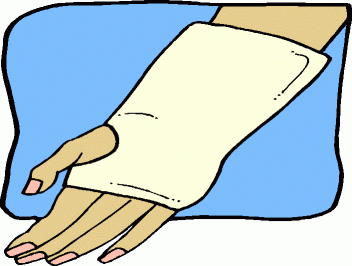
With carpal tunnel surgery, I couldn’t do my usual coping techniques. My right hand was wrapped in a bandage for 48 hours and for a week the only thing I could do was flex my fingers. Once the stitches were out, my hand was still very sore and I could slowly use it. Everything I usually do to cope involves using the hand that I had the surgery on. I felt lost. I couldn’t even journal out my feelings. I had to find new ways to cope. I couldn’t allow myself to just lie around and slip into depression. I had to find a way to deal with my situation.
I couldn’t put a harness on my dog, and I couldn’t risk her pulling on me when I walked. So, I left her home and went on walks by myself with my ear buds in and my phone playing music on iheart radio. This got me out of the house and into the sun which brightened my soul. Since I couldn’t write, I recorded my thoughts in the notebook app on my phone or on an old tape recorder. That way I was getting my feelings out and they weren’t trapped inside me. I walked down the street to my friend Stacy’s house who was recovering from eye surgery. We talked about our frustrations with our recovery process and many other things.
One day I was feeling lonely and sick of being stuck at home. My friend Amy was preparing for a yard sale. I offered to help if her brother could pick me up. Unfortunately, her brother was busy. She lives forty minutes away from me. My husband insisted I ask her to let Lou drop me at her house after he finished work and spend the night, and he would pick me up the next day after work. Amy was more than happy to have me over. She is an author also. She wrote a guest post a couple weeks ago for my blog. We had a great time. I helped her with some of her yard sale items. I put tape on them, and she wrote the price. We talked about writing and brainstormed on how to improve her newsletter and shopped for a basket she was giving away at her book launch.
Then I invited my mom and family friend to go to mile long yard sales on the road Amy lives on. We went to several yard sales including Amy’s. We found some treasures and had lunch at a church. It was fun. This got me out of the house and away from the TV. When I have nothing to keep me busy it’s easy to sleep until one-thirty p.m., lie on the couch in front of the TV and give in to my illness. Going yard sailing and staying at my friends kept me from doing that. I was able to get out of the house and keep active.
Combatting mental illness is a daily battle even in recovery. Health issues had threatened to send me into the dark hole again, but each time I found ways to fight it off by using coping techniques. Even when I couldn’t use my hand to do my normal coping methods, I found new ways to cope.
When life challenges your mental health with heart ache, health issues, and trials, you must find ways to cope and fight your illness. When you’re unable to use your normal coping techniques, get creative and find new ways to deal with your situation. Don’t let your illness take charge. There is always a way to cope, even if it means finding new techniques. Life will always challenge us and threaten to throw us back into the pits of darkness. It’s how we deal with it that helps us reach and stay in the light of recovery.
I have one more week until I return to work. I am finally strong enough to write and woodburn. My hand will still have soreness for a while, but at least I can do stuff. Finding new ways to cope when I couldn’t use my usual techniques kept me in the light of recovery.
I’ve been recovering from carpal tunnel surgery. I need the surgery in both hands but decided to do my right hand, my dominant hand first. I use my right hand to do all my writing, woodburning, eating and texting. It’s important to me to keep in contact with my support team, and many of them I connect with by texting and instant messenger. This is the first time I’ve felt brave enough to type this post. So, it may be short.
After surgery my hand was wrapped in gauze and a ace bandage for 48 hours. After I took the bandage off, I was only able to move my fingers so they wouldn’t get stiff. I had to do everything one-handed with my left hand. I had to find a new way to keep in contact with my support team. I decided to use dictation. That little microphone on your keypad can be a bit of a pain. My friend Cheryl found it fun to translate my messages.
Here are a few messages that were mistranslated and got a good laugh from my friends.
“It sucks,” came out, “It’s sex.”
“I found my glasses,” came out, “I found my foot.”
“I miss my writing,” came out, “You’re annoying.”
“Trying to cope the best I can,” came up, “I’m trying to poop the best I can.”
And a few swear words randomly appeared in my messages.
I never understood why my husband always cussed at his phone when he uses the microphone until now. It is frustrating, but it gave my friends a good laugh and me, too. Most importantly I was able to keep a connection with my support team.
Part of healing from surgery and keeping in the light of recovery is being able to connect with the people who listen to me, support me, and encourage me. Having a support team keeps me going.
Choose your support team carefully and always make sure you have a way to contact them when you need to. Pick people you trust the most like family, friends, a teacher, or therapist. My support team is my husband, my parents, and several friends. When things make it hard for you to contact your support tea,m find a way to stay connected even if it’s through dictation into a microphone on your cell phone.
Now I am finally able to use my right hand and my texts are not as funny. Keeping connected with my support team keeps me in the light of recovery.
Bullying, especially chronic and severe bullying, is traumatic for targets and can have long-lasting effects. Most people who’ve been traumatized by bullying have lives that don’t run smoothly. They experience many stops and starts in life- many interruptions and setbacks.
They suffer a long string of broken relationships and friendships due to their shattered trust in humanity. When you’ve been bullied severely as I have, you will come to believe the lie, that human beings are inherently evil and enjoy seeing others suffer, if you aren’t careful and you don’t get professional help. And naturally, this destructive belief will affect your personal relationships.
In order to succeed at anything- your job, academics, finances, projects, anything–you must know how to form and nurture successful relationships. The hard truth is that it really is who you are connected with that determines your success in life. How to form relationships and confidently maintain them is the most important life skill you can ever learn and master. It’s sad that traditional schools don’t teach this.
Many people who have been chronically and severely bullied have been stunted in their emotional development and their development of people-skills. Many targets and survivors of bullying are afraid of meeting new people and of relationships. They’re fearful of social engagements and situations because they see themselves through the eyes of their bullies- that they’re somehow defective and inferior to everyone. Therefore, they don’t trust themselves or other people anymore.
Targets and survivors of bullying may desire friends and relationships but don’t want to take the risks required to get what they want. They decide that it’s much safer to stay alone and avoid even the remotest chance of conflict, being ridiculed, and possibly being targeted again in the future.
What these traumatized people don’t realize is that this doesn’t decrease their chances of being targeted. It actually increases that chance because bullies actively search for people like them- easy marks who are fearful and easily intimidated. Also, it lessens their chances of success at all other aspects of their lives.
Many targets and survivors of bullying are ashamed of what they had to do to survive and keep from getting hurt and bullied worse than they already were. They have much shame about the many times they had to submit to the bullies’ demands to keep from getting their brains beat out or save themselves from being shot or stabbed.
They often look back and wish they’d spoken up or defended themselves and just took whatever consequences they’d have had to face afterward. Sadly, they haven’t thought about the fact that the brain’s and body’s natural reaction is to do whatever they must do to keep one from harm- it’s part of our survival instinct.
If you are or have been a target of bullying, how can you change your life for the better?
You start by getting therapy and by reading self-help and personal development books that deal with the type of problems you’re having. You also relearn the social arts and do the inner work to reprogram yourself. Realize that this will take a lot of time to internalize.
You replace negative thoughts with positive ones.
You count your blessings and make a list of your good qualities and talents.
You think of the good people in your life, even if you only know a few, and realize that there are more of them in the world- realize that, out of almost eight billion people in the world, there must be more good people besides the few you already know.
You spend time with the people who love you and who uplift you. These positive connections will balance out all the bad experiences you’ve had with bullies and your confidence will grow. Soon, you won’t be as fearful because you’ll feel better about yourself.
You take risks by meeting new people and making new connections. This will be uncomfortable at first but continue to push yourself and it will eventually feel natural.
These thing above are what I did to regain my confidence and become outgoing. It wasn’t easy and it took time and a lot of practice for it to sink in and become like second nature. But I look back now and I’m so glad I put in the work because my life is so much better now. I’m at peace with myself and with others. Words cannot explain the freedom that comes with it. You would have to experience it to know. But I promise that if you do the same things, I did and put in the time and work, the payoff will be exponential, and you’ll get the return on your investment you’ve never thought you would!
Invest in yourself. Don’t you think you’re worth the time and effort? I do.
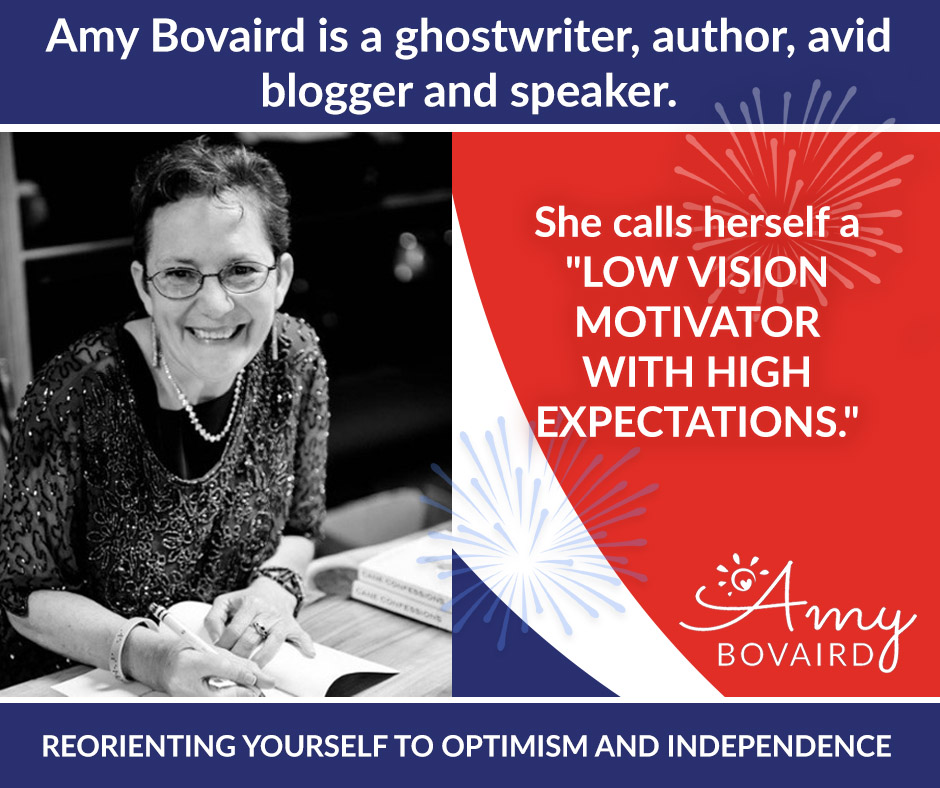
Let me introduce myself! Hi, I’m Amy Bovaird. Aimee and I share several common threads—we’re both authors, bloggers, and speakers. We both belong to Pennwriters, a professional writing organization dedicated to improving the skills of writers at all levels. Both are names are Amy, spelled differently, of course!
We also share another common attribute—the belief that our stories will encourage others struggling with disabilities. While Aimee writes honestly to educate others about mental illness and break through the stigma and misinformation, I write to educate others on sight and hearing loss.
What Causes my Disabilities? I have a hereditary condition called Retinitis Pigmentosa. My sight has progressively deteriorated over the years, starting with my peripheral (side) vision and it moving to tunnel vision. Finally, my central vision will be affected. Most lost most or all of their vision. We don’t know the cause of my hearing loss, only that it continues to weaken.
Thank goodness, I have come to learn I can live a happy, fulfilled life in spite of these disabilities!
Overcoming Obstacles Requires Determination
But things aren’t always rosy. We have to push forward and overcome our own obstacles. The pastimes I enjoyed most had to do with staying mobile – traveling, driving, hiking, climbing mountains. I often traveled alone internationally, so that was my happy place. My identity was wrapped up in the adventurer I became.
Giving Up Driving
As I gradually lost more sight, one aspect of getting around challenged me more than the others—driving. But I found ways around it. A flexible work schedule enabled me to drive into my governmental teaching job in the light and leave before it became dark. When I taught overseas, I could take public transportation. At the latter stages, my discomfort behind the wheel told me the time had come to give it up.
But yet … deep inside …
I couldn’t quite wrap my mind around the fact I couldn’t ever drive again. It’s a true rite of passage bequeathed to us in our teens.
Moving into a White Cane
When I learned to use a white cane, I gained back a lot of my independence. But because it revolved around a public tool, others didn’t always view me as having the same capabilities as I once had.
Excerpt from Second Sight: Milestones in Mobility (to be released in October)
The except from “A Gutsy Convertible” starts with two short commuter flights, leaving from Erie, PA and arriving in Detroit, MI. Here we go!
The cart driver eased to a halt. “Here ya’ go, ma’am. Ya’ bag’ll come in at Carrousel Three. Can I help ya’ git it?”
“N-no. I’m good.” I reached into my purse and found a couple of dollars and slipped them into the man’s hand who steered me through Detroit’s domestic airport.
My gaze, blurred as it was, swept through the throng of people—those maneuvering suitcases, parents admonishing children, and those headed out the door—seeking one person. Was that him? The man turned and waved in my direction. Yes! It had to be him. Relief coursed through me and my smile must have shown it.
“Look at you,” Mark said, taking me into his arms. “I was watching you on that airport cart. Ya’ looked mad or upset and a little bit lost. I said ‘What is goin’ on with Amy?’”
I made a face. “I coulda’ found my way here much faster on my own. Get this—the stewardess had them bring me a wheelchair while everyone else exited the plane la-la-la without a care.” I shook my head, still unsettled. “My legs aren’t broken,” I fumed. “I can move pretty fast with my cane.”
“When ya’ saw me, your face lit up like the Fourth of July fireworks we’re gonna have tomorrow night,” Mark teased, squeezing my shoulder and changing the subject. “Let’s find your bag and get outta here. Let me take that.” He lifted the strap of my burgundy leather carry-on from my shoulder.
That left me with my purse and white cane. I hesitated then folded up my cane. As expected, Mark took my arm, and looped it through his as we made our way up to the conveyor belt.
“There’s my bag.” I pointed to a small blue-gray nylon bag slowly moving on the carousel. He stopped in mid-step and stared at me. “How could ya’ see that? I mean, how could ya’ tell where your bag was?”
“I’m partially sighted, ya’ know. Besides, see that bright polka-dot scarf on the handle? That scarf is permanently tied on the handle. It always makes it easier to find my bag when I fly anywhere.”
Taking a deep breath, I consciously put the unsettling airplane experience aside for the moment to focus on Mark and my weekend with him.
That evening, we ate out on the grill as he had promised. He cooked all my favorites—steak and shrimp, corn on the cob, and baked potatoes. We chatted as he brushed the barbecue sauce on the steaks.
“Ya’ see the trouble I go to for you.” He grinned.
I took an appreciative sniff and smiled back. “It’s worth that awful flight to get here to see you—and eat steak and shrimp.”
“What? Miss World Traveler is put off by a couple of baby flights?” He jabbed me in the side, mock shock on his face.
“That’s just it,” I said. “This is my first time flying since using my white cane. “I don’t know about this wheelchair and cart business. Why don’t they just ask me what I need?”
“Silly, why don’t you just tell them?”
Silence hung in the air. I’d kept asking myself that same question throughout the flight. I didn’t have the metalanguage. Ha! This was not linguistics class at college. It required only a few simple words.
When Mark opened the grill to check the steaks, a wave of smoke escaped. He took the foil-wrapped corn and set it aside, then added more shrimp. He turned to me. “I think airlines use wheelchairs as an easy way of identifying those who need assistance. Otherwise, how would they know who needs it? They only have so much time to get you to the next flight so it’s a matter of convenience. Think of it that way.”
“Well—” as they look for an easy way to accommodate their little airlines, they rob me of my independence.” You let them. “I certainly don’t have any problem with getting from one gate to another.” I huffed.
The next morning, the sun shone but there were clouds in the sky.
“You’re in Michiganian land now,” Mark offered. “Don’t expect your Pennsylgonian weather to follow you here. The clouds are just for show. Pure sunshine here.”
He liked to play with words, maybe to impress the writer he imagined me to be. Maybe because when a relationship is fresh, the banter is too.
After I took an early morning run, Mark said, “Let’s go shopping.” He took the convertible, which he only used on special occasions—like my arrival.
“You don’t need that right now,” he whispered, pointing to my cane. “Nothing against your stick,” he added quickly. “I’m being selfish. I’d rather hold your hand.”
I blushed, and folded up my cane. Being with Mark was like playing the piano keys on the high end—fast and furious. My heart ran trying to keep up with the light notes, the ones I felt when I thought of: us.
Inside the store, Mark pushed the grocery cart with one hand and held onto my fingers, which rested on the steel handle, with the other. How I’d longed for such a feeling—being part of a couple again.
We picked up all kinds of party food. He’d planned a small get-together—in part, to welcome me and in part, for the Fourth of July.
My stomach did happy flip-flops. We’re kind of a couple. We’d connected via Facebook and from there, it went to phone calls and long talks. Several months after he met me, he visited. It was then he showed me a song he wrote …. about US! “…We need to be together. You be here or I be there ‘cause I can’t send flowers through the phone…” It had a country twang.
My heart burst every time I thought about it.
Outside, the sun caused a problem for me. Even with my sunglasses, I squinted to see this man that filled my stomach with butterflies from the start. He opened the car trunk and placed several full sacks of food inside.
I eyed the bags. “Will that all fit?”
“Almost.” He grabbed the watermelon and set it aside, then closed the trunk. “Got an idea here.” He used a pocketknife to cut through the tough rind. With a slow smile, he handed me a thick slice, dripping slice. He licked some of the juice off his fingers. “This here is Michiganian watermelon, nothin’ like it.”
“Hey, I can’t eat this—it’s way too big!” I held it away from me so the juice wouldn’t get on my clothes.
There in the store parking lot next to the car, we had an impromptu picnic for two. The sticky juice dripped down our fingers and onto the pavement. I attempted to eat a second one, but the juice tickled, and to my dismay, I snorted and felt a weird sensation as a seed flew up my nose. “Agh! Nose. In my nose.”
“What! You okay?” Mark looked concerned.
I took a tissue out and blew my nose. The seed came out. “I’m good now.”
We laughed at the silliness of eating watermelon slices that big and having a seed fly up my nose,
“We’d better get these groceries home,” he said. “We have the whole afternoon for our picnic.” He glanced at the sky and frowned. “Hope the weather holds up.”
With the leftover watermelon stashed away in its flimsy plastic bag and the dark green rinds tossed in the trash, we prepared to leave.
I opened the passenger door to Mark’s small white Mustang convertible.
“She’s got some years on her,” he said caressing the glossy enamel exterior, “but she’s still my baby.”
The tips of my mouth turned up as I looked over at him. “Don’t hold back now.”
I faintly caught his shrug. “You gotta slam the door or it won’t close all the way.” His words were part-apology and part-directive.
“I used to love driving.” I tried not to let my voice show how I longed to feel the wheel at my fingertips, how I used to follow a curve to wherever it went, then make my way home, put the car in park and slowly take the key out of the ignition. I jingled the keys on my chain all the way to the house before I set them on my table.
I hated giving up driving, something I did twice, once before going overseas in ’97 and again, nine years later when I returned to the States.
Mark looked over at me, a dare in his eyes. “Want me to put the top down?”
“Yes!”
I kicked off my sandals and jumped onto the seat as he slowly backed out of the Kroger parking lot. I stood up, my face to the sun and tried to keep my balance. My short hair whipped around as he gained speed. “This is living!” I shouted, my words lost in the rush of the wind.
I waved my arms back and forth, thrilled at my own daring. Maybe it was that I was nearing fifty and felt sixteen again. But maybe, with the sun warming my arms and the wind fresh on my face, it didn’t matter that I couldn’t see as much as I used to or that I relied on a red and white cane to get around.
At that moment, I trusted myself completely.
As we neared the private road leading to Mark’s house, he pulled the car over.
“Drive,” he ordered.
“What? No, I can’t. I couldn’t. Can I?”
“You want to drive, don’t you?” he sounded excited. “Is it a good vision day?”
It was no better or worse than usual, but I said, breathlessly, “Yes, it IS.”
“Then drive.” His voice held a distinct challenge.
***
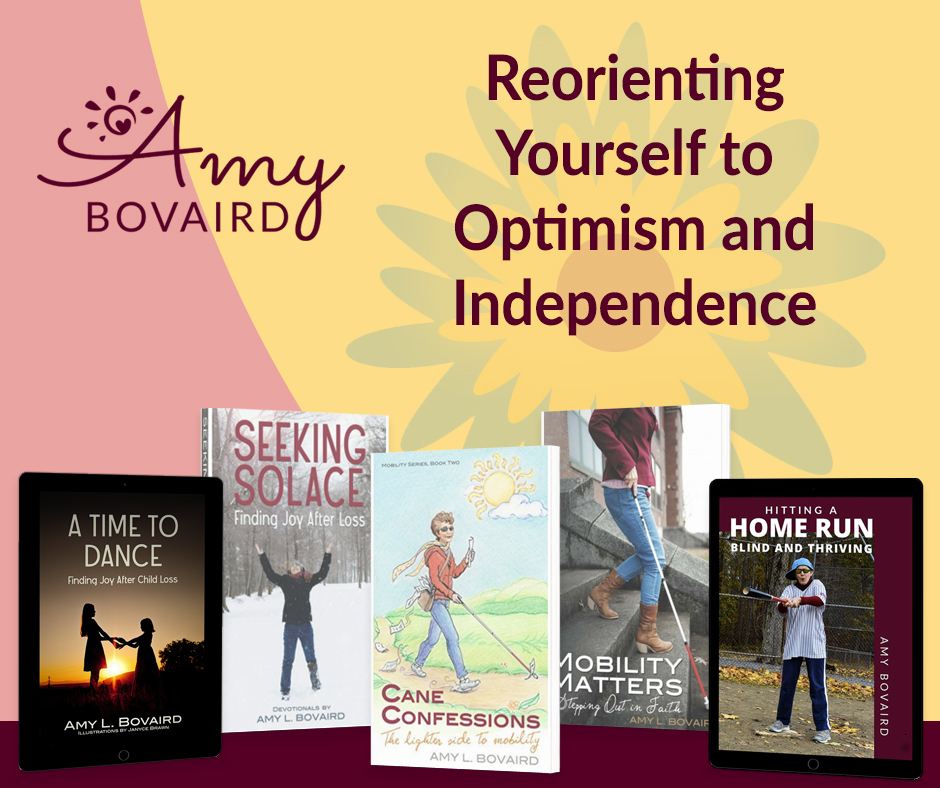
You’ll have to wait until my book comes out in October to see if I took the wheel or not! Second Sight: Milestones in Mobility is the 4th book in my Mobility Series. Meanwhile, I hope you’ll check out my other books on coping with sight loss to learn about the challenges, and the resilience.
Social Media To learn more about me, please check out and follow me on my social media sites: I’d love to hear what you think of my excerpt!
I would like to thank Aimee for inviting me to do a guest post.
Today at 7 am I’m having carpal tunnel surgery. While I’m recovering I have scheduled two guest posts. First one will come out August 3 by Amy Bovaird. She is a fellow memoir writer and blogger. She is also my friend and mentor. Be sure to checkout her post out on August 3.
August 10 a guest post by Cherie White will go out. Cherie like me is a advocate against bullying. I was a guest blogger on her post a little while ago. Please check her post out on August 10.
Please welcome my guest bloggers and leave them comments. As soon as my hand heals I will be back to writing my own posts.
My ninth surgery is a week away. I have so much to do to prepare. Surgery is the easy part because I’m asleep. It’s the recovery that is always hard. This is a minor surgery, but I’m sure recovery will be challenging. Everyone tells me different stories about carpal tunnel surgery. Some make it sound rough, while others say it is easy. I must be prepared for whatever lies ahead, and I must keep my anxiety under control as I get ready.
Everyone’s anxiety attacks are different. For me, my thoughts go on overload. A small worry grows and grows until it becomes a huge one. I tense up, I start dry heaving, I become nauseated, and I get sick. Right now, as I prepare for my surgery and recovery my anxiety is on high. I’m a worrier and I am worrying about everything obsessively.
I will be one-handed for a while. I am right-handed and that’s the hand the surgery is on. Cooking will be difficult, so my husband and I are planning easy meals that he can cook. After my other surgeries people, brought us some meals. Some of the people who brought us meals then have other things going on now. I feel weird asking people to help us out. Planning easy meals is the best idea I have. I also need easy lunches I can do on my own while Lou is at work.
You’d think with only two people there wouldn’t be a lot of laundry, but it’s never ending. I have baskets of clean laundry in the basement and plenty of dirty in our room. I need to get the laundry cleaned and put away. I need to have clothes at easy access, so I don’t have to search for things to wear. It should be interesting dressing one-handed. I am picking out easy slip-on outfits for after surgery.
I do the finances and keep track of the ledger of our expenses. I write them down in a notebook. I set up each page like a checkbook with a column for transaction, a column for withdrawal, one for deposits, and a final column to do adding and subtracting. I’ve been filling out extra pages with these columns and explaining to Lou how I do them. I keep a monthly planner with what bills need to be paid each week. I’ve been going over it with Lou also.
I filled out an application for an employee fund through work to help us with our mortgage. That put my anxiety into overdrive. We usually put money aside from my checks each week towards the mortgage, and what I will get for disability will not be enough. I got the grant last year for my back surgery, but what if they deny me because it wasn’t that long ago that I received it? During my recoveries I always write and woodburn to cope, but this time I won’t be able to. How will I cope? Lou won’t be able to take as much time off to help me after surgery. How will I manage on my own? Will I be able to dress in the morning? How will I text and call my support team with one hand?
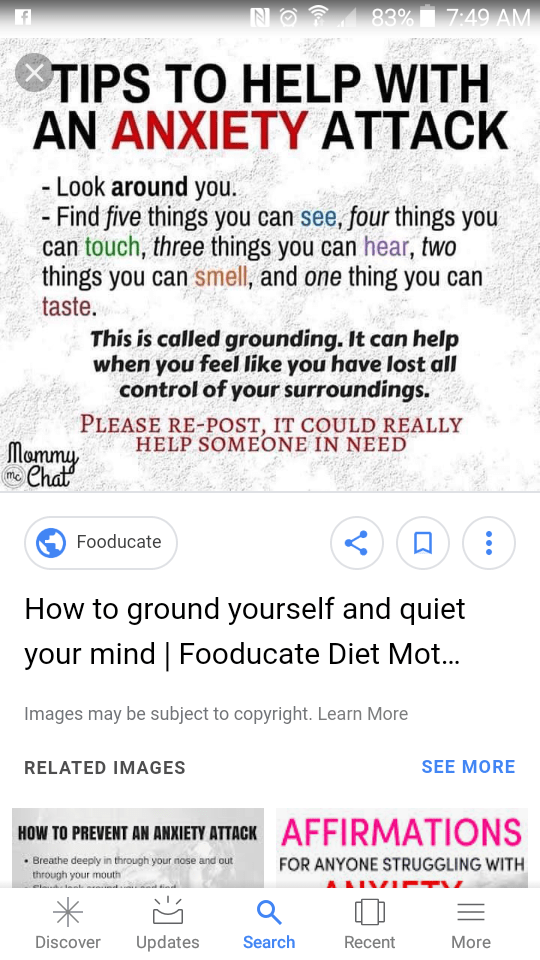
The worries race through my mind and they get bigger and bigger. I have been working hard at keeping myself from having an anxiety attack by using grounding techniques. Below is an example of how I use the techniques.
When I start dry heaving, my stomach twists, and I begin to feel like I’m going to get sick, I look at a picture of the grounding techniques my friend Cheryl sent me, and I start to go through them.
I look around me.
Five things I see are: my dog Esther, pictures of my nieces and nephews, my handsome husband, our couch, and flower print curtains my grandma gave me before she passed.
Four things I can touch: my dog’s soft fur, my husband’s beard, my cool cup of water, and the knitted covering on our couch.
Three things I can hear: the fan, my favorite CD, and the neighbors.
Two things I can smell: Garlic bread and the lemon scent air freshener.
One thing I can taste: Chocolate.
Doing this technique takes my mind off my worries and has me concentrating on things around me instead of the war inside me. To do the steps, I really have to look around and use my senses. It keeps my mind busy. As I do the grounding, my anxiety lessens and my stomach calms down. I’m able to prevent an anxiety attack. I forget about my worries, and I can think more realistically.
This technique may help you deal with your anxiety attacks and panic attacks. Write down these grounding steps and keep them close by. When you feel an attack coming on, pull them out and go through them. Believe it or not, it takes a lot of concentration to follow each step. That means you’re thinking about something other than your fears and worries. Give it a try and see if it helps.
Practicing the grounding techniques helps me prevent an anxiety attack and allows me to relax in the light of recovery.
Your mind races. Thoughts fill your head, drowning you in anguish. You can’t stop them the dark, sad, and painful thoughts. Your mind tells you bad things, and you can’t see pass that. You don’t know how to think any other way. You’ve done it for so long that it has become natural. You feel like you can’t breathe, your heart plummets, tears fill your eyes, and silently you scream out, “Stop!” But how do you stop? Is there another way of thinking?
Child crying
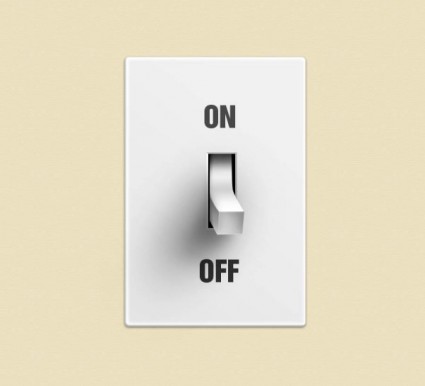
The mind is a tricky thing. When it is sick, it can focus on is the bad side of everything. It plays games with you and sends racing thoughts. If there were an on/off switch to the mind, that would be a blessing, but unfortunately there isn’t. Fighting the mind is the hardest battle you will fight. It twists things around, it goes nonstop, and it tears you apart, but you can fight it.
Most of my life I drowned in negative thinking. My mom said I needed to stop seeing the glass half empty and start seeing it half full. I didn’t know any other way of thinking. My therapist gave me charts to fill out. The charts had at the top the date, a column for negative thoughts, and a column for positive thoughts. I had to write down my negative thoughts, then change them into positive ones. The charts weren’t big enough for the negative thoughts. I struggled to come up with a way to turn my thoughts into positive ones. It took me a while to learn how to turn my thinking around. I had to practice.
I’ve learned to combat and change my thinking by doing the charts. I can’t say that I never think negative and I’m positive all the time. No person is positive all the time. I struggle with my mental illness daily even though I’m in recovery. The bad thoughts are not as frequent as they used to be, but they still rear their ugly heads. Especially now that I am preparing for a ninth surgery and I still must lose weight so I can keep my back healthy.
After I had my back surgery, I gained a lot of weight. I’ve been trying to lose it. I started walking two miles to work. I’ve been struggling with my diet. My friend and personal trainer is injured, and we haven’t been able to workout together as much. She keeps telling me I must do the exercises on my own, but I’m not good at keeping myself to an exercise routine. As soon as I have my surgery, I won’t be able to do as much once again. I’ll be one-handed for two to three weeks. The negative thinking has already been tormenting me.
I don’t do charts anymore, but I use my journal to change my negative thinking. Here is an example.
NEGATIVE THOUGHT:
I’m never going to lose weight. I’m going to be a big, fat slob the rest of my life. I’ll end up having more back surgeries and it will be all my fault because I’m lazy. I’ll gain all my weight back while recovering from yet another surgery.
POSITIVE THOUGHT:
I will lose weight. I’ve never gave up on anything before and I won’t start now. I’m a beautiful and strong woman and I will lose the weight. I will not have more back surgeries. I’m only having surgery on my hand and it’s a minor surgery. I will still be able to walk. I will work harder on my diet and I will not gain all my weight back.
You can also take a piece of paper and draw a line down the middle. On the Left side right negative thoughts and on the right side put positive thoughts. I’ll give you an example.
NEGATIVE THOUGHTS
POSITIVE THOUGHTS
All these surgeries are my fault. If I weren’t so fat and lazy, I would be healthier. I’m a pig and I deserve to suffer. I might as well give up.
Your Surgeries were not your fault. Most of them were caused by your job or bad luck. I do not deserve to suffer, and I am not a pig. I am a beautiful smart woman who will never give up.
Find away that works best for you to change your thinking. It takes time to learn to turn negative into positive. After you write out the positive read it over several times. Note how it makes you feel. Do you feel calmness? Do you feel happier? Do you feel stronger? Compare how you felt when you thought negatively to how you feel when you change to think positively. Note the difference. Don’t you feel better when you change your thought into something brighter?
I know when I write out my thoughts and I change them around, I feel like a weight being lifted off me. A peace fills me and the anguish in me lessens. Reading over the positive thoughts helps me convince myself they are true. I read them repeatedly until I believe them. It’s one thing to write them down, but another thing to truly believe that it is true. So reread your positive thoughts until you convince yourself it’s true. Try this coping technique and leave me a comment on how it helps you. You can even comment on how hard it is to do.
By combating my thinking and changing my thoughts into positive ones I stand with strength in the light of recovery.
Life really stinks. It seems like all the bad stuff happens to you and you’re the only one suffering. No one else is facing what you are. They are all walking around in their happy worlds while you are sinking into deep sadness. You keep falling apart and they keep smiling. It’s not fair. Not only do you struggle with this horrible illness of the mind, but bad stuff keeps happening to you. Why go on? Why fight for happiness? Do you even know what happiness is anymore? It just hurts to live.
It is so easy to get caught in this frame of mind. It’s hard to see anything past the negative. This type of thinking eats you up inside. It crushes you. When your mind is sick, it’s hard to see any good in life. Thinking positively is impossible. How do you change this thinking if nothing in your life is good?
I’ve struggled with negative thinking practically all my life and at times I still do. I’m going to have my ninth surgery on July 27. That day three years ago I had a double mastectomy. Each time I have another surgery, I go to that dark place in my mind. The negative thoughts bombard me.
Why do I keep having surgeries? Is God punishing me? It’s not fair. My body is already full of scars. My husband is twelve years older than I and has never had a surgery. Why am I’m the one with all the problems? My life sucks. Bad things keep happening to me. It will never end. We won’t be able to pay our bills, and we will go bankrupt. I can’t go through another surgery. Why doesn’t anyone else have to go through as much as me?
The thoughts go on. They course throughout my soul and send me into a depression. I cry, I get angry, and I start falling into that hole I worked so hard to get out of. Is it worth it? How could I let my mind tear me down? I spent years learning to look for the positive. My therapist had me keep a journal of positive things, and she gave me charts to fill out. The charts had one side that said, “Negative thoughts” and the other one said, “Positive thoughts”. I had to write down my negative thought and change them into positive ones. I did the work, yet I still get caught up in that negative thinking.
When I was at my worst, I thought the negative thinking was all there was. My therapist taught me there are other ways to look at the bad things in our lives. I don’t have to see life’s challenges as black and white. I don’t have to live in pure darkness. Fighting my thoughts at first seemed impossible. As I worked on it, it slowly got easier.
Even though I still fall into that frame of thinking, I have techniques to help me fight it. I don’t have to let my thoughts push me down anymore. I don’t have to allow my depression to rule my life. I can rise above it.
I decided I won’t let this next surgery push me into the hole again. I will combat my thoughts. I can’t say that I won’t struggle with the negative thoughts, but I’m going to work hard to focus on the positive. You may ask what is good about having a ninth surgery? Well, I decided to list the positives.
Here is my list of five positives for having another surgery:
My hand will no longer hurt while I write and do everyday tasks.
I get to have three weeks off work to relax, lie in my PJ’s, watch movies, or go for a walk.
I get to be pampered by my husband.
I have an excuse not to cook dinner, do laundry, or other household chores.
I can sleep in as long as I want to.
See there are good things with in the bad. Each time I start feeling down, I write five more positive things in my journal. I no longer do the charts, but I journal out all my negative thoughts. Then in my journal I turn them into positive thoughts.
If you’re struggling with mental illness and you’re caught in negative thinkin,g seek therapy. A therapist will teach you how to change your thinking. Learning positive thinking will not be easy. It’s a battle you can learn to cope with and change. Why don’t you take out a piece of paper and write “Five Positive Things”? Then start thinking about something good like you have a place to live. At first you may only be able to come up with one thing, but as you focus and work at it, more will come. Simple things can be positive like you woke up this morning. Give it a try.
Fighting mental illness is a constant battle, even in recovery, but while in recovery you will have many coping techniques to help you stand above the hole. Recovery doesn’t mean you’re cured; it means you have learned to manage your illness so you can live a normal life with happiness. Happiness and positive thinking are possible.
I have three weeks to prepare for my surgery. I choose to fight the worries and negative thinking and focus on the positive. I won’t allow myself to slip into a depression. Because I fight negative thinking, the light shines in my heart.
Last week I gave you signs of a bad therapist, and while there are many bad therapists, there are also good ones. The search for a good one can be frustrating. Some give up on their search after a bad experience. If you want to reach recovery, you must never quit looking for the right therapist. It took me several tries until I found one that helped me reach recovery. Good therapists do exist and if you want to reach recovery you must be determined in your pursuit to find the best therapist for you.
Here are some signs of a good therapist. These are signs I have noted in my own search for help.
Listens. A good therapist listens to your feelings and thoughts. He or she may take notes while listening. Therapist have many patients and taking notes helps them keep track of what is going on with their clients. Don’t worry if your therapist doesn’t take notes. Some have good memories. My therapist, Linda, never took notes, but each time I saw her, she seemed to remember parts of our conversations from the last session. I spilled my soul out to her, I cried, and she listened.
Uses your talents to help you communicate. If you can draw or write better than you can talk about your emotions, your therapist will use that to help you. Linda knew I am a writer. She gave me homework to write journal entries about my feelings and emotions. I would take my journal entry to our sessions, and we would discuss them. Then she had me keep a journal where I listed positive things in my life each day.
Gives you homework. A good therapist will assign you things to do at home. To get better you must work at it not only at therapy, but also at home. Reaching recovery is hard work. To change your negative thinking, to build up your self-esteem, to learn to think positively, and so on, you have to work at it on a daily basis, not just when you are at therapy. Linda gave me homework with each session. Sometimes I hated her for it because what she gave me to do was not easy. I gave it my all, though, and after time it got easier.
Teaches you healthy coping techniques. A good therapist doesn’t just listen to what you are going through, but also teaches you how to cope. Good coping techniques are the key to reaching recovery and staying in recovery. A good therapist knows that and will guide you through techniques that will help you deal with your illness. Linda taught me coping techniques that helped me handle my depression and she showed me healthy ways to cope with my internal pain without self-injuring. With her help I stopped self-injuring. The techniques she taught me helps me stay in recovery. I use them often.
Has lots of knowledge about mental illness and the illness you struggle with. You’d expect that this would be common sense. Unfortunately, there are those bad therapists who have little knowledge of this sickness. A good therapist has a vast knowledge about mental illness and the different kinds. He or she may have books on his or her bookshelves about mental illness. There are some therapists who specializes in certain types of mental illness. A therapist isn’t all knowing but should know enough to lead you to the proper help. Linda had a bookshelf in her office full of books on mental health. She knew a lot about the illnesses I have and how to help me fight them.
Has away to contact them when you need him or her. A good therapist has a number you can leave a message on or a on call person to contact if you need them after hours. While you are going through a rough time it is reassuring you can reach out to get help. They will never give you their home number, but they will give you a number where you can leave messages or where you can talk to someone who can contact them for you. Linda had a number where I could leave messages. She checked it frequently. I had to use it several times. She always called me back and she helped me through some very difficult times.
Shows compassion and cares about you. A good therapist shows you compassion and cares about you as a person. When you’re in therapy you build a relationship with your therapist. Your therapist becomes like a friend. She cares not only about helping you get better, but about you as a person. Linda was more than a therapist to me. She was my friend. Her children were born around the same time as my nieces. I could tell she cared about me and she showed me compassion. Now I am no longer in therapy and she moved on to a different type of therapy I miss her. I wish I could still talk to her, but I know that is not possible. I will always cherish her.
These are only a few signs of a good therapist. There are many more. If you search the internet, you can find sites that can guide you in finding the right help. Do your homework and be persistent. Finding a good therapist will help you reach recovery and what he or she teaches you will keep you in recovery. There is no cure to mental illness, but with the right medication, therapy, and coping techniques you can find happiness and learn how to handle your illness. Don’t give up there is a good therapist out there waiting to help you.
Linda was the best therapist I ever had. I went to her for many years and with her help I reached recovery. I could never thank her enough for what she taught me. I stand in recovery with strength and techniques to keep me above the hole of sadness.
Just as there are good and bad doctors, there are good and bad therapists. There are many good ones, but you must search for them. I have dealt with several bad therapists and it took me time to find the right one who helped me reach recovery. It’s easy to give up and become disappointed in your search for the right one, but don’t give up.
I have put together a list of signs of a bad therapist. These are things I have faced in my search for help. Read over them and keep the list close by while searching for a therapist.
Signs of a bad therapist:
Tells you to think happy thoughts or watch a funny movie. Mental illness isn’t fixed by thinking happy or watching a movie that makes you laugh. You wouldn’t need help if the road to recovery were that easy. I had a therapist that continually told me to think happy thoughts. I left each session feeling frustrated, and after a few appointments I decided to look for a new one.
Doesn’t challenge you or teach you ways to help yourself. If the therapist doesn’t give you homework or teach you ways to combat your negative thoughts and to cope with your feelings, he or she is doing little to help you. Part of reaching recovery is to work hard for it. Your negative thoughts and lack of self-esteem have taken years to accumulate. If you are not taught how to change them then recovery is impossible. You also need to learn how to cope with your illness. Coping techniques will help you reach recovery and stay in recovery. I’ve had a therapist who just sat, listened, and took notes. I felt like I was at a standstill. I wasn’t improving and had no idea how to get better. I had to decide to search for better help.
Tells you long stories about her or his own problems and give you little time to focus on yourself. You go to therapy to work on yourself and to focus on your mental health. You’re not there for your therapist’s stories or his or her problems. You are there for yourself and you must come first. Therapy is your time to be selfish. You’re there for you to get better. You can’t find recovery if your sessions are dragged on by your therapist’s stories and problems. The therapist’s job is to put all his or her time into helping you. One therapist I went to told me her problems. She would go into a long story about something that happened in her life. By the time she was done talking, there was little time for me and solving my problem. I felt my therapy sessions were useless. I was angry. I didn’t go to her to hear stories. I wanted help and I wasn’t getting it. Of course, I had to search for a better therapist.
Falls asleep while you’re talking or doesn’t seem to be paying attention. Your therapist’s job is to listen to you. If he or she seems distracted, then he or she isn’t listening. How can a therapist help you if he or she doesn’t pay attention to what is bothering you? You can’t reach recovery if your therapist falls asleep and doesn’t listen. By hearing your worries, thoughts, and fears a therapist can give you techniques on how to cope and fight your illness. Someone I care for went to a therapist who dozed off as he talked. I encouraged him to leave the therapist.
Tells you that you are causing your problems for attention. You are not to blame for your mental illness. It’s not all in your head. A therapist should know that and should never tell you that you are causing your own illness. Mental illness is like any other illness. It is caused by chemicals malfunctioning in your brain. You have no control over it just like a person has no control over cancer. When I was self-injuring, I went to a therapist who told me I injured to hurt others and to gain attention. Each time my mom picked me up from therapy, I cried. I felt guilty for causing pain to my family on purpose. When I told my mom about this she searched long and hard for better help for me.
Makes you feel ashamed or embarrassed after your appointments. A therapist must never make you feel ashamed or embarrassed by your illness and the things you do while you are sick. You have nothing to be ashamed or embarrassed about. You have an illness just like any other illnesses. A therapist’s job is to encourage you, not to make you feel bad about things you have done while you are sick. He or she should teach you ways to forgive yourself and find coping techniques, so you don’t repeat those actions. The therapist who told me I was injuring for attention also made me feel ashamed of being sick. This only made my illness worse.
If your therapist has any of these signs, it’s time to search for a new one. Don’t get frustrated and give up on your search for help. Be patient. Unfortunately, there are many bad therapists out there and finding the right one is not easy. Don’t let this sway you from seeking help because there are good ones out there. It’s like finding a doctor; you have to look around until you find one that suits your needs best. You may not always agree with your therapist’s advice, and a therapist could be good, but your personalities may clash. Don’t give up. The right one is out there.
After dealing with several bad therapists, I found a real good one who became like a friend to me. I confided in her like she was my best friend, and she helped me reach recovery. She taught me much of what I write about in my blog posts. She calls me one of her success stories. Even though I no longer need therapy, I hold her deep in my heart.
Because I didn’t let bad therapists stop me from seeking the proper help, I stand strong in the light of recovery.



















 aimeeeddy.com