No post this week. We spent sometime in Pittsburgh watching the Steelers game. I hope everyone is well and are not overstressing themselves for Christmas. Take time to enjoy the holiday season. Look for a post next week.
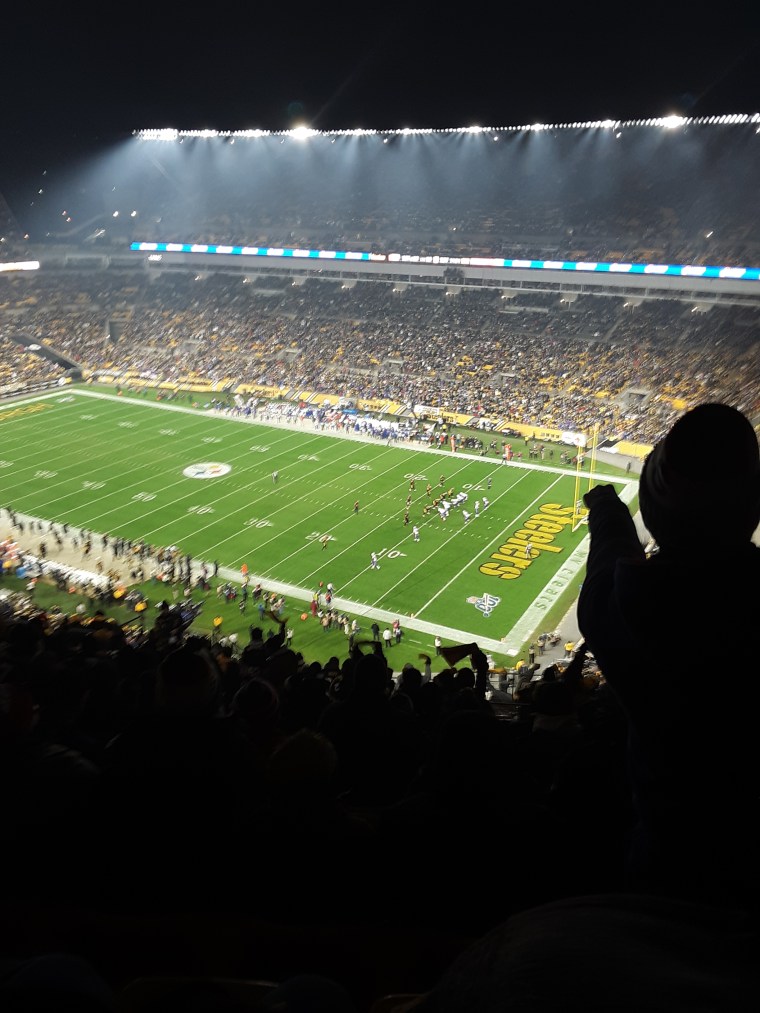
No post this week. We spent sometime in Pittsburgh watching the Steelers game. I hope everyone is well and are not overstressing themselves for Christmas. Take time to enjoy the holiday season. Look for a post next week.
There are right and wrong things to say to people, but sometimes people say the wrong thing at a rough time in a person’s life and it hurts. Choosing the right words is important, especially when someone is going through mental illness. When someone is struggling and going through this difficult sickness, saying the wrong thing can cause trauma and anguish. It can add fuel to burning emotions.
Never tell a person with mental illness who is going through an emotional episode to “get a grip.” Emotions can run wild and become totally out of control. A person can lose grip of his or her emotions and scream and cry. The person struggling with these emotions can’t just shut them off. So when someone tells them to “get a grip,” it hurts. It makes the person feel angry, misunderstood, and alone. It makes those emotions flare even more.
Recently my friend, Cheryl, who is struggling with depression and anxiety, told me about a situation she was in. She got very upset and her emotions flared. She cried and screamed until she became horse and a loved one told her to “get a grip.”
Cheryl messaged me. “When he said ‘get a grip’ it made me more upset. I felt like it was assumed that I could just flip a switch and suddenly be in control of my emotions in a snap. I couldn’t. My emotions were too out of control at the time. I couldn’t just turn those emotions off like a light switch.”
I’ve been in my friend’s shoes. When I was with my ex-boyfriend, it didn’t take much to send me in an emotional episode. I would go from sad to out-of-control. I would throw things, scream, and cry. He didn’t know how to handle my rapid emotions. He just stood over me while I was in a crumpled up mess screaming and crying, telling me, “Get a grip.”
The burning in me flared up more. I yelled at him. My anger burned even deeper. How could he tell me to get a grip? He had no right. Didn’t he know what was going on inside me? Didn’t he know I had no control? Was I in this alone? I couldn’t just stop.
I cried even harder and yelled out awful things to him. He in turned tried to control me by holding me down and telling me he wouldn’t let me go until I got a grip. I’m afraid of being held down, so things got even worse. I begged and pleaded with him to let me go, but he held me even harder. When he finally let go, I had bruises on my wrists.

All I needed from him was for him to hold me in his arms and whisper encouraging words until the tears stopped. I wanted him to just be there for me, but he couldn’t. He didn’t know how. He was the type of man who had to be in control. When he couldn’t control my emotions, he abused me instead.
To me the words “get a grip” are an insult. It made me feel like what I was going through was just a childish fit that I could just stop when I wanted to. It’s like what I was feeling didn’t matter.
I wanted to scream, “I can’t get a grip. I can’t just stop my emotions. If I could, I’d do it. Don’t you understand I have no control?”
My friend Cheryl posted on Facebook, “Please, if you know someone with anxiety and depression (and maybe also other mental health issues), when they are having an episode, PLEASE don’t tell them to get a grip! That does not help at all. In fact, it can make things even worse! It just fans the flames. Instead, if they allow you to do so, just hold them and be there for them. Find a more calming way to calm them down. That is what they need most. They need calm so it is easier for them to calm down.”
She is right. If you want to help someone going through an emotional episode, choose what you say and do carefully. You can either make things worse or better. If you say positive things, rub his or her back, and hold him or her if he or she lets you, you can help calm the person down. Try different things like deep breathing to help him or her, but never say, “Get a grip.” The person just needs you to be there for him or her in any way you can, even if it means just sitting with the person. Choose your words wisely. Be compassionate, kind, encouraging, and soothing. Don’t let your own frustration guide you in your actions. If you are angry yourself, calm yourself down before you try to help the person struggling.
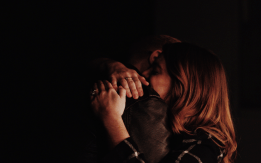
I have found a man who holds me when I break down. He knows how to cradle me in his arms and rub my back until the tears stop. He seems to know all the right things to say. He can calm me down when no one else can. Because he knows all the right things to say and do, he holds me up in the light.
Thanksgiving often gets pushed aside by stores. Right before or after Halloween the Christmas decorations go up. It’s hard to find Thanksgiving decorations to buy and no store ever puts them up. It’s pushed aside by wrapping paper, Christmas cards, Santa Clause, and shopping for the best gifts. Even the commercials and television shows display Christmas. Thanksgiving is also very important. We have a lot in our lives to be thankful for even when we can’t see it. It’s a season to be thankful for the bounties God gives us.

This year my sister invited my husband, parents, and me over for dinner. My niece, her daughter and her boyfriend, plus my nephew were all there. Of course my sister and her hubby, too. There were nine of us. The table was filled with endless dishes of food. My dad said the prayer and my mom suggested we go around the table and say what we were thankful for. I sat there listening to each person speak. Then it came my turn. I said I was thankful for my hubby and family, but my mind silently said something else. I didn’t want to give a long speech.
I’m thankful that I’m a year cancer free and that this Thanksgiving I’m not recovery from surgery. I’m thankful for all the friends and family members who stuck at my side last year and are still at my side. I’m thankful that I made it almost to the end of the year without any surgeries or any major health problems. I’m thankful I’m alive to spend another Thanksgiving with family. I’m thankful my cancer was caught early and I’m a survivor. I’m thankful I’m still in recovery from mental illness and even though I went through some really rough times, I’m still standing tall above the hole.
If I had said all this, when it was my turn, my family would have been drooling from starvation. Instead I said my thank you to God. For the last three years things have not been easy. In 2018 I had a detached tendon in my ankle reconstructed, I was in the emergency room four times, and I had to have a scope done. In 2019 I had breast cancer and found out I had the BRCA gene. I had a double mastectomy and a hysterectomy within three months. Then this year started with the death of my husband’s aunt, who also meant a lot to me, then the death of my grandma in September. I also had a flare up of my plantar fasciitis and I was in a boot for a month and half.

A lot of bad stuff has happened to me over a three year span and I could dwell on it and get really sad or I could be thankful for the good things. No matter what I’ve been through, I have had a wonderful husband taking care of me and supporting me. I also have had some wonderful friends who supported me with a shoulder to cry on, meals, gifts, visits, and so on. I have a dog that through it all snuggles up to me and while I was recovering from surgery wouldn’t leave my side. Then there is my family who has also supported me in many ways. I’m thankful for all this.
Because of everything I have been through, I have fallen down that hole of depression, but I was strong enough to pull myself up. I could have easily fallen back down to the bottom of that hole again and just stayed there. I could have given up. It would have been the easy thing to do. I have asked God if I were being punished and I got angry at times, but I didn’t let my mental illness take over, especially when I got breast cancer.
I have had plenty of reasons to not be thankful. I have had plenty of reasons to quit fighting. I’ve gone through stages of anger, grief, and self-pity, but I kept going. No matter how bad things have gotten, I still had plenty to be thankful for. Even the death of my grandma brought something good into my life: I reconnected with two of my cousins I had lost contact with.
No matter how bad my life seemed, there was always something good to be thankful for. Such as church ladies who brought me lunch and let my dog out, my parents who brought us meals and visited, friends who visited, a friend who set up a program for people to bring us meals, cards in the mail, gift cards in the mail, a friend doing my dishes, my husband always taking care of me, and much more.
This Thanksgiving I gave my great-niece kisses, talked and laughed with family, and ate delicious homemade food with a heart full of thanks. I’m very thankful despite all I’ve been through. No matter how bad things got, good things still happened.
Thanksgiving may be over, but it’s not too late to be thankful. Everything in your life may seem like it’s falling apart and yet among the sadness is good. No matter how depressed you are, even if you are very sick, you’re going through divorce, if your children broke your heart, or anything else going on in your life, there is something to be thankful for. There is good going on in the midst of darkness and tragedy. It may be difficult to see, but if you really look you’ll find it. Get a piece of paper or a journal and write at the top of the paper, “I’m thankful for…”. Then below it list the good things that happen in your life. You may find you have a lot to be thankful for. So what are you waiting for? Get to writing.

Because no matter how bad things got in my life, I was able to find things to be thankful for, so I am standing above the hole in the light of happiness.
Recently at work we lost a young man who had lost all hope and thought there was no other way out of his inner pain. His mom worked at the store where I work before I started. He was born in December of 1994 and I started working there in August of 1995. He was just a baby when I first met him. I watched him grow as she brought him grocery shopping and to events. Before I knew it, he was a young man coming to work as a cashier. At first I didn’t recognize him; he had grown up so fast. He had a nice smile and was easy to talk to. I enjoyed conversations with him and joking around in between customers. When he moved to another department, I still enjoyed casual talk. Now he’s gone.

I didn’t know. Many of us didn’t know of the demons that haunted his soul or the deep pain that etched is fingers within him. He put on a smile. He talked and he laughed with us all, hiding the deep darkness and pain lurking within. I know from experience that when struggling with mental health problems, many put on a disguise. Why? There is a lot of stigma to the illness and this causes fear of judgement in those suffering with it.
I know when I struggled I hid my pain and suffering because I feared what others would think of me. I didn’t want to be judged by my family and peers. I also hid my pain because I couldn’t explain it and I didn’t want to hurt anyone with my suffering. I felt like I was the only one in the world suffering. No one on earth could understand what was happening to me. Maybe that is what my co-worker felt. I will never know. Maybe he had his own reasons.
The question many of my fellow employees and I’m sure his family and friends are asking is, “What happened to make him want to take his life?”
No one can answer that question, but him. He took that with him. Could it be one thing? Could it be several things happening over time? Could it just have been a chemical imbalance in his brain? No one knows.
I have tried suicide in the past and luckily I didn’t succeed. It wasn’t just one thing the first time. I had been struggling with depression and thoughts of dying throughout my school years, but when my cousin was killed in an accident, I hit the very bottom of my hole. I graduated from high school and moved in with my grandparents, and a friend began to abuse me. I felt dark and hopeless inside. My soul and heart ached with so much pain that no matter what I did, nothing could relieve it. I just wanted it to end. My life was nothing, but a dark endless hole of unspeakable anguish. I thought I had no reason to live and that my family would be better off without me. I couldn’t see beyond my own suffering.

The second time I got sick when it seemed like everything in my life was going great. I had friends, I was living on my own with a roommate, and I was dating. A psychiatrist said I had a chemical imbalance. I moved in with my boyfriend. The more depressed and hopeless I became, the more controlling and abusive he became. One night I was taking a friend home, and I walked into the middle of a road as a car was coming. I just wanted to die, but my friend pulled me to the side of the road.
Was it like this for my co-worker? He had lost a child a while back. The child was born with health problems. Could that have triggered his inner pain or was it more? The one thing I do know was he was suffering, suffering more deeply than anyone could ever understand. He was in a very dark place. When you’re ready to die, to end the life God gave you, you have lost all hope for happiness, you have lost your strength to fight and you hurt so bad that nothing eases it. No hug can make the inner pain go away, nor a funny movie, nor kind words from loved ones, nor the sunshine, and not even the love of family and friends. You are screaming inside, crying and begging for it all just to end.
What my co-worker couldn’t see was that the pain can end and there is help. There are healthy ways to cope and medications that can stabilize the chemicals in the mind to give relief to some of the symptoms. There are therapists who can help find ways to cope, who can help teach new ways of thinking, and to talk to. There is help. Maybe he didn’t know there was help, maybe he thought he could handle it on his own, and maybe he was afraid to ask for help. Only God knows. The questions will remain unanswered. The only thing that can provide comfort is, knowing he is no longer struggling and hurting, and he is free.
All of us who knew him and loved him are left with heartache and questions. His mom, brothers, dad, and other family members are devastated. Their hearts are shattered, their lives forever changed, and some may need therapy to get through this. Their lives are not better without him. His pain is gone, but theirs will linger on. They provided grief counseling for his fellow employees, and his friends are also hurting. He’s free, but his family and friends aren’t. He didn’t know how much he would hurt his family and friends. I believe he’s in heaven looking down on his loved ones saying he’s sorry and watching over them while they grieve.
Suicide is not the answer to end your pain and deep darkness. Your life is worth living and help is out there. You’re not alone. Reach out to someone, anyone you can trust and ask for help. Don’t suffer alone. There are therapists, psychiatrists, crisis lines, and support groups. You may even find the people you think won’t understand and who will judge you are the people who will stick with you. Recovery is possible. Don’t give up on living; fight for the light, for a new chance at life, for happiness, for your family, and for yourself. Live your beautiful life, because even though you can’t see it, it is wonderful.
Andrew is the name of my co-work who passed. For the longest time I couldn’t stop thinking about how he suffered inside. I wish I could have told him that recovery is possible, but I never got that chance. Fly high Andrew; fly in God’s light and in his kingdom. You will never be forgotten.
I believe I’m alive so I can share my story and help others. I’m here to tell others how to find the light so they can dance within it with me.

In memory of Andrew Lyons November 15, 2019, rest in peace my friend.
Last week I wrote about magnifying a worry to the point that it becomes a big fear. Our minds are powerful. When left alone to worry, it can run wild like a windstorm. It starts out as a subtle wind then grows and grows until tree branches are flying around. Before you know, it the wind turns to a tornado. If you step back from the storm, you may see that it isn’t that bad after all. You see that it is a simple breeze dancing in the tree branches. It’s the same with a fear; if you step back, that big fear maybe something small.

Last week I wrote about my growing fear with a condition in my nose. Tuesday night I planned out what I would say to the Ear, Nose, and Throat doctor. I would ask him if there is any way to take care of a polyp without surgery. I would tell him about going through cancer and ask him to be sure I did not have cancer again. That night I worried about my appointment to the point I had a hard time falling asleep, even with my sleeping medications.
I can’t go through another surgery. I had nose surgery once and it was very painful. I have to make sure the doctor knows I refuse to go through surgery unless there’s no other choice. What will the doctor find within the inflamed nostril? Could it be cancer?
I rolled over onto my back and looked up at the ceiling. I can’t go to my appointment and get bad news. Maybe I can just skip it. Every time I have a problem it ends up in surgery. I had two surgeries last year and a surgery the year before, I can’t go through another one this year. Can’t I just go through one year without a major problem or surgery?
I took a deep breath and slowly let it out. Stop it, Aimee. You have to sleep. Just think of something good, but I can’t have cancer. I can’t go through hell again. Stop it, go to sleep.
Sleep finally settled in and the alarm went off at 7:00 am.We put it on snooze and finally got up at 7:30. We got breakfast on the way to our appointment and arrived 15 minutes early. I sat in the waiting room, watching people being called back while my mind began to wander and my stomach began to twist. I pulled out my cellphone and looked through my Facebook posts. I hoped it would keep me distracted enough so my nerves could calm down.It did somewhat.
A voice filled the room. “Aimee.”
I looked over near the hallway and stood up. “I’m Aimee.”
She smiled at me. “Follow me.”
My husband and I followed her to a room. I sat down in a chair while the nurse went over my medications and medical history. She had me sit in the examination chair. A few minutes later she came in with a big long instrument.
Oh no, this is really going to hurt. What is that a needle? Is he going to poke that inside my nose? Is he going to put that through the polyp? I want to leave now.
The doctor came in and introduced himself. He did a basic exam checking down my throat while using a tongue compressor. I gagged. Then he felt around my neck and had me swallow. He muttered his findings as he checked me out. I assumed he was recording it, but I didn’t see any recording device. He looked into both nostrils. Then he sprayed something in my left nostril and picked up the long thing that looked like a needle. The end of it lit up.
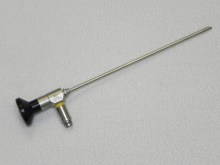
Oh no, he’s going to put this thing in my nose. This is really going to hurt. I grasped the arm rests and dug my fingers in. This is going to hurt bad.
He stuck it into my nose. It hurt a little, but was more uncomfortable than anything. I expected it to be a lot more painful. Instead it was very uncomfortable and made tears stream down my cheeks. The doctor pulled it out and the nurse gave me a tissue.
The doctor sat down on a stool. “Right nostril looks really good. Your left nostril has little sores and a staph infection.”
I looked at him. “You mean I don’t have a polyp?”
“I didn’t see any polyps. A staph infections is treatable it just takes time to completely get rid of it. My nurse will give you instructions on a solution to mix up and spray up your nose three times a day for,” he said.
I let out a breath of relief. My fear faded away and my soul felt like someone had just cut chains off of it. All I had was a simple infection that was totally treatable. From then until March I would just have to spray a solution up my nose and be careful when I blew my nose. My big, overwhelming fear turned out to be a smaller and very treatable condition.
Don’t let your mind turn a small problem into a huge fear. Often things we fear are only as big as we make them out to be. Try to stay positive when possible. Let the small things stay small until you have a real reason to worry. Not knowing is scary, but try to fight the racing thoughts. Are you worrying about something right now? Take the time and write down your fears and for each fear turn it around into something simple. Like, “I’m going to be fired for my mistake.” Change that around to, “It was a simple mistake; I won’t be fired for that.”
My husband and friends were right, and everything turned out to be fine. I’m learning to control those crazy thoughts and to stop my worries before they become magnified. Like usual, my problem turned to be much smaller than what my mind made it out to be. Learning to fight my thoughts before they become overwhelming fears helps me stand within the light.
We all have fears. Even those who say they are scared of nothing have fears. It’s part of human nature. Some people are scared of spiders, some are scared of heights, some are scared of small spaces and so on. Fear can cripple us from doing things and in some case can cause panic attacks and anxiety attacks. There are also fears that are just small concerns or worries that the mind magnifies into much worse. This often happens with people who have mental illness. Fears sometimes are more intense after going through such illnesses as cancer.

After reading my previous posts, you know I suffer from anxiety attacks and I’m a one-year survivor of breast cancer. These two mixed together can make my fears more intense. I belong to a breast cancer support group where many survivors talk about the fear of getting cancer again. I also have this fear.
For a month now I have noticed soreness in my nose. At first I thought I could just take care of it myself by spraying saline spray and nasal spray up my nostril. The problem is it didn’t get better, only worse. Wednesday I went to my family doctor.
She looked up each nostril with one of those lights they use. “You have a polyp in your right nostril. The left one is inflamed and I can’t see too far up.”
First thing that came out of my mouth was, “Is it cancerous?”
She typed something in her computer and looked up at me. “It’s probably not, but I want to set you up with an appointment with the Ear, Nose, and Throat specialist so they can have a better look at it.”
Shivers crawled up my back and my stomach twisted. I felt like I had just recieved awful news. My mind went crazy. I wanted to cry and scream. Instead I forced a smile and nodded my head.
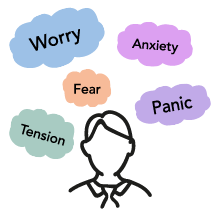
What do you mean “probably”? You can’t say it’s probably not cancerous. I want you to tell me it’s definitely not cancerous. When they found my lump in my breast, they said “More often than not, the cyst are benign, but we have to do a biopsy to be sure.” It wasn’t benign. What if this polyp isn’t just a polyp? What if there is something in the inflamed nostril? What if I have cancer of the nose? Is cancer of the nose possible?
After the appointment my husband and I went to lunch and started our Christmas shopping. I tried to keep my mind distracted, but I couldn’t stop it. It just ran out of control.
What if I have cancer again? Last year I lost my breasts. What if this year I have to lose my nose? I’d look weird without a nose. I don’t want any more surgeries. I can’t go through another one. What if behind the inflammation is more cancer? What if this time I have to go through chemotherapy and get sick and lose my hair? I can’t lose anything else. I can’t go through cancer again. I can’t do it.
Later that night my husband and I sat at home. I confided in him that I was scared. He pulled me close and told me I will be fine. He is usually right. When I start worrying obesessively to the point my problems turns to a giant fear, my husband always reassures me everything will be fine, and he’s usually right. Everything always turns out for the good, but when my mind gets going, I can’t seem to stop it. My mind keeps making the problem bigger and bigger until I have an anxiety attack. It was doing it again with an inflamed nostril and a polyp. I started dry heaving.
That night I went to my breast cancer support group and listened to stories of cancer being found in other places. I became even more scared. When I came home that night, I messaged my friend. She told me polyps are not cancerous and I had nothing to worry about, but I was still frightened. She suggested I do something to keep my mind busy. I told her I planned on working on my book proposal, but I couldn’t focus.
She texted me. “Work on your proposal. It will distract you. Keep busy.”
So I pulled out my laptop and got to work on my proposal. I became so focused on editing that I almost forgot about my problem. After I was done editing it was time for what my friend and I call, “Date night.” She lives far away. We like the same television shows. We watch them at the same time and comment on them through text messages. We refer to the nights our shows are on as “date nights.” I found this relaxing. I was too busy watching SWAT and texting back and forth with my friend to think about my fear. The next morning I texted another friend who said her husband had polyps in his nose and was given a steroid spray that made them go away. She assured me I would be fine.
If your worries are turning something that maybe nothing into a fear you can’t escape, then try to distract yourself. Fight those worries and do something that will keep your mind busy. Do a craft, write in a journal, read a book, or talk to a friend. If you can take the focus off the problem, your body can find time to relax and your mind won’t have time to keep magnifying. You can fight fears caused by over thinking and worrying. Talk to your therapist about coping techniques.
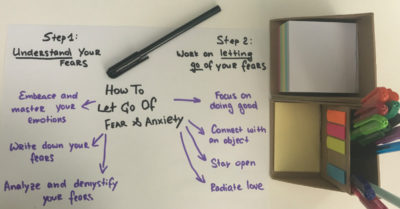
The next morning after my doctor appointment, I got a call that my appointment with the Ear, Nose, and Throat specialist was set for this coming Wednesday at 8:30 am. Until then I will keep myself busy and I will fight the fears that rise up. When my mind starts to race, I will try to focus on something positive or talk with my support system. Fighting my thoughts and coping with my fears help me stay within the light.
Many struggle with their self-esteem. Loving yourself despite your faults and flaws isn’t easy. Some people love themselves, but hate little things about themselves. When you are struggling with mental illness, you begin to hate everything about yourself. You can’t even stand to look at yourself in the mirror. The self-hate boils up within you like a volcano ready to explode. Hating yourself clouds your whole life. Trying to learn to love yourself while fighting for recovery can be an ongoing challenge.
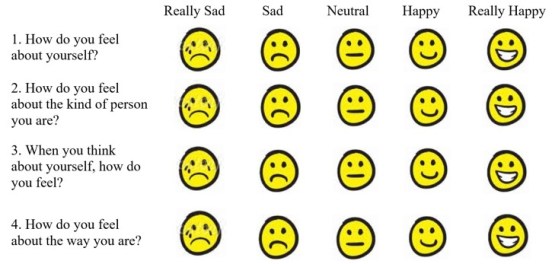
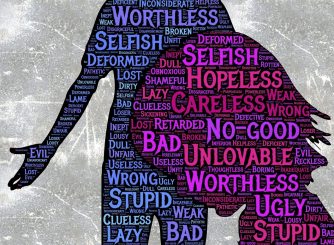
My self-esteem was torn apart in school when I was bullied. As I went from grade to grade being put down day after day, part of me died and I slipped into depression. I began to believe some of the awful things my teachers and classmates said about me. I dreamed of being like everyone else. I wanted to be able to learn like my classmates; I wanted to be smart and pretty. Instead I felt ugly, stupid, and worthless. I struggled with that though-out school. In high school I did find enough belief in myself to prove to everyone I was intelligent, but the self-hate still haunted me.
When I hit rock bottom of my mental illness my senior year of high school, my self-esteem faded even more. I looked into a mirror to see an ugly, fat, and worthless mess. I was a hopeless wreck. How could I love this woman who was ravished with anguish and was destined to live in deep sadness?
I was always bigger–boned then my siblings and I thought that meant I was fat. Both my older and little sisters have always been beautiful, and I felt like the ugly sister. My sisters were girly and I was a tom-boy. Even when I tried to be more girly, I felt uncomfortable and uglier. No matter how hard I tried to make myself look pretty, I only felt worse. Even being myself wasn’t enough to make me good inside. This self-hate followed me into my adult years.
I graduated from college, but it took me about five years to graduate from a two-year college and that’s not counting a year I took off to take care of my illness. Even though I never gave up on finishing college, while struggling with my learning disability and mental illness, I still felt like a failure. I had big plans for my future. I planned on graduating and going on to a four-year college, but instead I went to work at a grocery store. I felt like a loser. I thought, “I went to college to become a nobody.” I had big dreams of becoming a reporter and that dream was smashed. I was a loser like everyone predicted.
No one has ever made me feel like a beautiful woman until I met my husband. From the first day I met him, he told me how beautiful I am and treated me like a princess. No other man ever made me feel like I was desirable or like a woman. Even though he continues to tell me how beautiful I am, I still struggle with my self-esteem.
I have gained a lot of weight since I have been married. Sometimes I look in the mirror in disgust. How did I let myself get this big? Other times I look at myself and say, “I am beautiful no matter what.” I lost my breasts due to cancer. I decided not to get reconstruction. My husband said I’m beautiful the way I am. I am happy not having breasts, but at times I look at myself and only see my ugly scars.
Sometimes I like myself and sometimes I hate myself. It’s a constant battle, one I work hard to fight each day. Recently a lot of good things have happened in my life, making me feel less of a failure. Each time that inner voice puts me down, I argue with it. I tell myself I am beautiful and I am not a failure.
If you struggle with your self-esteem, fight it. Each day write something good about yourself in a notebook. Put positive things about yourself on index cards and put them around your home where you can see them. Argue with your inner voice that puts you down. Love yourself for who you are, as you are. Never give up on yourself. You can win the battle and learn to love yourself.
Recently, as you read in a previous blog, some good things have happened in my life that helped me realize I have never been a failure. I have worked successfully for 24 years at the same job, I have overcome mental illness, and much more. This year I received an award, I gave two speeches, I was on the news three times, and I’ve been published in a book. I am not a failure.

Each time I lose my way, I will remind myself of all I have achieved. Every time I feel ugly, I will tell myself I am beautiful. Building my self-esteem is an ongoing battle, but I will not give up. Because I continue to fight, I bathe in the light of recovery.
In my last post I wrote about giving a speech at Amy Bovaird’s Disability inSights seminar, and in this week’s post I am writing about the topic I covered in my speech. I talked about the steps to recovery. I’m not an expert or a professional in the field of mental health, but these are steps I learned through my own experiences and through my fight for recovery. It’s hard when you are ill to think your life could ever get better, but it can.
My recovery process stretched over several years, and it was an up and down process. It’s not an easy task, but it is worth the fight. Use these steps as guidance towards your recovery, and maybe think up some of your own steps.
Below are the steps I used to reach recovery.
Use these steps to help guide you to recovery. I want to urge all who are suffering with mental illness to fight for recovery. Recovery is not a cure, but it is a chance to take control of your illness and live a happy, productive, and meaningful life. It is possible. It’s a battle worth putting all of your willpower and determination into. Go now and take the steps to fight and win control over this awful sickness. You can do it!
It took me years of ups and downs to reach recovery, but no matter what, I never gave up. I followed these steps and I have been in the light of recovery for several years. I do have bad days, but I know how to handle them. I’m standing in the light for the world to see that recovery is possible.
They called me dumb, stupid, and retarded because I had a learning disability. It started in elementary with my first grade teacher and followed me into high school. I was supposed to be the retard who would never be able to do anything with her life when she grew up and the dummy my teachers pushed through elementary and assigned students to give me answers on tests. Teachers said I would grow up to be on welfare and unable to obtain a job. This bullying is part of what led me into mental illness and has left scars on my soul. They were wrong about me and I have proven it over and over again.

In high school I gave up fun time to study endless hours to prove I was intelligent. I became obsessed with getting good grades and making perfect attendance. I thought if I couldn’t get any awards at the end of the year for my accomplishments, at least I could get perfect attendance. In ways it paid off and in some ways it hurt me. I had no social life and I became mean when my family members got sick.
First I made it on the merit roll then the honor roll. My junior year of high school I was inducted into the National Honors Society. I was told I was the first student in my school with a learning disability to be inducted. As an inductee, I was given the assignment to go to the classroom of my fourth grade teacher, who had said I couldn’t read, to tutor one of her students in reading. When I graduated from high school, I received five scholarships and the principal gave a hidden hero speech about me. I proved everyone wrong, yet I was deeply depressed.
I went off to a community college. I got good grades, but I was deeply depressed and suicidal. I took time off from college to work through my mental illness and did return to graduate in 1999. I had a period of recovery and was able to receive my associate degree and once again proved them wrong.

After I graduated I continued to work at a grocery store where I started working during my year off. My plans changed. I had planned to go on to a four year college and become a reporter, but with my learning disability and mental health, I was unable to continue on with my collage path. Instead I stayed at the grocery store, feeling like I had failed. I became sick again. I felt like my life was a hopeless mess. I had no purpose.
I struggled to reach recovery from mental illness and reached it, yet I still felt like I failed. There had to be more to my life then to just be a cashier. Recently, thanks to Alexander Kovarovic, I have found my purpose. Alex invited me to write blogs for the National Youth Internet Safety and Cyberbullying Taskforce and then made me assistant to the director. I began a whole new adventure.
I started to step out of my comfort zone to call places to set up events and ask businesses for donations. This led to many opportunities. In March I was interviewed for a local news channel for my achievements and for being published in Alexander Kovarovic’s book Change Your Life. Then in April Alex came to Erie PA to award me and others the “Saving Lives” award. I was once again interviewed for the nightly news right before the ceremony. At the ceremony I gave a speech of acceptance and told my story of being bullied in school. Afterwards I was complimented on what a wonderful speech I gave and I realized I wanted to do more speaking.
Then my good friend Amy Bovaird asked me to speak at her Disability inSights seminar. I was excited and began to prepare. I practiced on my husband and on Marco Polo to a long distance friend. Amy invited me to go on the Insider, a local news show, to help promote the event. For the third time in one year I was on television.

A person who once said I would never be able to do anything stopped me at work. “I saw you on TV again. You are becoming a success.”
I smiled with pride and thought, I have always been a success and you just couldn’t see it. You once called me dumb; what do you call me now?
I overcame mental illness, I rose above bullying, I worked past relationship abuse, and I kicked breast cancer in the butt, and so much more. I had made many victories when I thought I had failed.
This past Friday I gave my speech at the seminar, about my journey through bullying, mental illness, and the steps I took towards recovery form mental illness. I spoke from my heart and shared my pain and my triumph with a room of about thirty people. Afterwards a person in the audience asked for my information to contact me for future speaking engagements. Someone asked me how long I had been speaking and another wanted her picture taken with me. Others gave me hugs and told me, “You’re an inspiration.”
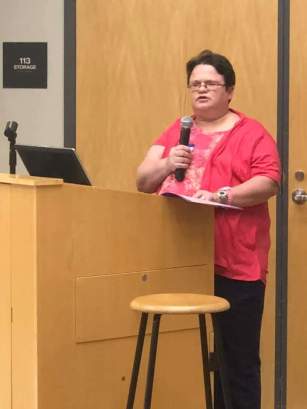
I felt uplifted. Not only uplifted by the wonderful response I got from my speech, but also by the others who spoke. The common theme I heard in the speeches was you can overcome whatever challenges and disability that lie before you. My new goal in my life is to help others through my writing and through speaking. I finally found my purpose.
God gives all of us purposes to our lives. Sometimes we can’t see it and we think our lives are going nowhere, but if we keep looking we’ll find it. We all have talents and abilities that could be used to change the world. We are not failures unless we choose to be. The fights we conquered are badges of success. Success is not being rich and famous. It’s facing life and all its ups and downs with strength and courage. It’s pushing against all odds to stand tall in the light. Find your talent and celebrate each of your successes no matter how small they are.
I am on a high. I am no longer stuck with that constant worry that I failed. I have been succeeding for years even when I thought I was a failure. I am standing in the light of triumph.
Going through serious illnesses such as breast cancer can lead to depression. Breast cancer is a life changing disease that not only affects the body physically, but also mentally. Your whole life is changed by this illness. Just hearing the “C” word leaves a person devastated. Sufferers are going though all kinds of changes in their bodies and are overloaded with information and appointments.

When you hear the words, “You have breast cancer,” your heart stops for a few minutes. Fear fills your body, your mind races, and tears flood your eyes. You fear that you will die, you fear getting sick from treatments, you fear what you will look like without hair or breasts, and so on. You are stunned, sad, angry, and scared. This is enough alone to send a person into depression. It’s what helped throw me towards that dark hole, but that’s just the beginning.
Once you are diagnosed, you are scheduled many appointments. Too many to keep track of. Specialists and doctors overwhelm you with information and your mind feels like it’s going to explode. They tell you what kind of treatments is recommended, they explain your cancer, and say things you may not understand. You’re sitting their trying to focus while your mind keeps repeating, “I can’t believe this is happening to me,” and “This can’t be real. I must be dreaming.”
Then there are the treatments. The treatments change your body. There are treatments that make you sick, burn your skin, and lose body parts, and more. These alone can send a person into depression. I had to make a very hard decision. I had to decide whether or not to keep my breasts. This sent me into depression. How could I make a decision to have a part of my body removed? I agonized and cried over this.
At work a woman gave me a keychain that was pink that had the words “brave, fight and live” on it. She told me she had a double mastectomy. I looked at her flat chest and thought, “She looks ugly, and I’m going to look ugly.” Of course she wasn’t ugly; she was beautiful, but when I looked at her, I didn’t see her; I saw myself. I pictured myself breastless and it wasn’t a pretty sight. I decided then I had to have reconstruction. It seemed like the only way I would ever be able to love myself, so I thought. I was wrong, but at the time I couldn’t see that.
For some breast cancer sufferers, it can be hard to decipher the symptoms of depression. With treatments they are already feeling fatigue, their appetite changes, they find it hard to sleep, they have aches and pains they never had before, and they find it hard to concentrate. When I had my bilateral mastectomy, I had no energy and sleeping was a challenge.
There are many other symptoms of depression to look for:
If you notice any of these signs seek help. You can find these
at American Cancer Society ttps://www.cancer.org/treatment/treatments-and-side-effects/emotional-side-effects/anxiety-fear-depression.html. After my mastectomy, it took me a while before I could even look at my chest and I cried easily. Since I have been through depression before, I knew the symptoms well. I felt that darkness engulfing my soul. I struggled at night to sleep even while on sleeping medication. The self-esteem that took me years to build was crumbling. On top of being depressed, I felt grief for losing the very part of my body that distinguished me as a woman. I felt hopeless.
My husband reassured me over and over again I was still beautiful. I used coping techniques I learned in years of therapy to help me face depression and defeat it once again. I leaned on my support team. In time I learned to accept myself without breasts. I decided I didn’t want more surgeries and chose not to have reconstruction. I had to learn to love myself as a woman with a flat chest.
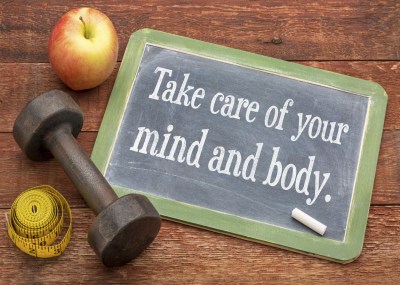
If you are going through breast cancer and you find yourself struggling with depression, turn to someone. Build a support system and talk to your cancer center about therapy. Going through a major illness like breast cancer is bound to cause sadness, but when that sadness persists and you can’t shake it, then you need help. Not only do you need to take care of your body, but you also need to take care of your mind.
I have been cancer free for one year. I fought breast cancer and depression and won. I am standing tall in the light of recovery.
 aimeeeddy.com