SURGERY NUMBER TWO

Any type of surgery is scary. Being put under while someone works on a part of your body with a scalpel is frightening. Then when you’re preparing for surgery, people tell you the horror story of their own experiences. Then there are people who make it sound like surgery is no big deal, when to you it is. Wondering what it is going to be like after surgery, hearing others stories, and trying to prepare for the surgery and recovery are nerve wracking. It’s easy to become depressed and anxious.

MW-GE143_medica_20180221131404_ZH

I had my mastectomy on July 17 and that was not an easy surgery. I had a hard time waking up from anesthesia, but the worst part was the drains that hurt every time I moved. The drains had to be emptied three times a day. I slept a lot and I had to sleep propped up. Then it took time for my incisions to heal.

This Friday I will be going in for my second surgery, a hysterectomy. It should be nothing compared to the mastectomy, but yet I’m on edge. The gynecologist who is doing the surgery said I’ll probably be stuck on the couch for a couple weeks afterwards.

4278

I’ve heard many stories about hysterectomies. One said it’ll hurt to just get out of bed, another said to have pads on hand because I’ll bleed a lot, and yet another said I’ll be in too much pain to do anything. I don’t know how my body will react to the surgery, but I’m trying hard not to worry about it. I keep telling myself it has to be easier than the first one, but the thing is no surgery, no matter how small, is easy. This will be my fifth surgery within my life time.

My first one was when I was four and I had my tonsils out. I still remember it. I stayed in the hospital and the nurse rocked me to sleep when I cried for my mom. None of my surgeries were easy. I hate the preparation. You get into a gown while they ask you questions and stab you with needles to put in IVs. Then they take you in to the surgery room and help you get on the table. I think the part I hate the most is waking up afterwards. They ask you questions while you try hard to figure out where you are.

little-boy-playing-his-toy-260nw-418462138

Right now I’m trying to prepare for surgery. We are buying microwave meals so we don’t have to worry about cooking for a while, I’m trying to get housework done so I don’t have to worry about it, I’m buying birthday cards for family members who have birthdays while I’m off, and I bought paper plates and cups so we won’t have to worry about the dishes. I’ll be off work from four to six weeks and disability doesn’t pay a lot, so Lou and I have been trying to save up money.

The hardest part is getting ready emotionally. Last year I had ankle surgery, this year I already had one surgery, and now another one is coming. When do I get a break? Am I the most unlucky person to have to go through so much? When do the health problems end? What will this surgery be like? How badly will I hurt after surgery? Am I strong enough to get through another surgery? The questions flood my mind. 20161130_122915

When I go to bed at night, sometimes I just sit in the dark thinking about what lies ahead of me. God only knows how this surgery will go and what recovery will be like. It’s not knowing that scares me the most. I hate being put under and waking up. I hate the idea of spending the night in the hospital, but the only thing that comforts me is knowing my husband will be waiting for me and he’ll be there the whole night. I hate not being able to do much while I’m recovering.

Instead of getting depressed about surgery, I’m trying to look at the positives. I’ll be out of work during Thanksgiving so I won’t have to deal with the holiday rush or lift frozen turkeys, I’ll get pampered by my husband, friends are planning to bring us delicious meals, and I’ll be off my feet and will not have to deal with the usual foot pain I get from standing for hours on end.

Food Bank Hands Out Turkeys Ahead Of Thanksgiving

I ask why did I have to get cancer and have the BRCA gene? Maybe it’s so I can write about it and maybe it’s just one of those things. God only knows. I just know I will face this next surgery with strength. Staying positive will help me get through recovery and keep me standing within the light.


Next week and maybe the week after there won’t be a blog post while I’m recovering from surgery. Soon as I feel up to it I will get back to blogging. In the comments let me know how you have dealt with up and coming surgeries.


GETTING FIT

Your food choices and exercise routines can help you fight mental illness and breast cancer. Television and other media advertise the easy way to lose weight and beat cancer or the foods that will help you get out of depression. Many of the newest breakthrough diets require you to give up meat, grains, and other foods. Skinny models are supposed to be the image we want to fight for emulate. All of this seems overwhelming. It’s hard to get motivated to work toward being healthier when you think you have to give up everything you like and when getting off the cozy couch to exercise seem like a chore.

maxresdefault

My doctor has been telling me for years to lose weight and eat better. My psychiatrist started me in a healthy diet program where they sent me information through the mail on eating healthy and exercising. I did lose some weight for a little while, but slipped up and gained it all back. I tried to do some exercises at home, but I came up with excuses not to do them. I’m too sore after work, I don’t have time, I don’t have enough energy, and so on. The excuses worked for me. I came up with this mind set, “If they can’t love me the way I am, who cares,” but while I stuck to that I felt awful about how I looked. I thought of myself as a fat slob. This only made me more depressed and made it hard for me to love myself.

After recovering from a double mastectomy due to breast cancer, I started thinking more about my overall health. Even if I have my breasts and uterus removed, there are other places I can get cancer in my body. What if I recover from cancer and end up with another illness like diabetes? How many health battles will I have to face if I don’t do something?

Does-Sugar-Cause-T2D-1440x810

Feeling like I needed to do something, I posted on Facebook, “I’m fat and I need to lose weight.” I got lots of comments on how to lose weight, but one person took it a step further.

Denise, a woman I work with, is into fitness stopped by my register, “What hours do you work Monday?”

“I’m off,” I replied.

“Good. I’ll pick you up at 9 am. Bring a towel and water bottle. Wear shorts, sneakers, and a t-shirt.”

Blue Water Bottle and Towel

I looked at her. “Why? What are we doing?”

Denise smiled. “You said on Facebook you want to lose weight, so I’m going to help you. We are going to work out.”

My stomach fell like a deflated ball. Could I do it? Am I strong enough to do this? Will she give up on me once she sees how badly out of shape I am? Will I have an asthma attack? Do I have what it takes to keep going?

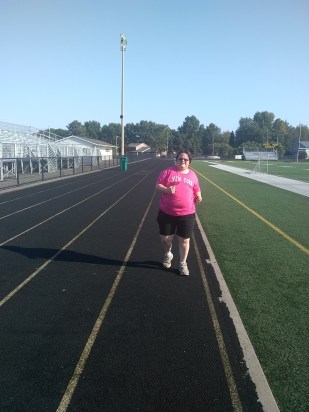
Monday we got together. Denise showed me different types of exercises. I felt like falling over and saying, “I give up” several times, but I pushed. I ran out of breath, my muscles ached, and sweat dripped down my back, but I didn’t give up. Denise encouraged me to keep going when I thought I had nothing left in me. She high fived me and congratulated me when I refused to give up. Her enthusiasm made me want to continue on.

IMG_20181008_100854755

Afterwards I went home, showered, and dropped to the couch. I hurt all over, but I felt pride deep inside me. Denise didn’t give up on me, and I didn’t quit. I dug down inside me for the determination that helped me to reach recovery from mental illness and to fight cancer, to push when I felt too tired to go on. I exercised for a full hour without quitting. That for me was a big accomplishment.

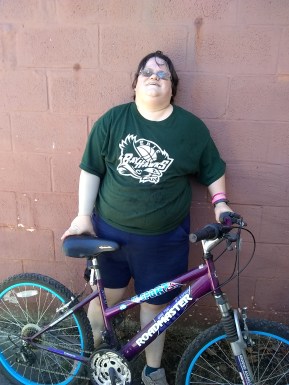
The next time we got together we went on a bike ride. I hadn’t ridden a bike in a couple of years. We have decided to exercise twice a week until my next surgery. Once I’m healed, we’ll start up again. Since I have been working out I can walk long distances with my husband without stopping several times to take a breath. I am very proud of myself and I feel stronger.

IMG_20181010_104743196

I also went to the cancer center to see a dietitian. We went over a normal day’s diet for me. What he told me encouraged me and made me want to continue on my quest to get in shape.

He said, “I’m not going to tell you what to stop eating, because when you’re told what not to eat, you crave it more. What I am going to do is tell you what healthy foods to add and how to break down the unhealthy foods into smaller portions.”

fruits-and-vegetables-group-cartoon-vector-1356051

In other words I don’t have to give up the foods I like, I just have to eat less of them and add fruits and vegetables. This was much easier then denying myself the things I like. This was and will be a plan I can follow. I’m confident I can make these changes. The dietitian also gave me a cook book and I started picking out some recipes to try. He told me how green, leafy vegetables help fight cancer.

By working out and starting to change my diet, I feel empowered to be a better, healthier person. I’m more confident in myself. Nothing is going to stand in my way. Exercising and making these changes is helping me feel better not just physically, but also emotionally. I am proud of myself.

IMG_20181019_190556114.jpg

Exercise and diet do help with mental illness and cancer, but it has to be your choice. If you can’t stick to a routine, find someone who will work beside you and encourage you. Even once or twice a week makes a difference. You can do it. You’ll sweat, you’ll gasp for air, you’ll hurt, but you’ll feel good because you did it. Push against all odds to get fit for you. Ignore all those who lectured you about your weight. You’re not doing this for them. You’re doing this for you: for a happier, healthier, and stronger you. You can do it.

IMG_20181010_101207444

I’m dedicated to keeping to an exercise routine and changing my diet. I’m already starting to feel better about myself and stronger. I’m determined to fight off chances of getting cancer again and to stay within the light of recovery. Because I’m willing to make these choices, I feel like the light is shining down on me more brightly.


SAYING THE RIGHT THING

In a previous post I wrote about all the wrong things to say to someone suffering with depression, and in this post I want to talk about the right things to say. What you say to a person struggling with depression can make a big difference. It can make the person feel loved, uplifted, encouraged, and cared for. The words you say can help him or her decide to strive for recovery and to keep fighting. The person fighting depression needs support and kindness.

positive-thinking-life-quotes-sayings-pictures1

Here are a few things you can say that will help out a person with depression:

  • I’m Here For You. Those four words can make a big difference in a person’s life. When a woman or man is struggling with this illness, he or she feels all alone and like a burden. Telling him or her that you’re there for the person lets him or her know she or he is not alone. Someone cares.
  • How Can I Help? Being willing to help the best you can is important to a person with depression. He or she needs to know someone cares enough to help when it is necessary. It’s good to know that there is a person out there willing to help even if it’s just a shoulder to cry on.
  • You Are Important and Your Life is Important. Many who face depression feel worthless and feel like their lives are a mistake. They can become suicidal and feel that everyone will be better off if they’re gone. Knowing he or she is important to just one person out there means the world, and knowing that someone thinks his or her life is important may help them want to keep living. Your words can help a person struggling reconsider suicide.
  • Have You Told Your Doctor/Therapist How You Feel? Being a friend and helping when you can is important, but you’re not a professional. It’s important to remind the one fighting this illness that he or she needs to tell the doctor or therapist how he or she feels so he or she can get the proper treatment. Encouraging a person to seek treatment is crucial in the battle to reach recovery. Knowing there are people out their trained to help gives the person hope.
  • Recovery Isn’t Easy, But It’s Possible. The person struggling often feels like he or she is stuck in the dark hole forever. He or she can’t see the light beyond the darkness. Encouraging the person that there is a possibility for recovery gives him or her hope. It’s also important that he or she knows it’s not easy, but it’s worth the fight. Even though he or she finds it hard to believe recovery is possible, keep reminding him or her it is possible. Inspire the person to work hard, because there is a life above the hole within the light.
  • God Didn’t Make a Mistake Making You. Depressed people often feels like their lives and very beings are a mistake. Telling him or her that he or she is not a mistake gives them a reason for their existence. Let the person know he or she was made for a purpose. Tell him or her God doesn’t make mistakes. Let him or her know that even though things are tough, God will get him or her through it.
  • It’s Ok to Feel That Way. Many who are sick hide their feelings and feel as if their feelings are inappropriate. Let them know that their feelings are okay. It’s not a sin or horrible thing to feel depressed. Let them know they  have no reason to be ashamed to feel so many emotions. By doing this you are letting them know you recognize their feelings and know that they are real and important. Just knowing that means the world to the sick person, because he or she often feels his or her feelings are not valid.

image_c8c0ff3e-90f3-4f7e-90dd-773409638b37_530x@2x

Remember, words make a big impact on people and what you say can make a difference. If you really want to help a person struggling with depression, then make sure you say the right things. Saying the right thing will help your friend or loved one know you are there for him or her and you’re willing to support him or her. Encouraging words mean the world to a person stuck at the bottom of the hole and it may help him or her move closer to recovery.

8bcdf2_77a17a64207b43d2a333ac1875def23b~mv2

I have wonderful friends, family and a husband who seem to know what to say when I’m at my darkest. Their words lifted me up into the light.


THE IMPORTANCE OF SUPPORT

When you’re going through a major illness like mental illness or breast cancer, it’s important to have people to listen, to care, and to help you. Family and friends can provide support to a certain point, but having support from a group of people who know what you are facing is even more important. It’s easier to confide in people who understand what you are going through because they have been where you are or are still traveling the same or a similar path as you. You can find these people in a support group.

stroke-help-support-group-img

Support groups are beneficial in many ways. You may say you feel uncomfortable talking to a group of strangers, but these strangers know more than anyone what it’s like to be in your shoes. I joined Linked By Pink breast cancer support group in August right after my double mastectomy. After only two meetings I feel like I was meant to join. The first meeting I received hugs and I was able to speak openly about what I was struggling with. I usually find it hard to talk in a crowd of people I don’t know. In a group of strangers I usually sit quietly and say nothing unless spoken to, but I felt differently at Linked By Pink.

I learned that there are many benefits to support groups: learning new coping skills, learning to talk openly about feelings, making new friendships, feeling less lonely, getting out of the house, reducing stress, depression and anxiety, learning about new treatments, comparing doctors, and finding new resources. To me these benefits are something I felt like I couldn’t pass up. I have many friends, but none truly understand what I’m going through. I’ve had to explain to several of my friends what a compression sleeve is and what lymphedema is. It’s nice to meet with a group of women once a month who know exactly what these are.

medi_sleeve

Make sure you do some research to find the right support group for you. There are many types of support groups that focus on specific issues like mental illness, abuse, divorce, grief, and so on. You have to feel comfortable in the group you join. If you don’t, try another one. When I was self-injuring, I joined a support group for self-injurers. The group seemed to be very negative and the people running it seemed worse off than those attending. I felt uncomfortable and had to quit the group. It didn’t give me the warm, caring and compassionate vibes I got from just attending my first meeting of Linked By Pink.

It’s important to know the main reasons why support groups are formed and what makes them important to your needs. Linked By Pink was started in October 2008 to provide support to young women diagnosed with breast cancer.

Breast-Cancer-Tagline-with-Ribbon-01

Norma Zimmer, president of Linked By Pink, told me in an email, “Women who started working on a calendar project to raise funds for other organizations found out how helpful it was to be with other young women to compare notes on treatments and emotional issues. So they started a support group called Link By Pink.”

Some support groups provide more than just emotional support. They also provide a range of services like financial grants, scholarships, and so on.

Scholarships

Programs and services Linked By Pink provides are:

  • Comfort gift bags to anyone diagnosed with breast cancer
  • Gift cards to members for meals after surgery
  • Grants to help with Medical, Travel, and Living Expenses available to anyone diagnosed under the age of 55. (In 2017 they awarded over $60,000 to local women and their families in grant money alone)
  • House cleaning for stage 4 members
  • Healthy lifestyle programs to help members learn about preventing recurrence
  • Christmas presents to families of members who have passed
  • Monthly support meetings
  • Online peer to peer support
  • Online peer to peer support for co-survivors and caregivers
  • Seven college scholarships totaling $5500 given out annually to Erie County high school students who have had a family member diagnosed

I received a comfort gift bag when I first learned I had breast cancer. Jael Norman Lippert, Managing Director, delivered the bag. She gave me a hug and said a prayer for me. It was right then I felt like I wasn’t alone. I also received the medical, travel, and living expense grant. This grant removed the worry of paying bills while I was off from work. My disability at work only paid me $57.00, not enough to live off of. My husband and I need both our paychecks to make it week by week. The grants eased my anxiety about paying bills.

couple-paying-bills-online-1024x682

Linked By Pink is focused in Erie, Pennsylvania. If you are from out of state, check with your doctor for local support groups, talk to nonprofit organizations, search the internet for National Institutes of Health websites for your specific illness, and join online support groups.

You can find out more about Linked By Pink at http://www.linkedbypink.org/. You must attend one meeting to be added to the Facebook group.

Take the steps you need to find recovery by joining a support group. Support of all kinds is very important, and when family and friends are not enough, turn to a group of people who have experienced or are experiencing what you are. It helps to have people who understand you.

478086136

I plan on attending many more Linked By Pink meetings. I am willing to learn, to find support, and grow within a group of women who are survivors. I stand within their beacon of light of support and strength.


THE WRONG THINGS TO SAY

It’s hard to know what to say to a person who is suffering with depression. What you say can either cause people to fall deep down the hole of darkness or help them feel a little better. So many people say the wrong thing. They may not realize how detrimental their words are to a person who is sick. People may even make comments because they really don’t understand what depression is.

What Do You Say Concept

Here is a list of the wrong things to say to a person with depression:

  • It’s All In Your Head. Depression is not imagined or faked. It’s very real. The sadness the person feels is not pretend. He or she is actually feeling that way. The person has a real illness due to a chemical imbalance in the brain.
  • Think Happy Thoughts. A person with depression can’t just think about something happy and his or her depression will disappear. It’s not that easy. If it were there would be no need for anti-depressants, therapists, and psychiatrists. As a matter of fact, many who are sick find it hard to think of happy things. It takes a combination of therapy, hard work, and medication to learn to find the good things about life.
  • Snap Out Of It. A person who is ill can’t just snap her or his fingers and the sadness disappears. It’s not that easy. When a person is crying and feeling hopeless, she or he can’t just pull him or herself out of it. Depression is an illness, and like any illness, it takes treatments such as therapy and medication to help a person see the light. Snapping out of it is impossible. You can’t just snap a person out of cancer and you can’t snap a person out of depression.
  • Grow Up. The sadness, crying-out breaks, and hopeless thinking are not a sign of immaturity. It has nothing to do with acting like a baby. They are part of a serious illness and should not be taken lightly. It’s not a matter of growing up. Even mature adults of all ages can have depression. It’s not immaturity; it’s an illness that’s out of the person’s control.
  • What Do You Have To Be Depressed About? So many think in order for someone to be deeply saddened they have to have a reason like horrible parents, an awful job, bad relationships, or so on, but that’s not true. People with depression often don’t even know why they are feeling down. They just are. You can have the best life ever and still be depressed. Why? Because it’s an illness of the brain; chemicals in the brain are not working properly.
  • If You Trust In God Or Read The Bible You’ll Be Cured. God does work miracles, but sometimes he allows us to go through rough things for a reason. A person with depression will not be magically cured by reading the Bible and praying to God. I’m not saying God and the Bible won’t help because they will, but they won’t make a person’s illness magically disappear. God will stand beside the person, he will guide him or her, he will open doors for the person, and much more. God gives those suffering with depression the tools to help him or herself. The Bible will give a person comfort, insight, and strength, but it won’t cure him or her. I’m not saying miracles can’t happen, but God also gives us tools to help ourselves. If you happen to receive a miracle, then thank God.
  • IT’S YOUR OWN FAULT. The person struggling with depression did nothing wrong to get this sickness. They did not make a mistake, nor did something on purpose to make him or her sad. No illness is a person’s own fault. You don’t tell someone with multiple sclerosis it’s his or her fault. It’s a sickness. No one is at fault.

93c4d36d63f8c6037a6303081d9a9516-bpfull

When a person is depressed, saying the right thing is very important because what you say can either hurt or help a person. Pick your words carefully and make sure you understand what depression is. Understanding depression can help you help someone fighting depression. Saying the wrong thing can push the person struggling down, but saying the right thing can bring comfort, renewed strength and hope.

blog158_2-208x300

When I was struggling, many people said the wrong things to me and dragged me down and it hurt. The people who chose their words carefully made a big difference in my recovery process. My friends and families carefully picked sayings that helped me fight harder, that brought me comfort, and that lifted me up. The right things said is what helped me stand proudly in the light.

Keep reading for a future post on the right things to say to someone who is struggling with depression.


COPING AND BACK TO LIVING

When you go through a serious illness like breast cancer, the normal routine of living is disrupted. For a time the world around you keeps going, but you stop. You stop living your normal life. Instead your focus changes from working, maintaining a social life, housekeeping, and so on to self-care, coping, healing, and surviving. Once you are healed, it’s hard to ease back into just living.

self-care-1200x750

I’ve been off work since July 17 and I’m finally easing back to work. I’m starting with a couple of days of work and using some vacation days. Before going back to work, I started worrying. I have scoliosis and being laid up messed my back up. I’ve been seeing the chiropractor to try and straighten it out, but I still hurt. How am I supposed to work if I’m hurting? Will people look at me differently without breasts? Am I up to standing for six hours with a fifteen minute break? Will my customers ask questions? Am I emotionally and physically up to working?

While I’ve been off work I put everything on hold and focused on myself and my healing process. My house is a mess, my laundry is piled up, I haven’t edited my memoir in a while, and my social life has mostly been going for rides with my husband and going to doctor appointments. My husband has focused himself on taking care of me. He has done a really good job, but now we have to get back to living our normal life. This isn’t easy to do when I know that within a month and a half I’ll be out for another surgery.

messy-house

How do I get back to living again? For a few weeks I’ve felt like I’m in a rut. I’m still trying to cope with what I have been through and all my attempts to move forward have failed. I made a goal to edit my memoir, but I couldn’t concentrate enough to keep to it. I planned on cleaning up around my house, but for some reason I couldn’t get motivated enough to do it. I’ve been stuck on Netflix. I’ve finished several seasons of shows and watched lots of movies.

I had to sit down and think. I listed my symptoms to see if I was suffering from depression. I’ve been through depression and I know the symptoms well. I’m not sad, I don’t feel hopeless, I want to live for many years, I’m not sleeping a lot, and I still have interest and pleasure in doing things. I went to the fair with a friend and a movie with another friend and had fun. So what’s my problem? Why is getting back into my normal routine so hard?

maxresdefault

A friend told me, “You’re expecting too much from yourself. You have been through a lot. Give yourself a break and take it one step at a time.”

I thought about what she said and she’s right. I’m still coping with all I have gone through and I still have one more surgery in November. I can’t rush things. I will get back to living one day at a time, but it is still important that I continue to practice self-care. Cancer turned my life upside down and it takes time to get it the right side up again. First step is slowly getting back to work and the next steps will follow. In time my house will be clean again, I’ll be doing more than watching TV, and I will get back to my memoir, but I can’t rush it.

one_day_at_a_time_ocean

You can’t go through cancer and not be affected in some way emotionally. I’m not in a depression, but I have dealt with some depression. I have my good days and bad days. I know I am stronger because of what I have been through and I will remain strong. My psychiatrist asked if I needed individual therapy, but I have lots of support from friends, family and the Linked by Pink cancer support group. So I told him I am fine without therapy.

So if you went through breast cancer and are trying to get back into a normal routine, don’t push yourself. Take each day step by step. Give yourself a break; you have been through a lot. You’ll get back to living again when you’re ready.

reach-your-dreams-achieve-your-potential

I’m taking steps day by day and soon life will be back to normal. I’m not rushing myself and I’m continuing to practice self-care. I give myself credit for how well I am doing and each day I take a new step the light of recovery shines on me.

DEPRESSION AND BREAST CANCER

Many people who go through serious illnesses or traumatic events in their lives find themselves falling into the dark hole of depression. Sometimes it can be a mild depression that goes away on its own, and other times it can lead to a major depression that takes medication and therapy to get through it. It’s easy to get depressed when you deal with such a serious illness as cancer. Cancer is an awful disease that has a bad reputation.

depressed-810x540

Despite the strides in treatment of cancer, many still see cancer as a death sentence. Even though advancements have been made and many live long lives after treatment, the road to recovery is not easy. Let’s face it; no illness is easy to deal with. Who would not get depressed when they have been diagnosed with an illness like breast cancer? It’s scary. Just saying the word “cancer” is frightening. The first thing that comes to mind is chemotherapy, losing hair, becoming very ill, and death. That’s what came to my mind when I heard the words, “You have breast cancer.”

I have dealt with mental illness most of my life. I have also overcome mental illness. I reached recovery a few years back and have been happy. It’s not that I’m cured from my illness, but I have it under control. I hadn’t felt deeply depressed in a long time. Then I got the phone call telling me I had breast cancer. My happy life shattered and my ability to keep above the hole failed and I fell. It was a long time since I had felt so bad inside. I felt my breath being drained from me.

Cesare-Pavese-Solo-senza-neanche

The darkness filled me and the light that once shined in me was smothered. I didn’t want to face another day. I wanted to lie in bed and pretend I didn’t exist. Why me? Why did I have to have cancer? Was God punishing me? Was I going to die? Would I lose my hair? Would I get very sick? What purpose would I have to go on if it would be in misery? I automatically saw the worst side of my illness. I once again was blinded to the positive side. That old negative thinking took over.

Then I got the news I had the BRCA gene and the depression got worse. I had to face some pretty major decisions like choosing to keep my breasts and being at high risk for another cancer or having a double mastectomy. How could a person be asked to make such a decision? I became flooded with many emotions: anger, grief, sadness, denial, and hopelessness. I felt like my insides were being pulled apart.

new-learning-the-grief-definition-is-the-first-step-to-finding-peace-1

Going to work and putting on a smile became a struggle. I tried to focus on my customers and job, but I couldn’t shake the sadness. I want to stop what I was doing and crumble into a ball and cry. I kept saying the words, “I have breast cancer,” but it felt like I was stuck in a night-mare. None of this could be real. I prayed that someone would wake me up and tell me, “You’re fine. You were just dreaming.”

I felt like I was falling to pieces, but I was too strong to allow myself to fall all the way down to the bottom of my hole. I used many of the coping techniques I learned in years of therapy for mental illness. I started trying to find the positive side to having cancer like, I caught it early and would not have to go through chemotherapy. I made boundaries for myself. I told my friends I loved them, but I had to take care of myself first and could not be as supportive as usual with their problems. I turned to my support system and talked to them when I felt I couldn’t go on. I found a support group full of women who are going through what I’m going through or have gone through it.

Build-Support-System

It’s normal to be depressed while facing a major illness. If you become so depressed that you feel you can’t shake it and want to end your life, ask for help. Give yourself a break; it’s only natural to be sad over a serious illness. Don’t be ashamed to ask for help and seek support. There are groups and therapists out there that will help you on the path you must face. You don’t have to be mentally ill to suffer with depression. Depression comes with many things like illnesses, loss, traumatic events, and so on. If you don’t take care of your depression, it can turn into an ongoing illness. You can overcome it.

6308193080_dcb5cf2da3

I have gone through my mastectomy. At support group a woman asked me if I was still in shock. She told me after shock would come depression and grief, but for me most of the depression and grief came before surgery. Now I’m healed up, feeling stronger, and will be returning to work September 17. I am standing in the light cancer free and once again in recovery from mental illness.

FOLLOW YOUR HEART

When you’re going through something like surgery or a certain illness, everyone has stories of things that go wrong and advice on what to do. Some advice is good and some is not. The best advice a person can be given is to listen to the doctors and follow your heart. Many may have been through what you may be facing or are going through, but that doesn’t mean your experience will be the same as theirs. What works for them may not work for you. There are people who just randomly give advice from their own opinion, also.

the-best-life-advice-your-friends-can-give-you-804x536

Since I had my double mastectomy, I have heard a lot of advice, some good and some bad. I have decided not to get reconstruction because of possible infections and more surgeries. I’ve heard lots of advice on this matter. A co-worker said, “You can change your mind. Maybe in a year you’ll want to get it done. It’ll make you feel better.” One lady told me, “You can get special bras with padding to wear in public. When you’re at home you can go without.” Another lady commented, “You can get prosthetic ones to put in your bra. You’ll feel more like a woman.” Someone else told me, “You won’t want your husband to touch you for a while without breasts. You’re going to feel like less of woman. Eventually you’ll want to get reconstruction to make you feel better.”

Maybe some women feel they must have breasts to feel womanly and others may have to put on special bras for appearances, but that is a personal choice. Not all women feel the same. Some are perfectly happy without breasts. I met women who are not ashamed at all to go flat chested after surgery. Some have even gotten tattoos where their breasts once were.

b5a8ae58d51fa8222ce8914e22015f46

I thought, before, surgery I would never be able to love myself without breast, but now after surgery I feel totally different. I feel like I have been free of a weight that hung from the front of me, a weight that gave me neck pains and headaches. I’m also freed from bras. No more straps sliding down, no more squishing breasts in one that’s a little too small, no more rashes and no more bras coming undone in public and sticking me in the back. I am free. I have nothing to hide or be ashamed of.

The doctor saved some skin for possible reconstruction and despite the scars, they look like small breast. I’m happy with that. The scars are reminders of the battle I faced with strength and overcame. I’m proud to walk around without bras and to tell the world I faced cancer and I beat it. I have no need for special devices to make it look like I have something. I have nothing to hide. I’m proud of my battle wounds and I still feel like a beautiful, desirable woman.

Double Mastectomy Surgery

I listen to others’ advice, but decided to follow my heart. When you’re faced not only with surgery, but major decisions, follow your heart. Where-ever your heart leads you is the direction you should go. You’ll hear from many who have been where you are or know someone who has, but in the end you have to decide what’s best for you, what will make you feel the most comfortable. Not everyone’s advice is bad. You just have to pick and choose which ones work for you.

Follow-Your-Heart-by-Maria-Rikteryte-at-The-Red-Door-Gallery

During my surgery and recovery I used some of the advice I got from other cancer survivors. When it came to deciding on reconstruction, I listened to others’ advice and in the end followed my heart. I’m still recovering from surgery. I’m in week six and doing well. I’m happy as I am and I feel beautiful and strong. I stand tall in the light of a new beginning.


DEALT BAD NEWS

When I heard the words, “You have breast cancer,” it felt like a knife stabbing my soul a hundred times. It seemed like I dangled between life and death. So I thought, “How could it be true?” I had no clues anything was wrong. I felt fine, yet a horrible disease had invaded my body. A simple mammogram revealed what seemed like a red letter of doom. The dice was rolled and my fate seemed to hang by a thread.

3132000_stock-photo-hanging-by-a-thread

I went from appointment to appointment in a daze. I was given pamphlets to study and books to read. My surgeon rambled on with words too big for me to grasp and too much information to sink in. My mind whirled. In the end I grasped enough of what was said to know my prognosis was good. I had a long road ahead of me, but my cancer was caught early.

One phone call dealt me another bad hand of cards. I was told I had a cancer-causing gene passed on through my family. I had decisions to make, important ones. Do I risk getting more cancer or take preventive measures? I decided not to play games with my life and opted for a double mastectomy and a hysterectomy. My simple square life suddenly spun into circles. Two surgeries lay before me. Would I lose myself or would I be strong like a board, never bending in the winds of life?

large_thephonecall_sallyhawkins

With one surgery behind me and another one to come, I am like a plum hanging from a tree branch. Each day I grow and ripen in life’s sunlight. I will nourish others souls with my new knowledge and experiences through my writings. Breast cancer was not my end, but a new beginning. I was dealt bad news, but  I rose above it.

I started this piece for a contest entry for a Pennwriters picnic. I decided to develop it into a blog post. I’m starting to get out and do more things after my mastectomy. I’m going to physical therapy and looking at each day as a chance to grow as a person.

picnicsgrilling-2x1-fullres-top-1024x512

My grandmother is 91. In her day cancer meant death and her husband died of cancer. When she found out I had cancer, she was sure I was going to die. Once I felt well enough after my surgery, I visited her. Her eyes lit up when she saw me. She had so many questions to ask. I reassured her I was fine and would thrive in this world for many years. She was relieved. I felt comfort in being able to calm my grandmother’s fears. In a way, I knew how she felt. When I first heard the word cancer, I too felt like I was dealt a death sentence. Now I know it’s not.

Cancer once meant you were going to die, but with modern technology it has become an obstacle to face with courage and to overcome with defiance. Never lose hope, because there is always hope. You can live many years in recovery of cancer. Your life has only taken a new path. Follow it and see where it takes you. In the whole process of working towards recovery you may find you will only grow stronger and wiser.

500_F_92626748_xZwAx4WsjckgJ7qq81Or1Ilsc8amFIF2

With the graceful hands of a surgeon and God’s good will I am now cancer free. I stand tall ready to leap into the light of life for many years to come.

NOTHING CAN CHANGE YOU

Nothing can change the person you are except you. Life’s challenges mold you into the person you are, medications help you with illnesses, and friends influence you, but only you can change your personality. Some believe once you are put on antidepressants and antipsychotic medications you will become a totally different person and you would also become a zombie, but that is untrue. The question you must discover is what do antidepressant and antipsychotic medications do?

be-you

In “How Antidepressants Work in the Brain,” Rebecca Gillaspy writes,(https://study.com/academy/lesson/how-antidepressants-work-in-the-brain.html) “Generally, antidepressants work by increasing the concentration of certain neurotransmitters within the brain, which, in turn, improves mood. While there are different types of antidepressants, each one works to manipulate one or more of the brain’s neurotransmitters.” In other words, antidepressants work with the brain to help ease the symptoms of your illness and help your mood so you can work hard at reaching recovery. Antipsychotics also work with neurotransmitters that help ease symptoms of such illnesses like bipolar.

In other words, they aren’t personality–altering drugs. They do not change the person God made you to be inside. They don’t change you from being a kind–hearted person to a mean and hateful person. I’ve been on antidepressants for many years and I am the same kind, caring, and loving person I have always been. When I was ill, I lost track of who I was and my moods made me sad and angry, but deep down, beyond my illness I was still the same person. Antidepressants helped bring me out of hiding. It brought who I was out from behind the dark cloud and helped me fight harder. They helped me climb the walls of my hole.

Cave-1

When I was placed in a mental health hospital, I had a roommate who talked little and walked the halls like a zombie. It frightened me. When she wasn’t walking, she was sleeping. It was like there was nothing left inside her. She seemed like an empty shell just existing. In the hospital we each met with a psychiatrist who managed our medication and decided on the proper medications. The more my roommate saw the psychiatrist the more she came alive. I soon learned she had been over–medicated. Too much medication made it impossible for her to function.

I saw my roommate later at a mental health support group outside of the hospital and she was full of life. Her psychiatrist was keeping her at a proper level of antidepressants that the symptoms of her illness could be treated and she could live a normal life. She was no longer a zombie. Instead she was working hard towards recovery.

Upcoming-Events

One time I was put on an antidepressant that made me feel like I was sleep walking. I couldn’t do anything without taking a long nap. Work, social activities, housework, and so on became too exhausting to do. I went on a trip with my husband and I spent most of it sleeping. When I told my psychiatrist, he took me off that antidepressant right away. Once he started me on a new medication, I started to live again.

Antidepressants don’t change your personality, but instead part the clouds of your illness to let the true you shine. They give you that extra strength you need to climb up out of your hole to recovery. For what medication can’t take care of, therapy and hard work will take you the rest of the way to the light. If you start sleeping a lot and begin feeling like a zombie, tell someone, because you’re either on too much antidepressant or on the wrong one. You should be able to function better on medication. You may not be a hundred percent yourself, but enough of yourself that you can start working on the things that are holding you back. Remember, recovery can be reached by a combination of medication and therapy.

tumblr_mwtfbuUTEK1s9w9cmo1_500

Antidepressants and therapy helped me climb up out of the hole of sadness and reach the light. I am still me even on medication. Nothing will ever change the person I am inside. I may have to be on antidepressants the rest of my life, but I am standing tall in the light.