
DOES PARENTAL ABUSE CAUSE MENTAL ILLNESS?

  Do you have to have been abused by your parents to suffer from mental illness? Mental illness is a sickness that does not choose its victims from a category. Anyone can suffer from this illness. You can have loving parents, grow up happily and have a healthy lifestyle, and still get sick. Mental illness does not discriminate; it just strikes whomever and whenever it wants to.

parent-clipart-8

   Although abuse can be a contributing factor to mental illness it is not the only cause. Research suggests that there are multiple, linking causes to mental illness. Some of those can be genetics, environment, and lifestyle influence. Biochemical processes and circuits and basic brain structure may play a role, too. – See more at: https://www.nami.org/Learn-More/Mental-Health-Conditions#sthash.YLGc9sBv.dpuf. In other words, mental illness can be inherited, can be brought on by abuse or trauma, or it could be a chemical imbalance in your brain or other factors within your life like divorce, loss of job, and so on.

   I had very loving parents. My mom stayed home and took care of us kids while my dad worked long hours at the family garage. They both gave my siblings and me plenty of love and never hurt us in any way. My mom is like a best friend to me, yet I have mental illness, and so does my sister. My grandmother on my mom’s side had mental illness, and I was abused by my classmates and teachers. These factors, along with a chemical imbalance in my brain, are believed to be the causes of my illness. My sister has never been properly diagnosed.

20170508_224421_HDR

   My parents supported me throughout school, they believed in me and showed me their love daily. I’m not saying my parents were perfect and there were never any problems, but there was no form of abuse. While my parents told me I could do anything I wanted, my classmates told me I was a useless loser who would never amount to anything. Having a chemical imbalance in my brain and genes passed on through the family, along with the abuse made me susceptible to mental illness.

   Some people are abused and never suffer from mental illness. They had the strength within them to overcome the damage and live a strong healthy life. Other people have healthy lives and find themselves falling down the dark hole. Why is that? Researches have many theories as to why one person has mental illness and another doesn’t. I believe that mental illness is a problem in the brain and the factors of life increase the severity of the illness. The abuse I faced contributed to my illness and made me too weak to fight back, but was not the sole cause of my sickness.

brain-image

   Everyone faces trials and tribulations, but not everyone has mental illness. Mental illness is a sickness of the mind. Even people with normal lives can become sick. The best researchers can’t explain why one person suffers and another one doesn’t. Just like we cannot explain why a person gets cancer and another one doesn’t.

Why-Helping-Others-is-Good-for-Your-Health

   I believe the reason I struggle with my mental illness is to use it to reach out to others and teach others. What caused my illness isn’t important, but the fact I took control of it and am using it to teach and help others means a lot more. I still have a strong relationship with my parents and I credit part of my recovery process to my mom’s determination to help me. This helps me shine in the light.

THE STIGMA OF MENTAL ILLNESS

  A stigma lingers around mental illness. Many with mental illness hide or avoid getting help because they fear what others will think of them. Many view those inflicted with the illness of the mind as violent, crazy, useless, and so on. Movies and even the news distort peoples’ perspective. Whenever someone kills people or goes on a violent rampage, the news highlights how the person was suffering with mental illness. They don’t say that most people with the illness are only a danger to themselves.

Daily-News-headline-newspapers

     In a Newsweek article called, “Nearly 1 in 5 Americans Suffers From Mental Illness Each Year” Victoria Bekiempis writes, “Every year, about 42.5 million American adults (or 18.2 percent of the total adult population in the United States) suffers from some mental illness.” You can find this article at http://www.newsweek.com/nearly-1-5-americans-suffer-mental-illness-each-year-230608. That means anyone could suffer from mental illness. Look around you. Your cashier, your teacher, your bus driver, your manager, and even your boss could have some form of mental illness. People with this illness work and live all around you and you may never know it.

   Since I started writing this blog, co-workers, and people around me have confided in me about their struggles. I have been a cashier for 22 years and most of my customers do not know I have mental illness. Until I had a major breakdown, years ago, many of my co-workers had no idea. Fellow employees came to me and said, “You always seemed so happy. I had no clue.” I had only told a few close friends because I didn’t want to be judged, but once it came out, I faced prejudice. I was asked if I was safe around knives; some feared I might be a danger to my co-workers and customers.

Things_Your_Wedding_Planner_Wont_Tell_Secrets

   Recently a criminal came into our city. The man posted on Facebook himself killing an elderly man. A customer said to me, “We don’t need crazy, mentally ill people in our city.” I told her most people who are mentally ill are not dangerous. Another customer said, “We can’t use mental illness as a excuse for killing people.” I wanted to tell the woman she was being waited on by someone who has the illness and I could never hurt a soul.

   Lead researcher Jillian Peterson, PhD in the online article, “Mental Illness Usually Not Link To Crime, Research Finds,” is quoted, “The vast majority of people with mental illness are not violent, not criminal and not dangerous.” This can be found at American Psychological Association, http://www.apa.org/news/press/releases/2014/04/mental-illness-crime.aspx.

nodanger

   Once people are told over and over again that a mentally ill person committed a violent crime, it becomes engraved in the public’s mind that people with mental illness are dangerous. What the public needs to know is that most who are sick couldn’t hurt anyone, but themselves.

   Is it important to know that the person who killed four people had mental illness? Isn’t it just as important to tell the public the facts? Shouldn’t readers and viewers be told that this is not common with people with this type of illness? I lost many friends because they were afraid I might hurt them, yet I have never hurt anyone.

   Let’s fight this stigma by educating the public with the facts about mental illness. It’s up to us to show the world that a sickness of the mind is an illness like any other and we can live normal lives. It’s up to us to show the world that we are human beings who deserve to be treated just like anyone else. Most of us are not violent. We are not crazy; we are not useless burdens on society, but humans suffering with a real illness.

facebookkk

   I write this blog to educate others and to help those suffering to reach the light. This is my calling from above and it helps me stand within the light.
A CELEBRATION

   Let’s celebrate. Let’s celebrate each step you make in your recovery process, each hurdle you have faced and each year you go without injuring. You must reward yourself for fighting one of the worst battles of your life. It is you that stood up to your illness and said, “I will no longer hurt myself;” it’s you who took the steps towards the light and you who made the ultimate decision of your life. So be proud of yourself and commemorate each year you face life’s challenges without hurting yourself.

2014-05-29-iStockHuffPostCelebrationMay2920142

   It may sound strange to some, but it was very special to me. My husband and I decided to marry on my fifth year of going without self-injuring. Marrying my husband on that day made my recovery even more special: I married my best friend on anniversary of the day, five years earlier, when I took my life back. This year Lou and I celebrated ten years of marriage and I celebrated fifteen years being self-injury free.

20170424_224026_HDR

   At one time I couldn’t imagine going one day without harming myself. I thought self-injury was the only way I could find relief from my inner pain. I couldn’t handle anything in my life without one cut. I couldn’t even handle every day challenges. Now I handle them with strength, support, and healthy coping techniques. When the pain gets overwhelming, I turn to my husband, I journal, I talk to my friends, and I say no to injuring myself.

   I’m very proud of my accomplishment. It took a lot of determination and courage to make it fifteen years without injuring. I had to take a vow to never allow myself to harm my body again. A friend challenged me to go one week without injuring and then two weeks. She made a deal with me: If I could go a month without injuring we would have a dinner with my friends. I made it to that month, and then I devoted myself to making it a year. Each year I rejoiced with friends and fifteen years later I rejoice with my best friend ever, my husband.

Fast Food Friends

   When I met Lou I was going through spells of depression. Lou helped bring me out of depression. He showed me how to love myself. He gives me all the attention and support I need. I couldn’t ask for a better person to share my celebration with. I couldn’t have picked a better day to marry, because not only do I honor my love for my husband, but I salute the day I decided not to let my illness control my impulses. The day I decided I was going to reach for recovery.

   I applauded my fifteen years and our anniversary with a day trip and a dinner out. I couldn’t have asked for a better day. My husband got me flowers and told me how proud of me he is.

20170424_224338_HDR

   If you have decided to stop harming yourself, then set a goal and cheer each time you reach that goal. Share your goal with friends and family. They can be a big help in reaching your goal. Their encouragement and support is very important. You don’t have to have a party or a fancy dinner. Celebrate by doing something that makes you happy, and something that you enjoy.

   I’m very proud of my accomplishment and each year I will continue to celebrate. This is what helps me bathe within the light.

ANOTHER PERSPECTIVE ON CHRONIC ILLNESS AND DEPRESSION

  When you’re suffering with an illness it’s good to hear from others how they deal with their illnesses. Sometimes people have different coping methods. Each person needs to find what works best for him or her. With this in mind, I decided to interview my friend Kelly, who like Cheryl, has fibromyalgia and other chronic illnesses.

20170414_220037

   Aimee: Does your chronic illness cause depression?

   Kelly: Yes. I have lived with pain every day for the past eight years. I also have debilitating fatigue, migraines, and stomach issues much of the time. It’s very depressing.

   Aimee: How does it make you feel emotionally?

   Kelly: I experience a variety of feelings related to the chronic illness. I grieve for the me I used to be. I’m super sad about the many things I am no longer able to do. Sometimes I’m angry that my illness has stolen so much from me. I get scared thinking about the future, with potentially 30 plus years more of misery. I occasionally feel worthless because I’m unable to work.

   Aimee: How does depression affect your life?

   Kelly: Depression makes everything worse. It saps the little bit of energy my illness hasn’t taken. It depletes my motivation, so I sit around a lot. Too much inactivity makes the physical pain worse, which worsens the depression. When I’m depressed, I don’t take good care of myself and good self-care is essential in managing my symptoms.

depression

   Depression also affects my relationships, because sometimes I just want to crawl inside myself and not talk to anyone. If I isolate myself very long, though, I get even more depressed. These vicious cycles can be hard to break.

   Aimee: How do you cope with depression?

   Kelly: I’m thankful to say I’ve learned a lot of coping strategies. I’ve seen a therapist. I take medicine as prescribed. I make a point of spending time with positive, supportive people. Walking outdoors makes me feel better physically and emotionally. I keep a journal to help me work through my feelings. Meditating on scripture and praying calm me and center me. Eating nutritious food and getting enough sleep are important keys to my well-being.

   Aimee: What steps have you taken to fight negative feelings and reach the light from your sadness?

   Kelly: There are two big ones:

   First, I try hard not to lose the light in the first place. I do this by paying close attention to my thoughts. As soon as I catch myself thinking things like, “I’ll never get any better,” or, “I can’t stand 30 more years of this,” or “I’m useless,” I tell myself to stop it. Then I replace the negative thoughts with life giving messages like, “Maybe they’ll find a cure,” and “Right now I only have to get through this one day and I do that.”

   The most important way I reach the light is through my relationship with Jesus. He experienced pain and suffering, so I know he understands how I feel. He is always with me providing strength and comfort. He reminds me that my worth and value come from who I am, not how hard I work. Because of Him I can be joyful despite the difficulties and hopeful that the future will be brighter.

religious-014

   Aimee: What advice would you give others suffering with a chronic illness?

   Kelly: 1. Deliberately and daily choose to acknowledge things you are thankful for, rather than counting up all you have lost.

  2. Dabble in creative activities like painting, scrapbooking, writing, cooking, jewelry making, etc. Until you find one brings you ease and pleasure.

  3. Don’t give up ever! The cure for your illness might be discovered tomorrow.

  4. In the meantime, though, try to make peace with yourself by accepting your current reality. We only multiply our own misery when we fuss and fret and focus on all those “if onlys.”

   Aimee: Do you think you have reached the light from depression?

   Kelly: I’d be lying if I said I never feel depressed anymore, but with God’s help and by remaining diligent in doing things that improve both my health and my mood, I live in the light the vast majority of the time.

Why-Sunlight-Deficiency-Is-As-Deadly-As-Smoking

   Kelly and many others suffer from chronic illnesses that spiral them into depression. If you face such illnesses, find a coping technique that works best for you. You can also stand in the light like Kelly.

LECTURES DON’T HELP

  Everyone has an opinion on how you can lose weight, how you can handle your mental illness better, how you should dress, and so on. What those struggling with mental illness need is someone to listen, not someone to lecture them on what they should be doing and on how to change their lifestyles. It’s okay to give advice when you’re asked and give guidance when needed, but continuous lectures only make a person suffering from mental illness feel worse. Lectures can be more hurtful then helpful.

aid22269-v4-728px-Survive-a-Negative-Friend-Step-15

   I’m overweight and I know it. Throughout my life I have struggled with my feelings about my weight and my looks. I still struggle, but not as badly. A family member lectures me continuously about my weight, about what I eat, and how much I eat. I’ve become nervous about eating in front of this person. With each lecture I feel like he is stabbing me with a knife, and I start to hate myself more. I go home and cry. Lou holds me and reassures me I am beautiful, even if I don’t feel beautiful.

   I know this family member means well. He is just concerned about my health, but he’s going about it the wrong way. His lectures hurt me and don’t help me. I know I’m overweight. I know I don’t eat the healthiest and I know that I’m at risk for heart disease, diabetes, and so on. I don’t need it rubbed in my face. I have tried to eat healthy, to exercise, and to cut down on bad foods. I lose a little and I gain it back. I don’t seem to be able to keep to an exercise plan. I’m trying to learn to love myself and the way I look no matter what size I am. The lectures just reinforce my self-hate.

maxresdefault

   What I need is some encouragement, support, and advice. I need to know that I am still beautiful even though I’m heavy. I want my family member to say, “I love you no matter what.” I need a little friendly advice on some ideas for healthy meals or snacks, but not a lecture. Be willing to stand beside me in my struggles and offer me your support; that’s all I ask for.

   When I was fighting my illness, I heard many lectures on what I could do differently to find happiness. They seemed to have all the answers for why I couldn’t get out of the hole. All I needed was to watch funny movies, think happy thoughts, or do something fun. I wanted to scream, “If it was that easy, I would have been cured by now.” I didn’t want to hear speeches on what I could do and what I was doing wrong. All I could ask for is support, guidance, and a shoulder to lean on.

subbanner_image_support@3x

   Keep the lectures to yourself. Just be a friend, a shoulder to lean on, and a supporter of someone who is mentally ill. Leave the rest to the professionals who know how to guide him or her towards the light. Suggest to him or her to find help, but don’t give him or her your ideas on how they can find the light, especially if you don’t know much about mental illness. Lectures hurt, even if they are meant to be helpful. Stand behind your friend or loved one in his or her struggles and encourage them to seek professional help.

sunlight-vitamin-d

   I wrote my family member a note explaining how his lectures hurt me and don’t help. He has backed off some. I am working on loving myself for who I am. When my family member begins to lecture, I try to change the subject and remind myself God makes all of us beautiful no matter what size we are. This is what helps me sparkle within the light.

DEPRESSION WITH CHRONIC ILLNESS

   Depression can happen to anyone and can come as a result of traumatic events in a person’s life and even as a result of chronic illnesses. Anyone can suffer from deep sadness when his or her life is turned upside down by an illness he or she has no control over or cure for.

   My friend Cheryl Miller suffers from fibromyalgia and her illness also spirals her into depression. I interviewed her for this blog post.

3.24.17.1(1)

   Aimee: Can you explain your chronic illness?

   Cheryl: I have fibromyalgia, which causes chronic widespread pain. It can affect different parts of my body or it can affect my whole body depending on the day and what I am doing. Most of the time it affects my legs and arms. They feel like they are on fire on really bad flare up days. Cold wind also makes it feel like I am being stabbed by a million needles at once.

I also have degenerative disease in my back which hurts every day. I try not to do too much on good days, because it can send me into a major flare up. Stress can also cause a flare up.

image-570x350

   Aimee: How does a chronic illness affect you emotionally?

   Cheryl: Having a chronic illness can make you depressed because you can’t do the things you used to. It is really hard to get used to. It’s hard to make plans because you don’t know how you will feel from one minute to the next. You feel bad for canceling plans because you are too exhausted and in too much pain to function.

   Aimee: How does your depression make you feel?

   Cheryl: Sometimes I feel hopeless. Most of the time I feel like I am too much of a burden on others because I can’t do all the things I used to be able to do and I need others’ help.

   Aimee: How do you fight these feelings?

   Cheryl: I will keep my mind busy doing things I like that don’t cause me to have flare ups. I play games on my computer, read, watch TV and just talk to friends or family.

kids-and-computer-games

   Aimee: How do you handle your depression?

   Cheryl: I take antidepressants as prescribed and I also talk to friends to help me through it. I am also part of some Facebook groups with people who have the same illness, and it helps a lot to have them because you know you aren’t alone.

   Aimee: What advice can you give to others suffering from chronic illness and depression?

   Cheryl: Find a good support system. Join groups who have people going through the same thing because they will understand what you are going through. If you have family and friends who may not understand, but want to help, then teach them about what you are going through and tell them what you need from them. If need be, you can also seek professional help like finding a therapist.

   Aimee: Is it possible to reach recovery from your depression?

   Cheryl: I think so, with medication and a good support system. Those things help to keep you in a happier place. Don’t get me wrong, there are still some times when the depression can overwhelm you, but you can feel better with having people you can talk to.

7b1a91d57e5a5ab44b74ed3b4d6f9dfe_resolution-1300x1032-girl-talking-to-friends-clipart_1300-1032

   Aimee: Do you think you have reached the light from your depression?

   Cheryl: Yes, I believe I have. I have a good support system and I have proper medications that I take like I’m supposed to. So even though my flare ups do happen and they do make me sad a bit, I know it will pass and that makes me feel better.

   If Cheryl can reach the light despite her chronic illness so can you. Because Cheryl is willing to turn for help, take care of her needs and teach others about her illness, she bathes within the light.

THE MYSTERY OF DREAMS

  Dreams can be meaningless creations of the subconscious, but sometimes dreams come from something that happen in your past or something your subconscious is trying to work out. Dreams can also be flashbacks of a traumatic event. The world the mind creates while we’re sleeping can be a mystery, but when they become regular and start triggering old feelings and inner anguish, then it’s time to see what in your life might be triggering the night time journeys.

1bb260_c188e2ec1aa44ead8f4470a0b149b1c3~mv2

   For several nights I tossed around in my bed. My mind wandered into the realms of the dream world. I was being touched in a way I didn’t like by a person I know would never hurt me. I called out for Lou in my dream and he was nowhere around. I cried for help, but my pleas went unheard. Then suddenly my alarm clock went off and the dream faded away. I turned my alarm to snooze and reached for Lou, but he had already left for work. I pulled my legs to my chest. I cradled myself until the anguish within me subsided.

   What could my dreams mean? I texted my friend Kelly and told her about my dreams. She suggested I journal about it. I also discussed my dreams with my friend Roberta. With the help of these two friends I started to analyze the meaning behind my late night journey into the subconscious. My dreams relate back to a time when I was abused. A friend’s news triggered my dreams and for some reason I dreamed my friend was the abuser even though I knew she would never do such a thing.

journal

   So why would I dream this friend would hurt me? For some reason her news stirred up memories of the abuse I undergone years ago. For an unknown reason my subconscious mind replaced the person who abused me with somebody I care about. Maybe because it was a person I cherished who originally hurt me. Then again it could be just the mind playing games.

   A while back my therapist helped me deal with what happened to me and I thought I had a good handle on it. The thing is abuse of any kind leaves a scar on the mind that never goes away. You can never forget, no matter how hard you try. You can place it in the back of your mind and go on with your life, but sometimes it resurfaces in a flashback, a dream or a memory. The important thing is not to allow it to bring you back down into your dark hole. You can rise above it.

   If your dreams are more than a creation of the subconscious and they bring up feelings of pain, sadness, anguish and so on, then take steps to find out there meaning. Talk to your therapist about your dream, discuss it with a friend or family member, and journal about it. Then find ways to cope with the feelings and bad memories the dream may create. Journal about your feelings and memories, talk to someone, remind yourself you are in control, and remember you rose above it once and can do it again.

Counseling-Mental-Health

   I’m still sorting out my dreams and coping with the memories they brought up. I’m taking steps to deal with the pain of the past that has resurfaced, and because I am doing this, I will stay within the light.

PROGRESS ON THE COMMITMENT

   Have you forgotten the commitment you made at the beginning of the year to work on your mental illness? Are you still working hard on it? Have you found it challenging?

   At times you have probably felt like giving up, but you couldn’t allow yourself to give in. You want to get better. You may have made small steps towards the light. Now is the time to take a look of how far you have come since you first made your commitment. Then celebrate your success no matter how small.

index

   I made the commitment to work on my excessive worrying. Since I made this commitment ,I’ve had a very big event happen in my life. I had surgery on a detached tendon in my ankle. I was off work for four weeks and laid up. During that time I made some discoveries about the root of my worrying. I learned that my job causes a lot of my anxiety and stress. My anxiety leads to worrying. I made plans on how to handle my anxiety, stress, and worrying, but plans are not good until you put them to work.

   I returned to work February 20 with light duty and instructions to sit. Sitting and bagging puts more stress on my neck and shoulders. I have to sit far enough back from the register so my drawer opens. So I have to reach for groceries causing soreness in my back. My neck jammed up while I was off, and seems to be worse while bagging and stretching. I started to worry about having more problems that will put me out of work.

166840017_XS

   I journaled about my feelings and worries. When my mind started on an endless worry binge, I told myself to stop. Everything will be okay. I’ve already been through the worst. These aches and pains are not that bad. I went to my doctor about my neck and am doing physical therapy for it. When I was home and I started to think too much, I pulled out my adult coloring book. This helped to ease my weary mind.

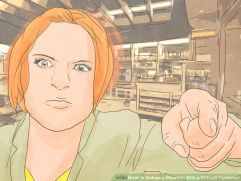
   Then a woman stood at my register for fifteen minutes accusing me of stealing her check. I tried to convince her I did not take it, and when she wouldn’t go away I had to call a coordinator. Next while cashing out a customer’s check, the check shot out of the machine and fell down into the register. The only way to get to the check would be to tear apart the register. Again I started worrying about getting in trouble.

aid582829-728px-Defuse-a-Situation-With-a-Difficult-Customer-Step-13-Version-2

   I talked to my husband about my worries. He listened to me and reassured me I would be fine. He even had me repeat several times, “I have nothing to worry about.” I did relaxation techniques and tried to keep my mind busy with my coloring and writing. I also listed positive things like I’m a good cashier, I’ve worked there twenty years and have not made any major mistakes, I’m lucky to have a job, I’m a good person, and I have done nothing wrong. These techniques helped and I did not get in trouble.

   I’m happy to report despite all that has happened, I have not had an anxiety attack since before my surgery. I have been able to ease my worries, I found out the causes of my worries and I am learning how to combat them. These are big steps to celebrate. I celebrated with a favorite snack and a dinner out with my husband.

   How far have you come with your commitment? Did you start going to therapy? Did you tell someone about your illness? Did you admit you have an illness? Each of these is a big step towards recovery. Now is the time to celebrate. Take a soothing bath, go to dinner, buy yourself something nice, or make yourself a special treat. Once you’re done celebrating, push on to the next steps. Keep to your commitment and you will reach the light.

rayos-de-sol

   I am determined to stick to my commitment. Times will get tough and I may slip, but I won’t give up. Since I’m willing to fight to take control of my worrying, I will continue to stand within the light.

LOSS OF CONFIDENCE

  Many of the symptoms of mental illness can be made worse by abuse. Some mental illness is also a result of abuse from peers or family members. Continuous put-downs can lead to loss of confidence in oneself. When you’re depressed, you feel bad about yourself and you feel hopeless. This also causes a person to lose his or her confidence. Feeling unsure of yourself and of the things you do can result from many things, but is often worse when you suffer from mental illness.

   Throughout my childhood, my teachers and my peers told me I would never amount to anything. Day after day I was put down. I lost my confidence in myself. I felt as if everything I did wasn’t good enough. I sat back and allowed the teachers to assign students to give me answers on tests. I gave up on trying to do my own work. I figured they were right about me: I was stupid. I had no belief in my own ability to succeed.

bullies-b3db70c7

   From sixth grade on my teachers stopped assigning students to give me answers on test. I had to learn to study and to do my own work. I felt helpless. How could I pass on my own? I thought I wasn’t smart enough, but deep down I knew I had no choice, but to try. I spent hours studying. I buried myself in my classwork. My mind went in circles. I can’t do this. I’m going to fail. I’m going to prove them all right, I am dumb. I pushed on and started getting high grades. Good grades weren’t enough. I still felt inferior. Even though I was proving them wrong, I didn’t believe I was worthy. I needed reassurance from my parents.

   Even as an adult I find it hard to believe in my abilities. I worry I’m not a good cashier and that I have failed as an author. I’ve started writing many manuscripts and gave up on them because I feared I didn’t have the ability to write a book. Every time I write a blog post and send it to my friend for editing I tell her I think I did a bad job. She always tells me how much she learned from my post and how well I write. I never have confidence in my ability to write something good. I even question each chapter of my memoir. I constantly need to hear people’s reassurance of my abilities and their praises.

Compliments

   How do I find self-confidence? This is a struggle for me. I work on it daily. I have to learn to love myself. Each day I point out something good about myself. I list the accomplishments I have made. I keep my customer compliments in my journal; when I lose belief in myself, I read through them. I remind myself, “I am a good writer and I can finish my memoir. I will get it published.” I keep writing my blog post and I tell myself if I weren’t a talented writer, I wouldn’t have as many followers.

   Finding your confidence is not easy. It can be a struggle, but it’s worth fighting for. Forget what others have told you in the past; ignore those self-put-downs and dig deep down inside yourself and find your self-worth. Learn to believe in yourself and your abilities. Put index cards with compliments about yourself around the house; write positive things about you and your accomplishments in a journal daily. Be proud of all your successes, even the small ones.

   I’m still building my self-confidence, but I have come a long way. This time I’m finishing my memoir manuscript and I’m determined to get it published. Since I am willing to build up my confidence, I still live within the light.