Blog posts

PROGRESS ON THE COMMITMENT

   Have you forgotten the commitment you made at the beginning of the year to work on your mental illness? Are you still working hard on it? Have you found it challenging?

   At times you have probably felt like giving up, but you couldn’t allow yourself to give in. You want to get better. You may have made small steps towards the light. Now is the time to take a look of how far you have come since you first made your commitment. Then celebrate your success no matter how small.

index

   I made the commitment to work on my excessive worrying. Since I made this commitment ,I’ve had a very big event happen in my life. I had surgery on a detached tendon in my ankle. I was off work for four weeks and laid up. During that time I made some discoveries about the root of my worrying. I learned that my job causes a lot of my anxiety and stress. My anxiety leads to worrying. I made plans on how to handle my anxiety, stress, and worrying, but plans are not good until you put them to work.

   I returned to work February 20 with light duty and instructions to sit. Sitting and bagging puts more stress on my neck and shoulders. I have to sit far enough back from the register so my drawer opens. So I have to reach for groceries causing soreness in my back. My neck jammed up while I was off, and seems to be worse while bagging and stretching. I started to worry about having more problems that will put me out of work.

166840017_XS

   I journaled about my feelings and worries. When my mind started on an endless worry binge, I told myself to stop. Everything will be okay. I’ve already been through the worst. These aches and pains are not that bad. I went to my doctor about my neck and am doing physical therapy for it. When I was home and I started to think too much, I pulled out my adult coloring book. This helped to ease my weary mind.

   Then a woman stood at my register for fifteen minutes accusing me of stealing her check. I tried to convince her I did not take it, and when she wouldn’t go away I had to call a coordinator. Next while cashing out a customer’s check, the check shot out of the machine and fell down into the register. The only way to get to the check would be to tear apart the register. Again I started worrying about getting in trouble.
aid582829-728px-Defuse-a-Situation-With-a-Difficult-Customer-Step-13-Version-2

   I talked to my husband about my worries. He listened to me and reassured me I would be fine. He even had me repeat several times, “I have nothing to worry about.” I did relaxation techniques and tried to keep my mind busy with my coloring and writing. I also listed positive things like I’m a good cashier, I’ve worked there twenty years and have not made any major mistakes, I’m lucky to have a job, I’m a good person, and I have done nothing wrong. These techniques helped and I did not get in trouble.

   I’m happy to report despite all that has happened, I have not had an anxiety attack since before my surgery. I have been able to ease my worries, I found out the causes of my worries and I am learning how to combat them. These are big steps to celebrate. I celebrated with a favorite snack and a dinner out with my husband.

   How far have you come with your commitment? Did you start going to therapy? Did you tell someone about your illness? Did you admit you have an illness? Each of these is a big step towards recovery. Now is the time to celebrate. Take a soothing bath, go to dinner, buy yourself something nice, or make yourself a special treat. Once you’re done celebrating, push on to the next steps. Keep to your commitment and you will reach the light.

rayos-de-sol

   I am determined to stick to my commitment. Times will get tough and I may slip, but I won’t give up. Since I’m willing to fight to take control of my worrying, I will continue to stand within the light.


LOSS OF CONFIDENCE

  Many of the symptoms of mental illness can be made worse by abuse. Some mental illness is also a result of abuse from peers or family members. Continuous put-downs can lead to loss of confidence in oneself. When you’re depressed, you feel bad about yourself and you feel hopeless. This also causes a person to lose his or her confidence. Feeling unsure of yourself and of the things you do can result from many things, but is often worse when you suffer from mental illness.

   Throughout my childhood, my teachers and my peers told me I would never amount to anything. Day after day I was put down. I lost my confidence in myself. I felt as if everything I did wasn’t good enough. I sat back and allowed the teachers to assign students to give me answers on tests. I gave up on trying to do my own work. I figured they were right about me: I was stupid. I had no belief in my own ability to succeed.

bullies-b3db70c7

   From sixth grade on my teachers stopped assigning students to give me answers on test. I had to learn to study and to do my own work. I felt helpless. How could I pass on my own? I thought I wasn’t smart enough, but deep down I knew I had no choice, but to try. I spent hours studying. I buried myself in my classwork. My mind went in circles. I can’t do this. I’m going to fail. I’m going to prove them all right, I am dumb. I pushed on and started getting high grades. Good grades weren’t enough. I still felt inferior. Even though I was proving them wrong, I didn’t believe I was worthy. I needed reassurance from my parents.

   Even as an adult I find it hard to believe in my abilities. I worry I’m not a good cashier and that I have failed as an author. I’ve started writing many manuscripts and gave up on them because I feared I didn’t have the ability to write a book. Every time I write a blog post and send it to my friend for editing I tell her I think I did a bad job. She always tells me how much she learned from my post and how well I write. I never have confidence in my ability to write something good. I even question each chapter of my memoir. I constantly need to hear people’s reassurance of my abilities and their praises.

Compliments

   How do I find self-confidence? This is a struggle for me. I work on it daily. I have to learn to love myself. Each day I point out something good about myself. I list the accomplishments I have made. I keep my customer compliments in my journal; when I lose belief in myself, I read through them. I remind myself, “I am a good writer and I can finish my memoir. I will get it published.” I keep writing my blog post and I tell myself if I weren’t a talented writer, I wouldn’t have as many followers.

   Finding your confidence is not easy. It can be a struggle, but it’s worth fighting for. Forget what others have told you in the past; ignore those self-put-downs and dig deep down inside yourself and find your self-worth. Learn to believe in yourself and your abilities. Put index cards with compliments about yourself around the house; write positive things about you and your accomplishments in a journal daily. Be proud of all your successes, even the small ones.

   I’m still building my self-confidence, but I have come a long way. This time I’m finishing my memoir manuscript and I’m determined to get it published. Since I am willing to build up my confidence, I still live within the light.

SEASONAL BLUES

   Seasonal Affective Disorder (SAD) is a type of depression brought on by the dark and dreary seasons of fall and winter. The lack of sun and long, cold winters affect everyone. Those of us who live in areas with rough winters struggle through them, but for people with SAD, the winters are almost unbearable. If you already have mental illness, the weather can make the dark hole seem endless. It’s more than just the winter blues. Unexpected sunny warm days during the winter can lift your spirits, but in some areas, days like this are very few. Some people even have SAD during the spring and summer months, but this is less common.

   Here are some symptoms of winter SAD I found online at Mayo Clinic (http://www.mayoclinic.org/diseases-conditions/seasonal-affective-disorder/basics/definition/CON-20021047):

  • Irritability

  • Tiredness and low energy

  • Problems getting along with others

  • Hypersensitivity to rejection

  • Heavy, “leaden” feeling in the arms or legs

  • Oversleeping

  • Appetite changes, especially a craving for foods high in carbohydrates

  • Weight gain

    get-ready-for-winter-2014

   I’ve never been diagnosed with SAD, but during my younger years I felt even more depressed during the winter. Soon as fall came around, I started dreading the sudden lack of sunlight and dip in temperature. My dark hole seemed to get deeper. I lacked energy and found myself feeling even more hopeless. I wanted to sleep all day and I easily lost my temper. The darker days seemed to mimic the darkness in my soul. I also seemed to eat more during the winter, which added on extra weight. Fall and winter deepened my sadness, making each day seem like a prison of darkness.

   Some people are only depressed during the fall and winter. A lady at work confided in me that every winter she would get depressed and didn’t know how to shake the depression. During warmer and brighter seasons her sadness would fade away. She felt helpless. She didn’t know how to deal with her seasonal depression. I found information on SAD and gave it to her.

   I told her that SAD can be treated with medication and therapy. There is also a therapy where you sit for some time under special lamps. For me I handle the winters with positive thinking, I try to keep busy with work and crafts, I remind myself that spring and summer will soon come, and I rejoice during those rare days when the sun shines and warm temperatures fill the air. I try to look for beauty in the dismal days, like how the snow lies across the tree branches.

121991-golden-sunny-day

   SAD is a serious illness. If you think you have this illness, get help. Don’t dismiss your feelings as just the common winter blues. Seasonal Affective Disorder can lead to suicidal thoughts, withdrawal from friends and family, inability to concentrate in school or work, and abuse of drugs or alcohol. These symptoms can be also found online at Mayo Clinic. With help you can learn to handle your Seasonal Affective Disorder and you can get through the darker seasons with some ease.

   I still hate the winter, but I have learned how to get through it without falling into the hole. I look forward to the uncommon days like last Friday when the temperature hit 75 degrees in February. I keep myself busy in the winter with my writing, crafts, and work. I look for the beauty in all things and remind myself brighter days will come. This helps me soak within the light.

PREPARING FOR STRESS

  We all deal with stress differently. Some people handle it well and some don’t. Some symptoms of stress on Web MD are anxiety, agitation, feelings of losing control, low self-esteem, and so on. Knowing what causes your stress and how you react to it can help you prepare when you know you are going to face a situation that will stir up your stress. In this case, it’s important to create a plan for how you will deal with it.

( http://www.webmd.com/balance/stress-management/stress-symptoms-effects_of-stress-on-the-body#2)

   I go back to work next week and I know my job brings on stress and anxiety. These few days before I go back are crucial. I need to come up with a plan to deal with the long lines, grumpy customers, and the aches and pains that go with the job of a cashier. I also have to make sure I take care of my ankle so I won’t have any relapses. A lot rests on my shoulders. Like you read in a previous blog post, I discovered my job is the main source of my anxiety. I have to be ready to handle that, too.

cashier-11024696

   There are many techniques to handle stress. I just have to find the ones that work for me and will help prevent anxiety attacks. Before surgery I dragged myself to work each day worrying about doing my job well, about keeping the line going, and dealing with aches and pains. There are many things to worry about like doing a WIC check right. One mistake could result in a five day suspension without pay. It’s important to make sure you give the right change back or to not forget to give change back. Then there is lifting heavy items like dog food and pop and standing on concrete floors for hours. Even with a mat, it’s difficult.

   The question is, how am I going to handle all this when I return to work? For a while I will be sitting while cashing and bagging. This will put a lot of extra weight on my shoulders, arms, and upper back. So it’s important for me to ice these areas after work and do stretches while I’m at work and home. I must also make sure I ice my ankle after work. I also must prepare myself mentally before work, during, and after. I have to use positive thinking and fight the worries with relaxing techniques. After work I will journal, color in my adult coloring book, and work on my memoir to keep my mind busy.

   I found some techniques on Web MD you can use to deal with stress. Some of them are:

  • exercise

  • deep breathing

  • meditate

  • do yoga

  • pray

  • making time for hobbies

  • talking about your problems

  • positive thinking

  • journal.

    100901667

   Find a method that works the best for you. Talk to your therapist about other ways to deal with the stresses in your life. Discuss with your therapist what things in your life cause your stress and develop a plan to handle it.

   While I’m writing this blog post, I am preparing for my return to work. Each time I start worrying about work, I tell myself to stop and try to think of something more positive. I iced my ankle and I went to the chiropractor to make sure my back and shoulders are ready for the extra work. I’ve been coloring in my adult coloring book and expressing my feelings in my journal. I’m also going to enjoy the couple of days I have left of freedom. By the time you read this, I will be back to work and well prepared to handle anxiety. This will keep the light shining down on me.

PHYSICAL HEALTH HELPS MENTAL HEALTH

   Mental illness can lead to physical problems such as tense muscles and a weak immune system. However, sometimes physical problems arise that have nothing to do with our mental health. Keeping your body healthy and dealing with physical ailments can boost your mental wellbeing. It’s not only important to feel good mentally, but also physically. Just suffering with your ailments only makes you feel miserable inside and out. The most important rule to recovery is, “Take care of yourself first.” That means inside and out. Jobs, college, and so on are not more important than you.

   A friend of mine has many aches and pains. I have referred her to a couple of my doctors, but she refuses to call them. She comes up with excuses. She can’t afford another bill, she doesn’t like doctors, she can’t find the time, and so on. So she goes to work each day toughing out the pain and feeling wiped out physically and mentally. I tell her to put all her worries aside and take care of herself. She should be number one and her health is more important than the bills and finding the time.

doctor

   I used to be like my friend. I used to drag myself to work sick. I even passed out a few times at work. I thought going to work was more important than my health. The more awful I felt physically, the worse I felt mentally. I felt sick inside and out. When I was physically ill my mind seemed to dip deeper into depression. I became obsessed with having perfect attendance. My mind raced and the darkness took over. I was afraid I’d lose my job if I called off, I feared other employees would think I was faking, I thought I wasn’t a good enough employee if I didn’t go in, and my mind went on and on. My illnesses only got worse.

   When I married my husband, he refused to allow me to go to work sick. He made me call off. He told me, “You are more important than your job. I can’t replace you.” I soon realized he was right. Taking time off to take care of myself began to help me feel better within and get over my illnesses faster.

20170205_193543_hdr

   This even goes for aches and pains like when my ankle was hurting. I worried about my pain, I felt sad because something was wrong, and I started to think the worst. Lou insisted I go to my foot doctor and I’m glad I did. If I didn’t get my ankle taken care of when I did, I would have been in even more pain and out of work longer with no income. Lack of income, intense pain, and six months off would have only dumped me deep into depression. Taking care of it when I did has been a challenge emotionally, but yet a relief. Recovery has been hard, but I have found plenty of time to relax and have had no anxiety attacks.

   When you’re working towards recovery, put yourself first. Take care of your emotional and physical needs. You’ll find that your physical needs are connected to your mental health. The better you feel on the outside, the better you’ll feel on the inside. When we are feeling the most vulnerable is when the mind attacks. When you’re physically ill or hurting is when you’re vulnerable. Make yourself number one.

   I now take care of myself first and I worry about my job second. Because I take care of myself inside and out, I shine within the light.

THE SOURCE OF MY ANXIETY


   We all have had anxiety at a point in our lives like when we have to give a speech or talk our bosses about a situation. Anxiety becomes a problem when it begins to overtake your life and makes you sick or have panic attacks. It’s when your fears become so overpowering that your body begins to react with an attack that makes you ill. The question you must ask yourself is, “What causes my anxiety?” What is the source of my internal fears and worries?

   Anxiety comes from your fears and worries being magnified. They are relentless. They can come from your job, stresses in your personal life, finances, illnesses, and so on. These are the things that bring on dizziness, sweats, uneasiness, nausea, panic attacks, shortness of breath, and so on.

   During my time off after surgery, I realized I have not had any anxiety attacks. I started looking at my daily rituals before my surgery to see if I could point out what could be the source of my anxiety. On a normal day, I work usually a six hour shift on my feet as a cashier. Half way through my shift, my feet, back, and shoulders start hurting. After work, we decide what to do for supper, and I do the checkbook and rest.

   During my time off, I slept in, I watched lots of TV, I colored in adult coloring books, and I worked on my writing. The pain from my surgery was managed by medication. Church ladies brought me lunch while Lou worked. I still had to keep track of the checkbook, but I didn’t have to go to work and deal with the stresses of life. Friends and family brought us food so I didn’t have to worry about dinner.

20170131_001733_hdr-1

   These past two weeks I have done nothing but relax. I haven’t worried about endless lines of customers, aches and pains, and not making mistakes at work. I did the checkbook, but with people bringing us food, we seemed to save money.

   I realized work and finances cause a lot of my anxiety. When I work, I worry obsessively about doing my job right, whether or not I will be able to make it through with the aches and pains, and if I’ll be able to walk out of the store at the end of my shift. Then I’m usually too tired to cook and it becomes too easy to eat out. I begin to worry about my hours and if I’ll make enough to pay bills. Will we go broke? Will we make enough money to get through the week?

   Now that I know the source of my anxiety, how do I handle it when I go back to work? Time off from work has given me a chance to think out a strategy. I’m going to try to list the positive things about my job. I’m going to focus on doing my job to the best of my ability and not think about the aches and pains. I will remind myself not to worry about the bills and other finances. We will be fine. When I start to worry about money, I will take time to sit and relax. I will do things that distract me like coloring and writing.

20170203_121543_hdr

   Figure out what the source of your anxiety is and create a plan to deal with those fears and worries. Talk to your therapist about it and use relaxation techniques. Fighting your anxiety is not easy and will take time, but don’t give up.

   I will continue to find ways to ease my anxiety and learn to control it. Because I am willing to fight my fears, I will continue to bathe in the light.

FINDING POSITIVITY IN A BAD SITUATION


   Life can throw boulders onto our path of recovery. Things happen that are out of our control. Illness strikes, injuries happen, and physical ailments arise. Suddenly our lives change. Sometimes we become unable to do our everyday rituals. We find ourselves dependent on others to dress, to get around, to get a glass of water, and so on. It’s very hard not to fall down the dark hole of depression when this happens. Finding the positive in your situation can be a struggle on the road to recovery from mental illness or even in recovery.

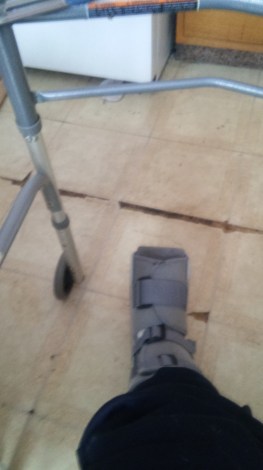
   On Thursday the nineteenth I had surgery on my ankle. A tendon had become detached and entangled with dead muscle. My podiatrist had to go in and repair the tendon and clean out the dead muscle. The surgery went well, but I was sent home with a walker and told not to put any weight on that foot. I didn’t realize how difficult this would be until I got home. I live in a home full of stairs. To go to the bathroom I would either have to go upstairs or downstairs to the basement. Just getting around on the first floor with a walker is a struggle.

20161130_122915.jpg

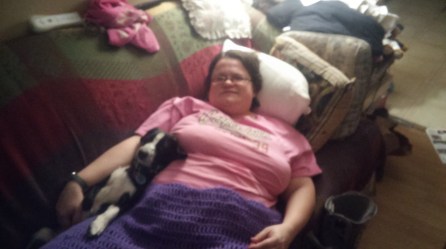
   I found myself confined to my living room couch with my ankle propped up and the television on. My husband has become my care giver. He has to get me whatever I need, help me up the stairs, and get my meals. I feel helpless. I used to be able to go up and down the stairs with ease and I’m used to being able to make meals for us. I started to feel hopeless while I lay on the couch. What good could I find in this situation? How could I stay in the light when I felt like a helpless wreck? It would be so easy to slip into depression, but I couldn’t let myself do that.

   I decided to make a list of good things about my situation, such as I have four weeks off of work, friends and my husband got me plants and flowers, I got many get well cards, I get to be waited on, and I have plenty of time to write. Each time I start to feel down, I try to think of something positive or I call and text friends and family. I’ve come too far to slip backwards. I can’t let this situation drag me down. I’m too strong to allow the darkness to seep in. So each day on the couch I try to keep busy writing, coloring in my adult coloring book, journaling, and turning to my family and friends for support.

20170130_141249_hdr

   Life’s unexpected events always fall in our path to recovery or in the middle of our recovery, but it’s how you handle them that counts. Do you let them defeat you or do you use them to push you forward? Can you push past the dark and reach into the light? Can you stand up to your illness and say, “I’m in control: you will not defeat me”? It’s up to you how you handle the unexpected situations in your life. Use your inner strength to rise above them. Look past the darkness and fight to find the positive within.

   I know I have a long road to recovery from my surgery ahead of me, but I refuse to allow the darkness to overcome me. I am willing to not only do what it takes to get my ankle better, but to keep myself standing in the light. Because of my determination, I will continue to soak in the light.

This week there is not a blog post because I had surgery on Thursday and am recovering. I had a tear in a ligament in my ankle repaired. I’ll be off work for  4 weeks. In that time I will have plenty of time to come up with post and to write about the challenges of recovering from surgery and dealing with mental illness.

PROGRESS REPORT


   Did you make your commitment for the New Year? Did you start taking your first steps? Don’t expect major progress right away. This is a huge battle you are engaging in. It’s not going to be easy, and right now you need to celebrate even the smallest accomplishment, like making your first appointment with your therapist or psychiatrist. Take note of your progress each day or week.

   This week has been a trial for me. I have been trying so hard to fight my worries about my surgery. It seemed like the doctor’s office was taking forever to schedule my surgery. I was getting worried. How could I plan up and coming birthdays? Would I have enough time to tell work? How long would I have to suffer? Would they schedule my surgery around my husband’s birthday and I’d be too miserable to celebrate? The worries went on and on.

   Monday I called the doctor’s office and they told me they were backed up and they would get to it when they could. My worries became endless. I tried to think of something else, but couldn’t. I tried to journal about it, but my emotions began to flood me. I went to work and a coworker asked about my surgery and I started crying. I thought I had failed at accomplishing my commitment. My husband reminded me that one slip does not mean I messed up. It just means I have to fight harder. I had to step back and look at what went wrong and find a better way to combat the worries.

   I picked up an adult coloring book for when I’m off for surgery. After my breakdown, once I got home, I started coloring in my book. I found that it kept my mind busy and helped me relax. That night I began to feel better and I got a call that my surgery was scheduled for January 19th. I celebrated the fact that I found a new way to help deal with my worries by treating myself to a sweet snack.

   A surgery date brought on new worries, like what if something goes wrong with the surgery? What if the recovery takes longer? What if they go in and find more wrong? What will I do while Lou’s at work? What if I get an infection?

  I faced the worries step by step, day by day. I decided to focus on preparing for my surgery and looking forward to having four weeks off from work.

   Wednesday came along. I did the blood work required by my doctor; I went to physical therapy and later relaxed at home with my husband. That night my husband looked at me and said, “I’m proud of you. All day you did not worry about anything.” I thought about it and agreed. He asked me how it felt and I said, “It feels really good.” The next day we went out to supper to celebrate.

   Fighting mental illness will not happen overnight. You will make small accomplishments and you will fall down. The recovery process can be slow and rough, but don’t give up. At first you might not even notice a change, but in time you will make some progress. Celebrate every accomplishment you make, even if it’s little. Don’t give up when you slip. Just keep fighting. Stick to your commitment. Don’t give up because you’re worth the fight.

   I’m willing to keep fighting to fulfill my commitment. It will take a lot of work, but I’m ready and willing to fight. My determination will help me stand within the light.

SKIP THE RESOLUTION; MAKE A COMMITMENT


   How many people make resolutions the for New Year and actually keep them? Not many. I stopped making resolutions because I can never stick to them. When it comes to recovering from mental illness, it’s best to skip the resolution and instead make a commitment. If we commit our souls, our determination, and our very being towards reaching recovery, then we are more likely going to keep to it. You need to make a vow to yourself that you will do whatever it takes to stand above the dark hole. If you’re in recovery, commit yourself to working on an area of your illness you still struggle with.

   This New Year I decided to commit myself to work on my worrying. Even though I’m in recovery, I still have mental illness and I still struggle with some aspects of my illness. Worrying is my biggest problem. I worry about everything and usually I have no reason to. Everything always turns out for the best, even though I worry it won’t. In 2017, I’m going to commit myself to fighting those worries, but this doesn’t happen overnight. It’s a step by step process.

   The first worry I’m going to concentrate on controlling is my worry about my ankle surgery. The first step I’m going to take is each time I start thinking about it, I am going to tell myself to stop and try to concentrate on something else. For the second step, I’m going to write down my worry and how it helps me or how it hurts me. Third, I am going to pray to the Lord and ask him to take my worry into his hands. Fourth, I’m going to turn to friends and family to help point out when I’m worrying too much and to remind me to stop.

   The process of fighting my worrying will not be easy, but if I’m committed to it, then I will put all of my willpower and determination into fighting it. I’m not just going to decide to defeat this; I’m going to strive to. Each day I’m going to follow the steps to stop my endless worries until I can learn to control them better.

   Like fighting my worries, fighting mental illness has to be taken step by step. First, you must accept you are ill. Second, you must decide you want to get better. Third, you must seek help. Fourth, you must fight. In order to make a commitment to get better, you must have already taken the first step. You can’t pledge to reach the light until you have accepted that you have an illness. Once you decide to get better, then make the commitment.

   So in 2017, change your New Year’s resolution to reach recovery into a commitment, and make it the most important fight you ever fought. Do it for yourself, do it for a chance to find happiness, and do it for a chance to live in the light. Don’t allow yourself to back away or become discouraged from your commitment. Stick to it through the rough times, through the slips backwards, and through life’s challenges. Focus on getting better and fight for it with all the strength you have within you. It’s a big step, but you can do it.

   This year I will fight my worries, and in time I will take control of them. It is my commitment to take control of my thoughts and ease my fears. Because I decided to pledge all of me into this fight, I will continue to remain within the light.