Blog posts

A LITTLE EXTRA HELP

  Don’t be afraid to admit you need help with not just your mental health, but also with everyday tasks. It’s a hard job to fight an illness of the mind. It takes a lot out of you mentally and physically. It becomes hard to take care of your physical needs as well as your daily tasks, such as cleaning your home, filling prescriptions, making meals, going to work on time and so on. It’s hard to admit you need extra help. We all want to be independent and we hate to admit we can’t do it all on our own, but there is no shame in needing help.

images (1)

   Before I met my husband, I tried to move out of home a few times. First time I moved in with a friend and her husband. I was responsible for myself. It started out we were going to share the grocery bill and food, but my friend started labeling her food and telling me I had to buy my own groceries. My friend started complaining I wasn’t doing enough to help out around the apartment. The truth is I found it hard to keep up with cleaning and managing daily tasks. I had a hard time remembering to take medications and even what side to park my car on. I also made bad choices.

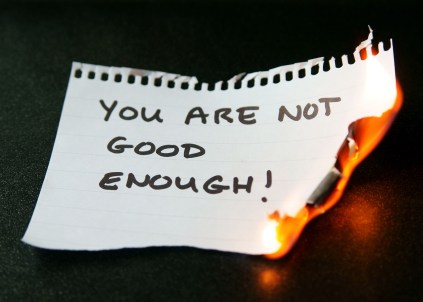
   To my friend and her husband, I was lazy and useless. I even overheard her telling someone I couldn’t cook or do anything right. It wasn’t that I couldn’t do those things, but I found it a struggle to take care of things while dealing with my mental wellbeing. It was during my first recovery. Even though I was emotionally stronger, I still had to take care of my illness. Recovery did not mean I was healed. My friend started putting mean notes up, accusing me of not doing things right and treating me bad. I fell apart and had to move home.


223490897_1

   The second time I left home I moved in with a girl whose parent lived below us. She did her own thing and I did my own thing. I’d forget to eat meals, I’d forget to take medication, I would miss appointments, I would mess up my work schedule and so on. I also did not take good care of myself physically. When I started slipping into my sickness, I began to struggle even more with daily tasks. I met a guy and, in time, I moved out and in with him. Things got worse.

   The guy turned out to be abusive and I slipped deeper into my illness. I called off from work a lot and I couldn’t take care of his home and myself. Once again I moved back home. I told my parents I was only going to stay with them until I could get my own place, but my parents thought it would be best if I didn’t move out. We discussed that I needed extra help.

depression-620_620x350_81478086841

   I stayed home with my parents while I worked on my illness. My parents helped me with the daily tasks I struggled with. They made sure I took care of my physical needs, also. They provided emotional support. They kept me from spending too much time alone dwelling on my sadness. They helped me with daily chores.

   I lived at home until I met my husband, Lou. He gives me lots of extra attention and he makes sure I take my medications and I get them filled on time. He texts me each morning so that I don’t over sleep and I make it to work. He remembers my work schedule better than I do. He refuses to allow me to go to work sick and makes sure I get to all my appointments. He also goes to all my appointments with me. He keeps my psychiatrist informed on how I’m doing.

20160422_193600_HDR

   I do things on my own and I also take care of my husband, but he gives me extra help. I’m not useless or helpless. I just need some assistance with a few things. I get forgetful.

   Mental illness is an internal battle and a constant battle. Even in recovery, I have to fight to stay well. It takes focus and concentration to keep well. I have to continue to practice my coping methods. Sometimes my mind wanders into negativity and when that happens I concentrate on how to turn my thoughts around. My mind is always busy. It’s hard to admit I need help with everyday things, but I’m not ashamed of it. My husband loves to give me the extra help I need and I love him for it.

Fotosearch_k6822570

   In a way I’m independent and in some ways I’m dependent on my husband. I may not ever be able to live on my own without someone to help me, but I’m not ashamed. It’s okay to ask for extra help with not only your illness, but with everyday things. Since I’m willing to ask for and accept help, I stand tall within the light.

A MOTHER’S HEARTBREAK

  Mental illness is not only hard on the person suffering with it, but it also affects the family. Parents, husbands, siblings, and so on are drawn into the saddened world of the person with mental illness. If the person refuses to admit his or her illness and get help, the people around him or her also suffer. Sometimes the person blames the people he or she love for his or her illness and he or she punishes them. I interviewed a friend who’s struggling with a daughter who won’t accept she has a mental illness.

Saving_BudgetingTipsforLowIncomeFamilies_0

   Aimee: How do you believe an untreated mental illness can affect a person?

   My Friend: I think that a mental illness that has gone on too long without some sort of treatment will only make the illness worse and prolong that person’s inability to realize that he or she is sick.

   Aimee: How do you feel your daughter’s illness has affected you?

   My Friend: It has made me very depressed, not knowing from day to day if I should walk on eggshells. I never know how she feels from one day to another.

   Aimee: How have you helped your daughter with her mental illness?

   My Friend: I have been through hell and back with my daughter. I’ve been with her in and out of serenity, through a hospital four times, from her trying to kill herself or just wanting attention. I have always been there for her whether she wants to believe it or not.

   Aimee: What have you done to help your daughter?

   My Friend: I have put her in many, many therapy sessions. She just gets angry and leaves because she thinks there is nothing wrong with her.

Why-Helping-Others-is-Good-for-Your-Health

   Aimee: How would you like your daughter to treat you?

   My friend: I don’t know. I guess with respect and showing some sort of love would be a great start.

   Aimee: Do you ever feel to blame for her illness?

   My Friend: In a way, because of some problems of my own. I have my husband to keep me strong and remind me I’m not to blame. I have always been there no matter what. Nobody grows up in a perfect world.

   Aimee: What advice would you give to parents dealing with a child who won’t get help for his or her illness?

   My Friend: Take care of yourself; if you don’t, you will end up with so much pain in your life. I did my best by getting her help many times, but it didn’t help because she didn’t want it.

   When your child becomes an adult, there isn’t much you can do for her. Especially if she won’t listen and thinks she is just fine.

   Aimee: What do you do to keep your daughter’s illness from dragging you down?

   My Friend: I have to move on and do what makes me happy, which is my husband, and focus on our relationship instead of her. Her mental illness has dragged me down for far too many years already.

image15

  As you can see my friend’s daughter’s mental illness has caused her great pain. She has suffered right along with her daughter and has been the victim of her daughter’s uncontrolled illness. If your parent is willing to help you, then turn to him or her with love and respect, and take his or her help. If you are unwilling to accept your illness, then no one can help you and no one is to blame but you. Recovery starts with acceptance and that starts with you. Don’t lash out at those you love. Turn to them for love and support. Let them help you find recovery.

   My mom has always been very supportive of me. There were times I took my inner pain out on my mother and treated her badly when I shouldn’t have. I deeply regret those moments. My mom suffered with me and went out of her way to find me help. Unfortunately, my friend’s daughter refuses her help. If only she could see my friend’s willingness to support and help her, she, too, could find the road to recovery.

d165bffb5be4a7a183975615f2301c27

I am very grateful for my mom and her support. Because I accepted my illness and turned to my mom for help, I owe her a lot of gratitude for helping me reach recovery.

So if you to have a caring mom like my friend is to her daughter, turn to her and embrace her. Give her respect and accept her help. Despite the struggles with her daughter, my friend finds strength within the light.

ENDLESS ROAD OF BAD LUCK

  When you’re depressed, your life seems to be on an endless road of bad luck. A depressed person thinks, “Anything bad that is going to happen is going to happen to me and it does.” The world is dark and hopeless. Nothing seems to work out and everything seems to go wrong. It seems, to the depressed person, like the bad luck follows him or her around. It’s like on the commercial where a dark cloud follows a person around.

bad_luck_road_sign

   This year, so far, has challenged my recovery. When I was depressed, the beginning of years like this one would have torn me apart. Before my recovery, my cousin died, my best friend abused me, an ex-boyfriend abused me, and friends betrayed me. I cried myself to sleep every night. I was doomed to live a world full of bad, hopeless luck. There was no way to avoid it. It was my curse and God’s punishment for me.

   Back then I injured, attempted suicide, and cried a lot. Every time something bad happened I fell into despair, and, no matter how hard I tried, I couldn’t pull myself up. I couldn’t even imagine how to lift myself up. I believed everything bad happening to me was a punishment from God. I didn’t know what I did wrong, but I was sure I was being punished. I turned away from God. I stop going to church and questioned God’s existence.

how-do-we-know-there-is-a-god2

   I have had every reason to feel the same with all that has happened this year, but I don’t. I’m stronger and I know differently. I started out my year with a major ankle surgery that left me laid up for a while. Using a walker jammed up my neck. making it very painful to move my neck, and then I got a bad cold. I thought that was enough, but my bad luck was just getting started.

   About three months after my surgery I ended up in the Emergency Room with serve side pains. They sent me home saying it was just a muscle strain. Then I woke up at four the next morning in unbearable pain and my husband took me back to the Emergency Room. They found out it was gastrointestinal and I needed a scope.

er-crash-cart2

   The next month I woke up with serve stomach pains, and once again I was back in the ER. This time I was diagnosed with a urinary tract infection. This Wednesday I had a scope of my esophagus and stomach to find I have an infection in the lining of my stomach.

   Bad luck has been following me since the beginning of the year. I had a choice to let it drag me back down into depression or I could pick myself up and rise above it. I asked Lou if God was punishing me. He said, “No, He has no reason to.” I’m not the best Christian. I haven’t been to church in a while and I don’t read the Bible, but that doesn’t mean I don’t worship God. I pray nightly, I go to Bible study, and I believe in God.

   In the ER while in major pain, I called to the Lord for relief. Lou told me, “God understands. He’s not punishing you.” Lou was right; he’s not. Life happens, bad things happen and we often have no control over them. So instead of dwelling on them I started listing the positive things in my life. I have Lou, I got a four week vacation after surgery, I still have four days to go on a trip with my husband, I have good friends and family, everything wrong with me is treatable, and I still have the rest of the year for good things to come my way.

960

   I did allow myself to have a day or two in between incidents to have a pity party. I had to allow myself to cry and feel bad for me, but then I forced myself to pick up the pieces and push forward. I couldn’t let my string of bad luck push me into the hole. I stood up to my illness and said, “I am in control; you are not.” Then I made jokes about my luck. Laughing about it made it smaller and less overbearing. Because I can do this, I stand bravely within the light.

DOES PARENTAL ABUSE CAUSE MENTAL ILLNESS?

  Do you have to have been abused by your parents to suffer from mental illness? Mental illness is a sickness that does not choose its victims from a category. Anyone can suffer from this illness. You can have loving parents, grow up happily and have a healthy lifestyle, and still get sick. Mental illness does not discriminate; it just strikes whomever and whenever it wants to.

parent-clipart-8

   Although abuse can be a contributing factor to mental illness it is not the only cause. Research suggests that there are multiple, linking causes to mental illness. Some of those can be genetics, environment, and lifestyle influence. Biochemical processes and circuits and basic brain structure may play a role, too. – See more at: https://www.nami.org/Learn-More/Mental-Health-Conditions#sthash.YLGc9sBv.dpuf. In other words, mental illness can be inherited, can be brought on by abuse or trauma, or it could be a chemical imbalance in your brain or other factors within your life like divorce, loss of job, and so on.

   I had very loving parents. My mom stayed home and took care of us kids while my dad worked long hours at the family garage. They both gave my siblings and me plenty of love and never hurt us in any way. My mom is like a best friend to me, yet I have mental illness, and so does my sister. My grandmother on my mom’s side had mental illness, and I was abused by my classmates and teachers. These factors, along with a chemical imbalance in my brain, are believed to be the causes of my illness. My sister has never been properly diagnosed.

20170508_224421_HDR

   My parents supported me throughout school, they believed in me and showed me their love daily. I’m not saying my parents were perfect and there were never any problems, but there was no form of abuse. While my parents told me I could do anything I wanted, my classmates told me I was a useless loser who would never amount to anything. Having a chemical imbalance in my brain and genes passed on through the family, along with the abuse made me susceptible to mental illness.

   Some people are abused and never suffer from mental illness. They had the strength within them to overcome the damage and live a strong healthy life. Other people have healthy lives and find themselves falling down the dark hole. Why is that? Researches have many theories as to why one person has mental illness and another doesn’t. I believe that mental illness is a problem in the brain and the factors of life increase the severity of the illness. The abuse I faced contributed to my illness and made me too weak to fight back, but was not the sole cause of my sickness.

brain-image

   Everyone faces trials and tribulations, but not everyone has mental illness. Mental illness is a sickness of the mind. Even people with normal lives can become sick. The best researchers can’t explain why one person suffers and another one doesn’t. Just like we cannot explain why a person gets cancer and another one doesn’t.

Why-Helping-Others-is-Good-for-Your-Health

   I believe the reason I struggle with my mental illness is to use it to reach out to others and teach others. What caused my illness isn’t important, but the fact I took control of it and am using it to teach and help others means a lot more. I still have a strong relationship with my parents and I credit part of my recovery process to my mom’s determination to help me. This helps me shine in the light.

THE STIGMA OF MENTAL ILLNESS

  A stigma lingers around mental illness. Many with mental illness hide or avoid getting help because they fear what others will think of them. Many view those inflicted with the illness of the mind as violent, crazy, useless, and so on. Movies and even the news distort peoples’ perspective. Whenever someone kills people or goes on a violent rampage, the news highlights how the person was suffering with mental illness. They don’t say that most people with the illness are only a danger to themselves.

Daily-News-headline-newspapers

     In a Newsweek article called, “Nearly 1 in 5 Americans Suffers From Mental Illness Each Year” Victoria Bekiempis writes, “Every year, about 42.5 million American adults (or 18.2 percent of the total adult population in the United States) suffers from some mental illness.” You can find this article at http://www.newsweek.com/nearly-1-5-americans-suffer-mental-illness-each-year-230608. That means anyone could suffer from mental illness. Look around you. Your cashier, your teacher, your bus driver, your manager, and even your boss could have some form of mental illness. People with this illness work and live all around you and you may never know it.

   Since I started writing this blog, co-workers, and people around me have confided in me about their struggles. I have been a cashier for 22 years and most of my customers do not know I have mental illness. Until I had a major breakdown, years ago, many of my co-workers had no idea. Fellow employees came to me and said, “You always seemed so happy. I had no clue.” I had only told a few close friends because I didn’t want to be judged, but once it came out, I faced prejudice. I was asked if I was safe around knives; some feared I might be a danger to my co-workers and customers.

Things_Your_Wedding_Planner_Wont_Tell_Secrets

   Recently a criminal came into our city. The man posted on Facebook himself killing an elderly man. A customer said to me, “We don’t need crazy, mentally ill people in our city.” I told her most people who are mentally ill are not dangerous. Another customer said, “We can’t use mental illness as a excuse for killing people.” I wanted to tell the woman she was being waited on by someone who has the illness and I could never hurt a soul.

   Lead researcher Jillian Peterson, PhD in the online article, “Mental Illness Usually Not Link To Crime, Research Finds,” is quoted, “The vast majority of people with mental illness are not violent, not criminal and not dangerous.” This can be found at American Psychological Association, http://www.apa.org/news/press/releases/2014/04/mental-illness-crime.aspx.

nodanger

   Once people are told over and over again that a mentally ill person committed a violent crime, it becomes engraved in the public’s mind that people with mental illness are dangerous. What the public needs to know is that most who are sick couldn’t hurt anyone, but themselves.

   Is it important to know that the person who killed four people had mental illness? Isn’t it just as important to tell the public the facts? Shouldn’t readers and viewers be told that this is not common with people with this type of illness? I lost many friends because they were afraid I might hurt them, yet I have never hurt anyone.

   Let’s fight this stigma by educating the public with the facts about mental illness. It’s up to us to show the world that a sickness of the mind is an illness like any other and we can live normal lives. It’s up to us to show the world that we are human beings who deserve to be treated just like anyone else. Most of us are not violent. We are not crazy; we are not useless burdens on society, but humans suffering with a real illness.

facebookkk

   I write this blog to educate others and to help those suffering to reach the light. This is my calling from above and it helps me stand within the light.

A CELEBRATION

   Let’s celebrate. Let’s celebrate each step you make in your recovery process, each hurdle you have faced and each year you go without injuring. You must reward yourself for fighting one of the worst battles of your life. It is you that stood up to your illness and said, “I will no longer hurt myself;” it’s you who took the steps towards the light and you who made the ultimate decision of your life. So be proud of yourself and commemorate each year you face life’s challenges without hurting yourself.

2014-05-29-iStockHuffPostCelebrationMay2920142

   It may sound strange to some, but it was very special to me. My husband and I decided to marry on my fifth year of going without self-injuring. Marrying my husband on that day made my recovery even more special: I married my best friend on anniversary of the day, five years earlier, when I took my life back. This year Lou and I celebrated ten years of marriage and I celebrated fifteen years being self-injury free.

20170424_224026_HDR

   At one time I couldn’t imagine going one day without harming myself. I thought self-injury was the only way I could find relief from my inner pain. I couldn’t handle anything in my life without one cut. I couldn’t even handle every day challenges. Now I handle them with strength, support, and healthy coping techniques. When the pain gets overwhelming, I turn to my husband, I journal, I talk to my friends, and I say no to injuring myself.

   I’m very proud of my accomplishment. It took a lot of determination and courage to make it fifteen years without injuring. I had to take a vow to never allow myself to harm my body again. A friend challenged me to go one week without injuring and then two weeks. She made a deal with me: If I could go a month without injuring we would have a dinner with my friends. I made it to that month, and then I devoted myself to making it a year. Each year I rejoiced with friends and fifteen years later I rejoice with my best friend ever, my husband.

Fast Food Friends

   When I met Lou I was going through spells of depression. Lou helped bring me out of depression. He showed me how to love myself. He gives me all the attention and support I need. I couldn’t ask for a better person to share my celebration with. I couldn’t have picked a better day to marry, because not only do I honor my love for my husband, but I salute the day I decided not to let my illness control my impulses. The day I decided I was going to reach for recovery.

   I applauded my fifteen years and our anniversary with a day trip and a dinner out. I couldn’t have asked for a better day. My husband got me flowers and told me how proud of me he is.

20170424_224338_HDR

   If you have decided to stop harming yourself, then set a goal and cheer each time you reach that goal. Share your goal with friends and family. They can be a big help in reaching your goal. Their encouragement and support is very important. You don’t have to have a party or a fancy dinner. Celebrate by doing something that makes you happy, and something that you enjoy.

   I’m very proud of my accomplishment and each year I will continue to celebrate. This is what helps me bathe within the light.

ANOTHER PERSPECTIVE ON CHRONIC ILLNESS AND DEPRESSION

  When you’re suffering with an illness it’s good to hear from others how they deal with their illnesses. Sometimes people have different coping methods. Each person needs to find what works best for him or her. With this in mind, I decided to interview my friend Kelly, who like Cheryl, has fibromyalgia and other chronic illnesses.

20170414_220037

   Aimee: Does your chronic illness cause depression?

   Kelly: Yes. I have lived with pain every day for the past eight years. I also have debilitating fatigue, migraines, and stomach issues much of the time. It’s very depressing.

   Aimee: How does it make you feel emotionally?

   Kelly: I experience a variety of feelings related to the chronic illness. I grieve for the me I used to be. I’m super sad about the many things I am no longer able to do. Sometimes I’m angry that my illness has stolen so much from me. I get scared thinking about the future, with potentially 30 plus years more of misery. I occasionally feel worthless because I’m unable to work.

   Aimee: How does depression affect your life?

   Kelly: Depression makes everything worse. It saps the little bit of energy my illness hasn’t taken. It depletes my motivation, so I sit around a lot. Too much inactivity makes the physical pain worse, which worsens the depression. When I’m depressed, I don’t take good care of myself and good self-care is essential in managing my symptoms.

depression

   Depression also affects my relationships, because sometimes I just want to crawl inside myself and not talk to anyone. If I isolate myself very long, though, I get even more depressed. These vicious cycles can be hard to break.

   Aimee: How do you cope with depression?

   Kelly: I’m thankful to say I’ve learned a lot of coping strategies. I’ve seen a therapist. I take medicine as prescribed. I make a point of spending time with positive, supportive people. Walking outdoors makes me feel better physically and emotionally. I keep a journal to help me work through my feelings. Meditating on scripture and praying calm me and center me. Eating nutritious food and getting enough sleep are important keys to my well-being.

   Aimee: What steps have you taken to fight negative feelings and reach the light from your sadness?

   Kelly: There are two big ones:

   First, I try hard not to lose the light in the first place. I do this by paying close attention to my thoughts. As soon as I catch myself thinking things like, “I’ll never get any better,” or, “I can’t stand 30 more years of this,” or “I’m useless,” I tell myself to stop it. Then I replace the negative thoughts with life giving messages like, “Maybe they’ll find a cure,” and “Right now I only have to get through this one day and I do that.”

   The most important way I reach the light is through my relationship with Jesus. He experienced pain and suffering, so I know he understands how I feel. He is always with me providing strength and comfort. He reminds me that my worth and value come from who I am, not how hard I work. Because of Him I can be joyful despite the difficulties and hopeful that the future will be brighter.

religious-014

   Aimee: What advice would you give others suffering with a chronic illness?

   Kelly: 1. Deliberately and daily choose to acknowledge things you are thankful for, rather than counting up all you have lost.

  2. Dabble in creative activities like painting, scrapbooking, writing, cooking, jewelry making, etc. Until you find one brings you ease and pleasure.

  3. Don’t give up ever! The cure for your illness might be discovered tomorrow.

  4. In the meantime, though, try to make peace with yourself by accepting your current reality. We only multiply our own misery when we fuss and fret and focus on all those “if onlys.”

   Aimee: Do you think you have reached the light from depression?

   Kelly: I’d be lying if I said I never feel depressed anymore, but with God’s help and by remaining diligent in doing things that improve both my health and my mood, I live in the light the vast majority of the time.

Why-Sunlight-Deficiency-Is-As-Deadly-As-Smoking

   Kelly and many others suffer from chronic illnesses that spiral them into depression. If you face such illnesses, find a coping technique that works best for you. You can also stand in the light like Kelly.

LECTURES DON’T HELP

  Everyone has an opinion on how you can lose weight, how you can handle your mental illness better, how you should dress, and so on. What those struggling with mental illness need is someone to listen, not someone to lecture them on what they should be doing and on how to change their lifestyles. It’s okay to give advice when you’re asked and give guidance when needed, but continuous lectures only make a person suffering from mental illness feel worse. Lectures can be more hurtful then helpful.

aid22269-v4-728px-Survive-a-Negative-Friend-Step-15

   I’m overweight and I know it. Throughout my life I have struggled with my feelings about my weight and my looks. I still struggle, but not as badly. A family member lectures me continuously about my weight, about what I eat, and how much I eat. I’ve become nervous about eating in front of this person. With each lecture I feel like he is stabbing me with a knife, and I start to hate myself more. I go home and cry. Lou holds me and reassures me I am beautiful, even if I don’t feel beautiful.

   I know this family member means well. He is just concerned about my health, but he’s going about it the wrong way. His lectures hurt me and don’t help me. I know I’m overweight. I know I don’t eat the healthiest and I know that I’m at risk for heart disease, diabetes, and so on. I don’t need it rubbed in my face. I have tried to eat healthy, to exercise, and to cut down on bad foods. I lose a little and I gain it back. I don’t seem to be able to keep to an exercise plan. I’m trying to learn to love myself and the way I look no matter what size I am. The lectures just reinforce my self-hate.

maxresdefault

   What I need is some encouragement, support, and advice. I need to know that I am still beautiful even though I’m heavy. I want my family member to say, “I love you no matter what.” I need a little friendly advice on some ideas for healthy meals or snacks, but not a lecture. Be willing to stand beside me in my struggles and offer me your support; that’s all I ask for.

   When I was fighting my illness, I heard many lectures on what I could do differently to find happiness. They seemed to have all the answers for why I couldn’t get out of the hole. All I needed was to watch funny movies, think happy thoughts, or do something fun. I wanted to scream, “If it was that easy, I would have been cured by now.” I didn’t want to hear speeches on what I could do and what I was doing wrong. All I could ask for is support, guidance, and a shoulder to lean on.

subbanner_image_support@3x

   Keep the lectures to yourself. Just be a friend, a shoulder to lean on, and a supporter of someone who is mentally ill. Leave the rest to the professionals who know how to guide him or her towards the light. Suggest to him or her to find help, but don’t give him or her your ideas on how they can find the light, especially if you don’t know much about mental illness. Lectures hurt, even if they are meant to be helpful. Stand behind your friend or loved one in his or her struggles and encourage them to seek professional help.

sunlight-vitamin-d

   I wrote my family member a note explaining how his lectures hurt me and don’t help. He has backed off some. I am working on loving myself for who I am. When my family member begins to lecture, I try to change the subject and remind myself God makes all of us beautiful no matter what size we are. This is what helps me sparkle within the light.