TALKING IN MY HOMETOWN

When I married my husband, I moved away from the town of Ripley where I grew up into a suburb of Erie. I was more than glad to move out of the town I was bullied in. My parents still live in my hometown, and I only go there to see them. Otherwise, I have had little to do with Ripley. When Ripley’s librarian messaged me to speak and sign books at their author night, I was apprehensive. Would some of the people who bullied me show up? Would anyone even show up?

When I got the message about talking in Ripley, I called my mom. I told her my fears and she encouraged me to do the author night. She said, “You need to put the past behind you and show them how far you have come.”

I thought about how they said I couldn’t read, and yet I wrote a book. They were wrong about me, and I needed to return to my hometown and let my light shine. I also felt Ripley was the perfect places to talk about bullying and the damage it does to the victim. I messaged the librarian and agreed to do the talk and book signing. she was thrilled.

Speaking up against bullying is very important to me. For my book launch party, I thought about my speech and thought about what I would say, but I didn’t plan anything out. I spoke from my heart and everyone at the party was impressed. I figured this method would also work for the author night. The only problem is when I tried to think about what I would say, my mind went blank. I kept thinking about what it would be like if I faced the bullies. If they read my book, would they even recognize themselves (I changed their names for privacy)? Would any of them ever apologize to me? Could I face them after all these years?

The night before the talk and book signing, I had problems with my acid reflux and was up most of the night. I didn’t get to sleep until 3:30 A.M. Then I had to get up at 7:30 to go to work. When I got to work, I was exhausted. My fellow employees kept asking me what was wrong. As I fought to keep my eyes open and do my job, I wondered how I would be able give a talk after work. There would be no time for a nap. Would I get up in front of everyone looking groggy and stumble over my words? Would I make a total fool out of myself?

By the time we arrived in Ripley after a half hour drive, my exhaustion faded and was replaced with nervousness and excitement. I set up my books on a table inside the library and talked to the librarian. It wasn’t long before people started showing up. A retired store manager from where I worked, a few people from a church I once attended, some people I hadn’t seen in a while, and others came wondering in.

A woman walked up to me and said, “Do you remember me?”

I replied, “No.”

The woman told me she was the Special Education aide who had helped me so much when I was in school. It had been years since I’d seen her and didn’t recognize her. I had written her a note about the book signing, but I didn’t know if she would come or not. Seeing her lifted my spirits even higher. Then another teacher whom helped me a lot in school and who I’ve kept in touch with over the years arrived. Then my parents snuck in and sat up front. I felt more confident than ever to stand in front of everyone and speak.

The librarian introduced me and then the words just flowed smoothly from my lips. I talked about the process of writing my book and then I talked about bullying. I told them that bullying happens in our schools, online, in our communities, in our workplaces, and even in our churches. I talked about how bullying is a from of abuse that causes wounds others can’t see. I talked about the damage it did to me, and I read a passage from my book where I was bullied in my back yard. Then I opened it up to questions. Everyone had lots to ask.

I had woodburned leather bracelets that say, “Stop Bullying.” I urged them to stand with me against bullying by buying a bracelet for five dollars. Afterwards they came to buy bracelets and books. I signed the books while I talked to them. Many told me I spoke like a professional and were surprised that I hadn’t planned out my speech. I felt exhilarated. I couldn’t have been prouder of myself.

Bullying may never stop, but if I can help bring awareness to the harm it causes and save other children and adults from suffering like I did, then I will promote my book and speak about bullying wherever and whenever I can. We need to stand together to fight against bullying. Words and actions do hurt. Bullying is peer abuse and can be verbal or physical. Children and even adults suffer with mental health problems, commit suicide, turn to alcohol, and much more due to this abuse. If we stand up together, we can save children and adults from suffering its wrath.

Making my dream come true by publishing a book and speaking out against bullying helps me shine within the light of recovery.

You can order your copy of my book on the home page of this site. Just click on the picture of my book and it will take you to Amazon to order it.

THE IMPORTANCE OF COMMUNICATING

Bullying is a big problem in our society. It does a lot of damage to the victim of bullying. It leads to mental health problems, suicide, alcohol abuse, and much more. Bullying can be physical or mental abuse, and it happens in our schools, our communities, our workplaces, and even in churches. Many victims of bullying suffer in silence. They fear the consequences of telling others what is happening to them. The problem is their silence can be devastating. It’s important to communicate with someone you trust and to know you can’t fight and suffer alone.

When I was bullied in school, I told my parents about some of the things I was going through, but not everything. I kept a lot to myself and I hid from them my declining mental health. My mom went to my school a lot arguing with the teachers and principals who would not help me. She never knew how horrible some of the teachers treated me. She would have fought harder for me if she knew everything.

Each day I went through school being put down, and the bullying didn’t stop at school. Some kids called me names and threw rocks at me in my own yard. I struggled with self-defeating thoughts, tormenting nightmares, and inner anguish. I tried to deal with it on my own, but as the years went on it took its toll on me. In time my silence became deafening, but my inner thoughts became out of control. My thoughts were like voices in my head, one telling me how awful I was, and the other one telling me I was a good person. My thoughts fought until the negative ones won, and I slipped down that black hole.

 Now that I’m an adult I look back at how much I kept to myself and I regret it. If only I had talked more to my parents, maybe they could have helped me fight the bullies and get me help for my mental health. Maybe if I hadn’t tried to deal with the bullying and mental illness on my own, I wouldn’t have suffered for so long. My parents could have gotten me help sooner. There is a lot of maybes, but the most important thing is what I have learned. I learned that communication is very important.

When I was being bullied and when my mental illness became overwhelming, I felt like I was all alone. It seemed like no one would ever like me or understand me. In school I just wanted to be accepted for who I was. I didn’t want to be popular, but liked. My classmates never took the time to get to know me and to see me for the person I was. Instead, they judged me for having a learning disability. I took their abuse day in and out without talking about it with my parents or others who cared about me. My mind became my jail.

Talking about my feelings has never been easy for me. It was in high school I discovered I had the ability to write. I would spend endless hours writing out a story in a notebook. My inner pain bled out through my pen. My stories were dark. I wrote about dying and tragedies. I poured my feelings into my stories. If only I would have just written about my feelings and what I was going through and let my parents read them.

I now know that communication about what is happening to me and inside me is very important. As an adult I went to a therapist who knew I am a writer. My homework for my therapy sessions was to write down my feelings and at our sessions we would discuss what I wrote. This worked well. By doing this she helped me find a way to deal with my illness, she taught me how to change my negative thinking, and she taught me coping techniques. I reached recovery because I was able to use this type of communication with my therapist.

If you’re being bullied or struggling with mental illness, don’t do it in silence. Communicate what is happening to you in the best way you know how. If you’re not good at talking, then put your feelings down on paper. Maybe you don’t have a close family or many friends who will listen, so you feel like there isn’t someone you can talk to. If this is the case then find someone you can trust like a teacher, a nice co-worker, a therapist, a manager, a pastor, a priest, and so on. Never suffer alone. Talk to someone you can trust or write it in a letter.

I have recently told the world what I went through in my memoir Escape to the Garage: Family Love Overcomes Bullying and it was healing. Now I have a support system that I talk, text, or write letters to when I’m struggling. I no longer suffer in silence. Because I now communicate what I feel and what I go through, I stand in the light of recovery stronger than ever.

THE IMPORTANCE OF FORGIVENESS

People can hurt us badly. The pain they’ve inflicted on us can lie heavily on our hearts, and the wounds they caused are burned into our souls. Betrayal, abuse, lying, and so much more are so hurtful that they seem unforgivable. Forgiving others when they have hurt us is extremely hard to do. It’s easier to bury the hurt and anger than to release the pain by forgiving.

Recently, as you have read in earlier posts, I have published my book Escape to the Garage: Family Love Overcomes Bullying, and a topic that I have discussed with my readers is forgiveness. Many have asked me if while writing this book was I able to forgive those who bullied me. Writing this book was therapeutic and healing. For years I carried around the wounds of the bullying I endured in school. Carrying it around was a heavy burden. I hated my abusers. Each time I remembered my childhood, I thought of the pain they caused me, and it flared a deep anger inside me. That anger ripped at me.

As I wrote my book, I had to relive it and that was extremely difficult, but it was helpful. By reliving it, I was able to trace my slow decline into mental illness and at the same time forgive those who abused me. As I wrote about the bullying, I felt that pain all over again. The hate and anger I felt towards them seared through me. I cried in my husband’s arms and whispered, “I forgive you.” Then suddenly a wound healed, and my soul was freed.

From childhood to adulthood, I carried anger, hate, and pain from what the kids and teachers did to me in school. As an adult, that anger, hate, and pain weighed on my soul as I struggled with mental illness. I talked to my therapist about the bullying, and it felt good to talk about it, but my heart was still heavy. It pulled me down.

I made friends but struggled to trust them. When I started working, I feared anyone who had authority over me. I couldn’t ask some of my teachers for help because they put me down, and to a kid, they were people of authority. So, when I started working, I feared managers. I did my best to avoid talking to them and if I needed their help, I found myself unable to ask. The worst part is when I started in the bakery department at the grocery store where I work, my first manager yelled a lot. I found myself unable to speak. Each day before work I felt sick to my stomach. I kept making mistakes until they moved me to the front end as a bagger.

Carrying that fear of authority around made my job harder. I couldn’t go to a manager for help or stand up for myself when I needed to. My fear and anger towards the teachers who hurt me hovered over me and pushed me down. Not being able to forgive those teachers held me back and left wounds open. While I wrote my book, I forgave each teacher one by one. By doing that I have taken control of the fear and have healed my wounds. Now I can talk more easily with my managers.

I learned that forgiveness isn’t for the person who hurt you, because that person may never admit he or she ever did anything wrong. I realized I didn’t have to track down each of my classmates and teachers who bullied me to forgive. I had to forgive for me within my heart and soul. It was the only way I could free myself of the hurt, anger, hate, and fears that burdened me for so long.

In high school when my mental illness sent me hurtling towards the bottom of the dark hole, a friend abused me. For years afterwards I struggled with the abuse and my feelings about it. I couldn’t move past it and it haunted me. I struggled with relationships because of it. My therapist told me to write down what I would say to the friend who hurt me in a letter and how what she did to me made me feel. She told me to let out all my feelings and then forgive her. She told me not to send the letter but burn it. I took it to a place where she hurt me, and I burned it. (I made sure I safely burned it without catching anything else on fire.)

By burning the letter and watching the paper turn to ash, I let go of all the anguish she caused me and forgave her. For once in my life, I was finally able to put what she did to me behind me and move on with my life. There are scars that no one can see, but I am no longer haunted by what the friend did to me. I am free. I’ll never completely forget, but it’s in the back of my mind and I live a happy life.

Forgive those who have hurt you for yourself. Don’t carry around the hurt and anger he or she caused you. By carrying it around, it’s eating you up inside and only hurting you and not them. They go on with their lives while you quietly drown in your own personal anguish. Forgive to free yourself, forgive to heal your wounds, and forgive to move forward with your life. You don’t have to face the person to forgive him or her. Put your forgiveness in a letter and burn it, or whisper it quietly into the night.

Since I wrote my book, I was able to forgive those who hurt me and now I’m free to dance within the light of recovery.

COMFORT OBJECTS

People find comfort in many ways while dealing with stressful and deeply emotional times in their lives. We all have things we use to soothe our nerves and ease our tension when life becomes challenging. Some people with anxiety use a comfort object. This object might be a stress ball, a gemstone, a rabbit’s foot, a pen, or anything small that can be carried around in a pocket or purse. Manipulating, rubbing, squishing, and so on distracts the struggler from the worries or thoughts that produces the anxiety.

A therapist I had gave me a smooth pink stone and told me when I started worrying to rub my finger across it. I got a little silk bag to put it in. I took it everywhere with me. I was fighting to reach recovery at the time and was struggling with racing thoughts. Each time the thoughts started, I pulled out my stone and rubbed it. I focused on the smoothness of its surfaces and its curves. Suddenly my mind was preoccupied with my stone and my racing thoughts calmed. I used this stone until I reached recovery and then put it aside.

A co-worker carries a small Lego piece with a wheel on it in his pocket. He told me it helps him with his anxiety. When he gets anxious, he twists the wheel around in circles. I see him carrying it with him at work and twisting it to calm himself. He told me he likes the feel of turning the wheel around in his hand and it distracts his anxiety.

Anything can be a comfort object as long as it’s small enough to carry around with you. The important thing is finding the right object for you. What calms one person may not calm another person. Playing with a Lego piece wouldn’t do much for me, but it’s a great help to my co-worker.

A month or so ago I found these animal-shaped squishy toys at Dollar Tree. I’ve seen kids play with squishy toys and have squished a few when going through the toy section in stores. I liked the feeling of them, so I bought one. I opened the package and started squishing it in my hand and manipulating. I loved it.

I decided to try using the squishy toys when my worries started to get the best of me. As I squished, stretched, and squeezed it, my mind became focused on the feeling of the squishy and the different things I could do with it. My mind became so focused on what I was doing, my worry eased up. Suddenly I had something to keep my mind busy and no time for my worries. Before I knew it, I became addicted to the squishy toys. Each time I went to Dollar Tree, I walked out with a new squishy toy, small ones and a bigger one. Each one small enough to put in my pocket. Now I have nineteen squishies.

I have several squishies lined up on my coffee table, one on my bedside table, and two I carry to work each day. They bring me comfort when anxiety rears its ugly head. By concentrating on the feeling of it, the different ways I can squish it, stretch it, and so on I’m distracting myself enough to stop myself from having an anxiety attack.

Anxiety strikes me the most while I’m at work and at night. Nighttime is when my worries start filling my mind. When the worries start to grow, and my anxiety threatens to make me sick, I reach for my squishy. The stress of work, especially when it gets very busy and during occasions when it’s slow and I’m bored, triggers worries which flare my anxiety. My squishy comes in handy at those moments. In between customers I squeeze it and when I’m bored, I squish, stretch, and focus on it.

In her article Using Comfort Objects to Reduce Anxiety, Tanya J. Peterson, MS, NCC, DAIS states that in carrying with you and using a comfort object, you are not only reducing anxiety in the moment, you are training your brain to shift its focus when anxiety flares. This is very important when you struggle with anxiety. When anxiety peaks it’s hard to stop the mind from racing and worrying. Finding something to train the brain to shift from those thoughts will help you take better control of your anxiety. It’s an important factor in your recovery.

Have you found a comfort object for your anxiety? Don’t be hasty in your choices and don’t be embarrassed by the object that gives you comfort. Make sure your object is small enough to carry around with you so you can use it whenever you feel anxious. Try different objects until you find the one that fits you best. Run your finger over it, check its texture, notice how it feels in your hand, and ask yourself will the object keep your mind busy. Give it a try. You find a comfort object very helpful.

My squishy addiction is giving me comfort when anxiety strikes and helps me stay in the light of recovery.

A DREAM WAS LAUNCHED AND FULFILLED

For several years as I wrote my book, I watched authors have book launch parties and I attended a couple. Each time I cheered them on and congratulated them while daydreaming of having my own party. Finishing my book at the time seemed like an endless process. I envied those who celebrated their published books, because it seemed like mine would never reach that point. I continued to dream as I wrote my book and rewrote parts of it. A dream was launched.

     As you’ve read in past posts, I have dreamed of writing a book and autographing it since high school. It’s a dream I have striven through the years to make come true. My parents always told me dreams can come true if you work hard enough. They were right. Writing a book is not an easy task. It takes time, planning, learning, rewriting, and lots of editing. It was a big accomplishment for me to finish the manuscript, but an even bigger accomplishment to publish it. Holding my very own book was one dream that came true. The next dream I strove to make come true was to celebrate its publication with a launch party.

I saved up money from selling my woodburnings to pay for my launch party. I had several friends offer to help me put together the party. My husband works in housekeeping at Erie Yacht Club in Erie, Pennsylvania where we live. So, we asked if we could have my party there, but a member must sponsor you. A fellow Pennwriter, Eugene Ware, is a member and agreed to sponsor me. Before I knew it, we had a room booked.

I wanted to make invitations on my computer but the program I use to make cards and invitations wasn’t working. I tried to look for templates on Microsoft Word to make them, but I was unsuccessful. My brother is a computer wiz so I asked him to make them and email them to me so I could print them off. He did an excellent job at making them.

I handed out and mailed seventy invitations. I counted the days down to my launch party. I decided I wouldn’t write out a speech and I would just talk from the heart. In my mind I went over the things I wanted to talk about. At night I dreamed of the party. I wrote down a brief outline of the order of things I would talk about. My friend Amy Bovaird donated baskets to raffle off at the party.

In the weeks before the party I woodburned bracelets that said, “Stop Bullying,” to sell and wooden bookmarks to raffle off for those who signed up for my blog. The books arrived three weeks before the party. When the day of my launch party came, I was ready. I was nervous, yet excited.

I got forty-three RSVPs, but I had them set up for fifty people. When people started coming in, I greeted them and got several hugs. People were ready to buy books before I even got started. They were excited. Once I told everyone to have a seat, we realized we needed more chairs. They brought in twelve more chairs. Instead of forty-three guests I had sixty-two.

I stood up in front of family and friends and spilled out my soul. I talked about how publishing my book was a dream come true. I presented my husband and parents with books and spoke about them and I spoke about bullying. Then I read two scenes from my book. I spoke with confidence and with God’s guidance. My nervousness faded away.

When it was finally time to sell and sign my books, I was flying like a bird above the clouds. My guests lined up. My husband took the money as I signed books. I can’t tell you how awesome it is to sign a book you wrote. It’s one of the best feelings in the world. As I signed their books, they congratulated me and told me what a wonderful job I did speaking. I was beaming with pride and glowing from the fulfillment of my dream.

My wedding day was the best day of my life and the day of my launch party was the second best day of my life. When we went to pay for the party, we were told we owed nothing. Someone made that day even more magical by paying for it. After the party I wanted to dance and jump for joy. It was so hard to go to bed that night. I was still filled with joy and pride.

If anyone ever tells you, “Dreams don’t come true,” don’t believe them. Dreams do come true if you work hard enough towards them. Don’t let anything stand in your way, not an illness, a disability, others disbelieving and so on. If I can make my dreams come true, so can you.

I can’t be prouder of myself for making my teenage dream come true. I launched a dream and fulfilled it, and because of that I’m flying above the clouds in the light of recovery.

DON’T STOP YOUR MEDICATION WHEN YOU FEEL WELL

There are different kinds of medications that treat various types of mental illness. There are antidepressants which are used to treat depression, anxiety, and some kinds of personality disorders. Then there are antipsychotics used to treat schizophrenia and sometimes bipolar disorder, and there are mood stabilizers used to treat people with bipolar. These medications help stabilize the chemical imbalance in the brain that causes mental illness. They relieve the symptoms of the illness and can often help people feel so much better that they think they’re cured, when they’re not.

It’s important to know that medication helps treat the illness but doesn’t cure it. There are several people I have known who were put on medication and once they felt better, they stopped taking the medication. Before they knew it, they were falling back down to the bottom of that hole again. One friend told me she was feeling good, so she stopped her medicine. She said she no longer needed it. I told her she should never stop her medication unless she’s told to by her psychiatrist. In a week she had a break down and ended up in a mental health hospital.

When I reached recovery and started to be able to think clearly, function, and feel happiness, I didn’t stop my medication. I kept on it and am still on it. Why? I know that the reason I’m doing well is because of the medication. Antidepressants helped me think clearer, helped with my fatigue, helped lift some of my sadness, and helped me to be able to function in everyday life. Once the medication helped, I added therapy to learn coping techniques, to learn ways to change my thinking, and to learn to love myself.

I was able to put all my effort into therapy to further my recovery because the antidepressants helped me be able to think more clearly. I learned that medication is just part of the process of reaching recovery. Even though the medication helped me feel better, I still had lots of work to do to climb out of that hole.

I knew a woman who was going to therapy and taking medication. She started to talk more; she was smiling and laughing. She was doing good. Then she told me she was doing so well that she quit therapy and her medication. She said she didn’t need it anymore. Before I knew it, I watched her fall backwards, deeper into her illness. She became suicidal and had to go back on her medication and restart therapy. What she didn’t realize was she was doing well because of the medication and therapy.

You don’t have to be in therapy your whole life. There is a point in your recovery process that your therapist will tell you are doing well enough that you will no longer needed it. Unfortunately, medication is something that you will have to always take. It’s the same as a person diagnosed with high blood pressure and put on medication for it. Without it the blood pressure would just go up again. To keep it at the level it should be, the person will have to continue taking the medicine for probably the rest of his or her life.

     Medication for mental illness is the same as medicine for other illnesses like high blood pressure. It treats the symptoms of the illness, stabilizing it, but not curing it. I’ve been in recovery for many years. I no longer go to therapy, but I take my antidepressants everyday and I’m sure I will be taking them the rest of my life. They are my life saver. I’m doing well and able to cope with rough times because of my medicine.

     You may think to be on antidepressants or antipsychotics for the rest of your life is like a death sentence, but it’s not. It’s the light above the dark hole, it’s the hand pulling you up, and it’s the reason you can live a good life. It’s the reason you are alive and well. Antidepressants and antipsychotics are not a death sentence, but a life sentence. By life sentence I mean they give you your chance to live and function well in your life. They give you a chance at reaching recovery and finding happiness.

The reason you are feeling well while you’re on your medication is because they are working. If you stop they will no longer work and you’ll fall hard, to the rock bottom of the hole. Never stop your medication on your own and never stop them just because you’re doing well. Remember you are doing well because of your medication.

Because of my antidepressants I am living a good life. I have a happy marriage, I have a good job, I published a book, and I am truly happy. Medication helps me stand in the light of recovery.

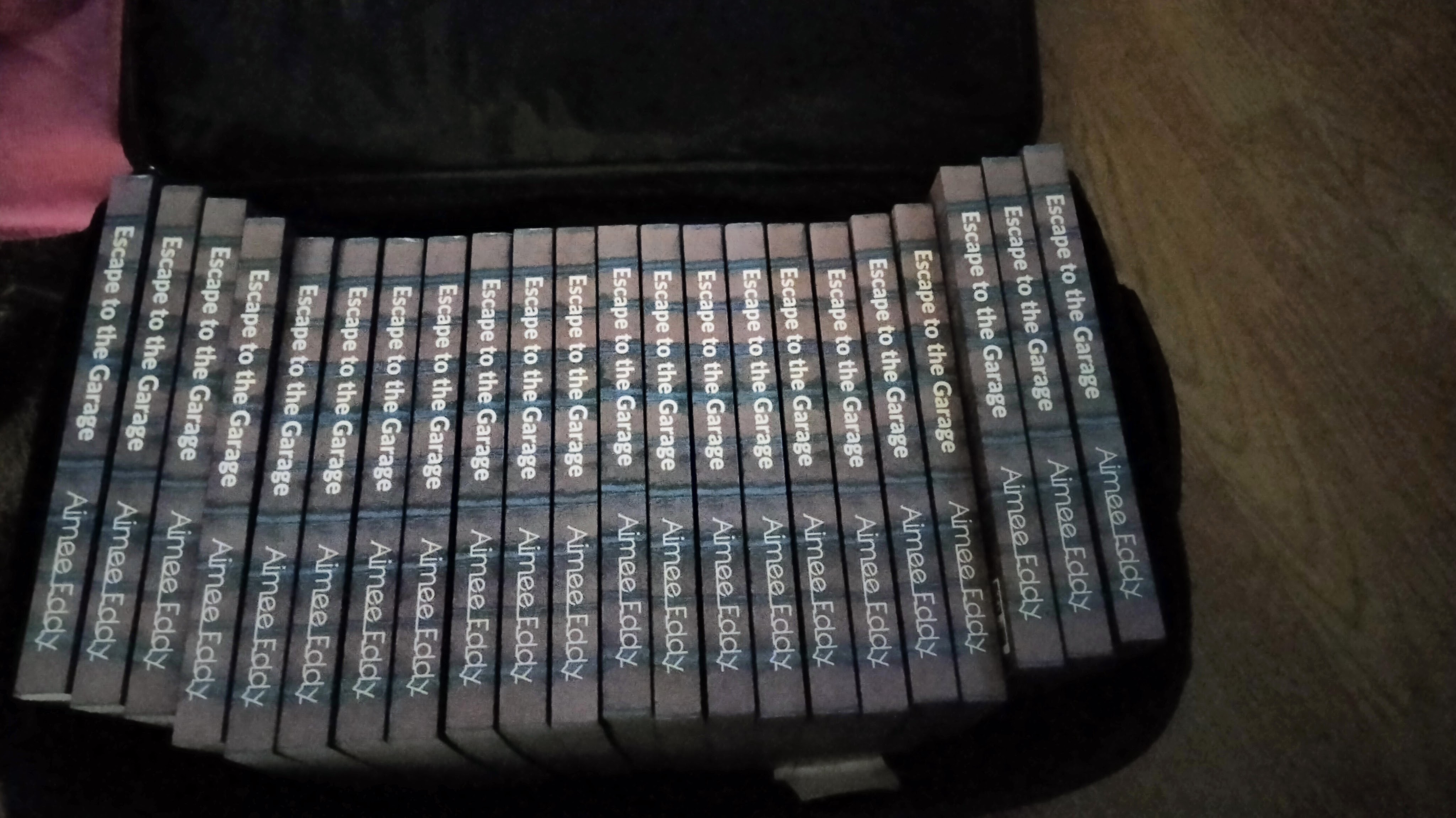
MY BOOKS ARRIVED!

I have dreamed of having a book published since high school. Through some ups and downs I wrote a book, and last Sunday it was published on Amazon. That day I ordered 100 copies of my books for my book launch party on August 17. I was flying high like a bird soaring above the treetops. Amazon said my books wouldn’t arrive until between August 8 and 10. It seemed so far away. Could I wait that long to hold my very first published book? Holding my book would make my dream coming true even more real.

At times in my life, I thought the dream of publishing a book would never come true. When I was at the bottom of the dark hole of my mental illness, I couldn’t write. I gave up on my dream while I struggled with the darkness that engulfed me. Then when I did reach recovery, I tried to write a book, but I failed. I feared my dream would never come true. I thought maybe I wasn’t meant to write a book and that I could only write short stories. For a while I lost hope in my dream. I gave up trying to write a book and focused on short pieces of writing.

I was told by several people when you’re struggling with mental illness dreams are impossible to fulfill. This flared the determination in me that got me through school. In school, teachers and classmates said I couldn’t read or pass classes on my own. This stirred up a determination to prove them wrong and I did. I decided if I could prove them wrong in school, I could do the same as an adult with mental illness.

In college I wrote a column called “Childhood” for a local newspaper about growing up around the family garage. For years I wanted to do more with the stories about the garage days. At a writers group called Pennwriters, I told them about my column and possibly turning the stories into a book. They thought it was a great idea. I thought about the family garage and how it helped me deal with the bullying I faced in school. Before I knew it, I had an idea for my book. I just needed to write it.

For four years I wrote my book. I relived the bullying I faced at school and had to take breaks from writing because it hurt too much. Sometimes I went for a week or two without writing. Then I struggled with self-doubt. I thought my writing sucked and there was no way I could a write my book. I wanted to quit several times. My husband encouraged me and insisted I keep writing. Before going to bed at night, he’d instruct me to write and when I came to bed, he’d ask me how many pages I had written. Each time I threatened to give up, he reminded me that I’m not a quitter.

I fought with my self-doubt, I struggled with old wounds being opened, and I relived memories that I thought I had buried, but yet I continued to write and grow as a writer. After four years I finished my book, but then came rewriting and editing. Rewriting and editing took another year. My dream seemed like it was miles away. After the editing was done, there were beta readers who read through the manuscript looking for errors which involved more editing. Then I thought my book was ready and I sent it to be formatted, but the lady formatting it found more mistakes and I had to have it proofread. Having my book published dangled before me, but still seemed out of reach.

Last Sunday my book was finally published on Amazon and my dream came true. To make my dream final would be to hold my own book in my hand. That would be a two week wait, or so I thought. On Saturday I called my husband on my break. He told me he had exciting news for me: my books had arrived. I couldn’t wait to finish my workday.

As soon as I got home, I opened one of the boxes and picked out one of my books. It was the most amazing feeling I have ever felt. I felt like I was in a dream. I was holding my book, the book I wrote with my name on it. I can’t explain how wonderful that felt.

In school they said I would never be able to read, and I’d end up on welfare, and now I’m a published author. I was told with mental illness I wouldn’t be able to make my dreams come true, and yet I did make my dream come true. Dreams can come true no matter what disability you have or illness you are struggling with. If you have a dream, don’t let anything stand in your way of making it come true.

Because of my determination to make my dream come true, I’m dancing in the light of recovery.