I hope you all had a wonderful Christmas and kept warm. Working in a grocery store at Christmas is very busy and tiring. After work all I wanted to do was collapse on the couch. I was too tired to write a post this week. I hope to sit down and write one for next week.
Don’t forget about my contest. Follow and you’ll be entered to win a prize. I’ll pick the winner after new years. See you in the new year.
Christmas is only a few days away. Everyone is rushing around getting their last-minute gifts and meal fixings and wrapping presents. Stockings are being hung and people are traveling to spend the holiday with their family. Families are getting ready to practice their holiday traditions. After Christmas we prepare to welcome in the New Year.
In elementary school I dreaded Christmas. For me it was the most depressing holiday. Every year we picked a classmate’s name to buy a gift for. For my classmates it seemed like a contest to see who could outdo the gag gift given by the person who got me the year before. I was the joke of my class. When I opened the gift, they laughed and pointed at me. All I wanted was a nice present like everyone else, but instead I got a can with a snake popping out of it or a whoopie cushion or some other gag gift. I swallowed my tears and became a miserable person for my family to be around.
Now as an adult I can’t wait until Christmas. My husband makes it a point to spoil me with gifts, love, and acceptance. I love gifts just like everyone else, but the love and acceptance means so much more. I’m no longer the joke of the class. I’m now the sparkle in my husband’s eyes. I can see his eyes glow as I open the gifts he buys me. I enjoy giving him thank you kisses and snuggles. No one laughs at me anymore. No longer the reject, I’m the queen of my husband’s heart.
I can’t wait until Christmas morning to see what he got me this year and to snuggle with him.
I’m also preparing for the new year. My book has been doing quite well. I have sold one hundred and twelve books on Amazon and one hundred and twenty-two books myself. I will always remember 2022 as the year my dream to publish a book came true.
When I was in school, I barely talked and when I had to talk in front of people, I got extremely nervous and made mistakes. As an adult I’ve been too shy to even read my writing in progress to the Pennwriters group. Since I have had my book published, I had a book launch party and two speaking events. For all three I never planned my speeches. I calmly stood before people and spoke from the heart. Fighting against bullying is very important and means a lot to me. I’m proud of how far I have come and I’m proud to stand up before people and to speak up to fight against bullying.
I have lots of plans and up and coming events for the new year. On January 14 from 1-3 p.m., I will be signing books at Werner books in Liberty Plaza, Erie. One of my regular customers is the head of Lawrence Park Historical Society and he asked me to speak to the society on January 16. Lawrence Park is the small township I live in. On February 25, I will be speaking and signing books at MCcord Library in North East at 10 a.m. I plan on contacting some schools to set up more speaking events. I also would like to talk to youth groups at churches.
I can’t wait to celebrate Christmas with my husband and my family, and I can’t wait for an exciting 2023. Speaking of Christmas, a book is an excellent gift. Just a suggestion for a last minute present. I’m proud to say my book is available on Amazon, at Werner Books in Liberty Plaza in Erie, at Pressed Books on West 8th street in Erie, and at Steve Krauza Chiropractor, on East Lake road Erie PA.
This Christmas give a special gift to someone who may not get one. When I was a kid, my mom made fruit baskets for people in our hometown who didn’t have much. She or one of us kids would knock on the door, leave the basket, and run away. Is there someone you know who could use a surprise gift? Make someone’s Christmas special by sharing the love deep in your heart. Make a sad soul sparkle.
Plan the new year with lots of fun and exciting adventures. Plan to try new things and reach to make your dreams come true.
Merry Christmas!!!
CONTEST!!!
Don’t forget about the contest!! Don’t forget to follow this blog to win a prize. If you’re a follower share this post with your friends and family and encourage them to follow. So far, I have five new followers.
Many of my readers have asked me why I didn’t fight back against my bullies. It’s the same question a woman is asked when she is being abused by her spouse. Since my book has come out, people have told me their stories of being bullied. A few have told me how they stood up to their bully and the bully never bugged them again. One lady told me how her husband beat up a kid who was harassing him. She said he couldn’t just take it and do nothing. But not everyone is able to fight back.
I couldn’t fight back. I was called a retard by a teacher in first grade. Teachers are supposed to support, encourage, and protect their students not put them down. By her calling me that name, I was instantly labeled for the rest of my school years by my classmates. I thought my first-grade teacher would be helpful and kind, but she was mean. Her words tore me apart inside and humiliated me in front of my peers.
Each day I went to school I was put down and called names such as retard, dummy, and stupid. Teachers assigned students to give me answers on tests. My parents told me I was smart, but after hearing I was dumb daily, I began to believe I was. I lost my self-esteem. All my classmates said I was stupid, and even the teachers were saying I wasn’t intelligent, and if an adult was saying it, then it had to be true.
We are all taught the saying, “Stick and stones may break my bones, but words can never hurt me,” but it is untrue. Words do hurt. They cause wounds no one can see, wounds that can’t be healed with a band aid and antibiotic. It isn’t as simple as fighting back when you lose who you are. Bullying is abuse. Unkind words tear apart self-esteem, cause mental health problems, leads to suicide, instill fear, and much worse.
A woman doesn’t fight back when her abusive husband puts her down daily because his words rip apart her strength, her self-esteem, her courage, and her mental wellbeing. It’s the same with a person being bullied. My classmates and teachers nearly destroyed me. I couldn’t fight back. I was beaten down like a wild animal. In time I learned that the less I talked, the safer I was. I hid inside myself, inside an imaginary world I created to protect myself.
It was like I was beaten until I lay on the ground bleeding. I was bleeding inside, and my strength seeped from each of the wounds on my soul and heart. I slowly slipped into mental illness and began to imagine my death. I wasn’t a wimp, but a battered child. Each word spoken to me was like fists pounding me until I couldn’t move or speak. I struggled to sleep at night because I had nightmares about the abuse and because I was afraid to go to school.
The wounds of the heart and soul take years to heal, but even though you are healed, you still have the scars that remind you of the abuse. I fear talking to people of authority like managers, I’m afraid to confront people, it takes me time to trust people, and I am protective of myself.
Kelly Clarkson’s song, “Because of you,” describes it well, “Because of you I learned to play on the safe side, so I don’t get hurt. Because of you I find it hard to trust not only me, but everyone around me. Because of you, I am afraid.”
It’s our job to speak up for those who can’t fight back. Let’s fight against bullying for those who are so beaten down they can’t stand up, let’s fight to keep another child from taking his or her life, and let’s fight to save a person from living in fear from this kind of abuse.
With my book and speaking events, I am speaking up and fighting against bullying for those who can’t. I struggled so I can use my story to help others and to bring awareness. Fighting against bullying helps me stand tall in the light of recovery.
Don’t forget about my contest!! So far, I have four new followers who are entered to win a woodburning. Remember to share with your friends and family and encourage them to follow. If you’re not a follower click, “follow.” In the new year I will pick a winner.
Wednesday was my speaking event and book signing at Blasco Library in Erie. For the several weeks before my talk, I printed out the flier the event coordinator emailed me and handed them out to my customers. I have worked for Giant Eagle grocery store for twenty-seven years and have a lot of regular customers who are very excited about my book. I also created an event online and invited a lot of my Facebook friends. I wanted my event to go well, and I wanted to make sure my message about bullying would be shared with many.
The night before my event I put my bookmarks, money box, business cards, and blog signup sheet in a bag. I watched the weather report. Winters in Erie can be tricky. The weather can change in a second. The weatherman predicted one to three inches of snow and gusting winds. I feared the worst. One to three inches is nothing for us, but what if the weather became worse and people couldn’t make my speaking event? Before bed I prayed for decent weather and a good turnout.
The next day there were a few snowflakes in the air, high winds, and cold temperatures. I was confident the weather would hold out for my event. We arrived at the library at 6 PM, a half hour early. A little before 6:30 people started arriving.
This man and woman came up to me. He handed me an angel ornament and an envelope. “I’m Ruth’s son. To her you were her angel. In the envelope is a picture of Ruth.”
When I started at Giant Eagle I worked in the bakery and then moved to the front end as a bagger. I bagged Ruth’s groceries. She was a sweet elder lady who requested I help her out to her car with her groceries. As I loaded her car we talked and became close. Each time she came to the store she requested me. When I became a cashier, she stood in my line no matter how long to talk to me as I rang up her food. We became very close. She brought me gifts at Christmas time, and I gave her cards with special messages I wrote.
When Ruth’s health declined, she moved into a nursing home. I visited her and brought my wedding pictures. She was thrilled. When she passed, I made it a point to go to her viewing to let her family know how special she was to me. It’s been several years since her passing and I hadn’t thought about her in a while. I have her gifts she gave me on a special shelf in my home. Seeing her son touched me deeply. He bought three books and had me sign “Mom’s angel” inside them. I was in tears.
Ruth will always have a special place in my heart. She was my angel to me also because when I met her, I was recovering for the first time from my mental illness. I didn’t talk a lot and having her to talk to meant the world to me. Her kindness spread a light into my soul and helped mend my wounds.
That night I delivered a speech on the effects of bullying with the memory of Ruth glowing inside me. I spoke from my heart. Afterwards I signed books and received many hugs. Many of the people who came were customers of mine. I sold eleven books and seven leather woodburned bracelets that say, “Stop Bullying.” One lady, who is a customer of mine, told me to contact Harborcreek School to do a talk. She said they are always looking for people like me who have a powerful story to share. In the new year I plan to contact the school and hopefully other schools.
I have a customer who said he will set up a speaking event for me at Lawrence Park Historical Society in the new year. A teacher from the school attended to as a kid is also working to set me up with North East Library to do another speaking event. I will keep you all posted of any other events going on.
If you go to the home page of this site, you can click on the picture of my book and it will take you to Amazon to order it. My book is in two bookstores in Erie: Werner Books, Liberty Plaza and Press Books on West 8th street. My chiropractor, Steve Krauza has my books for sale in his office. I’m looking for more places to make my book available to the public.
I went from a child people labeled “stupid” to a woman with a published book giving speeches against bullying. I don’t know if any of my bullies will ever apologize, but I know I have risen above them and forgiven them for myself. I’m proud of how far I have came and the book I wrote. I dreamed of this moment since I was a teenager, but I didn’t know how wonderful it would feel.
Don’t forget about the contest. Share this blog with your friends and encourage them to follow. If you’re not a follower, click follow and be entered into a contest to win a woodburned bookmark or bracelet. I’ll pick a winner in January.
They say not to judge a book by its cover but I need you to do just that. If you liked the cover of my book, Escape to the Garage: Family Love Overcomes Bullying, please vote for it for the Cover of the Month contest on AllAuthor.com! I’m getting closer to clinch the “Cover of the Month” contest on AllAuthor! I’d need as much support from you guys. Please take a short moment to vote for my book cover here: href=’https://allauthor.com/cover-of-the-month/14342/’ rel=”dofollow”><img src=”https://allauthor.com/book/big/799220220922042714.jpg”> Click to Vote!</a></p>
I have a contest for you!! Blogs are an important tool for authors. Authors use their blogs not only to educate their readers about a topic, but also to gain followers who love their writing and will buy their books. Blogs are an important tool to showcase the authors’ writing, share their knowledge, educate people, and much more.
I started my blog to educate my readers about mental illness and to inspire those struggling. Now I also use my blog to update my readers on my book and writing endeavors.
Mental illness is one of the most misunderstood illnesses. Because mental illness carries a stigma, those struggling often feel alone, and some are scared to ask for help. Many of us either struggle with mental illness or know someone who is or has struggled with it. If you are a follower, you know that I write about my experiences with mental illness, coping techniques, and my journey to recovery. Anyone can use many of the coping techniques even if they don’t have mental illness.
If you’re a follower, share this post with your friends and encourage them to follow. If you’re not a follower, go to the follow section and enter your email address and you will get my posts every Tuesday in your email. For each person who becomes a follower, you will be entered into a contest to win a woodburned bookmark or bracelet. I will pick the winner after the holidays!!
I have one new follower so far. Followers, get busy sharing, and those who are new to this blog follow and share this with your friends. Thank you!
Reaching recovery from mental illness is a very difficult battle, and the battle continues even though you’re in recovery. To stay in recovery, you must take care of yourself and your needs daily. You must take your medications, practice coping techniques, monitor your moods, know your triggers and limits, and so on. If you have a serious mental illness, then you will continue to struggle with symptoms of it for the rest of your life. The important part is knowing how to handle the rough times and knowing when you need to step back from stressful, overwhelming, or very emotional situations.
When I was very sick with my illness the only problems I saw were my bleak overwhelming sadness, anguish, and hopelessness. I couldn’t see anyone else’s problems. I couldn’t handle dealing with the simplest things like deciding to buy new shoes let alone handle the hardships that faced my friends. My best friend Cheryl struggled with a bad relationship and yet she stood at my side. I knew her relationship was bad, but I couldn’t give her the support she gave me.
We lost contact for several years and we found each other again through Facebook. When we reconnected I was married, in recovery, and much stronger. I was finally able to be the friend I couldn’t be all those years ago. I could listen to her problems and give her support. She also returned the support.
One time my grandma was very sick and in the hospital. I was taking it very hard, but at the same time Cheryl was struggling with her own troubles. I had to step back from being there for her, and she had to do the same for me. No matter how much I wanted to support her, I knew I couldn’t handle her situation at that time. I turned to others on my support team. We both agreed that we would be more helpful to one another by stepping back. It was hard to do, but very important for both our wellbeing.
I made friends with a woman when I was sick. We both had similar illnesses and we became very supportive of one another. We understood what each other was going through, and it helped to have a friend who understood. The problem was I reached recovery and she didn’t. She kept falling deeper into her illness. When we talked, it was all about her hopeless, awful life and she had no room in her darkness to listen to me. I tried to be a friend for as long as I could, but her downward spiral started to take its toll on me. She was pushing me beyond my limits, and I had to end our friendship. I couldn’t let her drag me back down that hole again. I’ll always cherish the friendship we had and the good memories we shared and wish her the best, but I had to take care of myself first.
Recently I have been supportive of a friend going through a very rough time while she dealt with a sick relative. I’ve been more than glad to listen to her, support her, and even let her cry on my shoulder. In some ways I understand what she is going through. Her situation is similar to when my grandmother was sick. After a while, her tough time became overwhelming to me. I didn’t want to stop supporting her, but I needed to take a break. I worried about how she would take it if I told her I needed a few days where we didn’t talk about her problems. I didn’t want to hurt her, but I had reached my limit.
I asked Cheryl for some advice, and she told me to just tell her I needed a few days to take care of myself. I put Cheryl’s advice in a message and my friend understood. After a few days of taking care of myself, clearing my mind, and taking a breather, I felt strong enough to support my friend once again. I wanted to give her the best support I could give her, and I knew I couldn’t do that if I went past my emotional limits. Taking a small break helped a lot and now I am at her side once again.
It’s important to know your limits. While you are in recovery, your mental health must come first. You can’t risk being pushed down that hole again. You can be there for your friends, but you need to know that when things get to be too much, you need to take a break or walk away.
Knowing my limits helps me be a better friend to those I care about and allows me to stand strong in the light of recovery.
Are you a follower of this blog? If not, click follow at the bottom of this page and be entered into a contest to win a woodburned bookmark or bracelet. Once you follow, you will receive this blog post each week in your email. I will pick a winner after the first of the year. Click follow now!!!
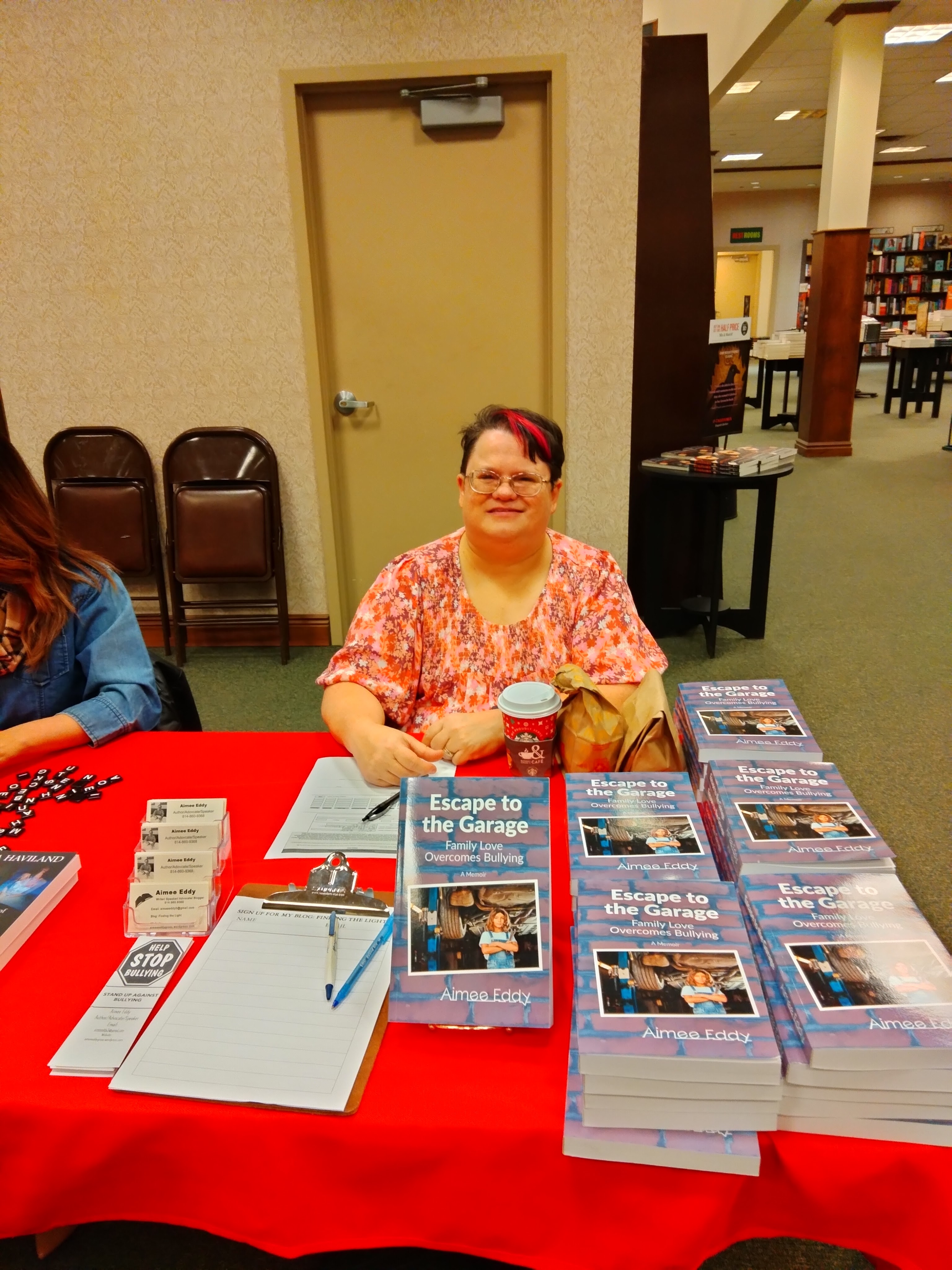
This past Saturday I participated in a multi-author book signing at Barnes and Noble, organized by Pennwriters, the nationwide writer’s group I belong to. It was my first book signing without giving a speech before hand. I didn’t know what to expect. I posted on many local social media sites and told my customers about it. I hoped all my hard work would bring a lot of people eagar to buy my book.
Once I arrived at the store, I noticed there were no tables set up. While I went to ask a fellow writer, Gene, my family friend and driver, Julie, looked for an employee to ask. While I talked to Gene, Julie returned to tell us that there were tables set up downstairs for us. Gene was disappointed. He thought we would be upstairs where most of the customers spend their time. His disapproval seemed logical. Once other authors arrived, they also disapproved of the location. I still had high hopes to sell several books.
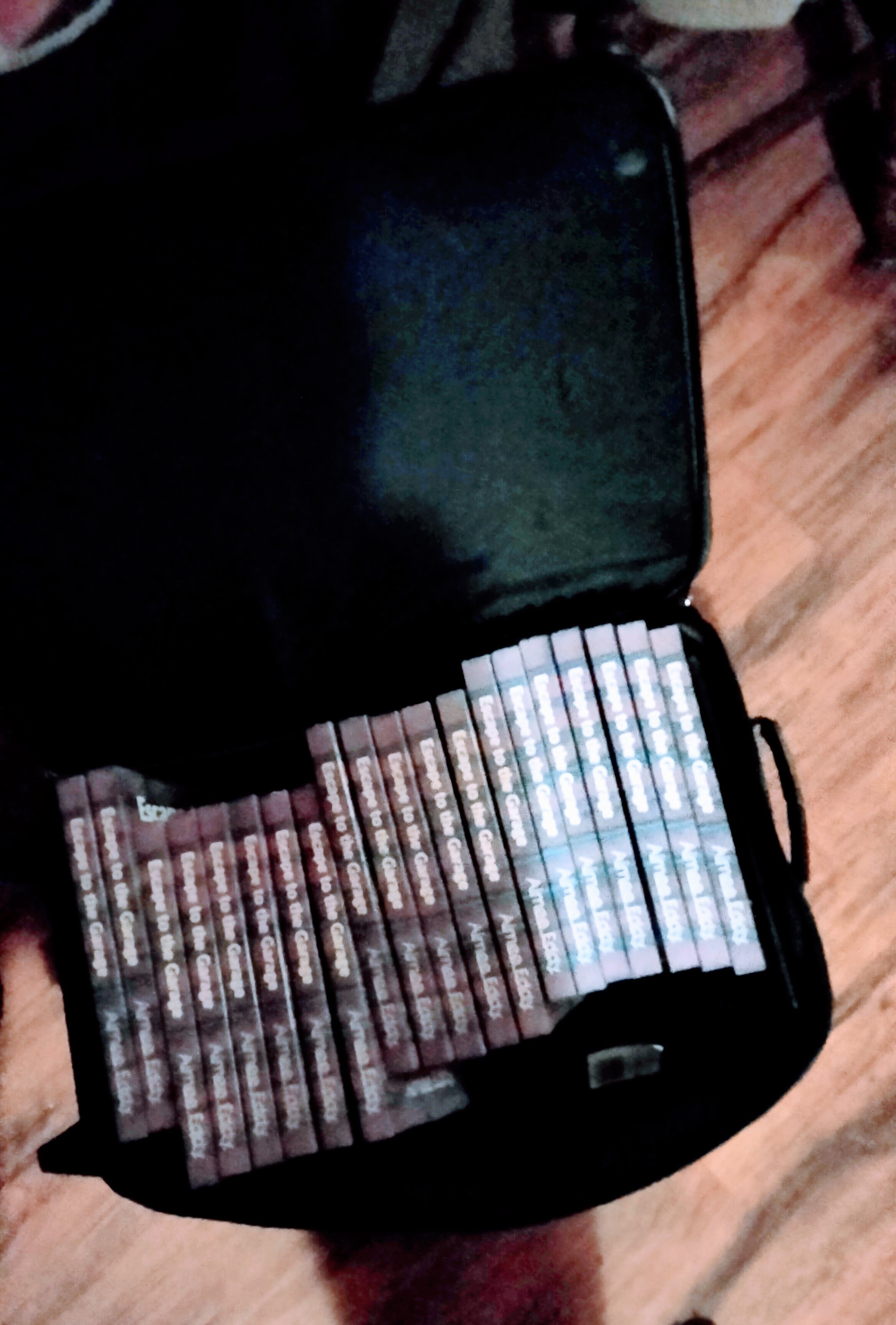
My friend and mentor, Amy, had told me to pack ten to fifteen books. My mom taught me it’s better to have too many then not enough. So I packed twenty-five books and put them on a corner of the table. I also put a sign-up sheet for my blog, and bookmarks and business cards. I was prepared.
It didn’t take long for me to see why the others were upset with the location. There wasn’t a high volume of customers on the lower floor. Those that came were looking for specific genres and only glanced at our tables. The author next to me brought a game called Bananagrams. It’s like Scrabble. You pick out twenty-one letters and try to make words. This helped alleviate our boredom. When a customer stopped to browse, I would look up to greet him or her and give a small pitch about my book.
The bookstore once in a great while announced we were downstairs, but it wasn’t enough. Julie had suggested that they needed a poster upstairs telling the customers about us and directing them downstairs. She was right. A poster would have made the customers more aware of us and our location. When I do a book signing of my own, I’ll make sure I have a poster made.
The bookstore had several events going on. They had a birthday party in the kids’ section and therapy dogs there. You would think that would bring more customers into the store who would want an autographed book, but not really. When they brought the therapy dogs down to see us, people crowded around our tables, but they wanted to see the dogs and not our books. Who wants to check out books when there are adorable dogs to pet? I also enjoyed petting the dogs.
The kids’ party brought parents of children and was good for the two authors who had written books for that age group. I thought maybe it would be good for my memoir about bullying, but the parents never made it past the authors with children’s books. The good news is the author next to me was very interesting to talk to. We had plenty of time to get to know each other and share our writing processes.
Ana, a fellow breast cancer survivor, showed up to buy my book. A customer of mine from Giant Eagle came, and a teacher who taught the opposite class from mine in fourth grade also showed up. I sold a total of three books over six hours. At least it was better than what I did at the craft fairs where I sold my woodburnings over the summer. One craft fair I sold two things and another one I sold nothing.
The bookstore gets forty percent of each book we sell. Being an author is not a lucrative business. When you see an author in television show sell a book and go on a big spending spree, that is untrue. Unless you have a best-selling book and movies made of your book, you don’t make a lot of money. I made $28.78. Not a lot of money but it was something. I’m putting some of the money I make towards getting a new computer. Eventually I will earn enough to buy one.
My day wasn’t a total loss. I got to know another author, I made some money, and I petted some adorable dogs. An author’s life isn’t easy, but I will keep pushing forward. I still have a talk and book signing at Blasco Library in Erie November 30. I have time to spread the word. Plus I plan on setting up other events.
When I was sick with mental illness, I would have seen Saturday as a total disaster and slipped into a depression. I’ve grown and learned a lot since then. Seeing the positive is what helps me stand in the light of recovery.
Here in Pennsylvania Fall has settled in with changing weather. We go from warm temperatures to cold. The saying here in my area is, “In a blink of an eye go from summer to spring to fall to winter.” The changing weather causes a lot of problems with sicknesses and allergies. Within a matter of about six weeks, I went from an asthma flare up to a cold and now a sinus infection. My husband and I went to Chazy, New York, to visit my friend Cheryl, and the whole time I struggled with a cold, but we still had a blast. Then I came home, and the doctor said I now have a sinus infection. Therefore, I haven’t written a new blog post in a little while. I’m taking antibiotics and getting better.
I thought I would do a little different blog post than usual. I have been wracking my brain and struggling with my computer to figure out how to set up a subscription button on my website for a newsletter. Writers use newsletters to keep in contact with their readers and to let the readers know about the authors’ writing adventures. I have failed at putting the subscription button on my site. I decided this post will be like a newsletter.
Since my book was published in July, I have sold 90 books on Amazon and 97 books myself. I couldn’t be prouder of my book, but since I have been focused on my first book, I haven’t taken any steps towards writing another book. I have plans to turn some of my blog posts into a book. My friend Roberta agreed to organize my posts for me and to help me with this book. Roberta has been editing each of my blog posts since I started blogging. She catches all my errors before I post. I owe her a lot of thanks. She has her hands full organizing my posts.
I do have plans for a second memoir. I plan to write one about the years after the family garage. There are events that happened after the garage that are very difficult to write about. I pushed through the pain to write my first book and will push through the pain to write my second memoir. Writing my first book was extremely difficult, yet healing, and so will writing my second memoir. Right now, I am writing down memories on index cards. When I’m ready to write my book, I will organize the index cards into a timeline and decide which chapters they will go in.
Right now, I’m working hard at learning to market Escape to the Garage: Family Love Overcomes Bullying. I’m staying busy on social media posting about my book, I’m telling my customers about my book, and I’m setting up events. A local newspaper, Erie Times News, published an article about me and this has gotten me a lot of attention from my customers. They are excited to have their cashier be a published author. My fellow employees are excited, too. They posted the news article by the time clock.
November 12, this coming Saturday, I will take part in a multi-author book signing at Barnes and Noble, in Erie from 11 a.m.to 5 p.m., sponsored by Pennwriters. Pennwriters is a nation-wide writing organization I belong to. If you live in the Erie area, come and see me and the other authors.
November 30 I will give a speech and sig books at Blasco Library in Erie from 6:30 to 7:30 p.m.. I will talk about how bullying affects the victims and bullying prevention. I will also sell my own woodburned leather bracelets that say, “Stop Bullying.”
I have five copies of my book at Werner Books a bookstore in Liberty Plaza, Erie. My chiropractor, Steve Krauza, has allowed me to put some books for sale in his office. This Wednesday I stopped at a bookstore on West Eighth Street in Erie, and once the manager comes back from a trip, a few of my books will be on sale there. If you live out of town you can get my book on Amazon at smarturl.it/EscapetotheGarage. You can also go to the home page of this site and click on the picture of my book and it will take you to Amazon to order your book.
I’m looking into more places to give speeches and sell my book. I think we all need to work together to get the word out that bullying is wrong, and we need to put an end to it. Bullying causes mental health problems, anger problems, suicide, and much more. It happens in our schools, online, workplaces, communities and in churches. I can’t completely put an end to bullying, but I hope I can reach out and help others who are being bullied and those who were bullied, educate people, and bring awareness to the damage it causes.
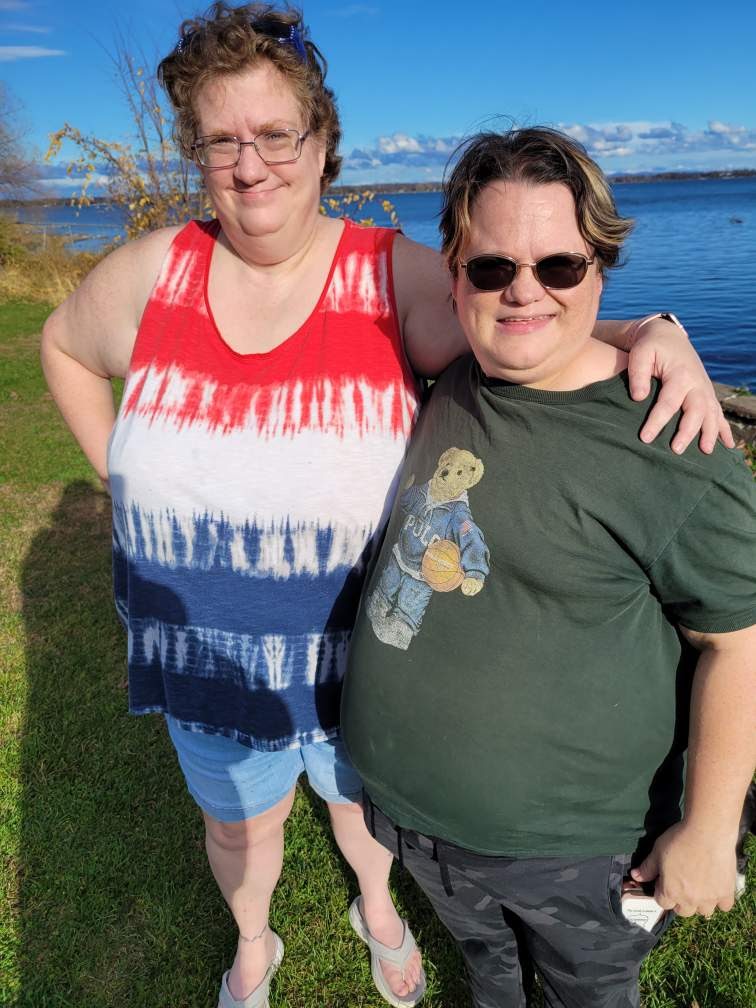
Last week we went to my best friend Cheryl Miller’s. We got home late Friday night. The whole time I struggled with a cold, but we still had a wonderful time. Due to all the traveling and still struggling with a cold I didn’t feel up to writing a blog post. I plan on writing one next week.
While on the trip my friend and I hit up some craft stores. I got some nice projects to woodburn. So check out Aimee’s Woodburnings on Facebook groups to see what new woodburnings I come up with.
Until next week keep reaching for the light of recovery.