ALL WOMEN ARE MOTHERS

A customer said something to me Saturday night that touched my heart. She said, “All women are mothers even if they don’t have children of their own.”

Most women have motherly instincts even if they don’t give birth to a child or adopt one. Teachers think of their students as their children, aunts think of their nieces and nephews as their children, pet owners think of their pets as their children, a woman can think of a younger friend as her child, and so on. A mother’s love is in our hearts, and we spread it to the people and pets in our lives. Mother’s Day isn’t just for the women who gave birth to a child, but for all women who have give motherly love to others.

When I was with my ex-boyfriend, he kept telling me how much he wanted to have a child with me. I had my doubts and said no. I was very sick and knew at that time I wasn’t capable of having a child. I figured I’d have a child one day when I was well. I dreamed of being a mom and holding my newborn child in my arms, but I feared I would pass my mental illness on to my child. I wasn’t sure I could watch my own child go through what I was going through. He pressed on and I stuck to no. He was abusive and not the kind of man I wanted to raise a child with.

After he kicked me out, I knew I had made the right choice, but I dreamed of motherhood. What name would I give my child if a girl or boy? What kind of mother would I be? How would I look as a pregnant woman? How many children would I have if I found the right man? I figured I would find a wonderful man who would help me build a beautiful family, but my mental illness shattered that dream.

I discussed my desire to have children with my therapist. We talked about how hard it would be for me to be off my antidepressants while being pregnant. There was a big possibility I would spend nine months in and out of a mental health hospital. Then there might be postpartum depression. With major depression, Borderline Personality Disorder, and anxiety, postpartum depression would be even harder on me. I didn’t want to be the mother who harmed her child or spent her child’s first years in a hospital. I couldn’t do that to a child.

Children are a lot of work and raising them is stressful. I don’t handle stress well. When I get stressed out, I have anxiety attacks and I fall apart. I don’t work a full-time job because I can’t handle forty hours of stress. There are no hours for parenting. I can’t just leave for hours at a time to relax and be by myself. After six hours of a hard day at work I can go home, put my feet up, watch a movie, snuggle with my husband, and be free of works problems. As a mom, home is your workplace and there is no leaving when things get rough. I would be constantly sick and falling apart because of the stress. I would probably end up spending a lot of time in a mental health hospital because the stress was too much for me to handle.

Then there is the worrying. I worry obsessively about small stuff. My worries overtake me, and they get blown out of portion. I would worry excessively about a child. My child wouldn’t have been able to go to school, a friend’s house, or to an activity without me worrying myself sick. My child probably would grow up to hate me because I wouldn’t let my child do much because I worried too much. I wouldn’t be able to eat or sleep because my worries would drive me crazy. I would be sick all the time from anxiety attacks.

These reasons and some other are what convinced me that I wasn’t meant to have a child. I mourned at first for my lost dream of motherhood. Accepting it wasn’t easy at first, but I knew it was the right decision. I cried over it.

When I met Lou, I told him I wouldn’t be able to give him a child. He said, “I don’t need children. I just need you.”

I love the marriage Lou and I have. I have had four dogs who were and are my babies. Our current dog, Esther, is my baby girl. I love her dearly and do my best to take really good care of her. I also have six nieces and five nephews whom I adore greatly and love endlessly. I have two great nieces, a great nephew, and a great nephew on the way that I also love endlessly. I also have nieces and nephews I have adopted into my heart whom I adore.

I don’t have any children I gave birth to, but I have lots of children, including fur babies. Like my customer said, “All women are mothers even if they don’t have children of their own.” I never gave birth to a child, but I have lots of children. My husband and mom give me a Mother’s Day card each year. I celebrate just like any other mother. Mother’s Day is for all women who have given love to a child or a pet. It’s for all women whose hearts are big, and love is endless.

Loving all my nieces, nephews, my past dogs, and my current dog spreads the light of recovery within my soul.

Happy belated Mother’s Day.

REJECTION LETTER

Rejection letters are part of the publishing business. All writers get them. Even J.K. Rowling received many rejection letters for the first Harry Potter book, and L. Frank Baum received several rejection slips for Wizard of OZ. It’s also the hard part of the business. It hurts to have something you worked very hard on denied, but it’s what you do with the rejection that counts. You either give up or push forward.

Ant Press replied to my manuscript on Friday morning. They sent me a glowing rejection slip. How can a person get a glowing rejection slip? Well, they had a lot of good things to say about my memoir. It just didn’t fit their market.

Here is a section from the rejection letter that puts a smile on my face.

“You write very well, and you’ll be glad to know that we found a lot to like about your story. You have an engaging ‘voice’ which will make your readers warm to you. Your confident use of dialogue to move the story along is commendable, too. Few writers understand how important it is to use plenty of dialogue, but you have grasped that. You write very directly without bogging us down with unnecessary flowery language, which makes your book easy to read. We liked your use of fragmented sentences to create drama and we enjoyed the inclusion of your thoughts.

“There is no question that your themes will resonate with many. The troubled childhood, the bullying and abuse you have suffered and the despair you felt. The garage escape and the discovery of the power of writing: ‘As my pen raced across the paper recording a fanciful daydream, I felt my soul pour down through my fingers.’ are all touchingly described and poignant.”

This tells me my manuscript is good and it’s not bad writing that got me a denial. I celebrated the positive, but I still felt like I got kicked in the stomach. I have been submitting short stories and essays since I was in high school. I have a box of rejection letters. I should be used to it, right? No matter how many times you get rejected, it doesn’t get easier. It’s one of the hardest parts of being an author.

I had my hopes high. I figured Ant Press would be the one to publish my memoir since their specialty is memoir. When they requested the full manuscript, I was sure they would love my manuscript and offer me a contract. I didn’t do much research into other publishers because I was confident I would get a yes, even though I know that most writers do not get accepted with the first submission. I bragged to everyone that my book was going to get published. I was flying high.

For a week I checked my email several times a day, hoping for an answer. Then on Friday there was the answer. As I read, “Sadly, we don’t feel we can offer you an Ant Press contract for Escape to the Family Garage,” I dropped from my high like a plane spiraling out of control. Tears threatened to fall, but I fought to stop them. My whole world crumbled. I wanted to cry, to scream and crawl back in bed, but I couldn’t. I had to prepare to go to work.

My husband called me to make sure I was up for work, and I told him. He told me not to give up. Then I called my friend and fellow memoirist Amy, and she gave me a pep talk. I read her the letter and she told me that it’s good news that they found good things about my memoir, and they took the time to consider it. She encouraged me to pray about my next step and to push forward. She told me the positive news is that they complimented my book and that meant I had a good, finished manuscript.

At work I mulled over the rejection and my next steps. Should I self-publish, or should I research other publishers? On my break I opened the Kindle app on my phone and browsed through publishers in Writer’s Market, a book that lists publishers and information about what type of work they accept and contact information. I found a few who accept memoir but not many with my topic. This discouraged me even more. I had saved up a lot of money for my book, but when I had carpal tunnel surgery, I had to use some of it for our mortgage. With what I have left would I have enough to self-publish?

While working my mind swirled with different thoughts about writing and work.

Will my book ever get published?

Why are the dang customers yelling at me because we got rid of plastic bags? I’m stuck, just a cashier people yell at for life.

Everyone says publishers only publish memoirs of famous people. Getting published is a hopeless dream.

Dang, people Ninety-nine cents for a reusable bag isn’t that bad since can use it plenty of times. I so wanted to tell my customers I was going to get my book published and instead I’m arguing about the cost of bags.”

I’ll never be able to afford to self-publish. I only have three hundred and some dollars. It’s hopeless.

After work I rode on the exercise bike while Cheryl cheered me on. She listened while I hacked out a plan. I will research publishers and self-publishing. I will give myself a week or more before I make any definite decisions. First, I need to feel the hurt, sort my feelings, and then decide when I’m thinking clearly.

Cheryl told me how proud of me she is. Several years ago, when my mental illness was at its worst, I would have bawled my eyes out and given up. I would have seen the rejection as the end of my life. Now I feel the emotions and plan to push forward. This shows how far I have come at taking control of my mental illness.

My determination to get published will help me strive to be stronger and more determined. I stand in the light as a strong woman ready to push forward.

THE MENTALLY ILL ARE NOT HELPLESS

Mental illness can be debilitating, leaving those who suffer with lack of energy, paralyzing fears, lack of will to take care of themselves, inability to make rational decisions, and more. Some can push through the symptoms that leave them feeling useless while for others illness is so bad they need constant care. The family members of many who struggle with mental illness believe they cannot do anything for themselves. Family members take over their care and cater to them like they are helpless children when they are not. Mental illness is debilitating, but that doesn’t make all who suffer with it helpless.

When my illness was at its worst, I couldn’t sleep, I had a hard time keeping food down, I was fatigued, I couldn’t make decisions easily, and my thinking was irrational, yet I forced myself to get up each day and go to college. I fought to keep awake during my classes and I got sick in between classes, but I kept good grades. My illness tried to keep me down, but I pushed myself to go on. After classes, I hid in my room. I self-injured, I planned my death, and I cried uncontrollably, and yet I still found a way to study. I even got good grades.

It would have been easy for me to just give up and fail out of college. Unfortunately, many who struggle with mental illness do give in and their families stand by and allow them. Some believe their sick family members need to be waited on and allowed to just give in. They see the ones struggling as helpless when they are not.

I know a woman who has a sister with mental illness. The sister gets depressed and sleeps the day away. The healthy one takes care of her sister and waits on her as if she’s helpless. The sick sister has no responsibilities and no reason to fight her illness. Why fight when she has someone to make excuses while she sleeps all day, someone to cook all her meals, someone to make decisions for her, and someone who comes running when she needs something? The sister of the sick one believes she’s helping her by catering to her when she’s only taking away her sister’s reasons to fight.

The one thing that kept me getting out of bed when I was at my worst was my purpose. When I was in college, my purpose was attending classes and passing one way or another. I lived with my grandparents and kept my illness a secret from them. They helped me without even knowing it. They bragged to family and friends how well I was doing in college. This encouraged me to keep going to classes and to study. When you are struggling with mental illness, you need encouragement and tasks that give you a reason to keep going on.

When I got bad, I did move home and took a year off from college. My parents could have told me, “You’re sick, so just go to therapy and don’t worry about anything else.” Instead they insisted I get a job while I was on leave. My parents never viewed me as helpless. They knew I needed their assistance in making sure I took my medication, they reminded me to take care of myself and made sure I ate healthy meals, but they never did everything for me. They gave me reasons to get up each day and they encouraged me to keep moving forward when I felt like I couldn’t. I made meals for my parents, I took care of my own bills, I helped my mom around the house, and I went to work.

Having things to do, a job to go to, and a reason to get out of bed gave me reasons to not give up on myself and my recovery. No matter how much I wanted to lie in bed and sleep all day, I couldn’t because I had a purpose. If my parents didn’t give me that reason, I would have been like the woman I described above. I would have just sunk deeper into my mental illness and given up. Instead, with my parent’s encouragement, I fought my way to recovery.

Mental illness makes living a normal life hard, but for most, it doesn’t make you helpless. Being catered to, others making excuses for your actions, taking away your responsibilities, and others making decisions for you strips you of your purpose in life. The best thing a loved one can do for someone who is mentally ill is to encourage him and her to get out of bed, to take control of his or her life, to give him or her responsibilities, and to help him or her feel useful.

The stigma that a person with mental illness can’t work, can’t take care of him or herself, and can’t live productive lives is false. There are cases when the person struggling is so bad, they need constant care, but this isn’t true for all who have mental illness. For many, recovery can be reached with medication and therapy. There are successful people in our society who pushed past their sickness and fought for recovery to be an important part of society. We are not helpless and useless people whom society can turn their backs on. We are nurses, CEOs, bus drivers, cashiers, college students, actresses, hair stylists, and much more.

If you have a family member who is struggling with mental illness, encourage him or her to get up, give the person responsibilities, and be there to help, but not to do everything for him or her. Having things for the person who is struggling to do gives them purpose and a reason to keep going. Encourage the one suffering to reach recovery and to live a productive life. You can help your loved one, but don’t do everything for him or her.

My husband helps me manage my mental illness and he takes good care of me, but he encourages me to do things for myself. My parents did the same when I was at my worst. Because my loved ones never treated me like I was useless, but instead encouraged me, I stand in the light of recovery smiling.

EXCITING NEWS!!

With Easter weekend I didn’t get a chance to write a post this week, but I have good news to share with you. My editor, Catherine McLean, finished editing my memoir!! The next step is to read through my memoir to see how well it works with the edits and prepare three chapters and a query to submit to ant press. Ant press specializes in memoir. They reply within two weeks. There is a possibility I will get a rejection letter. If I get a rejection letter I will just keep submitting until I get a acceptance letter.

The process to publication may be a long one but I am taking the steps and I will not give up. I will keep you posted on my progress.

I hope you all had a wonderful Easter. I will have a new post for you next week. Remember He’s Risen!! Happy Easter.

ESTHER’S RECOVERY

On Tuesday my Esther had surgery to remove a stone from her bladder. We had to take her to the vet between 8:00 a.m. and 8:30 a.m. and leave her there. We arrived ten minutes before eight and waited for them to unlock the door. Esther whimpered and shook all the way there, and when we got inside, she tucked her tail between her legs and shook. She knew she was in a place she didn’t want to be. We kissed her and hugged her goodbye and as the technician tried to walk her back, she pulled towards us. I swallowed a tear as we left.

At home I took a nap and dreamt about Esther having surgery. I dreamt that they called and said they couldn’t save her. Lou woke me up at 1:00 p.m. and I called the vet. Esther had just gotten out of surgery and everything went well. They instructed us to pick her up at 3:00 p.m.

She was groggy when we brought her home. I put her on the couch and covered her up with a blanket. She slept and only lifted her head a couple times to look at me.

Not too long after we got Esther, I had a detached tendon repaired in my ankle. Soon as I got home from the hospital, she was at my side lying next to me on the couch. She’s stayed at my side during a mastectomy, hysterectomy, and carpal tunnel surgery. With each surgery she watched over me, comforted me, and smothered me with love.

Esther is always taking care of me. She snuggles with me when I’m sad, she lays her head on my chest and nudges my hand with her nose when I cry, she keeps me from getting lonely when I’m by myself, and she always knows when I need extra love. She is my therapy. She gives me the comfort I need as I deal with mental illness. She’s the child I can’t have, and I owe her for all that she has done for me. Taking care of her during her recovery is the least I can do for her.

The vet technician said not to let her run or jump. I worried about her doing all the steps in our home, too so I carried her around like a baby for several days. Up and down stairs and I lifted her on and off the couch. On Friday the vet called to tell me that Esther’s stone resulted an infection. They also told me she was able to do steps. I was glad. Carrying a thirteen-pound dog around made my shoulders and back hurt, but I would have kept doing it if I had to.

Keeping a seven-year-old dog from jumping has been a challenge. I turn around for one minute and she jumps off the couch. When my husband goes to work in the morning I have him put Esther in bed with me, but she won’t stay. She knows she’s not allowed in the bed while he’s home. I put her down and she goes to her bed. I fall back to sleep and when I wake up, she’s back in bed with me. She waits until my husband is gone and then jumps up onto the bed. Each time she jumps I check her stitches to make sure she hasn’t broken any open.

When she must go potty, I put a leash on her to walk her around the yard, so she won’t run. She thinks she should go for a walk and pulls towards the gate to our fenced in yard. I have to walk her several times around the yard until she decides to go. Sometimes she tries to stand on her back legs and put her front paws on my leg. I try to instruct her to stay down.

Taking care of her after her surgery is the least I can do after all the times she has taken care of me through my surgeries. I’m not sure if she knows how much she has helped me and continues to help me. She’s more than a dog to me and I would do anything to keep her well. She fills my heart with love and light. She makes my days brighter.

The good news is she is healing well and is no longer peeing blood. She doesn’t need to go out as often, she has less accidents, and she no longer strains to pee. Knowing she is feeling better makes me feel good. On April 20, we must take her back to the vet to check her incision and her urine. If the infection is completely gone, we can take her off the prescription food and put her on Purina. The prescription food costs a hundred dollars. Purina will be much cheaper.

ESTHER

In June of 2016 my dog Elli slipped a disk in her back which paralyzed her back end. She was in a lot of pain, and we had to make the awful decision to put her down. I took her death harshly and I cried over the phone to my mom, telling her I couldn’t keep putting my baby dogs down. I told her I was never getting another dog again. As time passed my grief lessened and Lou insisted we start looking for another dog. He knew I needed the emotional support a dog gave me.

In November we started making trips to a local animal shelter. We looked at several dogs, but none of them was right. Many of the dogs were big ones and I wanted one that would snuggle up on my lap. We kept up our search. A few days after Thanksgiving we went back to the shelter. Lou went to the bathroom. He told me to go ahead and look around and when he was done, we’d choose a dog together.

I walked around looking at dogs of several sizes. Then all the dogs began barking except for this little black dog with white on her face, paws. and belly. She shied away in the corner of her cage. I walked over and read the name on the cage. It said her name was Esther and she was two years old. My heart melted and it was like God whispered in my ear, “She’s the one I made for you.”

When Lou came in from the bathroom, I pointed at Esther and said, “I want her.”

Lou looked at me. “I thought we were choosing together. I haven’t even had a chance to look around.”

“I know, but she’s the one. See if you can find someone,” I said.

Lou wasn’t so sure about Esther, but he went and got a worker at the shelter. We took her to a small room where we could hold her and see how she reacted to us. She went straight to me. She gave me kisses and snuggled up in my arms. That day we adopted her. When we took her home, she didn’t want much to do with Lou. Lou wasn’t sure if he liked her, but in time she warmed up to him. She started laying her head on his chest and nudging his hand with her nose until he petted her.

I decided that having children with my mental illness would not be a good idea. With my anxiety and struggles with handling stress, taking care of a baby would have been too much. Then postpartum depression would have been crippling for me. My dogs became the only children I could have. When we adopted Esther, she became our child. Plus, she, like my prior dogs, became my therapy dog. 

Esther is a snuggler. She loves to snuggle up on my lap and nudge my hand until I pet her. She gets mad at me if I have something other than her on my lap. I sit on the couch with my computer on a lap desk to do my writing. She sits at the other end staring at me, and when I look up at her she turns away. It’s as if she’s saying, “Mommy, how dare you have that thing on your lap. That’s my place.”

Esther loves visitors. When people come to visit, she runs to them and stands on her back legs begging for attention. When people sit on our couch, she goes from lap to lap for pets. She loves people. When we go for walks, she allows all the neighborhood kids to give her pets.

Esther is a very quiet and well-mannered dog. She hardly ever barks, and when she does it surprises us. She doesn’t bark at me when she’s hungry. Instead, she jumps up and down on me like I’m a trampoline. She loves to give me kisses. She also thinks she must clean me by licking my clothes.

When I cry, she lays her head on my chest and nudges me until I pet her. When I was laid up from surgeries, she sat at my side and refused to leave me. My husband had to feed her on the couch beside me and carry her outside to go potty. She follows me around the house even to the bathroom. She lies beside the tub when I take a shower. At night she sleeps in her own bed and when Lou goes to work in the morning, she gets in bed with me and sleeps beside me.

One day Lou and I went to our great niece’s birthday party and when we came home, we saw blood in her crate. It was a Sunday, and no vets were open, so I called the emergency vet. They said to make sure I got her into my vet the next day, but my vet was booked. I called all over Erie until I found a vet that would take her. The vet examined her, got a urine sample, and took a sonogram. They showed us the sonogram image. Our baby girl had a stone in her bladder the size of an egg. She’s only a thirteen-pound dog. They gave us medication and told us of a prescription food to help break down the stone.

A week later she was still bleeding a lot when she peed, so we took her back. The vet took a urine sample to send to a lab and said her stone was getting bigger and she needs surgery. My husband’s hours were cut badly at work, and he just started a second job. Money has been tight. Paying for her surgery would be a struggle, but we are willing to do anything to get our baby better. So, we started a Gofundme account. So far, we have raised $700.00 of the $1000.00 we need.

Esther is our baby and my therapy dog. We will do whatever it takes to get her better. Esther’s love and snuggles keeps me standing in the light of recovery.

If you would like to donate towards getting Esther better, here is the link to her Gofundme account. Fundraiser by Aimee Eddy : Help Esther get surgery (gofundme.com)

EDITING MY MEMOIR

I’m sure you have been wondering how I have been doing on the editing process of my manuscript. I know my family, friends and customers are always asking about how my memoir is coming along. My parents are waiting to read it, but I’m making them wait until my book is published. I admit the process of editing is taking longer than I expected, but I’m lucky to have and had two wonderful editors.

The editor I’m working with now, Catherine McLean, is very good at finding the small details I didn’t think about and finding cause and effect. Cause and effect is when one action causes another one. It’s like when a child falls, causing her to scrape her knee and cry. It seems simple, right? In writing a story, it isn’t so easy. Catherine seems to find a lot of problems with cause and effect in my manuscript. In some cases I must rearrange a sentence and in others I have to add a few words or a new sentence. This leads to a lot of thinking and writing and rewriting until I get it right.

Some chapters have few errors, and some have many. Editing is a lot of work. When my first editor, Kathy Otten, sent back my manuscripts with her edits, I thought I had done an awful job at self-editing. I also wondered if my memoir was any good. I had to remind myself this was just another part of the process of making my memoir even better. Once I did the edits, I thought it was in good shape until I sent it to Catherine. Catherine found things wrong that I didn’t even think about like the color of my shirt, how I could see the closet at night in my bedroom, and of course cause and effects.

I asked Catherine if my memoir was any good after I saw all her edits. She replied that my manuscript was worth her and my time. She complimented me on how I was able to fix problems with just one sentence. She told me I’m a fantastically good writer. Her encouragements makes me feel better about my writing and the process of editing.

I just finished editing chapters 28 and 29. Hopefully Monday and Tuesday I will be able to work on editing chapter 30. Once I send the three chapters back, I will only have two more chapters to edit. Wait! Don’t get too excited. After I’m done with the last two chapters, Catherine will go through the memoir a second time to look for any other mistakes and to tie up any loose ends. I just hope in the second round she will not find too much for me to fix.

I have my query letter written. A query letter is like a sales pitch to publishers. The letter tells about my memoir and my qualifications to have written it. I must make the finishing touches on it. When my manuscript is done with the editing process, I will send the query letter and three chapters to a publisher. If the publisher likes what he or she reads, he or she will request the whole manuscript.

Finding a publisher takes a lot of research. My friend and mentor, Amy Bovaird, gave me information about a publisher who specializes in memoirs. I am also researching other publications just in case I get the dreaded rejection letter. Rejection letters are also a part of the publication process. Even J.K. Rowling received rejection letters until her first Harry Potter novel got published.

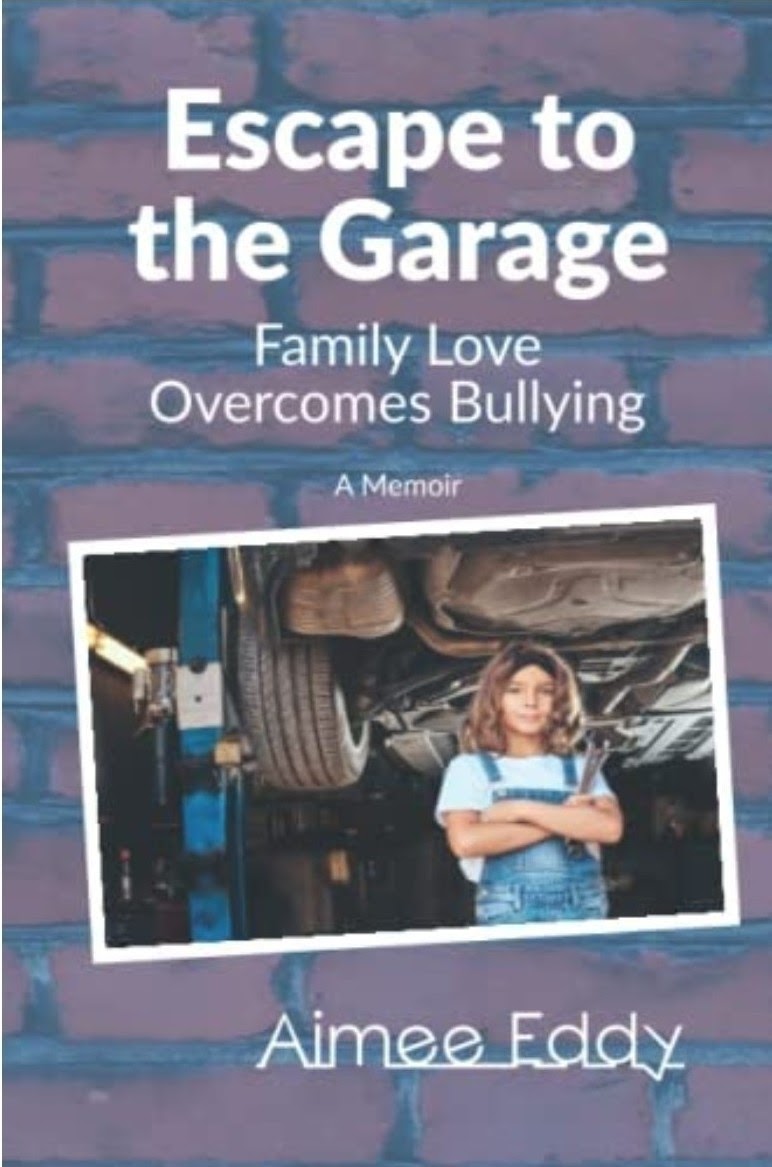
I’m getting closer to finishing the editing process, but as you can see, I have a long way to go until I hold my published book in my hand. Since high school I have dreamed of having a book published, and I am determined to make that happen. In time I will hold my book, Escape to the Family Garage: Family Love Overcomes Bullying. The title could change. Sometimes publishers change the titles we authors have given our manuscript.

I will strive to get my memoir published and make it a success when it is published. My writing helps me help others and is a form of therapy to me. It helps me stand tall in the light of recovery.

“BURNING” AWAY WORRIES

Times are tough. There is a lot going on in our country and in the world. First Covid spread across the world, then shortages plagued our businesses, then people fighting over politics raided the capital, then Russia declared war on Ukraine, and inflation and rising gas prices struck many countries including ours. All of these have taken a toll on people, creating worrying, anxiety, fear, and sadness. Worries plague us all and hit those with mental illness even harder.

I’m a worrier. My husband is always reassuring me that things will be okay. My friend Cheryl says we do a kind of song and dance. I text her my worries, she reassures me with texts, and we do this several times until I calm down. Everything I worry about always turns out for the good and Lou and Cheryl say, “See, we told you everything would be alright.”

When Lou and I were first married, the worries were so bad I would lose sleep, have anxiety attacks, and fall apart. With therapy and my support system, the worrying had gotten better and less debilitating. This year those debilitating worries are threatening to overtake me again. We’ve been having a tough time financially. Things at Lou’s job have changed, and this has taken a toll on our finances. On top of that we’re still paying on some bills from when I had back surgery, our furnace is squealing, and other bills are adding up.

My worries have become like a nagging voice in my mind telling me negative things, obsessing on the same things, making things out to be worse than they are, and embellishing the problems. Once the voice of my worries gets started, it refuses to stop. My muscles tighten, my chest aches, my anxiety heightens, and I lose sleep even with sleeping medication. The voices shout at me, ramping up my fears, and I feel like curling up in a ball. It’s so agonizing to fight the voices. My whole body feels the power of a small worry that turns into a huge one.

In 2020 I started a business by chance. While laid up from back surgery I coped by woodburning Christmas ornaments, and when I said I would give one to a friend, she offered to buy it. Before I knew it, I was selling ornaments, plaques, canvas wrist purses, and much more. I started a group on Facebook to sell my work and my business: “Aimee’s Woodburnings” was started. I love to woodburn and it has been my coping technique through some of my surgeries and is now helping me cope with the worrying.

During Christmas I sold forty-two ornaments. Then during January my sales slowed. In February they began to pick up. This month I have had several orders plus an order for twenty-five crosses. I can’t draw anything but stick figures, so I use patterns to create my designs. There is nothing more exciting to me than the challenge to come up with a design my customers would love. Sometimes I cut patterns and use several of them to create a design. This gets my mind thinking about other things then my worries.

For the crosses I use stencils to put the words “He’s Risen” across the middle of the cross and stencils to decorate the top and bottom half of the crosses. Woodburning relieves my stress and keeps my mind occupied. I get excited when a customer requests something special. My mind starts thinking of what patterns I can use to fill the request. It feels like I have reached a euphoria. I flip through my patterns, I pick the patterns I need, I make copies on my printer, I cut them and position them, and I tape them and carbon paper to the wood. Finally, I trace them to the wood and then I burn them. All of this takes concentration which keeps the worries away.

The money from my small business was originally meant to go towards getting my memoir published, but during these hard times it has helped with groceries and necessities. My small business has been helping me fight my obsessive worrying from getting too overwhelming, and it has helped us out financially. I just love how an idea or a pattern can transform into a beautiful piece of work. It brings me joy to sell my work to people who can give them as gifts or use them to decorate their homes. With each woodburning I feel my worries drift away. I get so engulfed in my work I forget what was bothering me in the first place.

What crafts or activities in your life makes you happy? What things do you like to do that keep your mind occupied? If you’re struggling with overwhelming worries and anxiety, turn to the things that help you cope and keep your mind busy. Find something you enjoy and when worries voice starts nagging you, do that craft or activity that distracts the mind and lifts your spirits. If this doesn’t help with your worrying and your having problems with anxiety and panic attacks, talk to a therapist or psychiatrist.

My small business is therapy to me, and I love doing it. Each order I get helps burn away my worries. Aimee’s Woodburnings helps me stand radiantly in the light of recovery.

If you want to know more about my business leave me a comment.

TRUTH

BY Julie Eddy

I will not be led

Astray or abused

By the vipers of

This world

Their tongues will strike

I will fight

With all my might

Until all the pain

Is gone

I shall shine

From within as the

Truth has won

This poem is written by my mother Julie Eddy. God has touched her soul with poetry. She is a wonderful woman who raised four children. She has eight grandchildren, two great grandchildren, and a third grandchild on the way. She loves antiques and has been married to my dad for fifty-one years. She is a kind woman who gives her heart and soul to her family and friends. I am honored to share her poem with you on my blog.

PERSONALIZATION

I’ve written about cognitive distortions in several past blog posts. When struggling with depression, it’s important to know what cognitive distortions are and which ones you struggle with. Many people struggle with a distortion called personalization. It’s when you put the blame on yourself for negative events that are out of your control. This type of thinking leads to a lot of guilt and anguish.

I’ve struggled with personalization throughout my life. In school I struggled with making friendships and when I did make friends, they either turned their backs on me or moved away. When a friend moved away, I blamed myself. My friends moved because I was a loser who deserved to be alone. My friends never wrote me even though I gave them my address because I was a worthless friend to them. Everything was my fault. This caused me a lot of guilt and internal pain. I felt that I wasn’t worthy of friendships. I caused them to leave me. What I didn’t take into consideration was that maybe their parents got better jobs and maybe they didn’t write because they lost my address.

In seventh grade my uncle was in an accident. When I found out about the accident, I wished he’d be injured so kids at school would pay attention to me. When we got the news, he died I automatically blamed myself. I was convinced for the longest time that I was an evil person who wished her own uncle dead. I struggled with this for several years. In eighth grade I struggled with it so much that I thought I was having a mental break down. The guilt and anguish of taking the blame ripped me apart inside. My uncle was run over by a man who had been drinking, yet I blamed myself. It took a school therapist to help me see I was not to blame.

For the longest time when plans with a friend or family member got canceled, I would have a break down. I’d go on a self-destructive path of blaming myself and punishing myself. They canceled because I’m boring to hang around with. Who would like to do something with such an awful person like me? It’s all my fault they canceled. I would curl up in a ball and cry and berate myself. I would try to figure out what I did wrong to make the person not want to be around me. I didn’t even consider that maybe an emergency came up or the person wasn’t feeling well. To me the only possible reason for the plans ending was because I did something wrong.

Blaming myself for things that were out of my control put a lot on my shoulders. I internalized the guilt, the self-hate, and pain. The feelings tore me up inside. Years of blaming myself for the negative events in my life took a toll on me. It led to a lot of crying, to self-injuring, and self-berating, and it was all unnecessary. I tortured myself for no reason.

It’s hard to argue distortive thinking. When the mind is sick, it feels like you have lost all control of your ability to think and reason. Your mind takes on a life of its own. You feel like you’re trapped within its evil wrath, but you’re not. You can fight your thoughts. It’s not easy. First step is to Google cognitive distortions or get the book, Feeling Good The New Mood Therapy by David D. Burns, M.D. and identify the cognitive distortions you struggle with. Once you have identified them, talk to a therapist about how you can learn ways to change this type of thinking.

In therapy I talked about how I used personalization. We talked about situations where I blamed myself for something bad that happened. My therapist helped me learn to reason with myself. I’d write down the situation in my journal and then I would write out the reasons why the event could have gone wrong. Like when my uncle died, I wrote down: a drunk driver ran him over, a wish can’t kill a person, I had no control over how my uncle died and could not have caused his death. Therefore, I was not to blame for his death. It was an awful accident that was out of my control.

My friend canceled our plans to meet for dinner. In my journal I wrote down: she could have been called to work, she may have had a family emergency, her car may not have started, or she may not be feeling well. Writing down the reasons my friend could have canceled helped me avoid guilt and pain.

This sounds easy, but it’s not. Just writing these down doesn’t just make those feeling burning inside you disappear. You also must fight your urge to blame yourself. You have to remind yourself repeatedly that you are not the blame for things that are out of your control. Battling the sick mind is very hard, but you can do it. A therapist will also have other ways you can change cognitive distortions. Your mind doesn’t have to control you: take control of it.

I still find myself struggling at times with cognitive distortions and when I do, I journal, and I talk to my support system. I stand in the light of recovery because I’m willing to fight and take control of my mind.