Blog posts

I DON’T NEED A HERO


   We all have heroes in our lives. They can be movie stars, parents, or people who performed a courageous act. Heroes are people we cherish deeply and look up to. Then there are people who try to play hero. They go out of their way to get a pat on the back and praise. When you’re struggling with mental illness, you tend to lean on others for support, but what you don’t need them to do is play hero.

   When I was with my ex-boyfriend, he made it a point to tell his friends and family about my mental illness and how helpless I was. The worse my illness became, the more he bragged about how well he was taking care of me. Everyone praised him on what a good person he was for taking care of such a helpless wreck. He even told my therapist about all he was doing for me and how I was ungrateful.

   He took care of everything for me and wouldn’t let me help out. He wouldn’t let me be his partner; instead he wanted to be my hero. He wanted everyone to believe he was my hero. He controlled me like an animal, causing my illness to worsen. He told people I abused him, when in fact, he abused me. All I wanted was him to work with me through my illness, but instead he told me he was going to take care of me on his own.

   I didn’t want him to be my hero. I wanted him to be my partner. It angered me each time he bragged about what he was doing for me. I hated how his family felt sorry for him and told him how wonderful he was. I cringed each time they told me how grateful I should be. He made me feel small, useless, and helpless.

   When I met my husband, he stood at my side and agreed to go to couple therapy to learn how to handle my illness. He comforted me, supported me, and told no one what he did for me. He never asked for a pat on the back; he just did it because he cared. He also allowed me to do things for him. I taught him how to drive and he taught me how to love again. He showed me he needed me as much as I needed him. He never played hero and refused to be called my hero. Instead, he became my partner.

   Together, as a team, we took on my illness and we still do. He allows me to do stuff for myself and for him. We figure out challenges together. We do almost everything together. We are partners.

   Just because somebody is mentally ill doesn’t mean he or she is incapable of doing anything. He or she does not need a hero. Allow him or her to do things for him or herself and you. Show him or her that you will work with him or her to get better. Don’t ask for praise from others. Just be at the person’s side because you love him or her. Don’t play hero; be a partner, a friend, and a supporter.

   I might need a little extra attention and support than my husband does, but I do take care of him, also. We face the complication of my illness,and we take care of our home and other responsibilities together. I also take care of some things on my own with his support. Because he doesn’t try to be my hero, we share our lives with happiness and I dance within the light.

DEVELOPING BAD COPING METHODS


   Often when you’re struggling with a mental illness, you develop many bad coping methods. You come up with the best way you can think of to handle the pain within you. Without guidance, you don’t know of any other ways to handle your inner agony. You might not even realize that your coping technique is hurting you, not helping you. You find yourself using your bad coping method so often that it becomes an instinct. You automatically turn to it during rough times.

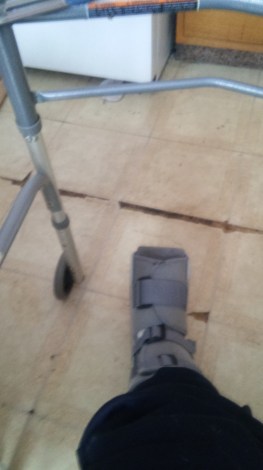
   My school years were like a living nightmare. Each day I was put down and tormented by my peers, while I was also dealing with an undiagnosed mental illness. I found going to school unbearable. I didn’t know how to deal with the powerful emotions and the fear of going to school each day. I started imagining bad things happening to me, like getting hit by a car and being unconscious for a month, or falling down and breaking my leg. If I got hurt then I wouldn’t have to go to school.

   I began daydreaming about it during school, in the morning, and before going to bed at night. It got to the point that I couldn’t stop thinking about it and I started wishing my daydreams would come true. My imaginary accidents provided an escape from reality. Getting hurt was the only way I could think of to avoid facing day after day of teasing and internal turmoil. If I got hurt, then everyone would pay special attention to me and maybe some of my classmates would be sorry for what they had done to me.

   I coped with rough times this way so often that this became a habit to me. I couldn’t stop it, even in my adult years. When college and work became stressful, I would automatically imagine getting hurt. When things got rough and I felt like disappearing, I would drift off into my dream world.

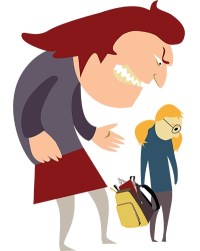
   When I told my therapist at that time about my daydreams of getting hurt, she laughed at me. I was confused. Why did she think my daydreams were a joke? Weren’t they serious? I couldn’t stop them. Wasn’t that a problem?

   I left that therapist and found one who took me seriously. She told me I had developed an unhealthy coping technique, and I had done it so long I didn’t know any other way. She told me my daydreams were like self-injury. I cut to relieve my pain and I imagined injuries to escape my inner pain. In a way I was self-injuring my soul. I wanted and dreamed of something bad happening to me, causing inner turmoil. It kept me awake at night, it made me anxious, it became hard to focus on reality, I started making mistakes, and I also started hating myself for wanting to be hurt.

   My therapist told me when the stressful and rough times faced me, to try to picture something happy, like walking on the beach or lying in a field staring up at the sky. She told me when I started to daydream about injury, to tell myself to stop and try to clear my mind. She taught me healthy ways to deal with stress like using relaxation techniques, listing the positive things in my life, and doing hobbies to keep my mind busy.

   Think about the bad coping techniques you have developed. Is there a better coping method? Are your unhealthy ways actually hurting you in the long run? How can you change something you have done for so long? Talk to a therapist who will help you find better ways to deal with your pain and darkness.

   I still struggle with my bad coping methods, but they don’t happen as often and I have learned how to fight them. I have also learned to cope with stressors and life struggles healthily. When I start imagining the worst I stop myself and start focusing on the positive. Because I am able to do this, I dance within the light.

NOT KNOWING WHEN YOU’RE ILL


   Many people suffer with mental illness without even knowing it because some symptoms are things all people face from time to time. Many of us have sad days, feel lonely, have negative thoughts, feel hopeless, struggle with expressing feelings, and more. How do we tell if it’s just a natural feeling or mental illness? Sometimes people with mental illness have lived their lives for so long in the hole that they think their darkness is natural.

   For a big part of my childhood and all my teen years, I felt a deep darkness within my soul. I didn’t know how to describe my feelings and thoughts, so I kept them deep within me. This led to breakdowns and angry fits. I thought I was just different and what I was dealing with was who I was. I saw myself as an angry, sad, and lonely person. My mom always told me I saw the glass half empty. I thought it was part of my personality.

   When my cousin died, the hole became deeper. My feelings were out of control. I dipped further into sadness. The feelings of hopelessness, worthlessness, and lack of energy increased. I had always struggled with sleep, but it suddenly became impossible. I sat up all night drowning in my thoughts. I knew something was wrong with me, but I didn’t know what. I told my family I was fine when I was dying inside. How could I tell them something wasn’t right with me when I didn’t know what it was?

   One day, at college, I went to a table set up with information on mental illness. I knew my grandmother on my mom’s side had mental illness, but I knew very little about it. I picked up a pamphlet on depression. In it I found that I had most of the symptoms. Suddenly everything made sense. I knew at that moment I had been suffering with a mental illness and I needed help. I looked back at my younger years and realized I had been sick for a while.

   I learned that a lot of the symptoms I felt were feelings people have dealt with at one point or another in their lives. The difference is I felt them on a daily basis and all at once. Nothing seemed to ease them. I also learned that for people who have mental illness the darkness, the feelings of worthlessness, and other symptoms were more powerful than what healthy people feel.

   In other words, when you fall down into the hole of darkness and no matter how hard you try you can’t climb up, when sadness blankets your soul, smothering you, when your negative thoughts flood your mind relentlessly and emotions stab your insides over and over again until you’re drained of energy, you have a mental illness. This doesn’t happen once in a while; it happens daily. When nothing can shine the light within your soul, then you know you need help.

   There are many different mental illnesses, but if you notice you have feelings, thoughts, actions that you struggle with on a daily basis and you find it hard or impossible to function, tell someone and find help. Mental illness is treatable, but you must first recognize and accept you have a problem.

   When I learned I have mental illness and recognized the symptoms, I worked hard to reach for recovery. It was a long and difficult path, but it was worth it. Now that I know that I have an illness, I work hard daily to stand tall within the light.

OVERFLOWING WITH EMOTIONS


   Many people cry during a dramatic movie. Who didn’t cry when Bambi’s mother or Lassie died? For some, all they have to do is see a person in tears on a T.V. show or movie and they are crying, too.

   But What happens when you’re not watching a movie and the tears come? Like when you’re just talking about something important in your life, or just having a simple conversation with a friend. When you have depression, Borderline Personality Disorder, anxiety or other mental illnesses, the tears come on suddenly. You’re not necessarily crying because you’re sad, but just because of overflowing emotions.

   I probably cry more than most people and most of the time it’s not because I’m sad, but because emotions flood my body. While at work I was telling a customer about my writing and suddenly the tears started falling. I fought to hold them back, but I couldn’t.

   My customer looked at me. “Why are you crying?”

   I wiped my tears. “It’s just allergies.” I couldn’t explain to my customer how powerful my emotions are and how simple things stir them up.

   It’s embarrassing being overwhelmed so much that I cry and it is very difficult to explain. How do I explain I just feel things more strongly than others to the point my eyes water? How do I explain crying when I’m not sad? How do I explain that I’m suddenly hit by powerful emotions and I have no control or that I feel things more intensely than others?

   I went to my doctor’s office one day and I told her about my future appointment with an allergist. My eyes started flooding with tears. My doctor looked at me, “You poor thing. Your eyes are watering badly. I hope they find out what allergies you are suffering with.” I just agreed with her. I couldn’t tell her the truth. It was just easier to let her believe it was allergies. I couldn’t tell her suddenly a waterfall of feelings filled me and I wasn’t sure why.

   Many people become overwhelmed when something really good happens to them. Like when a long lost son returns home, when a new baby is born or when a friend throws you a surprise party, but what about out of the blue when you’re having a simple conversation. The simplest thing can bring tears for me. Why? Because I feel things more deeply and much stronger than others.

   There is no cure to the sudden tears and emotions that overwhelm you. It’s a part of your life and it’s nothing to be embarrassed about. Feeling things deeply can make you more sensitive to others’ needs and help you to be more compassionate. It doesn’t make you weak; it only strengthens you. Use the tears to reach out to others and show them the true you.

   I’m still learning to stop hiding why I suddenly cry. I’m finding that admitting the truth is helping me reach even further into the light.

INFLUENCE OF OTHERS


   People in our lives have a big influence on us and on our pattern of thinking. We are especially influenced as children. Things said to us by our parents, teachers, peers, and family members can either strengthen us or hurt us. If a parent pushes his or her child to be an over achiever, the child begins to believe if he or she falls short, he or she is a failure. If a kid is told daily by their classmates he or she is a failure, he or she begins to believe he or she is not worth anything. Constant belittling becomes ingrained in the mind and can lead to poor self-esteem and mental illness.

   Throughout my childhood, my classmates and teachers put me down. They called me stupid, retarded, loser, and dummy. My teachers and classmates told me I would never become anything. I’d never be able to hold a job. I started to hate myself. I began to believe what they were saying about me was true. In my mind, I was a loser and stupid. I stopped trying. I didn’t do my homework or study for tests. Why did I need to, anyway? Teachers assigned a student to give me answers on the tests.

   Then I went to high school and the teachers no longer asked students to give me answers on tests. My grades suddenly counted. I was no longer going to be pushed on from grade to grade. I became convinced I had to prove myself to everyone. A low grade meant I was a failure. I spent endless hours studying. I had to find out if what everyone told me through grade school was right. I became obsessed with succeeding. I gave up fun for hours with my head in my books. I criticized myself when I got a low grade and ripped myself apart when I didn’t understand something while doing homework.

   Years of being put down by my peers and teachers haunted me for the rest of my life. I struggled with my self-esteem. I hated how I looked, I thought I wasn’t as smart as everyone else, and I felt worthless. Most of all, I felt like everything I did I had to succeed at or else I was a failure. Even in college, and in the work force, I felt like I had to prove to the world and myself I was not stupid. In college, if I got a low grade, I degraded myself and when I started working and I made a mistake, I put myself down.

   I still struggle with the need to prove myself. I would start writing a book and when I felt it wasn’t good enough I would quit. This time with the help of my husband I have stuck to writing my memoir, but I keep thinking what if I can’t get it published, what if I get it published and I can’t sell it to readers. Then I would be a failure just like they told me I would be throughout school.

   My mental illness increased my negative thoughts. Through therapy I had to learn how to like myself and change my pattern of thinking. I had to work hard to undo the damage my classmates and teachers did to me. My therapist told me to make a list of the things I liked about myself and then make a list of my successes. It took me a long time to fill my lists, but after some hard work I found some good things about myself and I came to the realization I am successful.

   Look back at the bad things you were told as a child and see how it affected your thinking. Find a therapist who can show you a healthier way of thinking. Change your negative thinking to positive and learn to love yourself inside out. Put the past behind you and start over with a new view on life.

   I remind myself daily, I have nothing to prove. I am a success. I want my future book to do well because I want to touch the world with my writing, instead of trying to prove that I am not a failure. I no longer have to prove myself. I have learned to love myself and measure even the small accomplishments in life as an achievement. Because of my new view of myself and my life, I bathe in the light.

FEELING ALONE WITH OTHERS

  Mental illness can be a very lonely illness. It’s a battle within the mind and a heavy burden to carry. It’s very hard to explain to others what is happening within you, so you put a smile on for your friends and family. You pretend like nothing is wrong when in reality you’re dying inside. Your friends and family members are laughing, talking and having a good time, but you’re not. Suddenly you feel alone while surrounded by people. You can’t tell people how you feel. You don’t want to ruin their fun. So you suffer in silence.

   I felt this way when I was ill. I thought my illness was my battle and no one could help me and no one would understand. I went to work with a smile across my lips; I talked and laughed with my fellow employees. I put on a show for everyone, but inside was a terrible darkness. I had to force myself to smile, to laugh, even to talk, and it was hard to make myself go to work, but no one knew. I felt so alone. It was like I was the only one on earth suffering. I was surrounded by hundreds of customers and employees, yet it seemed like I was by myself.

   I tried to avoid going out with friends. Not because I didn’t want to, but because I didn’t want to ruin their fun, and I knew I would only become more depressed. When I did hang out with them, I felt like an outsider. They were happy while I was sad. They were having fun and I was struggling to see beyond my hole. While they enjoyed themselves, I sunk deeper into the darkness. I was with my friends, yet I felt like no one knew I was there. I was fighting a battle no one knew about, an internal battle that was all mine to bear. So I thought.

   In time, I started making excuses why I couldn’t go out with my friends. I started hiding at home. I’d go to work and return home to my room. I spent hours feeling isolated from the world. I was alone and lonely. I had no one around me and I desperately wanted someone to say, “I know what you’re going through, let’s talk.” I wanted someone to spill all my feelings to, but I kept them to myself. I didn’t think anyone would understand. This only made me fall deeper into my hole of depression and led to self-injury.

   It seems impossible to be alone when you’re surrounded by people, but it isn’t. When you’re struggling with an illness of the mind, it’s hard to explain to others what’s going on within you. People find it hard to understand what you’re facing when they have never been through it, but if you give them a chance they will try. If they don’t want to try, then find someone who will. Don’t try to fight your illness alone. Turn to family, friends, and a therapist for support.

   You’re not alone. Other people suffer with the same illness and there are groups on-line and off where you can find those people. Ask your therapist or contact NAMI, National Alliance on Mental Illness, to find groups near you. You can find NAMI on-line at http://www.nami.org/.

   When I was in the hospital, a caseworker arranged for me to participate in a Borderline Personality Disorder group when I got out. It helped to talk with people who were facing the same things as I. It helped me realize I was not the only one on earth with this terrible sickness.

   When I came to the realization I could not handle my illness alone, I turned to friends and family. With their help the burden became lighter and the loneliness faded. I learned that some of my friends have faced a similar illness themselves or have family members who have. Some of my friends and family members became my biggest supporters and partners in my struggle to reach for the light. With the support of others I no longer feel lonely. I now share the burden of my illness with friends, family, and my husband. I no longer feel alone and that helps me stand tall within the light.

SELF-INJURY ALTERNATIVES


   What do you do when you want to stop injuring, but you are finding it hard to resist the temptation? How do you resist that craving, that need to end your inner pain? It seems impossible to refuse the need to harm yourself and it’s hard to think of doing anything else other than ripping at your flesh. Are there alternatives to injuring? Can you do something else to fill your longings? My answer to you is yes. There are alternatives to self-harm.

   Putting an end to self-injury is like giving up drugs. You feel like you need it, you have to do it, you can’t survive without it and nothing else can take its place. When you try to give it up, somehow you keep getting drawn back to it. To curb those feelings, there are safe alternatives you can use instead of self-injuring. Below is some of the alternatives I used when I felt the need to harm myself.

  • Start a self-injury journal and write down how you are feeling and why you want to injure. Then write down how you would feel after you hurt yourself. Doing this helped me express what I was feeling inside and helped me see that I would only feel worse afterwards.

  • Draw on your arms with a washable marker, where you would like to injure. Put lines or draw a picture. I just drew lines in the spots I would usually cut. Afterwards I looked at my arms and thought how bad they would look if those were actual injuries. Then I’d wash them off and it was like washing the pain away.

  • Hold an ice cube in your hand until you feel the sting of the coldness. For me holding an ice cube until the coldness stung my skin resembled the sting of harming myself. This took the place of my need to feel physical pain instead of emotional. It was just enough to take me away for a few minutes.

  • Use a rubber band or hair band to snap yourself just enough to simulate an injury. I used the rubber band to also take the place of a cut. The snap against my skin was enough to relive my temptations.

  • Call a friend and tell him or her how you are feeling. Talking to my friend distracted me from what I wanted to do to myself. We would talk for hours until she was sure I would be okay.

  • Get out of the house by going out with friends, visiting family, or just going to the movies. Getting away from the place where I harmed myself kept me away from the tools I used and the place that I felt I could not resist my urges.

  • If all else doesn’t work, call your therapist or 1-800-DONTCUT. Talking to my therapist gave me a professional who could help me find other ways to express my pent up pain. My therapist also got me to talk about the feelings and thoughts that led to my injuring.

   Find an alternative to help you resist your addiction to self-injury. It’s not easy to do, but with hard work you can find ways to stop harming yourself. Eventually you won’t even need the alternatives because the need to injure will no longer haunt you. In time you will learn healthy ways to handle your inner pain and you will forget about using self-harm.

   I no longer need alternatives to self-injury. I now can handle emotional pain with healthier methods and without even considering cutting myself. Finding recovery from self-injury has freed my soul and allowed me to stand within the light.

   These are only a few alternatives. You can find some of these and many more at Teen Help at http://www.teenhelp.org/forums/f12-self-harm/t9418-alternatives-self-harm/.

WHAT’S NORMAL?


   We often think we all can be defined by who is normal and who is not. When we struggle with mental illness, we try to compare ourselves to others who do not have an illness of the mind. We think they are normal and we are not. Sometimes we think we are just freaks who don’t fit in with everyone else. We are thought of differently by those who don’t understand, we are emotional, we cry easily, we react to things differently, we are sometimes up and down and our minds play games with us. We are different.

   When I was ill I asked God, “Why am I not normal? Why can’t I be like everyone else?” Even when I was in school and the kids picked on me, I thought I was not normal because I had a learning disability. I thought the things that made me different made me inferior to others. It was as if I were another species. Being diagnosed with a mental illness increased my negative feelings.

   I looked in the mirror and saw an ugly, messed up wreck. I was different from my family and friends. They knew how to be happy, they enjoyed their lives, they didn’t cry for no reason, they didn’t stay up all night with racing thoughts or burst out in emotional episodes. I felt like an outcast. I could never fit in with everyone else because I was not normal. I felt like God made a mistake when he made me.

   I was always told God does not mess up, but I was convinced he goofed with me. Why else would I have a mental illness? Why else did emotions and thoughts seem to run wild throughout me, ripping me apart? Why else did I feel things so deeply? I could talk about something and tears would start spilling out of my eyes. People would ask and still ask, “Why are you crying?” I can’t tell them it’s because I feel a flood of strong emotions and I can’t control the tears. Why do the tears come even when something is not sad? Is it because I’m not normal?

   My mom told me, “There is no such thing as normal. We are each different and unique in our own ways.”

  Then I realized I wasn’t different because I had an illness, but because God made me to be my own person. Nobody is the same. He made each of us to be an individual. He doesn’t want us all to be alike. That would be boring. My illness was not and is not me. It’s not what sets me apart from everyone else. What makes me the person I am is the kind, loving, caring, and humorous person I am inside.

   So when you start asking why you’re not normal, remember normal doesn’t exist. You are your own person. You don’t fit in a category or in a group. Be proud of who you are. Remember everyone has flaws, different ways, looks, reactions, and so on. Your illness does not make you different or a freak of nature. Your illness is a part of your life, but it’s not you. Dig deep down inside you and discover who you are and how God made you special.

   I know I’m not normal and I now know no one is. I am proud of who I am and I know it’s not my illness that makes me different, but the work of God. He made us each in different shapes, sizes, colors, and with different personalities. We are all unique individuals. We are wild, wacky and a little bit crazy. I thank God for me. Being proud of who I am helps me stand within the light.

IDENTIFY YOUR FEELINGS


   With mental illness it’s important that you’re able to define the difference between feelings and thoughts. Many self-injurers hurt themselves as a way to handle overwhelming emotions, but when they try to express their feelings, they confuse feelings with thoughts. This makes it even harder to find ways to channel those emotions into something healthier then harming themselves.

   When I was struggling with self-injury, I thought I was telling my therapist my feelings when, in fact, I was describing my thoughts. Through my therapist and the book, The Scarred Soul, I found out there is a difference between feelings and thoughts. When I told my therapist, “I feel like my friend is ignoring me,” I was telling her what I thought, not my true emotions. My therapist also told me to use one word to express feelings, like I felt “hurt.” My feelings were made more powerful by my thought that my friend was ignoring me.

   My friend didn’t know how I felt, because I kept it deep within me. The more I held them inside, the stronger my emotions became and the more negative my thoughts became. This created more feelings. I became angry, sad, frustrated, lonely, and hurt. My thoughts seem to increase the intensity of my feelings. It was like the match that lit the fire. I “felt like” my friend was using me and I “felt” that She hated me and was only pretending to be my friend. These thoughts increased and raced through my mind. My emotions felt like swords jabbing into my soul, so I would injure.

   My therapist would ask me how I felt at each appointment. She gave me a list of feelings such as angry, sad, hopeless, guilty, happy, amused, frustrated, irritable, excited, and so on. Once I identified my emotions then I had to find things I could do to cope with my feelings, such as do a craft, exercise, journaling, call a friend, do relaxation techniques, I made a list of my emotions and then made another list of ways I could express them without injuring. Then I worked on how to change my thoughts into positive ones, like, “My friend was busy; she was not ignoring me.”

   Learning the difference between your thoughts and feelings can help you figure out what is leading you to harm yourself and what fuels those emotions. Thoughts can make emotions grow stronger and more intense. If you can pin point the emotions, you can find healthy ways to release them. Each day in a journal write down how you feel and what you will do to release your feelings without self-injuring. Then write down your thoughts and turn them into positive ones. Start taking those steps to stop hurting yourself now by identifying your feelings.

   By identifying my emotions, I can now express them without wounding myself. This has also helped me get a better handle on my depression. By telling what emotions I felt, I could find methods to help me find the light and I could express to my therapist what was happening within me. Then I could deal with, first, my emotions and then, my thoughts. By learning how to cope with thoughts and emotions I grew stronger and now I stand tall within the light.

   Once again I found some of this information in The Scarred Soul: Understanding and Ending Self-inflicted Violence By Tracy Alderman, Ph.D. In my past blog I gave you a link to get this book. I suggest you get it. It helped me out a lot and became like a Bible to me.

SELF-INJURY COPING TECHNIQUES


   While we self-injure, we think there is no other way to deal with the emotional turmoil within us. We don’t know how to cope with our internal pain or lack of emotions, but there is hope. There are other ways to deal with the illness that plagues our minds and souls. It’s just a matter of finding one or more that works best for you.

   When I was working towards stopping cutting, my therapist taught me different ways to handle my overwhelming emotions. Some of these techniques can be found in The Scarred Soul: Understanding and Ending Self-Inflicted Violence by Tracy Alderman, Ph.D. The Scarred Soul can be found at https://www.amazon.com/Scarred-Soul-Understanding-Self-Inflicted-Violence/dp/1572240792/ref=sr_1_1?s=books&ie=UTF8&qid=1472346771&sr=1-1&keywords=tracy+alderman .

   Below are some healthy coping techniques that helped me and may help you.

  • Use a journal to express your feelings. I used to carry my journal everywhere I went. I would write my deepest, darkest thoughts and feelings in it. I filled the pages and emptied my soul of emotions and inner agony I was burying within me. My journal became my lifeline. I would write on my breaks, when I was out to eat, or home alone.

  • Call a friend, a family member or member of the clergy to talk about what is happening within you. When I felt really bad and wanted to cut myself, I would call a friend. My friend would talk to me for hours and do her best to get my mind off of my illness. She wouldn’t hang up until I started laughing.

  • Use a punching bag or pillow to vent your inter frustration and anger. My therapist suggested I do this. I bought a child’s punching bag and would punch it until all the pent up anger was out of me. When the punching bag popped, I used a pillow. Just punching something relieved me of feelings and emotions that were burning deep within me.

  • Use relaxation techniques to soothe your inner feeling and need to hurt yourself. I used deep breathing and relaxing music to help me relax. When I felt like injuring, I would put on soft music lay down and picture myself walking in the woods or on a beach. If that didn’t help, I would take a deep breath in, hold it for a minutes and slowly release it. I would do this several times till I felt better.

  • Get yourself a therapist who can give you professional guidance. I realized I couldn’t fight my illness on my own. I needed professional help. I found a therapist I felt comfortable with and told her my deepest secrets. When I was unable to verbally tell my therapist how I felt, then I wrote it down for her to read. Then I did the homework my therapist gave me. I found that therapy doesn’t work unless you’re willing to do the work.

  • Identify your feelings as something separate from your thoughts. I learned that feelings can be described with one word, not in a complete sentence. Some feeling words are frustrated, sad, angry, and alone. I learn that saying, “I feel like my life is over” is a thought not a feeling. Once I identified my feelings, I found ways to relieve them like using some of the above coping techniques.

   Try using some of these techniques to help you cope with your mental illness instead of injuring. If these don’t work for you, talk to your therapist about other ones that may help you. Remember, dealing with the pain and darkness within you takes hard work and determination. Ending the cycle of self-harming is not going to be easy, but if your determined enough, you can do it.

   With determination and hard work I stopped self-injury and now I stand tall within the light.