FRIENDSHIPS AND BOUNDARIES

True friendship is a special thing, and it doesn’t come easily. A good friendship takes work. Both friends must give equally and understand each other’s boundaries. When a person is struggling with mental illness, it becomes hard to be a good friend. The person struggling has a hard time understanding boundaries and finds it hard to be able to listen and support a friend. Even in recovery a person struggles with friendships and boundaries.
Being a friend to a person in the depth of the hole of mental illness takes a lot of patience, understanding, and strength. A person struggling is trapped in his or her own agony, and he or she finds it impossible to be supportive, able to listen, and honor boundaries. He or she can barely handle his or her own problems let alone others’ problems. They often step on their friend’s boundaries, expecting too much, and become angry when the friend can’t give as much as he or she needs.

When in recovery, a person is stronger and more able to handle other’s problems, but must keep to his or her own boundaries. In recovery he or she are continually taking care of her or himself to stay well. When the struggler is having a hard time, he or she must focus on him or herself. It’s important for the person with mental illness to tell his or her friends when he or she must take a step back for a bit to focus on the persons own well being.

I have been struggling emotionally with my husband’s illness, and now he has another illness on top of that. I’m feeling overwhelmed, sad, and anxious. Several times I have teetered at the edge of that dark hole of depression. I’m trying to prepare for the future while handling what is going on with him now. It’s a lot to handle. I worry a lot, I slip into bouts of depression, and I have anxiety attacks.

A good friend of mine is also going through a hard time and she calls me almost every night to confide in me, but I have found it hard to listen to her problems and deal with my own. I told her I couldn’t handle her problems right now. She replied, “I didn’t ask you to handle my problems.”

When I care about a person and he or she confides in me or vents to me, I become emotionally involved. When I’m struggling with my mental illness, I can’t become involved because I’m barely hanging on. I must put myself first, so I don’t fall down that hole again. That’s when I need to put up my boundaries and stick to them. My friend didn’t call me for a couple of days. I feared she was mad at me. When I told her I was feeling better and could talk to her, she seemed distant.

What I needed from her was support, encouragement, and listening ears while I struggled, but instead I received silence. My Borderline Personality kicked in, and I feared she was abandoning me. I became angry and played over in my head how I would confront her, but I decided instead to write a nice email explaining why I couldn’t listen to her problems. I came to the realization that she too has boundaries and I can’t expect everyone to be able to handle my illness.
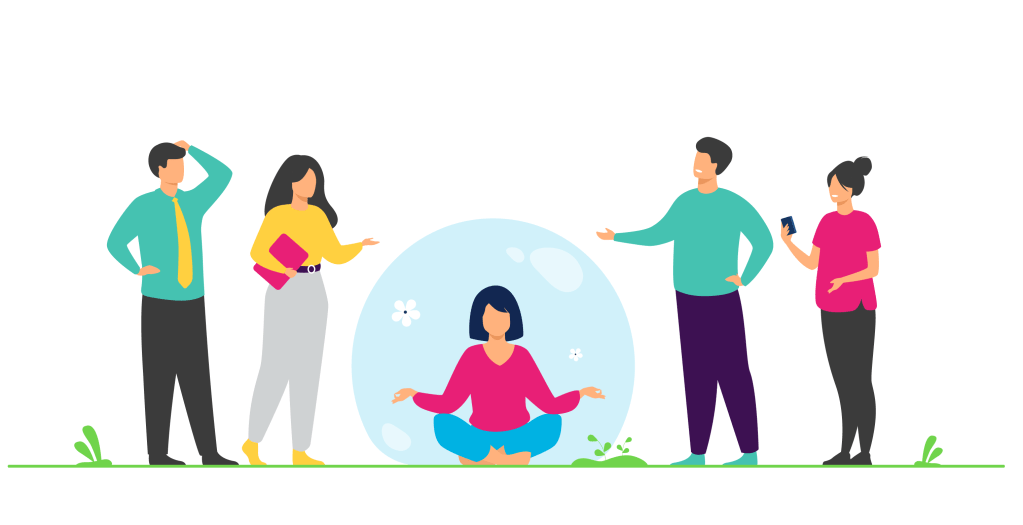
In time my friend started confiding in me again. Then my husband and I had an appointment with his doctor about his new illness. I became overwhelmed with the things I needed to do for him. Plus, I’m trying to help my sister with her vision problems and we keep hitting dead ends. I was feeling emotional and when my friend called, I confided in her and forgot to ask about her problems. She became mad at me and when I tried to explain we ended up arguing. I decided for my well being and for the sake of our friendship, I needed to take a break from the friendship. At this point in my life, I need to focus on keeping myself well and depend on friends who can be supportive and understanding.

Not every friend you have understands how to help you or is able to give the support you need during hard times. You can teach them, but it’s up to them if they can handle your illness. If they can’t that is okay. Mental illness is a hard illness to handle, and you must respect your friends’ boundaries. Know which friends you can turn to while you’re struggling and know that those friends also have boundaries. Respecting your friends’ boundaries and letting your friends know about your own boundaries will help you build a strong relationship.
Knowing that I have good friends and using boundaries and respecting boundaries helps me stand tall in the light of recovery.

SIGNS OF A HEALTHY RELATIONSHIP

For most of my childhood and into my adult years, I didn’t know what a healthy friendship was. As a child I had friends turn against me or hurt me. In my adult years I chose people I thought were good friends, only to get hurt by them. When I started dating as an adult, I got myself into bad relationships. For the longest time I didn’t know what a healthy relationship was. I found myself being hurt, taken advantage of. and abused.

It wasn’t until I started to work towards recovery from mental illness that I learned through therapy what a healthy relationship is. That’s when I started cutting unhealthy relationships from my life. I ended friendships that were toxic and started working on building healthy relationships.

Sometimes while struggling with mental illness, you feel so bad about yourself that you can’t see the signs of a toxic relationship, or you think that you deserve how you are being treated. No one deserves to be treated badly. We all deserve to be in healthy relationships. You might ask how I know what a healthy relationship is? Below is a list of signs of a healthy relationship.

  • You have good communication. A healthy relationship cannot survive without good communication. You need to be able to talk to each other about important things, feelings, and much more.
  • You lift each other up. You support each other and you give each other strength. When one of you is down, you lift the other one up and so forth. If your partner cares for you, he or she will lift you up and make you feel good about yourself.
  • You respect each other. You value each other and care about one another’s wants and needs. You treat each other with consideration, and you recognize each other’s worth. You show kindness and compassion.
  • You are there during good and bad times. In a good relationship, you are there for each other during happy times and bad times. You take care of one another when you’re sick and celebrate the good times together. A good partner will take care of you after surgery, when you have the flu, when you lose a loved one, and you will do the same for him or her.
  • You listen to each other. In a good relationship your partner is willing to listen to you when you need someone to confide in or have something important to say. Your partner wants to hear about your bad days and good days. He or she is willing to let you vent when you need to. He or she doesn’t ignore you or cut you off when you are talking. The person cares about you enough to want to hear what you have to say.
  • You take care of each other. In a good relationship your partner should take care of you as much as you take care of him or her. It’s not a one-way street. One person doesn’t do all the work in a good relationship. You care for one another’s needs.
  • You respect each other’s boundaries. Everyone has boundaries and the person you care about should respect those boundaries. If you need time alone, then your partner should respect that. If you can’t handle something emotionally and you need to step back, that should be respected.
  • You support each other. If your partner starts a new job, be supportive. Your partner should be encouraging, helpful, and available when you are emotional. He or she celebrates your success with you and helps you out when things become too much. You do the same for your partner.
  • You care for each other. Your partner should show you how much he or she cares about you and your needs doing little things to show care like hugs, compliments, saying “I love you,” and helping you without you asking.

It wasn’t until I met my husband that I learned what a good relationship is. On our first date he promised to treat me like a woman, take care of me, and respect me. This promise convinced me to go on another date with him, and after twenty years together and almost eighteen years of marriage he is keeping that promise. He showed me what a healthy relationship is supposed to be, and he is the first man who ever treated me like a beautiful woman. I also now have healthy relationships with my friends.

Use these signs of a good relationship to guide you in friendships, boyfriends or girlfriends relationships, and marriages. If your relationship doesn’t have any signs of a good relationship, consider talking to your partner to work towards fixing your relationship. Therapy helps not only marriages, but all types of relationships. Consider it. If you find your partner is unwilling to fix your relationship, then walk away if you need to.

I walked away from a friendship that became too much for me. I got well and she didn’t. Our relationship risked my mental well=being. Now years later, she’s doing better, and we are talking again. We are slowly getting to know each other and rebuilding our friendship.

I now have many healthy relationships, and this helps me bathe in the light of recovery.

SIGNS OF A TOXIC RELATIONSHIP

When you’re struggling with mental illness, it’s easy to get into unhealthy relationships. Even if you don’t have a mental illness, you can find yourself in toxic relationships. When I was struggling with mental illness, I became prey to abusive and destructive relationships with boyfriends and friends. I was too sick to see the signs that I was in a toxic relationship, and they ended badly with me getting hurt.

As I worked on my recovery and went to therapy, I began to learn the signs of a toxic relationship. Once I learned the signs, I ended a lot of friendships that were not good for me. I found myself reevaluating what I needed and wanted in friends and boyfriends. Below is a list of the signs of a toxic relationship:

  • The relationship is one sided. When you are in a relationship, each person must contribute and support the other. When one person is doing all the work, it is an unhealthy relationship. I had to take a step away from a friend because our friendship suddenly centered all on her. I didn’t get a chance to talk about myself or my needs. I found the friendship too much for me to handle. I needed support too, so I walked away.
  • The person is controlling. When you’re in a relationship, you should be able to make your own decisions and do things on your own. When the other person starts telling you what to do and what you can’t do, that is unhealthy. The controlling person might take over all finances, tell you when you can see your friends and family, make decisions for you, and much more. I was in a relationship with an ex-boyfriend who was controlling. He told me what pan I could use to cook in, he spent my money on his needs, he demanded his family was more important than mine, and he made decisions for me. He kicked me out, and that’s when I was put in a mental health hospital and started on my road to recovery.
  • The person uses your weaknesses to put you down. A person who knows your weakness and uses them to play with your mind and put you down is toxic. This person will use your fears to manipulate you. For example, if you’re afraid you’re not a good driver, that person will harp on mistakes you make while driving, insult how you drive, and tell you what a bad driver you are. My ex-boyfriend used my self-doubt about being successful against me. He put me down for working as a cashier, told me I failed because I was unable to go on to a four-year college, and insulted me for not getting the degree I wanted. The funny thing was he never went to college and had no degree! After we broke up, I realized I was successful.
  • The person is abusive. No one deserves to be abused in any way. If you are being abused physically, sexually, or verbally, you need to find help. Verbal abuse is just as damaging as physical abuse. Words don’t cause physical wounds, but they do cause internal wounds. All abuse is wrong, and you need to get out of that relationship. A friend I trusted abused me sexually, and an ex-boyfriend verbally and sexually abused me. It took me years to recover from these abuses. Luckily, they both eventually broke up with me.
  • The person is always jealous. If you’re in a relationship where a partner is jealous every time you go out with friends or talk to another person, then you’re in a toxic relationship. If your friend is jealous of all your accomplishments or because you hang out with other friends without her or him, that is very unhealthy. I had a friend who was jealous because a lot of people I worked with liked me, and her jealousy became a big problem because she started copying me. When I started on my road to recovery, I ended the friendship.
  • The person doesn’t support you. When you’re in a relationship with a partner or a friend, you should support each other. You should support each other during good times and bad times. If you are not getting any support, that is a sign that you’re in a bad relationship. I had friendships in the past where I was supporting my friends, but when I needed support, I felt alone. Now that I am in recovery, I have friends who celebrate my accomplishments with me, listen to me when I’m struggling, and give me advice when I need it. I do the same for them.

If you notice some of these signs in a friend or partner, then make the decision to walk away from that relationship. If you are in an unhealthy marriage, try couple therapy. We all deserve to be around and with positive people who give us what we need in our relationships. We live in a harsh world where building good relationships is a lot of work, but it’s worth it. Toxic relationships lead to depression, PTSD, anxiety, stress, and hurt feelings. You deserve healthy and nurturing relationships.

Now that I’m in recovery I have healthy relationships. I have some real good friends and a wonderful husband. I now know when to walk away from toxic relationships, and that helps me stand in the light of recovery.