Blog posts

FATHER’S DAY

A good father is a special man who loves his children endlessly and gives unconditionally. Not every man is a good father. Some fail at that role or were never meant to be a dad in the first place, but there are many men who take up the role as if they were born for it. A dad’s role is important in a child’s life and even in an adult’s life. A father never stops being a dad no matter old a person gets. He never stops being a hero.

My dad is one of those men who took on father hood as if he were born for it. When we were kids, he worked long hours at the family garage, but still found some free time to teach us, play with us, and love us. My brother, younger sister and I went to work with my dad at the family garage. Going to work with Dad was special to me. It was a chance to spend extra time with the man who worked hard for his family, a man I admired. On his free time, he swung us in circles, gave us piggyback rides, played kick ball and whiffle ball with us, and tickled us. He taught us to work hard for what we want and to cherish what we have no matter how small it is.

My dad is the type of man who would give what very little he has to help someone in need. He is also the most hardworking man I know. Whenever my husband and I have a problem with our car or home, my dad is willing to help. He has repaired my cars even before I met my husband. In my college years my cars broke down just about anywhere between my home and college which were a hour apart. My dad always came to my rescue. He hooked a chain from his pickup to my car and towed me home. He put engines, transmissions, carburetors, and so on in my cars. I can’t count how many engines he put in my cars. Even though I am now married, he has still offers to do repairs on my cars although the repairs are more minor than my younger years.

There isn’t much my father can’t do. He can fix cars, lawn mowers, private airplanes, and do home repairs and remodeling. He’s a very talented man. He put windows in our homes. One window in our living room we bought was bigger than the old one. My dad worked hard at making it fit. He had to take out some bricks, but he made it fit beautifully. My dad and his friend repaired our garage roof and when I was preparing for back surgery he and his friend put a new hot water tank in our basement. When I had breast cancer, we got a note from the township about our sidewalk being uneven. My dad and his friend fixed it.

When we got our home, the tiles in our kitchen floor were broken in spots. As the years went by the tiles broke even more, sticking to our feet and shoes. Before we knew it, we were tracking pieces of it around our home. Just recently my father offered to put a floor in our kitchen and we gladly accepted. I had popped a joint out in my hip and was off work when my dad and his friend decided to put the flooring in. My dad even let me pick out the flooring. The two men worked hours on end for a week to put in a new floor. They found several holes under the old flooring and even had to patch those up. In the end they put in a beautiful floor.

I admire my dad for how hard he works, for his endless kindness, for his ability to do many things, and his loving heart. I may not always agree with my dad, but I look up to him. He supports my writing and loves me without end. He’s a special man and God made him to be my father. I thank God for him each day. His determination and kindness have inspired me to give to others and to fight for what I believe in.

No matter how sick I got with my mental illness he never turned his back on me. He may not have completely understood my illness, but he has always been supportive and encouraging. He was and is always there when I need him. My father is more than my dad; he’s my hero. I thank God for him each day.

Because I have such a wonderful dad who is always there for me, I stand in the light of recovery, a well-loved woman with strength and determination.

THINGS NOT TO SAY

When you know a family member, co-worker, or friend with mental illness, it can be hard to know the right thing to say. Mental illness is one of the hardest illnesses for people to understand, and this sometimes leads people to say the wrong things. Often, they mean no harm by the things they say, and they don’t even realize how hurtful their words are to the person struggling. It’s a lack of knowledge and sometimes stigma that leads to this. Knowing what not to say can help prevent hurt feelings and anguish for the person who is struggling.

I have compiled a list of things not to say to someone struggling with mental illness. Here is my list.

  • Take a happy pill. Antidepressants and other medications for mental illness do not automatically make you happy. They help people struggling manage their symptoms, work towards recovery, and stay in recovery. They are very important medications and not a joke. Telling people who are fighting this illness to take a happy pill is an insult. They depend on their medication to make it day by day.
  • Snap out of it. People with mental illness can’t just snap out of their illness just like a person with cancer can’t just wish it gone. It takes a combination of therapy, hard work, and medication to reach recovery. It’s a hard road. It’s not a matter of snapping your fingers and it’s gone. It’s very frustrating and angering to be told to just snap out of it, because if it were that easy the person wouldn’t feel so bad.
  • Think happy thoughts. If happy thoughts could cause mental illness to go away, therapists and psychiatrists would be out of a job. When you’re sick, it’s hard to think happy thoughts, and when you do it doesn’t make those sad feelings disappear. Mental illness is a sickness, and like any other illness you must have treatment and medication to help manage it. This is very frustrating and hurtful to someone who is sick. If it were that easy the person wouldn’t be struggling.
  • What do you have to be depressed about? People with depression, can be sad and not even know why. It’s caused by an imbalance of chemicals in the brain. A person with this illness could have a wonderful family and life, and yet be stuck in deep sadness. There is often no reason other than it’s an illness that the person has no control over. Being told this makes a person feel like no one understands him or her and it’s very hurtful.
  • Have you been in the looney bin? A mental health hospital is not a looney bin. It’s a place to treat people who are very sick with their mental illness. It’s like any other hospital that treats the sick. Many who go in the mental health hospital need extra care and help to deal with their sickness. It is sometimes the safest place for them when their illness sends them down an endless hole. Calling a mental health hospital the looney bin is an insult and it hurts.
  • Watch funny movies. If a person is depressed, watching a funny movie will not make the sadness magically go away. The person could spend endless hours watching funny movies and still feel depressed. A person with this illness often can’t even laugh at such movies. It takes help from professionals for the person struggling to get better. This too is an insult. It’s like you don’t take the illness seriously or the person.
  • Get a hold of yourself. When someone with mental illness is emotional and falling apart, the person can’t just get a hold of himself or herself. The person can’t control the emotions. They are too overwhelming and it’s better for him or her to let them out then hold them inside. Once the emotions get flowing, it’s nearly impossible to stop them. Being told this is like telling them they are not allowed to feel and that is very upsetting.  
  • It’s not a big deal. People with mental illness see things differently than others. What may seem like a small problem to you may be a huge problem for people who are struggling. To them it is a big deal, and they just want to be taken seriously. It hurts to be told the thing that is a big deal to them isn’t. It makes them feel like no one is taking them seriously.
  • It could be worse. For a person struggling with mental illness, it seems like everything is hopeless and nothing could ever make them feel better. To you, things could be worse, but to people with mental illness, they feel like nothing could be any worse then what they is going though. Telling them it could be worse makes them feel like you don’t understand how bad they feel.
  • It’s all in your head. Mental illness and the feelings people are struggling with are not something they made up. It’s not just in their heads. It’s very real and the racing thoughts are no joke. Telling people with mental illness that it’s in their head is telling what they are feeling is not important, and you think they are faking. That hurts deeply.

Instead of saying the wrong thing to your loved ones, research their mental illness. The best thing you can do for someone with mental illness is to listen, give comfort, be supportive, and encourage the person to get proper help. If you can’t think of the right thing to say, then stick to reassuring statements such as these and others

  • “I’m here for you.”
  • “You’re important to me and many others.”
  • “We’ll get through this together.”
  • “You can get through this.”

I have had people say the wrong things to me many times. Their words hurt me deeply. Sometimes they didn’t even realize they hurt me. Educating people allows me to help others and myself. Educating those around me about the things not to say helps me stand proudly in the light of recovery.

RISING ABOVE

Many don’t understand what a learning disability is. It means a person has a difficult time comprehending and processing information. A person with this disability must find different ways to learn. Those with this disability have high intelligence; they just learn differently. Many mistakenly think of a person with a learning disability as being intellectually challenged. Intellectually challenged people have sereve impairments that make social, intellectual, and self-care difficult. They have lower than normal intelligence. They are two different kinds of disabilities that are often mistaken as one.

I have a learning disability. I read at a slower pace than normal, I have a hard time with basic math, I struggle with memorizing things, and sometimes I don’t remember what I read. This disability made school very difficult for me. My teachers and classmates thought it meant I was dumb. Teachers pushed me through elementary, but when I got to high school, I had to discover ways around my disability to pass my classes.

I couldn’t keep up with notes the teachers put on the chalk board, so I spent hours reading through my textbooks, writing out my own notes. When it came to studying for tests, I wrote a question on the front of an index card and the answer on the back. I spent hours reading over those index cards until I could repeat the answers out loud without looking. I stressed before my tests. Passing was everything to me. So many said I couldn’t pass school on my own, and I had to prove them wrong. This laid a big burden on my shoulders. Just barely passing wasn’t good enough for me. I had to pass with high grades even if it meant giving up fun time to study.

I fought mental illness and struggled with my learning disability to succeed in school. I pushed through endless nights of studying and struggling to understand homework. They told me in elementary I couldn’t do anything on my own and it became my determination to prove them wrong. When I graduated from school, I made the honor roll, was inducted in the Honors Society, graduated with five scholarships, and had a hidden hero speech given about me. I was also hitting the bottom of the dark hole of depression.

In college I couldn’t keep up with the reading assignments because I couldn’t read fast enough. I enrolled in recording for the blind and they put my textbooks on tape. Listening to them helped me complete my assignments and made it easier for me to remember what was read. I was at the bottom of the hole of my mental illness. Getting out of bed, keeping food down, sleeping, and concentrating were hard. That coupled with my learning disability, made college seem impossible, but I managed to push through and pass my classes with high grades.

When I took a year off from college, I started working at a grocery store. I first worked in the bakery, then moved to the front end as a bagger, and then became a cashier. Back then we had to remember produce codes. A fellow employee put the codes on index cards for me. Each day I took the cards to work with me, and at home I read over them. In time I began to remember them. The registers add up the groceries, but when I accidently entered the wrong amount of money I was given, I had to figure out the correct change to give out. I can’t add or subtract in my head. I started carrying a calculator with me to work for situations like this.

I’ve worked hard to rise above my learning disability while fighting mental illness. I struggled with self-doubt and hopelessness, and I mentally punished myself when I made a simple mistake. At work and I rarely spoke to anyone. I drowned in my negative thoughts. My co-workers encouraged me to talk. Before long I had friends and a social life. I rose above my mental illness and learning disability to be a cashier.

August will mark twenty-seven years at the grocery store. I have regular customers who wait in long lines to see me. One customer teases me that I’m cheating on him with my husband. I have trained several cashiers, and I mentor a friend who has vision loss who is working at the same grocery chain but in a different location.

The girl who others said couldn’t read and was dumb has an associate degree and is about to get a book published. The person who thought her life was hopeless and planned her death is happy and filled with hope. Determination helped me find away around my learning disability and helped me reach recovery from mental illness. It has also given me the ability to assist others. Through it all I have grown into a stronger person who doesn’t take the word “can’t” as meaning “unable to do something,” but as meaning I can do anything I put my mind too.

We all need this type of determination in our lives. It’s time to stop saying, “I can’t beat this disability,” or “I can’t recover from my mental illness,” and just give up. It’s time to say, “I can.” I can work around my disability, I can reach recovery from mental illness, and I can be happy. Rise up against the odds and push forward.

My determination has gotten me far in my life and will continue to push me further into a bright future. In August I will be holding my published book saying, “I can, and I did succeed.” I rise above my learning disability and mental illness to stand in a bright light of determination and strength.

THE BATTLE AGAINST ANXIETY

Around forty million people today struggle with an anxiety disorder. It often goes along with other mental illnesses like depression. Anxiety manifests in different ways for different people. Some have panic attacks, whiles others get physically ill. Fighting and learning to handle anxiety are challenges that on some days can seem impossible.

A couple of weeks ago I was stretching beyond my cash register to scan a cake a customer was holding up when I felt an immediate pain in my left hip. I tried to ignore the pain, but it started shooting down my leg. I told a manager and filled out an accident report. A co-worker took me home and when my husband got home, he took me to an urgent care that was approved for workers compensation. The doctor examined me and told me I had popped a joint in my hip out of place. He gave me steroids and pain medicine and recommended I go to a chiropractor to have it put in place.

An approved chiropractor didn’t have an available appointment until a week later. While I waited to be seen the only thing I could do comfortably was lie on the couch and watch TV. Sitting and standing for more than a couple of minutes hurt. Nights were also rough. It was hard to get comfortable. A few nights I cried out as pain shot down my hip and leg.

 This made me worry that maybe more was wrong than what the urgent care doctor said. Maybe he missed something. He didn’t take x-rays. I have osteoporosis; maybe I broke my hip? What if I needed another surgery?

While I waited for my appointment, my dad and his friend put a kitchen floor in my house. While they tore up the old floor, my dad frequently asked how I was doing. I told him I was hurting. I lay on my couch watching them work while worrying about my hip. The medicine made the pain bearable for a little while. I could sit up for short periods of time to do edits one of my beta readers made on my memoir.

I tried to remind myself of the positive things of being off work. I got to watch my old worn-out kitchen floor transform into a beautiful floor, I had a good excuse to lie around, I got to be waited on by my husband, and I got to spend extra time with my dog, Esther.

New kitchen floor

The worries about more being wrong with my hip started to grow bigger and bigger. The night before my chiropractor appointment, my thoughts took control of me and ran wild. I pictured myself having hip surgery and being laid up for six months or more. I wanted 2022 to be a year without surgeries and now I would probably have one. It seemed like every time I had a problem it led to having a surgery. It seemed inevitable. I was sure the chiropractor would say he couldn’t help me because more was wrong.

I rolled from side to side in bed while my thoughts raced, and my stomach twisted. I did deep breathing to try to calm my anxiety, but it didn’t help. I tried to picture myself floating on a small boat, but the nagging thoughts intruded. I took my sleeping medicine, and usually a little bit after I lay down, I’d drift off to sleep, but not this time. Even my sleeping medication couldn’t calm my overbearing anxiety and obsessive worrying. I was wide awake.

“Why aren’t you sleeping? Are you worrying about tomorrow?” Lou whispered.

I buried my head in my pillow to hide my tears. “I can’t sleep. No matter what I try, nothing works.”

Lou stretched his arm out to me. “Come over here.”

I lay on his chest and he gently stroked my back. “Let go of your worries. Close your eyes and relax. Sleep, my love, sleep.”

I lay on his chest for a while, and when I thought I was drifting off to sleep, I rolled over to my side of the bed. Then the thoughts started screaming in my head again. I thought if I lay still Lou wouldn’t know I didn’t fall asleep, but there was no fooling him. He knew I was awake, and he refused to sleep until I slept. He suggested I counted sheep. So, I gave it a try. I got to 100 and I was still awake.

The chiropractor can’t help you. You have more wrong with your hip. You probably broke something. You’ll end up having another surgery. This time you’ll be out longer. You may never be able to work again. If I broke a bone, it would be because of my osteoporosis and workers comp won’t pay my medical bills. I’ll be out of work with no money to pay bills. Lou deserves a healthy wife. Not one he has to take care of all the time.

Internally I yelled at myself. Stop it. Stop thinking. Think about something good. You’re going to have a book published. Think about that.

Lou wrapped his arm around me. “Baby, you need to sleep.”

I hit my fist against my head and cried, “I can’t stop the dumb thoughts. What’s wrong with me? Usually, I drift off to sleep. I’m trying so hard, and nothing is working.”

Lou massaged my shoulders and back, but I was still awake. At 8:00 a.m. we decided to get up and go get breakfast. As we got closer to the time to leave for my appointment my stomach began to cramp, and I felt sick. I recently developed an obsession with squishy toys I found at Dollar Tree. I like the feeling of the toys in my hand and squishing them is relaxing. Before my appointment I squeezed the squishy toy like a stress ball, and it helped settle my nerves some.

Once I got to my appointment my anxiety faded away as the chiropractor popped my joint in place and massaged my muscles around my hip. Later that night I discussed with my friend Cheryl different things I could have done to calm my anxiety so I could sleep. My plan for the next time anxiety and worrying get the best of me is to do grounding techniques, keep a squishy near my bed, and talk or journal about my fears before bedtime.

Sometimes anxiety gets the best of us, but once you are calm it’s good to make a plan of how to better handle it. Think about that anxiety attack and plan out different things that could help you fight it. Anxiety is relentless, but not impossible to fight. Try different methods such as deep breathing, meditation, listening to nature sounds, squeezing a stress ball or a squishy toy, practice grounding techniques, and so on. Find what works for you and plan to use it when anxiety gets the best of you.

I continue to look for new ways to help with my anxiety. I keep track of things that work and what doesn’t. Fighting my anxiety helps me bathe in the light of recovery.

LAUNCH DATE IS SET

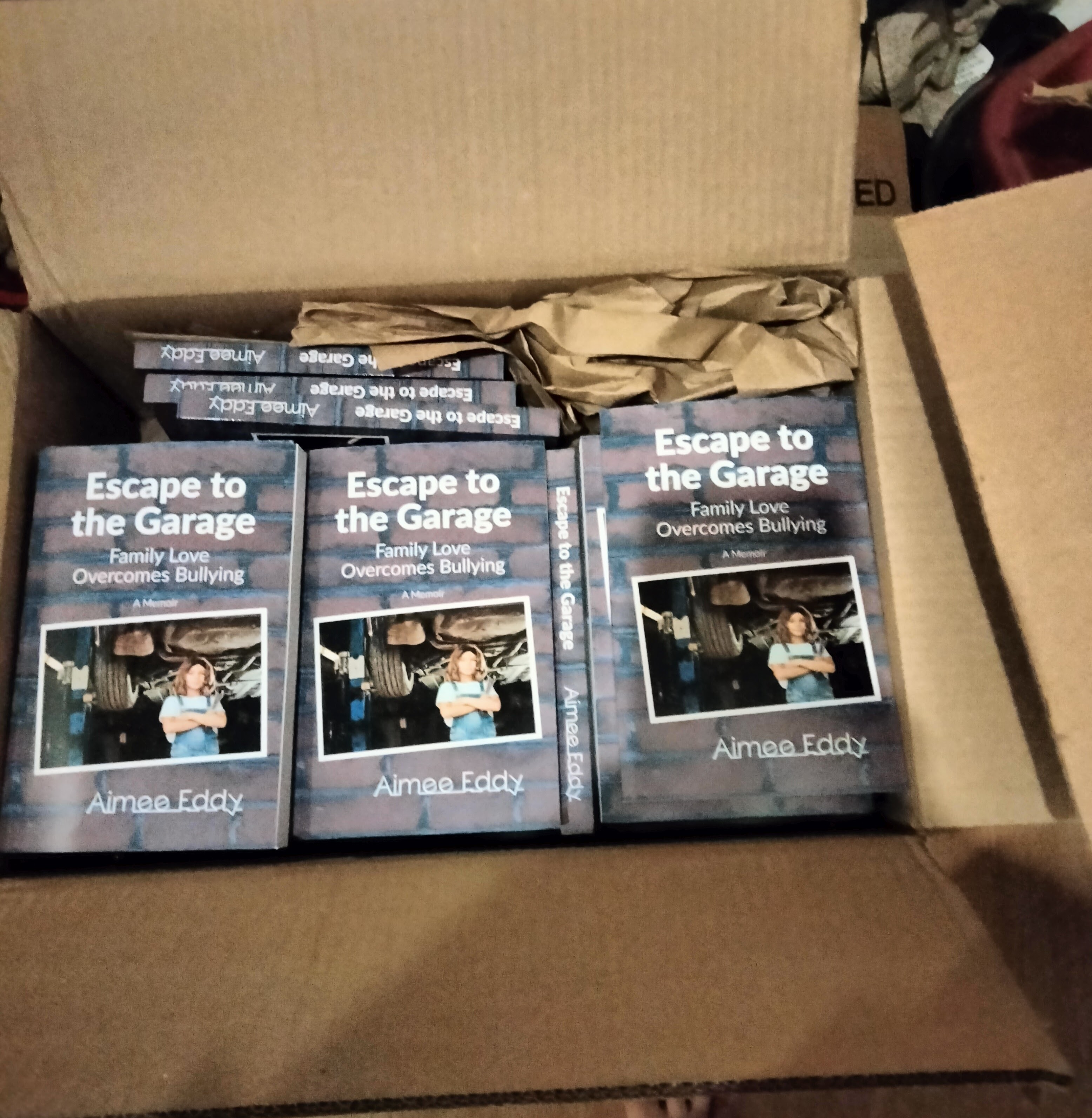
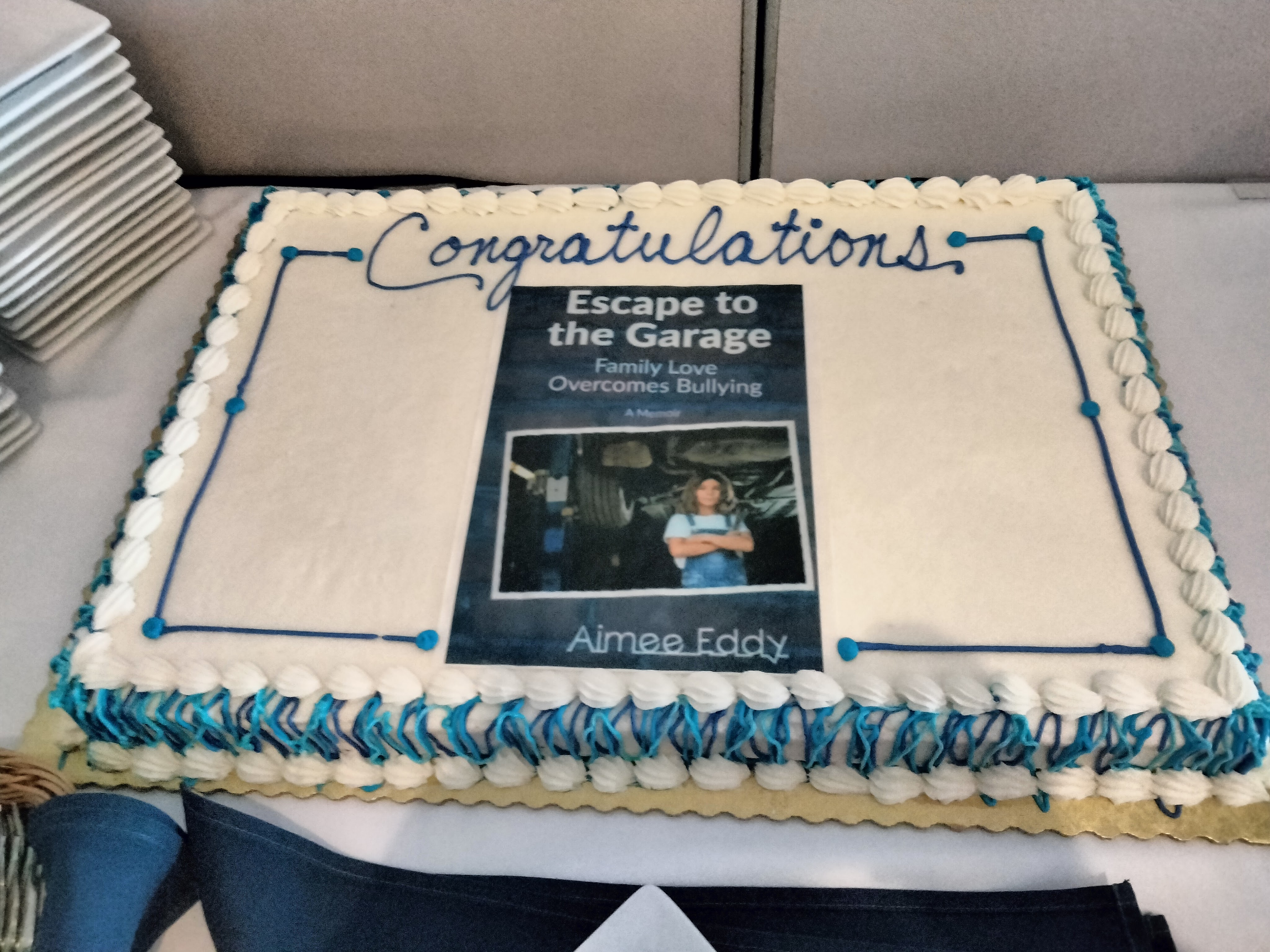
Four years of writing my memoir, reliving good and bad memories, and then more time working on editing will soon end. I have set a launch date and I’m planning a launch party. God has been good. He has been working his miracles to help my book get published. I know he wants my story to be told, and he has been sending me wonderful people to help me get my book out there for people to read.

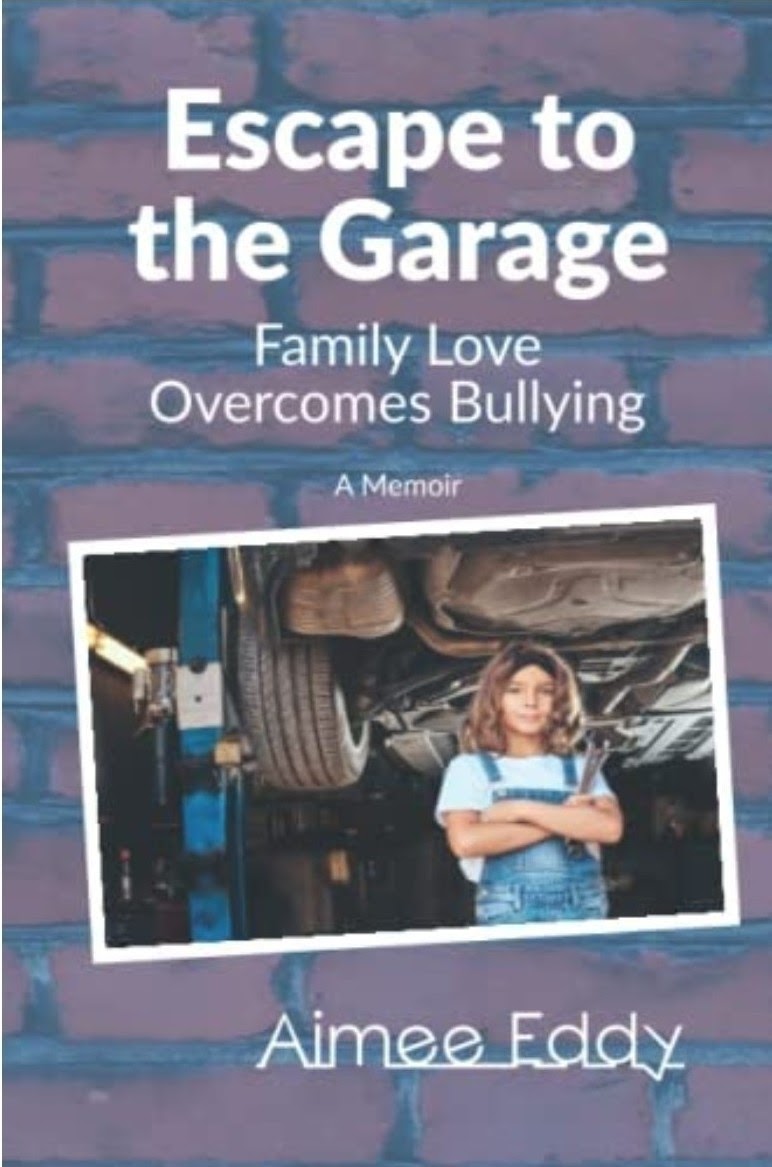
I am self-publishing my book. When I tell people that they ask me, “How are you going to come up with the money for that?” My answer is through the grace of God. He has given me two wonderful editors for free and another author who created my cover and will format my memoir. He has allowed me to sell my woodburnings to put a side for the launch party, publicity, and other things I need. He has given me wonderful friends and family who have been supporting me through the whole process. God wants my story to be told and soon that will happen.

I have seven beta readers reading my manuscript right now. Beta readers are people who read the manuscript to check for any errors the editors may have missed and to make sure it flows well. I have three people giving me endorsements; these are a strong sentence or two that tells good things about the book. I’m currently working with Pennwriters, a national writing group, to fine tune my back blurb, which is the paragraph on the back cover that talks about the book, and I’m working on the about the author section.

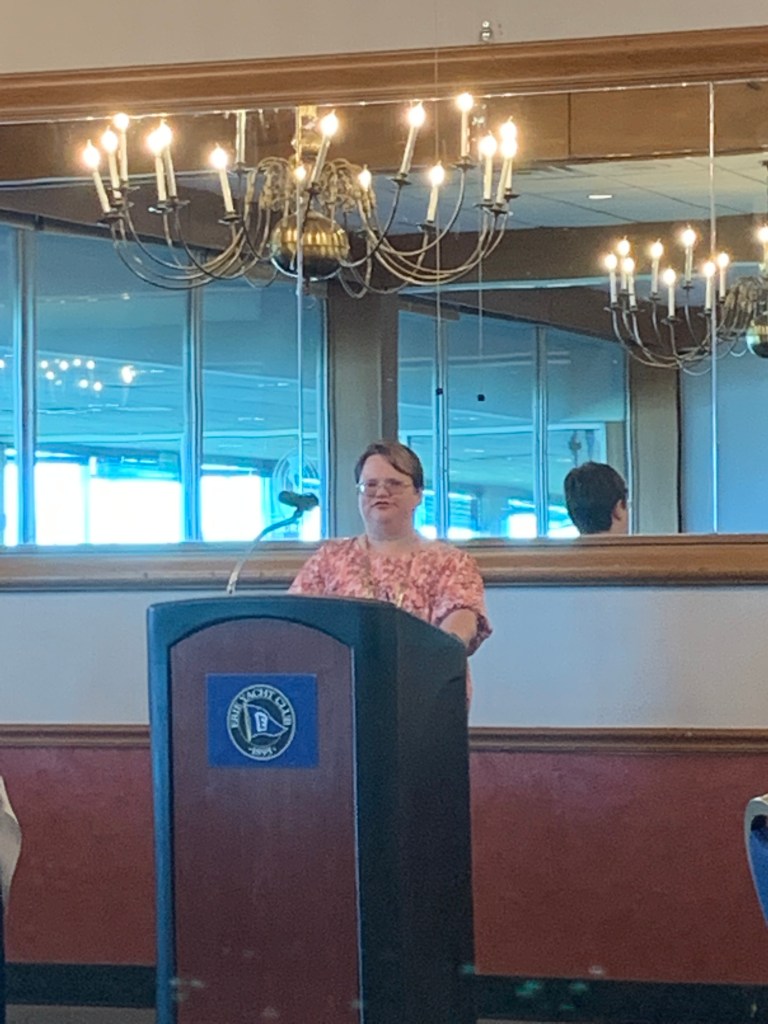
Everything is coming together nicely. I just recently revealed my book cover on Facebook. This Wednesday a friend of my husband is going to take a head shot of me to put in my book and for me to use for publicity. A member of the Yacht Club where my husband works is sponsoring me to have my launch party there. The only way a nonmember can have a party there is if a member sponsors you. Right now, I’m trying to design my own invitations for the party and put together a list of people to invite. Step by step everything is coming together, and God is leading the way.

I have set my launch date for August 17. I am so excited I can barely wait. It’s been my dream since high school to have my own book published. I made many attempts at trying to write a book, but never succeeded until now. I think the biggest reason I have completed this memoir is my husband. Each night before he went to bed, he encouraged me to write. When I came to bed, he’d ask me how many pages I wrote. When I felt like giving up, he pushed me to keep going. He gave that extra boost I needed to finish this book. Pennwriters also is a big part of completing my book, they helped me fine tune my writing skills and grow as an author.

I owe a lot to my parents also. Since I realized I could write way back in seventh grade, they have been very encouraging. My mom used to be the first person to read all my writing. I would spend hours in my room writing out a short story and then I would take it to my mom to read. She would point out any mistakes I made and praise me on what a wonderful job I did. I filled folders and notebooks with stories. Mom loved every one of them, and when a story was published or I won a contest, my parents were the first to congratulate me. My dad told me when I became a famous author some day, I could buy him his own airport. Dad loves to fly small airplanes.

My grandparents were also very supportive of my writing. I was always excited to share my writing with them. They to believed in my ability to go far with my work. Grandma never wrote a book or short story, but she crafted wonderful letters that could put tears in your eyes. Her words were beautifully written, and I believe I got my talent to write from her. My parents were the first to get anything I was published in, and my grandparents were second.

It’s because of my parents’ and grandparents’ support and belief in me that I kept pursuing the dream to be a published author. It’s because of my husband’s extra push to finish this manuscript that I’m about to have a published book. God gave me these wonderful people to help me to help me along. That’s why my book will be dedicated to them.

My dreams of having a book published is coming true and I couldn’t be more excited than I am. I’ll be dancing when my published book arrives in the mail. I plan to have my husband take a picture of me holding it. In high school I daydreamed about holding my published book and doing book signings. That daydream is about to become a reality.

I hope to work with the grocery store where I’ve worked nearly 27 years to have a book signing. I know I can sell plenty of copies because many customers and fellow employees know I have been working on a book. Some of my customers have been getting progress reports on it through the years. I have been keeping the store manager up to date on the progress of my book. I believe it will be great for Giant Eagle to have their own cashier as a published author.

Once the book is published, I must market it and set up my own book signing. I know that many of my published author friends will give me lots of advice. The work is never done. Even when the book is published. From what I have been told, marketing it is the hardest part. I’m ready for a new challenge.

My parents always told me that dreams come true if you’re willing to work hard at it. They are right. My dream is about to come true. I am going to have my first book published. Because of all the wonderful people God put in my life, I stand in the light as a proud author about to have her book published.

FALLING OUT OF RECOVERY PLAN

There is no cure for mental illness. Recovery doesn’t mean you are cured and will never struggle or fall down that hole again. Recovery means, with medication and coping techniques, you can manage your illness well enough that you can live your life and find happiness. What happens when you begin to fall backwards into the wrath of your illness? There will be times when your illness gets the best of you, and you begin to struggle harder than usual.

Don’t beat yourself up if you feel like you’re losing control of your illness. It’s unfortunately part of the process. I have put together a plan on what to do if I feel like I’m falling out of recovery. Here is my plan.

  • Step one. Take note of your symptoms. You should know the signs of when you’re losing control of your illness. Write down your symptoms: Are you canceling plans with friends? Are you calling off work a lot? Are you struggling to get out of bed? Are you thinking about hurting yourself? Are you having frequent crying spells? Are you so depressed you can’t function? Are your thoughts racing out of control?
  • Step two. Tell someone about your feelings. This is a good time to lean on your support system. Talk to the friends and family you have chosen as a support team. That’s what they are there for. You can’t fight this illness alone.
  • Step three. Try using the coping techniques you have learned to help you deal with this rough time. Coping techniques can be: doing a craft, listing the positives, journaling, breathing exercises, going for a walk, writing your negative thoughts down and changing them into positive.
  • Step four. If you’re not in therapy, then find a therapist. There are some state programs that can get you therapy at low cost or no cost if you don’t have insurance. Do some research to find the right therapist for you. If you’re in therapy, make sure you show your therapist a list of your symptoms and how you are feeling. Discuss with him or her about what the next steps you need to take.
  • Step five. Talk to your psychiatrist. This is another good time to use your list of symptoms. Tell your psychiatrist everything and be throrogh. He or she may need to adjust your medication or change it. Knowing what your symptoms are will help the psychiatrist to decide how to help you. If you don’t have a psychiatrist, I suggest you look into finding one. The proper medication can help with many of your symptoms and make it easier to fight your way back to recovery. Family doctors can prescribe you antidepressants, but a psychiatrist can prescribe you stronger ones and ones that will help you the best.
  • Step six. If you have a helpline or crisis line in your area and you’re feeling bad, call them. They are there to help you and steer you to the right help. If you feel suicidal, call them. Keep the number for the help line or crisis line where you can find it, like on your refrigerator. Add it into your cell phone.
  • Step seven. This is a last resort step. If everything you’re doing isn’t helping you, you feel like you’re a danger to yourself and others, and you are seriously thinking about suicide, then it’s time to check into inpatient care. You can talk to your therapist or psychiatrist about helping you find the right hospital. You can ask someone from your support team to go with you to an emergency room to be admitted.
  • The most important step: Fight with all you have in you to pull yourself back up. Remember how you got yourself out of this darkness before and use it to help you climb out of the hole. You reached recovery once and you can do it again. FIGHT!!!

Falling backwards can happen to anyone. Sometimes life throws us down and we lose grip on the light of recovery. You didn’t do anything wrong. It’s not your fault you’re falling out of recovery. You can only manage your illness; you can’t control it. It has a mind of its own and it can rear its ugly head during the rough times in your life when you are the weakest. The good news is there is always a path back to recovery. Create your own plan for when you feel like you’re falling out of recovery. Make sure you share your plan with your support team, so they know what to do.

There have been times in my life I felt like I was falling backwards. I turned to my plan to help me get onto the right path. My support team has also been vital in helping me when I feel like I’m losing the battle. Having a plan has helped me stay within the light of recovery. I stand in the light of recovery knowing my plan will always help me find my way back if I fall down that hole again.

ALL WOMEN ARE MOTHERS

A customer said something to me Saturday night that touched my heart. She said, “All women are mothers even if they don’t have children of their own.”

Most women have motherly instincts even if they don’t give birth to a child or adopt one. Teachers think of their students as their children, aunts think of their nieces and nephews as their children, pet owners think of their pets as their children, a woman can think of a younger friend as her child, and so on. A mother’s love is in our hearts, and we spread it to the people and pets in our lives. Mother’s Day isn’t just for the women who gave birth to a child, but for all women who have give motherly love to others.

When I was with my ex-boyfriend, he kept telling me how much he wanted to have a child with me. I had my doubts and said no. I was very sick and knew at that time I wasn’t capable of having a child. I figured I’d have a child one day when I was well. I dreamed of being a mom and holding my newborn child in my arms, but I feared I would pass my mental illness on to my child. I wasn’t sure I could watch my own child go through what I was going through. He pressed on and I stuck to no. He was abusive and not the kind of man I wanted to raise a child with.

After he kicked me out, I knew I had made the right choice, but I dreamed of motherhood. What name would I give my child if a girl or boy? What kind of mother would I be? How would I look as a pregnant woman? How many children would I have if I found the right man? I figured I would find a wonderful man who would help me build a beautiful family, but my mental illness shattered that dream.

I discussed my desire to have children with my therapist. We talked about how hard it would be for me to be off my antidepressants while being pregnant. There was a big possibility I would spend nine months in and out of a mental health hospital. Then there might be postpartum depression. With major depression, Borderline Personality Disorder, and anxiety, postpartum depression would be even harder on me. I didn’t want to be the mother who harmed her child or spent her child’s first years in a hospital. I couldn’t do that to a child.

Children are a lot of work and raising them is stressful. I don’t handle stress well. When I get stressed out, I have anxiety attacks and I fall apart. I don’t work a full-time job because I can’t handle forty hours of stress. There are no hours for parenting. I can’t just leave for hours at a time to relax and be by myself. After six hours of a hard day at work I can go home, put my feet up, watch a movie, snuggle with my husband, and be free of works problems. As a mom, home is your workplace and there is no leaving when things get rough. I would be constantly sick and falling apart because of the stress. I would probably end up spending a lot of time in a mental health hospital because the stress was too much for me to handle.

Then there is the worrying. I worry obsessively about small stuff. My worries overtake me, and they get blown out of portion. I would worry excessively about a child. My child wouldn’t have been able to go to school, a friend’s house, or to an activity without me worrying myself sick. My child probably would grow up to hate me because I wouldn’t let my child do much because I worried too much. I wouldn’t be able to eat or sleep because my worries would drive me crazy. I would be sick all the time from anxiety attacks.

These reasons and some other are what convinced me that I wasn’t meant to have a child. I mourned at first for my lost dream of motherhood. Accepting it wasn’t easy at first, but I knew it was the right decision. I cried over it.

When I met Lou, I told him I wouldn’t be able to give him a child. He said, “I don’t need children. I just need you.”

I love the marriage Lou and I have. I have had four dogs who were and are my babies. Our current dog, Esther, is my baby girl. I love her dearly and do my best to take really good care of her. I also have six nieces and five nephews whom I adore greatly and love endlessly. I have two great nieces, a great nephew, and a great nephew on the way that I also love endlessly. I also have nieces and nephews I have adopted into my heart whom I adore.

I don’t have any children I gave birth to, but I have lots of children, including fur babies. Like my customer said, “All women are mothers even if they don’t have children of their own.” I never gave birth to a child, but I have lots of children. My husband and mom give me a Mother’s Day card each year. I celebrate just like any other mother. Mother’s Day is for all women who have given love to a child or a pet. It’s for all women whose hearts are big, and love is endless.

Loving all my nieces, nephews, my past dogs, and my current dog spreads the light of recovery within my soul.

Happy belated Mother’s Day.

REJECTION LETTER

Rejection letters are part of the publishing business. All writers get them. Even J.K. Rowling received many rejection letters for the first Harry Potter book, and L. Frank Baum received several rejection slips for Wizard of OZ. It’s also the hard part of the business. It hurts to have something you worked very hard on denied, but it’s what you do with the rejection that counts. You either give up or push forward.

Ant Press replied to my manuscript on Friday morning. They sent me a glowing rejection slip. How can a person get a glowing rejection slip? Well, they had a lot of good things to say about my memoir. It just didn’t fit their market.

Here is a section from the rejection letter that puts a smile on my face.

“You write very well, and you’ll be glad to know that we found a lot to like about your story. You have an engaging ‘voice’ which will make your readers warm to you. Your confident use of dialogue to move the story along is commendable, too. Few writers understand how important it is to use plenty of dialogue, but you have grasped that. You write very directly without bogging us down with unnecessary flowery language, which makes your book easy to read. We liked your use of fragmented sentences to create drama and we enjoyed the inclusion of your thoughts.

“There is no question that your themes will resonate with many. The troubled childhood, the bullying and abuse you have suffered and the despair you felt. The garage escape and the discovery of the power of writing: ‘As my pen raced across the paper recording a fanciful daydream, I felt my soul pour down through my fingers.’ are all touchingly described and poignant.”

This tells me my manuscript is good and it’s not bad writing that got me a denial. I celebrated the positive, but I still felt like I got kicked in the stomach. I have been submitting short stories and essays since I was in high school. I have a box of rejection letters. I should be used to it, right? No matter how many times you get rejected, it doesn’t get easier. It’s one of the hardest parts of being an author.

I had my hopes high. I figured Ant Press would be the one to publish my memoir since their specialty is memoir. When they requested the full manuscript, I was sure they would love my manuscript and offer me a contract. I didn’t do much research into other publishers because I was confident I would get a yes, even though I know that most writers do not get accepted with the first submission. I bragged to everyone that my book was going to get published. I was flying high.

For a week I checked my email several times a day, hoping for an answer. Then on Friday there was the answer. As I read, “Sadly, we don’t feel we can offer you an Ant Press contract for Escape to the Family Garage,” I dropped from my high like a plane spiraling out of control. Tears threatened to fall, but I fought to stop them. My whole world crumbled. I wanted to cry, to scream and crawl back in bed, but I couldn’t. I had to prepare to go to work.

My husband called me to make sure I was up for work, and I told him. He told me not to give up. Then I called my friend and fellow memoirist Amy, and she gave me a pep talk. I read her the letter and she told me that it’s good news that they found good things about my memoir, and they took the time to consider it. She encouraged me to pray about my next step and to push forward. She told me the positive news is that they complimented my book and that meant I had a good, finished manuscript.

At work I mulled over the rejection and my next steps. Should I self-publish, or should I research other publishers? On my break I opened the Kindle app on my phone and browsed through publishers in Writer’s Market, a book that lists publishers and information about what type of work they accept and contact information. I found a few who accept memoir but not many with my topic. This discouraged me even more. I had saved up a lot of money for my book, but when I had carpal tunnel surgery, I had to use some of it for our mortgage. With what I have left would I have enough to self-publish?

While working my mind swirled with different thoughts about writing and work.

Will my book ever get published?

Why are the dang customers yelling at me because we got rid of plastic bags? I’m stuck, just a cashier people yell at for life.

Everyone says publishers only publish memoirs of famous people. Getting published is a hopeless dream.

Dang, people Ninety-nine cents for a reusable bag isn’t that bad since can use it plenty of times. I so wanted to tell my customers I was going to get my book published and instead I’m arguing about the cost of bags.”

I’ll never be able to afford to self-publish. I only have three hundred and some dollars. It’s hopeless.

After work I rode on the exercise bike while Cheryl cheered me on. She listened while I hacked out a plan. I will research publishers and self-publishing. I will give myself a week or more before I make any definite decisions. First, I need to feel the hurt, sort my feelings, and then decide when I’m thinking clearly.

Cheryl told me how proud of me she is. Several years ago, when my mental illness was at its worst, I would have bawled my eyes out and given up. I would have seen the rejection as the end of my life. Now I feel the emotions and plan to push forward. This shows how far I have come at taking control of my mental illness.

My determination to get published will help me strive to be stronger and more determined. I stand in the light as a strong woman ready to push forward.

THE MENTALLY ILL ARE NOT HELPLESS

Mental illness can be debilitating, leaving those who suffer with lack of energy, paralyzing fears, lack of will to take care of themselves, inability to make rational decisions, and more. Some can push through the symptoms that leave them feeling useless while for others illness is so bad they need constant care. The family members of many who struggle with mental illness believe they cannot do anything for themselves. Family members take over their care and cater to them like they are helpless children when they are not. Mental illness is debilitating, but that doesn’t make all who suffer with it helpless.

When my illness was at its worst, I couldn’t sleep, I had a hard time keeping food down, I was fatigued, I couldn’t make decisions easily, and my thinking was irrational, yet I forced myself to get up each day and go to college. I fought to keep awake during my classes and I got sick in between classes, but I kept good grades. My illness tried to keep me down, but I pushed myself to go on. After classes, I hid in my room. I self-injured, I planned my death, and I cried uncontrollably, and yet I still found a way to study. I even got good grades.

It would have been easy for me to just give up and fail out of college. Unfortunately, many who struggle with mental illness do give in and their families stand by and allow them. Some believe their sick family members need to be waited on and allowed to just give in. They see the ones struggling as helpless when they are not.

I know a woman who has a sister with mental illness. The sister gets depressed and sleeps the day away. The healthy one takes care of her sister and waits on her as if she’s helpless. The sick sister has no responsibilities and no reason to fight her illness. Why fight when she has someone to make excuses while she sleeps all day, someone to cook all her meals, someone to make decisions for her, and someone who comes running when she needs something? The sister of the sick one believes she’s helping her by catering to her when she’s only taking away her sister’s reasons to fight.

The one thing that kept me getting out of bed when I was at my worst was my purpose. When I was in college, my purpose was attending classes and passing one way or another. I lived with my grandparents and kept my illness a secret from them. They helped me without even knowing it. They bragged to family and friends how well I was doing in college. This encouraged me to keep going to classes and to study. When you are struggling with mental illness, you need encouragement and tasks that give you a reason to keep going on.

When I got bad, I did move home and took a year off from college. My parents could have told me, “You’re sick, so just go to therapy and don’t worry about anything else.” Instead they insisted I get a job while I was on leave. My parents never viewed me as helpless. They knew I needed their assistance in making sure I took my medication, they reminded me to take care of myself and made sure I ate healthy meals, but they never did everything for me. They gave me reasons to get up each day and they encouraged me to keep moving forward when I felt like I couldn’t. I made meals for my parents, I took care of my own bills, I helped my mom around the house, and I went to work.

Having things to do, a job to go to, and a reason to get out of bed gave me reasons to not give up on myself and my recovery. No matter how much I wanted to lie in bed and sleep all day, I couldn’t because I had a purpose. If my parents didn’t give me that reason, I would have been like the woman I described above. I would have just sunk deeper into my mental illness and given up. Instead, with my parent’s encouragement, I fought my way to recovery.

Mental illness makes living a normal life hard, but for most, it doesn’t make you helpless. Being catered to, others making excuses for your actions, taking away your responsibilities, and others making decisions for you strips you of your purpose in life. The best thing a loved one can do for someone who is mentally ill is to encourage him and her to get out of bed, to take control of his or her life, to give him or her responsibilities, and to help him or her feel useful.

The stigma that a person with mental illness can’t work, can’t take care of him or herself, and can’t live productive lives is false. There are cases when the person struggling is so bad, they need constant care, but this isn’t true for all who have mental illness. For many, recovery can be reached with medication and therapy. There are successful people in our society who pushed past their sickness and fought for recovery to be an important part of society. We are not helpless and useless people whom society can turn their backs on. We are nurses, CEOs, bus drivers, cashiers, college students, actresses, hair stylists, and much more.

If you have a family member who is struggling with mental illness, encourage him or her to get up, give the person responsibilities, and be there to help, but not to do everything for him or her. Having things for the person who is struggling to do gives them purpose and a reason to keep going. Encourage the one suffering to reach recovery and to live a productive life. You can help your loved one, but don’t do everything for him or her.

My husband helps me manage my mental illness and he takes good care of me, but he encourages me to do things for myself. My parents did the same when I was at my worst. Because my loved ones never treated me like I was useless, but instead encouraged me, I stand in the light of recovery smiling.

EXCITING NEWS!!

With Easter weekend I didn’t get a chance to write a post this week, but I have good news to share with you. My editor, Catherine McLean, finished editing my memoir!! The next step is to read through my memoir to see how well it works with the edits and prepare three chapters and a query to submit to ant press. Ant press specializes in memoir. They reply within two weeks. There is a possibility I will get a rejection letter. If I get a rejection letter I will just keep submitting until I get a acceptance letter.

The process to publication may be a long one but I am taking the steps and I will not give up. I will keep you posted on my progress.

I hope you all had a wonderful Easter. I will have a new post for you next week. Remember He’s Risen!! Happy Easter.