UPDATE

My dad got off the ventilator Friday and is eating soft foods, sitting in a chair and talking. He’s still in ICU. He still has a blood infection all through his body, making him septic. He’s improving but has a long journey ahead of him.

I went back to work Sunday. Now we’re trying to work around our work schedules to visit my dad. I’m exhausted mentally and physically. I’m journaling out my feelings, using different coping techniques for anxiety and leaning on my support team. Everything has been a lot and so I didn’t write a blog post this week. My main focus is on my dad.

I appreciate all who are praying for my dad and family. Please lift up my mom she is getting worn down by this, but is at my dad’s side every day.

TRAGEDY IN MY FAMILY

I didn’t write a blog post for this week because my dad has pneumonia in his left lung and is on a ventilator. This has been very heartbreaking for my family especially my mom. My dad can open his eyes and move his hands and legs. He still has his sense of humor even though he can’t talk. He kicked me in the butt a couple times.

   I can’t imagine life without my dad. Please pray for him to improve and get off the ventilator. Please pray for my family as we try to get through this especially my mom. Thank you and I appreciate all of you.

MY FRIEND BARB

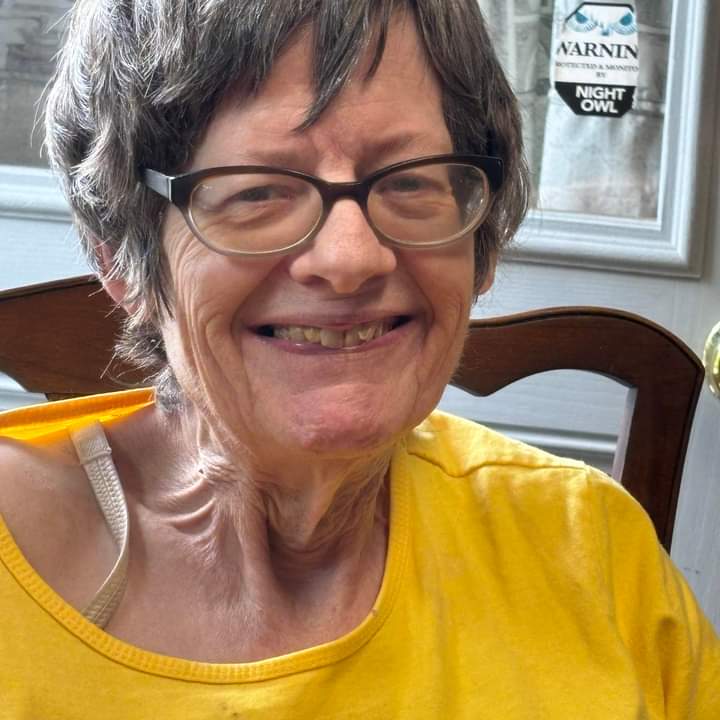
Friends come and go in our lives. Each friend makes a different impact on your life and heart. Even bad friendships teach you lessons. Some friends are only meant to come in your life for a short time, and some span over many years. Those that last for many years are very special and only get stronger through the years. Barb was one of those special friends that lasted for many years.

 I met Barb almost twenty-nine years ago as a regular customer of mine at the grocery store where I work . She had some problems walking and talking, but it didn’t stop her from coming in the store regularly to shop and visit me. First, she came to me when I was a bagger. I packed her groceries and chatted with her. Then when I became a cashier, she started coming to my line even if she had to wait a while. Our store had a play area for parents to leave their children while they shopped.

Barb would smile at me. “I think I would love to work with the kids. Do you think they will hire me?”

I sent her groceries down the belt. “I’m sure they would. Stop at the service desk and get an application.”

“I will and I’ll put you down as a reference,” she said.

I don’t think she ever filled out an application, because each time she came in, she talked about working at the area where the kids played. I kept encouraging her to apply.

Then I had to take some time off for sick leave after my relationship with my abusive ex landed me in the mental health hospital. When I returned to work, I was moved to the bakery. Barb found me in the bakery and would stop by to say hi and chat with me while I worked. Even though she had some problems walking, it didn’t stop her from walking around our big store. She didn’t let anything stand in her way.

Then I met my friend Kelly at Saint Davids Christian Writers Conference and learned she lived in the same city where I worked. Kelly invited me to attend her Bible study group held at her church. I agreed and showed up.

Barb came strolling in late and pointed at me. “Hey, I know you.”

It wasn’t until that Bible study group that I learned Barb’s name and we started a friendship. After that Barb invited me to her home for picnics, parties, and to visit. I learned that Barb loved to host parties. The more I got to know her, the closer we became. Barb reminded me of myself in many ways. She was determined and she wouldn’t let anything stand in her way. Just like I wouldn’t let bullying and mental illness to stand in my way.

When I met my husband, I introduced her to him and he started calling her, “Barbra Streisand,” and it put a big smile on her lips. In time her walking and talking became harder for Barb. She was diagnosed with cerebral palsy. I encouraged her to use a motorized cart to shop at the store.

“As long as I have a cart to lean on, I can walk on my own,” she told me.

She wasn’t about to let the disease win. She pushed forward and when I asked her if she needed help to her car, he told me she wasn’t an elderly person, she could do it. The longer I knew her, the worse it became for her to walk and talk. I had to learn to interpret some of what she said, and even though she moved slower, she still walked around the store. She was too determined and stubborn to give in.

She lived in a home that had many stairs to get to the first floor. At first, she did them well while holding on to the rail, but then she became slower and eventually had to slide down each step, but like the grocery store, she wasn’t going to let the stairs defeat her. Barb was inspiring.

When she started using a walker and eventually a wheelchair, I knew the cerebral palsy was becoming worse, but even though she needed help, she wasn’t a quitter. At home she used railings that were installed to help her walk around. She struggled but pushed on. Her speech became even worse and understanding what she was saying became even harder, but it didn’t stop her from trying to get her words out. I could hear the frustration in her voice as she tried to talk to me. It finally came to the point Barb could no longer visit me at work. I tried to call her and check on her, but felt bad when I couldn’t understand what she was saying to me.

Eventually her daughter had to move her to assisted living. I planned to visit her during my vacation the week after Father’s Day, but I got sick and then my husband got sick. Before I knew it, her daughter posted on Facebook she was in respiratory distress and she wasn’t sure if Barb would make it through the night, but Barb wasn’t willing to give up without a fight. Barb was transferred to her home and her daughter stayed at her side while hospice took care of her. I planned to go see her Friday after work to say my goodbyes, but I ended up taking my husband to the emergency room. Barb passed away after midnight on Saturday morning.

Barb fought all the way to the end. She never allowed anything to stand in her way; she pushed through her decline due to her disease with strength, determination, and stubbornness. She had a beautiful smile that lit up the room and loved to give from the heart. I don’t believe cerebral palsy won. She may have passed away, but she gained her angel wings and a new body. She has left an everlasting impact on my life and the memory of her will remind me how important it is to never let anything hold you down.

Barb has made my life brighter and inspired me to be stronger. Barb has entered the light of heaven and I will allow her memory to inspire me to never let anything to keep me from the light of my recovery from mental illness.

THE GOOD SIDE OF A BAD VACATION

Even when we make the best plans for our life, things can go wrong. The best plans can be ruined in a second by an unexpected illness, a tragedy, or an injury. Life never works out exactly how we want it to. Life’s unexpected roadblocks can be hard to handle when you are working towards recovery or are in recovery from mental illness. How you handle these roadblocks is what keeps you on the right track towards or keeping in, recovery.

Last week I had planned for a vacation from work. Lou still had to work, but we planned one night out of town at a hotel and a day at a safari and shopping. The rest of my vacation I planned to put up our small pool, do laundry, and get the old 70’s -80’s entertainment center out of our living room and set up a TV stand. I even planned to buckle down and work on my next book. I was going to start my vacation with a Father’s Day picnic with my dad and family. I was looking forward to a week away from work, getting things done, and having some fun, but life threw a roadblock in my way and turned my vacation upside down.

The Thursday before my vacation I felt rundown. I thought maybe it was just an off day or a one-day thing, but when I woke up on Friday, I felt even more fatigued, my throat hurt, and I was coughing. My husband told me to call off work, but I was stubborn and went in. Halfway through my shift I felt so sick I could barely stand. I went home early and had to call off on Saturday. I lay in bed crying. Since I was sick, I couldn’t be anywhere near my dad since he’s going through cancer. My oldest sister was also sick, and my younger siblings live out of town. There would be none of us kids to spend Father’s Day with my dad. I felt awful about it. This was going to be the first Father’s Day in a long time I wasn’t going to spend with him.

I called and told my dad I was on vacation and if I were better by the end of the week, we could celebrate. I set my hopes on that. I told my husband we would have to lose our money for our night away, but he told me, “We’ll see how you are by Tuesday.” I started my vacation too sick to move, coughing so hard my stomach hurt, and unable to eat much food. Father’s Day I lay on the couch, sucking cough drops, and watching movies in between drifting off to sleep. My automatic thoughts were negative. My vacation was going to be an absolute disaster. We were going to lose our money on our hotel room and be stuck at home. Everything I had planned would never get done, and I was going to spend the whole week miserable.

Lou didn’t give up on our night away. He took me to the doctor on Monday. The doctor prescribed me cough medicine and a steroid because my asthma flared up by my illness. She diagnosed me with a viral infection and prescribed me lots of rest. I was feeling better by Monday, with a little more energy, but the cough was horrible. I had to curl up in a ball and clench my stomach each time I coughed.

Lou said, “How about I drive to the hotel, we get some food to eat, and spend the night resting in air conditioning. I’ll get us some snacks foods and I’ll take care of you. Since we’re going through a heat wave the air conditioning will help your breathing.”

I wasn’t too sure about this idea. Was I well enough for the ride? Would it be fair for Lou to do all the driving? What if I just got sicker? Would I even enjoy it? I agreed to our overnight trip but wasn’t too sure about it. I feared it would be a disaster.

We went on our trip. The cough medicine helped ease my coughing, I slept while Lou drove, and when we got there, I had more energy. We were able to have dinner out and spend the night relaxing in our room, eating junk food. Lou watched sports on the TV, and I watched movies on a portable DVD player. It turned out to be a very relaxing night away and I enjoyed it. The hotel had a very good free breakfast, and we went to Walmart to pick up a few things before heading home the next day. I was glad Lou wouldn’t let me cancel it.

Thursday morning Lou called me from work to tell me he wasn’t feeling good and was coming home. He was lightheaded so I took him to the ER. We sat in the ER waiting room for over five hours without them calling us back to a room. When I asked the woman at the check in desk how much longer until they call my husband back, they couldn’t find him in the computer. She went over and took his wrist band, told me to sit down and she would be right back. We sat and sat and she never came back. We got mad and left. That night while he slept, I had extra energy, so I went outside and put our pool up. Then I went inside and lay down. The next day I took Lou to Urgent Care to find out he had bronchitis.

I kept thinking this is the vacation from hell. Everything was going wrong. First, I was sick, then a horrible day at the ER, and next Lou was sick. Then I started to look at the positive side to my awful vacation: we still got to spend the night away, I got to sleep in and watch movies all day, I still was able to put the pool up, and I did sit in it for a couple days. I didn’t have to call off from work and I got paid to be sick.

Why am I telling you about my bad vacation? Because no matter how bad things, get there is a good side to everything. It’s so hard to see it when we are going though the difficult times, but the good is there. Instead of dwelling on the bad try to find the positive in what you are going through. Good comes from the bad.

As I write this, I’m not a hundred percent better, but I’m much better than I was. I still have a milder cough, my voice is hoarse, and I’m weak, but I’m ready to go back to work. Looking at the positive side of difficult situations keeps me soaking in the light of recovery.

TIPS FOR CONTROLING OVERREACTIONS WHEN YOU’RE EMOTIONAL

We often react irrationally when we are angry or frustrated. We say things we don’t mean, and we behave badly. It’s easy to lose track of ourselves when our emotions get the best of us. The same is true when you are struggling with depression. When you’re feeling very sad and hopeless, everything seems overwhelming and your emotions become out of control. You get hurt by simple reactions from others, you might see a friend canceling something as if they are doing it to hurt you, or you might overreact to a text or comment a person makes to you. To protect yourself you might say, text, or react badly towards the person whose intentions you misperceive

I have misinterpreted many things while I was at my worst. I have overreacted to others’ simple words and reactions. When a friend had an emergency come up, I interpreted her canceling a get-together as “She doesn’t want to spend time with me.” I’ve mistaken others’ intentions or misread things people have said. My wrongful reactions have cost me friendships or led me to hurt people I care about. So, I came up with tips to help you take control of your reactions so you can handle situations better.

Here are my tips:

  • Don’t react when you are very emotional. If you’re feeling down and you’re flooded with emotions, allow yourself to calm down and think more clearly before dealing with a disagreement or something that might have been said or done. Like when a friend told you she doesn’t have time to talk to you right now. You might be angry, sad, and hurt. All those emotions flood you and you start thinking your friendship is over and your friend hates you. In this case you might be attempted to say or text something mean. Instead of saying something you’ll regret, give yourself time to calm down. When you are calm, talk to your friend.
  • When a friend cancels something, don’t take it personally. Emergencies come up, people get sick, and plans change. Don’t automatically think it’s because the friend is trying to hurt you, doesn’t have time for you, or the friend doesn’t want to be around you. Ask him or her why he or she canceled. If you take the time to talk to your friend before you jump to a conclusion, you might just find out the cancellation has nothing to do with you, and you might be able to reschedule with your friend.
  • Write down your thoughts and feelings. When you are upset with someone, put your thoughts and feelings down on paper in a journal. Write out all those crazy thoughts that are driven by your emotions before you say something you don’t mean to. Once you get all those feelings and bad thoughts out, look at them and see if you can understand them differently, then write that down. Like, someone I know well ignored me when I said hi, so I thought she’s embarrassed by me. I hate her and will never talk to her again. Then think about it and write down: Maybe she was busy and didn’t hear or see me.
  • Don’t take boundaries personally. We all have boundaries, and we need those boundaries to take care of ourselves. Don’t get mad if someone can’t talk about your problems because he or she is going through their own problems. Be understanding of that and find someone else to talk to. If your friend can’t talk after ten at night, respect that and make sure you call before ten. Don’t take boundaries personally. They are there to help the person who you care about and it’s nothing against you.
  • Turn to a support partner. Talk out the situation or thing that happened with your support partner or support team. Having someone with a clear mind to talk to can help you think rationally about your feelings or the situation. They can help you calm down and tell you if you’re distorting things.

Use these tips to help you handle your emotions without overreacting and hurting relationships. It’s not easy to do when your mind is clouded by your sadness and hopelessness, but you can do it. By working through your emotions and thoughts before you overreact, you’ll find you’ll have stronger relationships and will avoid driving away people who really care about you.

I’m doing better at controlling my over-reactions when I go through a hard time, but sometimes I slip up. When I do slip up, I take the time to think it through and work it out with my friends and the people I care about. Following these tips helps me dance in the light of recovery.

UNEXPECTED KINDNESS

When you are struggling with depression, everything looks awful and hopeless. You can’t see past the dark clouds of your illness. It seems like everything is going wrong and life is an endless hole of negativity. Seeing something good seems impossible. The truth is your illness blinds you to the good happening around you. When the world seems like a dark hole, unexpected kindness can come out of nowhere. Open your heart and look towards the light.

A lot has been happening in my life. As you know, my dad is undergoing chemo for bone cancer and it has sent me into a depression. On top of that, I have been struggling with my asthma and my husband put his back and hip out of place. Last summer I struggled with my asthma too. I go to the lung specialist on Wednesday. My husband started back to work full-time last week after being partially laid off all winter, and he had to miss two days because of his back. He’s improving and working, but still hurting. I hate seeing him in pain. Last week after paying our mortgage, we barely had enough money to make it through the week. We really need him to have a good paycheck. We just can’t seem to catch up. It feels like the world is against us.

I’m slowly working on coming to terms with my dad having cancer, but now I’m worrying about everything else. I’m also worried about my older sister who is struggling with health issues too. When I start worrying, I worry obsessively, and it gets me down and stirs up my anxiety. Everything seems hopeless right now.

Saturday, I walked down to the corner of my street and waited for the bus. When the bus arrived, one of my regular grocery store customers crossed the road.

He walked over to me. “Hold on a minute. I have something for you that I have been meaning to give you for a while.”

I motioned to the bus driver to wait.

My regular customer handed me something. “This is for your book.”

I put it in my pocket without looking at it and said, “Thank you,” and got on the bus.  After I sat, I reached in my pocket for the thing my customer had handed me. I pulled it out and stared at it for several minutes. He had given me a hundred dollars! Suddenly the sun seemed to shine brighter and my soul lifted. I just couldn’t believe a customer would just give me a hundred dollars.

This unexpected kindness made everything wrong in my life seem less overwhelming and horrible. My customer made my whole day better. When I got to work, I told several of my co-workers about it. They were very happy for me. For the rest of my day, all my worries disappeared, and I felt like I was dancing with the sun. The customer said the hundred dollars was for my book, but I used some of it for food for dinner. It was money we needed badly.

I can’t wait until my customer comes into the store. If he and his wife don’t already have my book, I plan on giving them one with a bookmark I woodburned and a pen that has “Stop Bullying” and my book title on it. If he has my book, I’m going to give him a thank you note, a pen, and a bookmark. He made my day shine and helped me look at life in a positive way. Everything that was going wrong didn’t seem as awful. God sent that customer to show me there is hope and goodness in the world.

When you’re struggling with depression, it’s so hard to see past the sadness and hopelessness, but try to look for the good in your life. God gives us people and things in our life to show us there is positivity in the world. When you least expect it, someone may show you unexpected kindness, small or big. The person you least expect may ask you how you are or tell you how good you look. A stranger may walk up to you and tell you how much he or she loves your smile or give you a hug. Unexpected kindness comes in many forms. God is looking out for you, and you just need to look for the ways he’s working in your life. Also reach out and do unexpected acts of kindness for others. It will lift your spirits to make others feel good. You don’t have to spend money to do something kind for others. Say something nice, give a hug, or offer to help someone out.

Because God sent my regular customer to bless me with unexpected kindness, I am standing closer to the light of recovery.

KEEPING FEARS IN CHECK

Fears can be either realistic or unrealistic. If you’re afraid you are going to get hurt walking on a floor full of holes, that is realistic, but fear of things like heights is unrealistic. Standing at the top of a lighthouse with railings around you will not cause you harm. With mental illness, unrealistic fears are made bigger in the mind of the person struggling, causing anxiety attacks, panic attacks, and depression. In order to ease anxiety, a person needs to find a way to keep those fears in check.

As you read in my last post, my dad has bone cancer and I’m struggling with it. My fears are causing me to have anxiety attacks and giving me the feeling that I’m losing control of my depression and emotions. It began with the fear that my dad would become very sick from the chemo, but so far he’s only had mild side effects. Then the fear grew bigger to thinking the longer he’s on chemo, the sicker he’ll get. The fears kept growing; my dad is suffering from fatigue from his treatments. What if he gets depressed and gives up? If he gives up, his health will decline. My dad’s immune system is gone because of the chemo; what if he catches an illness and ends up in the hospital? What if he dies of a sickness he gets instead of chemo?

The fears just keep growing and new ones sprout up. I feel my chest tighten and my throat aches like a fist of emotions are being pushed up through it. I cry, I feel sick, and I just want to lie in bed and hide from the world. Everything becomes overwhelming and just holding myself up seems like too much.

I allowed my fears to take control of me, and I haven’t been doing a good job at keeping my fears in check. I am reminding myself to go back to my first fear and evaluate it. Was my fear that my dad would get really sick from chemo realistic? That fear was based on horror stories I heard from others who had bad experiences with chemo. It wasn’t based on facts. Facts are everyone reacts differently to chemo, and there are different types and strengths of chemo. Everyone’s cancer journey and treatments are different. My dad has only had annoying minor effects. Now I look at my first fear and realize it wasn’t a realistic fear. It was more like something to be concerned about, but not something I needed to drive myself into an anxiety attack over.

I realize I need to take control of my fears and keep them in check. I need to acknowledge the realistic fears and unrealistic fears, and then work on stopping them from multiplying. My dad will never give up, he’s a strong man, and his cancer will go in remission, and he will live a long live. I tell myself don’t worry about him catching other illnesses. I can not control the future and worrying about it will only cause me to fall back down the hole.

I have other fears that bring on my anxiety. I worry about our finances, and this causes fears. I fear we won’t be able to pay our bills and will get ourselves so deep in debt that we’ll lose our home and have nothing. We’ll end up being homeless with all our belongings being sold to pay our bills. This fear grew in intensity while my husband was partially laid off over the winter. I looked at that fear and realized how unrealistic it was. Money has been tight, but with managing and arranging payments on bills, we’ve been able to make it through. We have gone to the food bank at our church to keep meals on the table. We still have our home, and our mortgage is always paid.

I have developed a process where I tell my friend and my husband my fears, and they reassure me that I have nothing to worry about. I’ve started journaling out my fears and then looking at them to see which ones are realistic and which ones are not. Most of my fears are unrealistic. I tear apart my unrealistic fears and find a way to think differently. Instead of “We’re having a hard time paying bills and we’re going to lose everything” I now think “We’ll pay what we can, and we’ll be fine.”

Keeping your fears in check is taking your fear and deciding if you have a real reason to be afraid or not. Then stop yourself before the fear grows out of control. It’s not easy to do. It’s a battle with the mind to take your fears under control and to keep them from sending you into an anxiety attack, panic attack or depression.

Say or write down your fear. Then think about the fear and say or write down the facts about the fear. For example: Fear: My dad is going to get depressed and give up. Facts: My dad may get discouraged, but he never gives up on anything. He has a strong faith that keeps him going. He has a loving family that will keep encouraging him. My dad is a very determined man. Looking at the facts shows me that my fear is unrealistic and helps me let go of that fear.

Look at your fears. Write them down and write out the facts. Are your fears realistic or unrealistic? If it’s unrealistic, then take steps to let it go. Doing this will help you keep your fears in check and prevent them from getting out of hand.

I’m working hard on keeping my fears under control. It’s not easy, but it’s worth it. In time my fears will take less control over me, and I will stand stronger in the light of recovery.

FACING A ROUGH TIME

Cancer has affected almost everyone’s life in some way or another, whether it be a friend, co-worker, family member, or your own journey. Cancer likes to rear its ugly head and leave a wound or scar on the soul. It’s hard to face going through your own cancer and then face it again with a loved one. When you have depression and anxiety, facing hardships like this can deepen your illness or send you down that dark hole again.

When my grandpa got prostate cancer many years ago, they said he’d die of natural causes before he’d die of cancer. The sad thing is the cancer spread throughout his body and he struggled to the end. I kept breaking down so much when I went to see him in the hospital that I couldn’t go see him anymore.

Then when I learned I had breast cancer, my thoughts went back to my grandpa and I thought I was also going to die a miserable death, but I didn’t. I’m still here, proud to be a survivor.

I prayed cancer would never affect our family again, but it has. After a week long vacation, my husband and I came home to the news that my dad has bone cancer. I put on a brave face on for my parents, but when I got home, I broke down. I cried in Lou’s arms. Then in the days after the announcement, I went from okay to falling apart. It became a matter of waiting to see when they would start chemo and the next steps. I didn’t have to go through chemo when I had cancer, but there was a lot of dreaded waiting. Waiting to find out if I had the BRCA gene, waiting to find out what was next, and wondering what was going to happen to me. All those memories returned with my dad. The old emotions and fears resurfaced.

My dad is a handy man and a mechanic. He can fix almost anything. He fixes cars, lawn mowers, and even private airplanes. He has fixed and still fixes many of my vehicles. He does repairs around his own home, has helped remodel his church and has done repairs in my home. If he’s sitting down too long, he thinks he’s being lazy. He gives from the bottom of his heart to his family, friends, and strangers. I don’t always agree on his views, but I love him endlessly. Hearing he has bone cancer sent a knife deep in my heart.

My father has always been a healthy, active man even at seventy-four. Nothing kept him down. His oncologist said his cancer wasn’t life threatening, but they said something similar about Grandpa’s. I can’t bear the thought of losing my dad from a miserable struggle with this horrible disease. This troubled me greatly. I don’t want to lose my dad. I cried more tears in Lou’s arms.

Then my dad had to take a class about his treatment and start shots and chemo. My younger sister came to town to go to appointments with them. I was relieved but I felt guilty. I stress every six months when I go to the cancer center for my checkups, but going there for my dad seemed even more frightening. I just couldn’t do it, but I felt it was my responsibility. My older sister is struggling with health problems, and as the second oldest I should be at my parents’ side while my dad goes through his treatments, but emotionally I can’t handle it.

I remember making the decision to have a double mastectomy and then a full hysterectomy. I cried about it and agonized over it. Then there was the news that I would have to wait six months to do reconstruction and it would take several surgeries for it. I decided not to do reconstruction, and I had to learn to love myself as a woman without breasts. I felt like I was getting one let down one after another. My whole life was changing, and I fell into a depression. Those feelings came back as my dad faced his treatments.

When my sister told me the details of my dad’s treatments, I realized my dad’s life would be forever changed. His food had to be washed before being prepared, masks in public, washing his hands frequently, being susceptible to illnesses, and chemo every day. I felt that anguish inside me like the anguish I felt when I had cancer.

Then as we came closer to the beginning of his treatments, I began to worry obsessively how chemo would affect him. Would he no longer be that active and strong man I always knew? Would he get very sick? Would he need lots of extra care? The worries flooded me, and I felt the sadness of depression taking control. My muscles were tense, my stomach twisted, and the tears came expectantly. I struggled to sleep or even focus on everyday things.

When he made it through his first shots and chemo pill without many problems, I sighed with relief. Now I worry about him catching an illness and ending up in the hospital. I worry about my dad having more side effects from the chemo pill the longer he takes it. The worries flood my mind and I feel like I’m losing control of my illness. I feel the pain of my emotions searing throughout my soul. The tears, the endless worries, and my chest tightening has me struggling to hold on to the edge of my hole. I feel like I’m losing control, and I will be at the bottom of that hole again.

I remind myself this is just a rough time, and I can get back to the top of the hole again. I lean on my support system, I journal my feelings, and I plan to work on some woodburning projects and my next book. I talked to my psychiatrist about my struggles with my depression during this rough time, and he upped my medicine.

Rough times are part of recovery from mental illness and part of the struggle with this sickness. The important part of dealing with rough times is using coping techniques, leaning on your support team, and asking for extra help from your therapist or psychiatrist. There will always be bad things happening in our lives, threatening to make the struggle with or recovery from mental illness rougher, but the most important thing is how you handle it. Don’t let it destroy you or throw you down that hole again. You can get through life’s heartaches and still work towards recovery or stay in recovery.

My dad’s journey has just begun and what is to come is unknown. Our hopes are that he will reach recovery. My struggles with this rough time will take a lot of work and coping, but I will soon stand in the light of recovery again.

SPEAKING OUT

This week I have a special guest for my blog post. I joined podcast groups on Facebook and received a request to be interviewed for my blog. The young man I interviewed is Kadin McElwain. His answers to my questions impressed me. He is a true example of rising above bullying and a challenge people don’t understand. I can relate to him in some ways with my learning disability and bullying. Please welcome Kadin McElwain.

Aimee: Tell me about yourself.

Kadin: I’m an autistic college student, writer, and activist who is on a mission to raise as much awareness as possible by telling my story.

Aimee: When were you diagnosed with autism? Tell me about autism and the things you struggle with:

Kadin: I was diagnosed when I was two years old, coincidentally after getting the smallpox vaccination. It of course didn’t cause autism, but I always find that funny since that conspiracy theory is there. Throughout my life, I was told I wouldn’t amount to anything because I had autism. But thanks to a supportive set of parents and my own work ethic, I proved the naysayers wrong. The main struggles are with the social stuff. I take things literally, I have a hard time understanding facial expressions, and I have a hard time making friends and maintaining relationships. But I have been working on the latter two during my time in college.

Aimee: What are some things you do to work around your disability to get through school, college, and your life?

Kadin:I wouldn’t call autism a “disability” per say. I like to refer to it as a different ability. But to answer this question, I started therapy in September to help me better manage stress when it comes to things like academics and work. I also have testing accommodation (i.e. extended time on tests, a private room to take said tests, that kind of thing). But historically, throughout grade school, I had an IEP, which is a plan for people like me that’s made to help them succeed in school. But mainly, I’d say my parents have been my biggest tool, if you will, to help me manage this journey of being an adult with autism.

Aimee: When did you first face bullying because of your disability? How long did the bullying go on for?

Kadin: Well in elementary school, I was safe from bullying, and I was actually pretty popular. But in middle school and high school I started getting bullied for autism. Of course, everyone has experienced bullying in high school at some point. That’s everyone’s worst nightmare. But add someone with autism or someone who’s neurodivergent into the mix, then you become more vulnerable. Now to be fair, I did unintentionally put myself into a lot of those bullying situations. I would always tell on people for petty stuff, such as being on their phone in class. But these students should’ve known that I was on the spectrum. Quite frankly, the instructors should’ve told the class that as well.

Aimee: How has bullying impacted your life?

Kadin: I wouldn’t say it impacted my current life. I’m fine. But at the time, it hurt to be bullied and rightfully so. Thanks to that, I had a hard time making friends and I honestly lost trust in people for a while after the bullying. Quite frankly, I still do.

Aimee: Did you struggle with any mental health issues because of the bullying?

Kadin: I don’t know if this counts, but I just had a hard time embracing this gift of autism that I had thanks to the bullying. But I wouldn’t say it caused any mental well-being challenges. It was mainly low self-esteem.

Aimee: If you have struggled with mental illness because of bullying, what type of illness and how did you cope and work through it?

Kadin: My family helped me cope with my self-esteem.

Aimee: How did you rise above bullying? Tell me about how you prove people wrong and your accomplishments.

Kadin: I learned not to give the people who are bullying the time of day, and I also made it a part of my mission. I hope that schools and workplaces can implement mandatory autism training programs for students, teachers, and parents to take before they even enroll in the school. The parents’ part is because I believe everything starts at home.

Aimee: Tell me about what you write? Do you have a book(s) published, stories or poems published? Do you have a blog? What genre do you write? (If you have a blog or any books published you can include a link to them.)

Kadin: I mainly specialize in sports journalism. I write for a site called The Sports Column and I’ve published over 400 articles between 2019 and 2024. I have been working to branch out into motivational writing and op-eds by telling my story.

Aimee: Tell me about your work as an activist and how you work to raise awareness about autism.

Kadin: My activism began with a class project for my freshman year of college. The assignment was to work with a group to help the community. So, my group and I set up a GoFundMe for The Autism Society of America, and we ended up raising $1,085 for it and winning a contest with it. But unfortunately, as typical with my generation (The Participation Trophy Generation), my group only did the assignment to get the grade and the prize we got for winning the contest. To put it simply, their hearts weren’t truly in it. So, I thought “If no one else is going to take this cause seriously, I might as well be the one to do so.” So that project led to me speaking to political officials and people in power in school districts about autism, setting up fundraisers within my community for autism organizations, and appearing on various media platforms to tell my story. It’s not an easy thing, but I believe in the cause. If there’s gonna be change in the world, you definitely have to be outspoken about the issue.

Aimee: What advice do you give to others struggling with autism?

Kadin: I would say that you are extremely important in society, and you have amazing things to bring to the table, regardless of what you’re going through. If people can’t see that, don’t give them the time of day. They’ll be missing out on an amazing person.

Aimee: What advice would you give about facing bullying and/or mental illness?

Kadin: Don’t let these people bring you down. You are stronger than them and you deserve to be treated with kindness and to be around people who would never try to change the you that you are.

Aimee: Is there anything else you would like to tell my readers?

Kadin: Keep spreading positivity.

Kadin has embraced autism and risen above bullying to tell his story and become an inspiration to many. He stands in the light of success and strength.