
MINIMIZING WORRIES

I’m a worrier. It’s part of my anxiety. My worries start small and get bigger. They make me feel tense and nauseated. Sometimes, if my worries get really big, I can’t sleep. I roll around in bed while my mind goes over my worry, making it bigger and bigger. I want to cry, scream, and turn off my brain, but nothing seems to stop it. I silently plead with my mind to quit torturing me, but it rages on.

I write my thoughts down in a notebook for my therapist to read and then we discuss them. I wrote about my obsessive worrying. She told me I need to minimize my worries and evaluate them. If there’s nothing I can do about my worry, I need to let it go. Easier said than done. Then she told me there is something I can do: I need to look at my worry and think about how I can make it smaller. She said I should look at the facts and figure out step by step what I can do to shrink that worry. It sounds easy but it’s hard to do.

My biggest worry is finances. I worry each week we’re not going to have enough money to make it through the week. Then the worry turns into, “We’re going to go broke!” It snowballs until I think that we’re going to lose everything and live in a cardboard box. It makes me sick each week to worry about this.

I text with Cheryl about my worries. She always tells me everything will be okay, but I can’t stop my mind. This week I texted her a breakdown of my worry.

I texted her, “I have $93.00 until Wednesday. I have prescriptions for $36.95, and if I get half a tank of gas, it will cost $25.00. That leaves me $31.11 and Wednesday is four days away. We can make it, right?”

Cheryl replied, “Yea, you can make it. Very good.”

It helped me to look at my worry clearly and made it look less overwhelming. It prevented me from obsessing over how we were going to make it through the week and kept it from getting bigger. I broke it down even further. If we eat meals at home and take short rides, we could make that money stretch. I try to take my husband on rides after work to get him out of the house, and small rides will still get him out.

Recently we got a new to us SUV and the alarm kept going off every time I locked it. On Thursday we dropped it off at a Honda dealer for repairs. I worried about the cost being big. They called and told me the hood latch caused the alarm to go off, the transmission fluid needed to be changed, and we needed a cabin filter. They said it would cost over nine hundred dollars. If I only got the hood latch fixed, they quoted me $604.00. I had the $604.00 left over from the loan, and I could do that. My dad could change the transmission fluid and cabin filter, and I would just have to buy the filter and fluid.

I decided to call my dad, and he suggested I call the dealer I bought the car from and ask if he could give me anything towards the repairs. So, I called the dealer and he said he would send me a check for half the cost of the repairs. I decided I could use the money he sends me for the transmission fluid and cabin filter. The left-over money I’ll put in my savings for future needs. By thinking it through like this it prevented me from worrying about the costs of the repairs.

I’m still working on letting go of worries I can’t do anything about. This one is going to be harder. The minimizing my worries also takes some work. Right now, I’m doing it with financial worries, but I have to work on it with other worries too. What I have been doing is helping. I’m not going to lie to you; this process is not easy. It takes a lot of work. Are you willing to do the work to minimize your worries, before they take control of you? The trick is to catch the worry in the beginning and then break it down. 

Even though you’re working on making your worries smaller, there still will be days the worries get out of control. Don’t beat yourself up for it. Just keep practicing until it becomes a habit. I know that I will struggle at times with my obsessive worrying, but I won’t let it get me down. I’m going to keep working at minimizing them until it becomes a part of my everyday routine. Let’s do this together.

I’m working each day on making my worries smaller and by doing this it helps me stay in the light of recovery.

WHAT IF’S

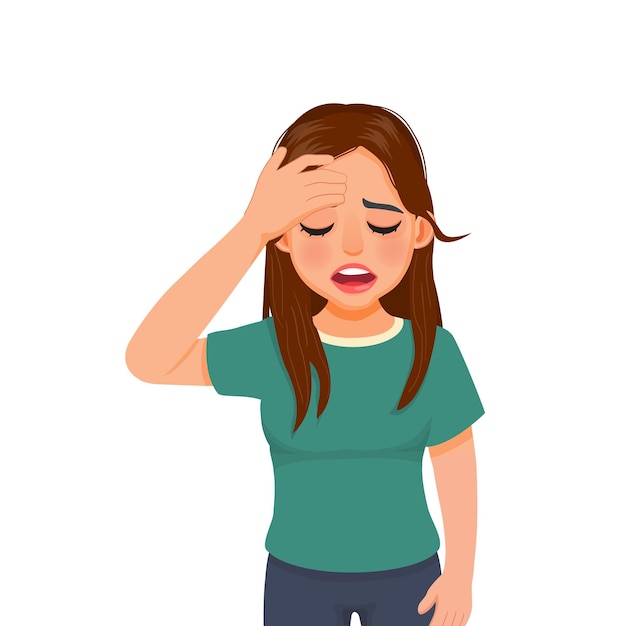
Do you ever worry about what might happen in the future? You start thinking about what could happen, and then it snowballs into a lot of “what if’s.” You think about so many “what if’s” that you feel tense in the shoulders and neck, you feel sick to the stomach, you have panic attacks, and you can’t sleep. You literally make yourself sick with anticipatory anxiety. Sometimes you get so upset that you cancel plans, stay in bed and block out the people you love.

I am guilty of struggling with anticipatory anxiety and even more now that I am doing somethings on my own since my loved one (lo)is  struggling with dementia. I’m learning to be more independent and to be a caregiver. I once depended on my lo for many things. We were a team, but now I have to take care of some of those things by myself. This is scary to me.

When our nephew passed, we had to travel three hours to his memorial service. My lo and I always shared the driving, and we always drove there in the summer. In the week before the service, I started spiraling with anticipatory anxiety. The “what if’s” swirled around in my mind like a tornado.

What if we can’t get out of Erie? What if we run into bad weather on the way there? What if we get in an accident and end up dead? What if we make it there and the weather is too bad to go home?  What if I can’t drive that far? What if we get stranded on the highway?

The “what ifs” made my shoulders tense, made me sick to my stomach, made my chest ache, and made emotions well up inside me like a ball caught in my throat. I told my “what if’s” to my friend Cheryl and she told me to stop worrying and I’ll be fine. She assured me that she believed I could make the trip without problems, but I couldn’t shut off my mind.

I wrote down my “what if’s” in a notebook and let my therapist read them.

My therapist said, “When you come up with a “what if,” find a solution. For each of your “what if’s,” there are solutions. I have faith you’re very capable of making this trip, but if your anxiety gets too bad, it’s okay to decide to cancel your plans. Have faith in yourself.”

So, here are my solutions for my “what ifs.”

  • What if we can’t make it out of Erie? Solution: If the weather is too bad, we’ll stay home.
  • What if we run into bad weather on the way? Solution: If the weather gets bad, we’ll pull off at an exit and find a hotel for the night.
  • What if we get in a bad accident and end up dead? Solution: Focus on the positive that we will make it safely.
  • What if we make it there and it’s too bad to leave to go home? Solution: I can call off work and stay at the hotel until the weather gets better.
  • What if I can’t drive that far? Solution: I’ll take breaks and take my time getting there.
  • What if we get stranded on the highway? Solution: We’ll pack a shovel, sleeping bags, water, and food.

With solutions to my “what if’s” I had a set plan and our trip no longer seemed so scary. My anxiety began to lift. We packed our car the night before and left early the next morning. Starting out it was snowy and a bit difficult to see, but I kept going. Farther down the highway the snow faded away and the sun shone. It was sunny for the rest of our trip. I stopped a couple times to stretch my legs, but we made it to our hotel without any problems.

The memorial service was on a Saturday, and we were going to stay until Monday, but because of a storm coming across Pennsylvania and much of the US, we left for home after we got some food at the meal after the service. The trip home was great. Sunny skies all the way home. The snowstorm hit the next day, and we were safe in our home. My anxiety was for nothing. I was so proud of myself for making the trip there and back without any problems.

If you’re struggling with anticipatory anxiety, come up with solutions for each of your “what if’s.” Once you do that, you’ll see that you have a plan for things that could go wrong. Having a plan makes the anxiety less powerful and helps ease your physical reactions.

From now on when I’m struggling with anticipatory anxiety, I’m going to come up with solutions, and this will help me stay in the light of recovery.