MY HOLIDAY

When I was bullied as a child, I did a lot of daydreaming to escape. I daydreamed of good things and bad things. I imagined getting hurt or dying so I would get attention or wouldn’t have to go to school. I also imagined winning awards, becoming a famous author, and my bullies cheering for me. I wanted people to see that I was capable of great things and realize they were wrong about me. I never thought that my childhood dreams would come true, until now.

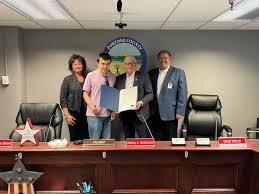
If you have been following my blog, you read that in April I will be awarded a Lifetime Service Award from the president of the United States for my work for One Life Project. Last month I learned I will also be receiving a proclamation from the mayor of Buffalo, New York, declaring February 21, “Aimee Eddy Day”. The proclamation is a long letter which talks about my work with One Life and my book, Escape to the Garage: Family Love Overcomes Bullying. Alex, the founder of One Life Project, read it to me and sent me pictures of it. Alex also received a proclamation declaring February 22 “Alexander Kovarovic Day.”

“Next year we’ll have to meet in Buffalo on February 21 and celebrate our holidays at midnight,” Alex said.

I wiped tears of joy from my eyes. “That would be awesome. We definitely have to do that.”

I imagined as a child becoming an adult standing before a crowd of people giving a speech and receiving an award. Afterwards, Donna and other bullies shook my hand and apologized for how they treated me. Well, this dream is coming true. I will be giving a speech in New York City and receiving the president’s award, the proclamation, and other awards in front of lots of people. My bullies won’t be there to apologize, but I will be flying high.

My friend Amy said, “Wouldn’t it be great if on your holiday you went to Buffalo and they had a parade for you?”

I smiled. “I would wave out the window of a car at all my fans and tell them to buy my book.”

When I was a child, teachers said that I couldn’t read, and they pushed me from grade to grade. They thought because my learning disability would prevent me from accomplishing anything important in my life. One of my teachers predicted I would grow up to be on welfare. Some of those teachers shop at the grocery store I have worked at for going on thirty years. I make sure to tell them about my awards. They treat me totally differently now. One told me she always knew I was a hard worker. In school she accused me of cheating on a test when I earned an “A.”

Who would have ever thought I would have my own holiday? It’s not a major holiday requiring schools, post offices and banks to be closed, but it’s my day. On that day I went to work and told my customers about it. They were excited and some said they need to get my autograph. I told my co-workers too.

One co-worker said, “Since it’s Aimee Eddy Day, we should close the store down and all go celebrate.”

A customer spoke up. “Wait until after I pay for my groceries.”

I said, “Yes and we all get paid to have the day off.”

Unfortunately, the managers would not have agreed to closing the store and paying us to be off. After work my husband suggested we go out to eat to celebrate my holiday. So, we went to an Asian buffet. I love Asian food, but my husband doesn’t. Luckily the buffet had American food too.

I’m doing what God wants me to do. I’m helping youth who are struggling like I did as a young person. When I was a kid, we didn’t talk about mental illness. There were no programs in schools to educate children and not much out there to educate parents about mental illness. I’m helping change that with One Life Project. I am helping to put together workbooks that schools, young people, and parents can use. I’m helping with developing programs that I will take part in teaching about mental illness and coping techniques. I’m part of a podcast that talks about mental illness, and I help pass out information at events. I’m doing God’s work. I’m serving the youth of our country.

Dreams do come true. Just because you have a disability or mental illness, it doesn’t mean that you can’t succeed in life. If you work hard enough and believe in your dream, you can make anything happen. Maybe you can have a holiday of your own too. Life might take you down different paths, but don’t give up on your dreams.

I can’t wait until next month when I give my speech and receive my awards. I just need to find wall space to hang up my awards. I work hard to keep making my dreams come true, and that holds me up in the light of recovery.

FROM BEHIND THE SHADOWS

All my life I have been the type of person to hide in the shadows. In school I stayed in the shadows to try and hide from the bullying. That protection followed me into college and adulthood. If I went unseen, I was safe from making a fool out of myself or getting put down. I have always followed what others told me to do and never could see myself as a leader. Until now.

I went through school trying very hard to be unseen and hidden. If I was put in a group of people to do an assignment, I kept my mouth shut and let others make the decisions. In college I took a class in TV news. We were broken into groups and were given the task of putting together a commercial. One person took the role as leader of the group and each of us was given the task of brainstorming ideas. I listened to the others’ ideas and only gave my ideas when I was asked. I was too scared and shy to speak up on my own. Even in college away from the kids from previous schools I was afraid of being put down. I became comfortable in the shadows.

Even when I started working at the grocery store where I continue to work, I stayed in the shadows. When I first started there, I barely talked. In time I learned to open up to fellow employees, but I found it impossible to take the initiative to talk to managers or to speak up during a training session. Sitting quietly with my lips tightly closed has always been the safest way for me.

I was going through breast cancer when Alex Kovarovic asked me to write for his nonprofit National Internet Safety and Cyberbullying Taskforce. I was excited. In time I went from writing blog posts to interviewing volunteers and helping plan events. I felt totally out of my league, but I stayed with Alex and the nonprofit as it changed into One Life Project. With One Life Project I became president’s assistant in education and research and worked alongside, Alex. I started by researching topics for the website and realized I was pretty good at research.

When Alex moved me up to a higher position where I was going to work alongside another woman to lead a group of volunteers, I got scared. The girl often planned online meetings and let me know of them at the last minute. I sat in the meetings silently as she talked, but I noticed she was disorganized and kept getting distracted by people in the background. I was afraid to step out of the shadows to speak up and take charge.

But Alex didn’t give up on me; he moved me up to Executive President of Educational Outreach and Advocacy and then to Senior Executive President of Education. Now I’m making hard decisions like letting go of people who are not doing their share. Alex is continuing to guide me in my role as a leader. I’m stepping out of the shadows to excel in my position. I’m learning to speak up and step out of my comfort zone. It’s scary and exciting. I’m proud of how far I have come and of myself for stepping out of the shadows.

I work with my team of volunteers to put together workbooks for schools and universities. I have traveled to events and handed out educational material, and I was even interviewed with Alex for Spectrum News. I’m learning different skills and how to educate young people about mental illness. The work I do means a lot to me because I was once a young person with mental illness. I had no one to teach me what mental illness was and how to ask for help. Now I’m part of a organization that gives young people opportunities to learn and ways to ask for help.

In April I will be traveling to New York City for a conference and awards ceremony. I will be giving a speech at the conference and receiving awards at the ceremony. One award I know I’m getting is from the President of the United States. It is the Lifetime Achievement award. I can’t wait to be honored with this award and possibly others.

You may feel like you’ll never rise out of the darkness or from behind the shadows to succeed, but that is untrue. You can do a lot with your life, despite mental illness or bullying. You don’t have to settle for being at the bottom. Use the determination deep down inside you to rise and reach beyond your safe place. You can become successful. Mental illness and bullying are only challenges you must overcome to make your dreams become possible. Don’t be afraid to try something new.

Stepping out of the shadows has helped me rise above the hole into the light of success.

BULLYING WARNING SIGNS

Bullying is a big problem affecting people all around us, especially our children. Children are acting out violently, going into depression, and are even taking their lives because they are abused daily at school by their peers. Many children feel alone and unable to turn to others for help. They often struggle in silence. If you’re a parent or family member, it’s important to know the warning signs of bullying.

Below is a list I found on StopBullying.gov  of the warning signs for the adults in a child’s life to look out for. You know that old saying, “It takes a village to raise a child,” is true. Not only do the parents of children need to look out for the warning signs, but so do the other adults in their lives like aunts, uncles, grandparents, family friends, and so on.

Here is the list:

  • Lost or destroyed belongings such as electronics, clothing, jewelry, and others
  • Trouble sleeping or frequent nightmares
  • Declining grades, loss of interest in schoolwork or not wanting to go to school
  • Sudden loss of friends or avoidance of social activities
  • Feelings of helplessness, hopelessness, or decreased self-esteem
  • Self-destructive behaviors such as running away, self-harm, or talking about suicide

If you notice any of these signs in your children or children in your life, find them help. Talk to their teachers, guidance counselor, or principal, and if none of them listen to you, go to the school board. It’s important to encourage your children to talk to you, be willing to listen, and look into getting therapy for them. If you can’t afford a therapist, there are government funded programs that will get you help for a low price or for free.

When I was being bullied, the biggest mistake I made was to keep what was happening to myself. I suffered in silence and it led me down a dark road. If you’re being bullied, talk to someone you trust such as a parent, a family member, a teacher, a guidance counselor, or other trusted adult. You can’t rise above bullying without help. Don’t suffer alone.

It’s important that we all spread the message that bullying is a form of abuse and it needs to stop. Since my book, Escape to the Garage: Family Love Overcomes Bullying, has been published, it has been my goal to speak up for those who can’t speak up for themselves. Spreading my message is helping me stand strong in the light of recovery.

REASONS WHY MY LIFE IS IMPORTANT

I started watching a Netflix series called 13 Reasons Why; it is about a young girl who was bullied at school and sexually harassed at school until she committed suicide. The series speaks to me because in some ways I was in the shoes of the girl the show is about. It goes through many reasons why she took her life, and it hits home with me. I wanted to die when I was being bullied. I daydreamed about something horrible happening to me, resulting in my death.

Life is hard and especially harder for others. Sometimes a series of things or just one thing happens to a person to make life seem impossible to live. Some may ask how anyone could even think about taking their life, and no one can truly know what is happening inside a person. You don’t know what can drive a person to suicide unless you have been at that breaking point, but that doesn’t make it right. It’s hard when you’re at that point to see any other way out of your inner anguish, but there is a way. There are many reasons to live and push forward.

I had many reasons why I wanted to die when I was in school: my classmates picked on me, some of my teachers put me down, my friends either moved away or turned their backs on me, I felt alone, I felt worthless, and I thought I was the ugly one in my family. In spite of that, there are reasons my life is important which I’m going to list:

  • My parents loved me for who I was no matter what. My parents loved everything about me. They didn’t care if I was a tomboy or that my room was messy. They saw me for the person I was, and they loved me for that. If I took my life they would have been devastated.
  • I had dreams to fulfill. I dreamed of becoming a published author. I wrote many short stories and entered them into contests. I didn’t know that I would publish my own memoir that would help many, but I would have never found that out if I had ended my life.
  • I was smart and had a lot to accomplish. Despite my learning disability, I was an intelligent person. I just had to work harder to succeed at school. Once I found out that I was intelligent, I made the merit roll, honor roll, published stories, and made the National Honor Society. I would never have accomplished all that if I had taken my life.
  • I made a difference in people’s lives. Even though I felt alone, I was making a difference in people’s lives. I was friends with a girl whose home life was bad and I gave her someone to lean on. I became best friends with a girl who also was being bullied and we became inseparable. I even became close to her sisters and mother. My parents and grandparents’ lives were beautiful with me in it. If I died, they would all have been hurt and very sad.
  • I had a bright future ahead of me. At that time to me my future seemed dim, but it was bright. I proved I could accomplish a lot despite a learning disability, and my future was waiting for me. I had plans for college and dreams to become a published author. I had several acceptance letters to colleges. Now I am a published author, I have a college degree, I’ve worked the same job for twenty-nine years, I work for a nonprofit helping others with mental illness, and I would have never accomplished all this if I weren’t alive.
  • My life story could help people. In high school I wrote fictional stories based on the bullying I faced. I was determined to prove myself and that helped me accomplish a lot. I was an example that anyone could succeed. As an adult I have overcome bullying, a learning disability, mental illness, and relationship abuse and many see me as an inspiration. I tell my story in this blog and in my memoir and it helps people. If I had died, I would have never been able to tell my story to the world.

If you are feeling suicidal, write out a list of why your life is important, and dig deep inside you to find those reasons. Ask people in your life why you are important to them. You’ll find that your life is worth living. There are a lot of reasons to be on this earth living your life and fighting for happiness. Instead of coming up with 13 reasons why you should end your life, come up with 13 reasons why you should live your life.

Because I never succeeded at taking my life I live a beautiful life with a wonderful husband, lots of memories, a good job, and lots of happiness. I stand tall in the light of recovery glad to be alive.

MY NEXT MEMOIR

It’s been a little while since I worked on my next memoir, The Years After the Garage. With all the hard times going on in my life, I haven’t been in the right mind set to relive my past. Plus, I’m learning a new role at One Life Project and that has been exciting, scary, and a bit overwhelming. Today, Saturday the twenty-eighth, I had the day off from work and it happened to be when Pennwriters meet in person. I haven’t been to an in person meeting in months. So, I printed out chapter one of my memoir and took it to the group.

I arrived there a little before one o’clock. There were some people I knew and some people who were new to me. I have reworked chapter one a couple of times, trying to make sure this book could keep the readers interest if they had not read the first one. That involved giving some details about things that happened in the first book. Details like coffee break was a break that the guys at E.L. Eddy and Sons Garage took. The new people who never read the first book said the memoir worked well as a stand-alone book. Even those who read the first book agreed.

One woman asked if I should add my perspective from me as an adult looking back. I explained that would take my readers out of the story. A good memoir brings the readers into the story and allows them to live each part with the author. I want my readers to cry, to get mad, to feel sad, to laugh, and to rejoice with the teenage me. This shows the readers what it’s like to go through bullying and to slide into mental illness. If I put the adult me into it, then I take the readers out of the story.

Minor grammar errors were found in my chapter. It was suggested to cut the chapter into two chapters, but that would make one eight pages long and the other one four pages long. I’m not sure if I can have chapters in such different lengths. I may have to add to the four pages chapter. When I got home, I talked with another memoir writer and posted on We Love Memoirs Authors group on Facebook to ask about the chapter lengths. Once I figure out what to do, I will know if I need to add, and then I will work on that. By splitting chapters I went from six chapters to eight, putting me further along in my memoir.

My first book was about bullying and finding acceptance from family. The second book focuses on mental illness and the accomplishments I make despite being sick. It shows the pressure I put on myself to succeed. What helps me deal with the mental illness is my writing and woodburning. The bullying I face in this book is a little different than what I faced in grade school. Bullying comes in many forms such as gossip, physical abuse, destruction of personal objects, and being ignored. I’m not going to tell you which one of these I face in the next book.

One theme I want to make clear in this book is that even though a person has mental illness, he or she can still accomplish a lot in his or her life. Mental illness doesn’t mean you cannot fulfill your dreams or succeed at your goals. I achieved a lot while struggling with my illness. It did make things harder, and I put myself through hell to reach my goals, but I did it. This book will show that.

The good news is after this meeting I am inspired to keep working on my next memoir. I came home and split a couple chapters up and reworked some scenes. I wanted to get this book done in two years, but it’s already been a year since I started it. I can’t write every day like many authors do. I write when I’m emotionally strong enough and inspired. I do hope it won’t take me four years to write it like it did the first one.

If you want to keep updated monthly on what is going on with my writing and One Life Project, sign up for my newsletter at http://eepurl.com/iuzWqw and get a gift for signing up.

Writing is my way of healing from the past and dealing with my emotions. When I’m not working on a book, I’m journaling. Releasing my feelings and past in words helps me stay in the light of recovery.

HELPING THE YOUTH

When I was in school, I struggled with mental illness, and I had no idea what was wrong with me. I kept my struggle to myself because I feared no one would understand the horrible feelings that plagued me. I fought deep sadness, inner pain, and racing thoughts in silence. When I went to school, in the seventies and eighties mental illness wasn’t talked about in or out of school.

Sad woman silhouette sitting alone on white background

My struggles followed me into college and adulthood. Now I work for One Life Project to help children find help and to educate them, so they don’t have to struggle alone.

I started with One Life Project in 2018 when it was called National Internet Safety and Cyberbullying Taskforce, and I have watched it grow as it changed into One Life Project (OLP). With One Life Project I believe I’m reaching out and touching one life at a time and making a difference. OLP helps make the world a kinder place where we advocate for, educate, and support youth with their mental health in the hopes to prevent suicide in our youth and to end the stigma surrounding mental health.

I started writing blog posts in 2018 for the Taskforce. I also helped interview volunteers and set up events. I was totally confused and nervous about my role of setting up events. Then when the Taskforce became One Life Project I took on new roles first as a director, then as the president’s assistant, and now as executive president of educational outreach and advocacy. As I take on my new role, I am learning to become a leader and advocate. I learned that I’m good at doing research, and I’m learning how to put projects together such as workbooks for college students. So far, I’ve helped edit a self-esteem workbook and I’m currently helping the president put together a sexual assault workbook. The next workbook I will be working on is deals with teen bullying, a subject I have become well acquainted with.

I believe strongly in the work One Life is doing, the projects I’m working on, and the subjects I’m researching. I believe if we can educate our youth early and support them then they can reach recovery from mental illness before they reach their adulthood. No child should struggle in silence and feel afraid to ask for help. No child should feel there is no help and the only way to receive relief is by taking his or her life. No parent should be confused with what is going on with their child or not knowing how to help their child. Working with OLP I’m helping to make sure that our youth and their parents are educated.

The workbooks and the educational materials I’m taking part in is going to help thousands of our youth with some very rough times in their lives. I’m proud to be a part of this. I don’t want to see our teens, our college students, and our young adults struggle like I did. Each youth is important and deserves to be educated, supported, and advocated for.

If mental health was talked about and taught when I was young, I may have never struggled into my adulthood or kept my struggles quiet. I would have been able to turn to my parents without fear, and they would have known how to help me. Instead, I learned after hitting rock bottom and trying to take my life from a pamphlet I found at college that I had an illness. After that I took a year off from college and got the help I needed. It has taken me into my adult years to reach recovery.

I’m still learning my role as executive president of educational outreach and advocacy, but I’m excited to grow as a leader and advocate. OLP is also helping me grow as a person and learn new things about myself. Check out One Life Project at https://www.projectonelife.org/

Working for One Life Project and believing in their mission is helping me grow into a better person and stand proudly in the light of recovery.

GOSSIP AND BULLYING

Gossip has been a part of our culture for years. We have all taken part in it in some way or another. We think nothing of it like it’s a natural part of being humans, but gossip is a form of bullying. Many people’s lives are ruined by this form of bullying. The victims of gossip are hurt emotionally and sometimes physically by a false tale spread by many.

I was told by an ex-employee of my workplace that the boss’s girlfriend left him. So, when I went to work the next day, I asked a fellow employee if it was true. Next thing I knew she was telling other employees and then she told the boss. Before I knew it my boss took me aside to lecture me about passing rumors. I felt bad. I didn’t mean for it to become a rumor, but it did. I realized after I was lectured that I should have asked the boss or just let it go until it was verified by him or his girlfriend who came in regularly.

In the small town I live in there was a rumor that one of the town women was cheating on her husband. The rumor soon became that she was seeing several men. The rumor kept growing and in time the couple’s marriage fell apart. After the damage was done the truth came out that she never cheated on her husband, but instead was hanging out with some of her women friends. I can’t imagine how hurt the woman was by a lie that destroyed her marriage. She was probably not only hurt by the gossip, but also by her husband not trusting her. The husband was probably hurt too by being led to believe his wife was betraying him.

Gossip starts with someone telling one person something they heard and then it gets passed around. As it gets passed around, it changes and grows into something worse. Bullying is a form of abuse that is repeated physically, verbally, or socially. Verbal bullying is the repetition of mean things being said. Gossip is where a truth or lie is turned into something false and repeated continually until it grows into something awful. The rumors hurt a person’s wellbeing and are repeated, making it a form of bullying.

When I worked in the bakery, the ladies told me different stories about how the Greek lady who worked with us faked her accent to appear innocent and turned around and stabbed them in the back. I was told stories of mean things she did to them. Each person made her sound worse. When I got to know her, I realized that they were passing rumors that were not true. Her accent was real, and she had interesting stories to tell about her culture. I found her to be kind and caring. What the other ladies said about her were all lies. In time the rumors and the way she was treated hurt her so badly that she ended up leaving.

We should never pass around anything that is told to us, especially if it’s told in confidence. We should also never believe what is told about a person until we confirm whether it’s true or not with the person it’s about. If you hear something about a person don’t repeat it. If you do, you become one of the bullies.

Gossip happens in schools, communities, workplaces, and even in churches. It’s up to us to put an end to it. We must stand up and say stop passing things that are not true and stop believing things we hear from others instead of the person, him or herself. Let the gossip stop with you.

You teach your children with different parenting methods, but also by your own actions. If you go around spreading gossip, then your child sees it and thinks it’s okay. So, he or she goes to school and passes rumors. Sometimes bullies are created by their parents. Be an inspiration to your children, teach them to always be kind, and practice what you teach. Teach your children about gossip and not to pass things around that are told to them. Teach them to always look for the truth.

There is a lot of gossip going around where I work. I don’t pass around what I hear, and I find out the truth before believing what I am told. By standing up against bullying and its different forms like gossip, I stand tall in the light of recovery.

GOSSIP AND BULLYING

Gossip has been a part of our culture for years. We have all taken part in it in some way or another. We think nothing of it like it’s a natural part of being humans, but gossip is a form of bullying. Many people’s lives are ruined by this form of bullying. The victims of gossip are hurt emotionally and sometimes physically by a false tale spread by many.

I was told by an ex-employee of my workplace that the boss’s girlfriend left him. So, when I went to work the next day, I asked a fellow employee if it was true. Next thing I knew she was telling other employees and then she told the boss. Before I knew it my boss took me aside to lecture me about passing rumors. I felt bad. I didn’t mean for it to become a rumor, but it did. I realized after I was lectured that I should have asked the boss or just let it go until it was verified by him or his girlfriend who came in regularly.

In the small town I live in there was a rumor that one of the town women was cheating on her husband. The rumor soon became that she was seeing several men. The rumor kept growing and in time the couple’s marriage fell apart. After the damage was done the truth came out that she never cheated on her husband, but instead was hanging out with some of her women friends. I can’t imagine how hurt the woman was by a lie that destroyed her marriage. She was probably not only hurt by the gossip, but also by her husband not trusting her. The husband was probably hurt too by being led to believe his wife was betraying him.

Gossip starts with someone telling one person something they heard and then it gets passed around. As it gets passed around, it changes and grows into something worse. Bullying is a form of abuse that is repeated physically, verbally, or socially. Verbal bullying is the repetition of mean things being said. Gossip is where a truth or lie is turned into something false and repeated continually until it grows into something awful. The rumors hurt a person’s wellbeing and are repeated, making it a form of bullying.

When I worked in the bakery, the ladies told me different stories about how the Greek lady who worked with us faked her accent to appear innocent and turned around and stabbed them in the back. I was told stories of mean things she did to them. Each person made her sound worse. When I got to know her, I realized that they were passing rumors that were not true. Her accent was real, and she had interesting stories to tell about her culture. I found her to be kind and caring. What the other ladies said about her were all lies. In time the rumors and the way she was treated hurt her so badly that she ended up leaving.

We should never pass around anything that is told to us, especially if it’s told in confidence. We should also never believe what is told about a person until we confirm whether it’s true or not with the person it’s about. If you hear something about a person don’t repeat it. If you do, you become one of the bullies.

Gossip happens in schools, communities, workplaces, and even in churches. It’s up to us to put an end to it. We must stand up and say stop passing things that are not true and stop believing things we hear from others instead of the person, him or herself. Let the gossip stop with you.

You teach your children with different parenting methods, but also by your own actions. If you go around spreading gossip, then your child sees it and thinks it’s okay. So, he or she goes to school and passes rumors. Sometimes bullies are created by their parents. Be an inspiration to your children, teach them to always be kind, and practice what you teach. Teach your children about gossip and not to pass things around that are told to them. Teach them to always look for the truth.

There is a lot of gossip going around where I work. I don’t pass around what I hear, and I find out the truth before believing what I am told. By standing up against bullying and its different forms like gossip, I stand tall in the light of recovery.

SPEAKING OUT

This week I have a special guest for my blog post. I joined podcast groups on Facebook and received a request to be interviewed for my blog. The young man I interviewed is Kadin McElwain. His answers to my questions impressed me. He is a true example of rising above bullying and a challenge people don’t understand. I can relate to him in some ways with my learning disability and bullying. Please welcome Kadin McElwain.

Aimee: Tell me about yourself.

Kadin: I’m an autistic college student, writer, and activist who is on a mission to raise as much awareness as possible by telling my story.

Aimee: When were you diagnosed with autism? Tell me about autism and the things you struggle with:

Kadin: I was diagnosed when I was two years old, coincidentally after getting the smallpox vaccination. It of course didn’t cause autism, but I always find that funny since that conspiracy theory is there. Throughout my life, I was told I wouldn’t amount to anything because I had autism. But thanks to a supportive set of parents and my own work ethic, I proved the naysayers wrong. The main struggles are with the social stuff. I take things literally, I have a hard time understanding facial expressions, and I have a hard time making friends and maintaining relationships. But I have been working on the latter two during my time in college.

Aimee: What are some things you do to work around your disability to get through school, college, and your life?

Kadin:I wouldn’t call autism a “disability” per say. I like to refer to it as a different ability. But to answer this question, I started therapy in September to help me better manage stress when it comes to things like academics and work. I also have testing accommodation (i.e. extended time on tests, a private room to take said tests, that kind of thing). But historically, throughout grade school, I had an IEP, which is a plan for people like me that’s made to help them succeed in school. But mainly, I’d say my parents have been my biggest tool, if you will, to help me manage this journey of being an adult with autism.

Aimee: When did you first face bullying because of your disability? How long did the bullying go on for?

Kadin: Well in elementary school, I was safe from bullying, and I was actually pretty popular. But in middle school and high school I started getting bullied for autism. Of course, everyone has experienced bullying in high school at some point. That’s everyone’s worst nightmare. But add someone with autism or someone who’s neurodivergent into the mix, then you become more vulnerable. Now to be fair, I did unintentionally put myself into a lot of those bullying situations. I would always tell on people for petty stuff, such as being on their phone in class. But these students should’ve known that I was on the spectrum. Quite frankly, the instructors should’ve told the class that as well.

Aimee: How has bullying impacted your life?

Kadin: I wouldn’t say it impacted my current life. I’m fine. But at the time, it hurt to be bullied and rightfully so. Thanks to that, I had a hard time making friends and I honestly lost trust in people for a while after the bullying. Quite frankly, I still do.

Aimee: Did you struggle with any mental health issues because of the bullying?

Kadin: I don’t know if this counts, but I just had a hard time embracing this gift of autism that I had thanks to the bullying. But I wouldn’t say it caused any mental well-being challenges. It was mainly low self-esteem.

Aimee: If you have struggled with mental illness because of bullying, what type of illness and how did you cope and work through it?

Kadin: My family helped me cope with my self-esteem.

Aimee: How did you rise above bullying? Tell me about how you prove people wrong and your accomplishments.

Kadin: I learned not to give the people who are bullying the time of day, and I also made it a part of my mission. I hope that schools and workplaces can implement mandatory autism training programs for students, teachers, and parents to take before they even enroll in the school. The parents’ part is because I believe everything starts at home.

Aimee: Tell me about what you write? Do you have a book(s) published, stories or poems published? Do you have a blog? What genre do you write? (If you have a blog or any books published you can include a link to them.)

Kadin: I mainly specialize in sports journalism. I write for a site called The Sports Column and I’ve published over 400 articles between 2019 and 2024. I have been working to branch out into motivational writing and op-eds by telling my story.

Aimee: Tell me about your work as an activist and how you work to raise awareness about autism.

Kadin: My activism began with a class project for my freshman year of college. The assignment was to work with a group to help the community. So, my group and I set up a GoFundMe for The Autism Society of America, and we ended up raising $1,085 for it and winning a contest with it. But unfortunately, as typical with my generation (The Participation Trophy Generation), my group only did the assignment to get the grade and the prize we got for winning the contest. To put it simply, their hearts weren’t truly in it. So, I thought “If no one else is going to take this cause seriously, I might as well be the one to do so.” So that project led to me speaking to political officials and people in power in school districts about autism, setting up fundraisers within my community for autism organizations, and appearing on various media platforms to tell my story. It’s not an easy thing, but I believe in the cause. If there’s gonna be change in the world, you definitely have to be outspoken about the issue.

Aimee: What advice do you give to others struggling with autism?

Kadin: I would say that you are extremely important in society, and you have amazing things to bring to the table, regardless of what you’re going through. If people can’t see that, don’t give them the time of day. They’ll be missing out on an amazing person.

Aimee: What advice would you give about facing bullying and/or mental illness?

Kadin: Don’t let these people bring you down. You are stronger than them and you deserve to be treated with kindness and to be around people who would never try to change the you that you are.

Aimee: Is there anything else you would like to tell my readers?

Kadin: Keep spreading positivity.

Kadin has embraced autism and risen above bullying to tell his story and become an inspiration to many. He stands in the light of success and strength.

EMOTIONS FROM THE PAST

Wounds on the soul from the past can heal, but a scar remains. We can move on from abuse, forgive those who have hurt us and heal, but the memory and the scar inside us never goes completely away. Sometimes things that happen in our lives reopen the wound and a storm of emotions flood us. How we handle the feelings is what matters the most.

I was looking at my reviews on Amazon for my book, Escape to the Garage: Family Love Overcomes Bullying, and realized I got a five star review last month. There was no name to tell who wrote the review. The review stated that he or she was a classmate of mine and had good memories of me. Then it stated that he or she hoped he or she was not one of those I wrote about. This opened an old wound. Who could have good memories of me, but not know if he or she was one of the bullies? I had friends that moved away when I was younger, and the few friends that I kept more than a year would know they were not one of the bullies.

Who would have good memories of me when I didn’t talk to my classmates? We had a very small class and often kids follow the crowd when it comes to bullying even if they don’t agree. That doesn’t make what they did okay. Even when you don’t agree yet you participate, you’re as bad as the bullies. Was this one of those type of people from my class? Was it someone who didn’t even try to talk to me because he or she was afraid of getting bullied? Or was it one of the friends who turned their back on me? I went over and over in my mind who it could be who wrote the review.

I want my classmates and the bullies to read my book and see what they put me through. The person did acknowledge that he or she is happy to see my success which made me feel good. Then the person wrote that now that he or she is an adult, none of that horrible kid’s stuff matters. He or she didn’t seem to understand that it’s not just horrible kids’ stuff. When I was younger in the eighties and nineties when kids were mean to others, they didn’t recognize it as bullying. It was kids being kids, but it’s more than that. Bullying doesn’t just happen with children; it happens to adults too. Adults also can be bullies. Plus, what happens to a victim of bullying can affect them into adulthood. The reader of my book obviously doesn’t understand that bullying isn’t just kids’ stuff and that angered me.

To me saying It’s kids’ stuff is just like saying kids will be kids, and the pain and damage I had to struggle with into my adulthood didn’t matter. I spent many years in therapy learning to love myself, change my negative thinking, mend the inner wounds, and forgive and move on from the abuse I faced as a child. Years of being put down by classmates and teachers destroyed my self-esteem, led me into a mental war with myself, and caused wounds no one could see. It also led me into bad relationships, made me afraid to stand up for myself, made it hard for me to trust, and made me agree to things I wasn’t comfortable with because I was too afraid to speak up and so much more. This led into my adulthood. The pain of that resurfaced with the five-star review.

The song “Because of You” by Kelly Clarkson is about someone who was abused, and the lyrics hold true for bullying too. Think about the lyrics as you read them and imagine that child or adult who is being bullied. Here are the lyrics:

Because of you

I never stray too far from the sidewalk

Because of you

I learned to play on the safe side,

so I don’t get hurt

Because of you

I find it hard to trust not only me,

But everyone around me

Because of you

I am afraid

It took me years to overcome these things the song talks about. I had to go through therapy and take antidepressants, and even now I fear being hurt again. I am an adult now and my wounds are scars that at times reopen. The scars are from the bullies who verbally and physically abused me and the bad relationships I got into as an adult because I didn’t know how to have a healthy relationship.

Because of you (my bullies), sometimes my scars open up and the pain floods back, but because I’m stronger I can handle the pain and I stitch that wound up. When I read that review, I texted my friends who are also part of my support team, Cheryl and Amy. They both mentioned the positive side of the review and told me not to dwell on who it might be. I didn’t want to hear the positive, but I listened, or more like read it. Amy suggested I write this post about it, and it is very healing.

To my classmate who wrote the review you’re right; I have succeeded. I am not done yet. I have more books to write, and I am working hard at giving talks to bring awareness to bullying. Thank you for your review.

If old wounds are reopened, turn to your support system, don’t let the wounds push you down, and stitch them back up. Because I stitched my old wounds back up, I stand tall in the light of recovery.

TIPS FOR HELPING YOUR CHILD WITH BULLYING

Unfortunately, bullying is a big problem in our schools. Children are being abused physically and verbally for being different. This abuse leads to mental health problems, behavioral problems, drug and alcohol abuse, and academic problems. Many parents are lost, not knowing how they can help their child.

From personal experience as a bullying survivor and through research, I put together some tips for parents to help their children. Below are my tips:

  • Look for signs of bullying. Some of the signs that your child is being bullied are: missing or destroyed belongings and clothing, loss of friends, spending time alone, loss of self-esteem, not sleeping or having nightmares, trying to avoid going to school, unexplained injuries, and so on. You can find out more at this site What are common signs of being bullied? | NICHD – Eunice Kennedy Shriver National Institute of Child Health and Human Development (nih.gov)
  • Keep an open communication with your children. Talk to your children about school. Ask them about their day and friends. Tell your children they can talk to you if they need to. Be interested in their activities and what is going on in their lives. If you have a busy lifestyle, make a special time each day to sit and talk with your children.
  • Be willing to listen. If your child wants to talk, then make time to listen. Let your children know you’re always willing to listen to them. Sometimes they just need a shoulder to cry on and someone to listen while they let out their feelings.
  • Encourage children to share their feelings with other adults. Understand children don’t tell their parents everything. Let your child know if they can’t tell you something, they can tell an aunt, uncle, grandparents, or another adult they feel close to.
  • Look for signs of mental health problems. Many children who are bullied struggle with depression and anxiety. Learn about the signs of depression and anxiety such as nausea, frequent shaking, tightness in the chest, irritability, hopelessness, talk of suicide, excessive worrying, and feelings of sadness. You can find out more at Identifying anxiety, depression signs – Mayo Clinic Health System.
  • Seek professional help. If you notice signs of continuous bullying or signs of depression and anxiety, look into therapy for your child. Bullying is a form of abuse that rips apart a child’s self-esteem and mental well-being. A therapist can help your child cope and talk about what is happening to them. If you don’t feel confident with the school therapist, look for another professional. If you do not have health insurance, look into state funded programs. Many state programs offer help at low cost or no cost. The sooner you get your child help, the better chances you have of combating the effects of bullying.
  • Fight for your child. Talk to teachers, principal, school administration, or school board to put a stop to the bullying your child is facing. If no one will listen then document what is happening and talk to the news. Do what it takes to end the abuse your child is facing.

If your child is being bullied, use these tips to help them deal with what is happening to them. It’s your job as a parent to do what it takes to help your child. No matter how busy your life is, make time for your children and be aware of what is going on in their lives. Lean on friends and family for support. Let’s stop what we are doing and speak out for our children.

I wrote my book Escape to the Garage: Family Love Overcomes Bullying to show not only the effects of bullying, but also the importance of family. My mom fought endlessly for me, but unfortunately back then she didn’t have the resources we have now. My family and my parents got me through many hard times as a child. The only regret I have is I should have never kept so much to myself. Writing my book and speaking out against bullying helps me heal in the light of recovery.