ALWAYS BE YOURSELF

High school is a hard time for teens. They are at the dating age, they face peer pressure, and they work hard to fit in. If you dress differently, are too skinny or too big–boned or have any noticeable difference, you are teased and put down. Many try to change who they are to be part of the popular crowd or to fit in. Bullies are people who act aggressively towards people who are different. They pick out someone whom they determine is weak and abuse the person physically, verbally, or by cyberbullying. They prey on people who dare to be different.

My older sister was in the most current style before the others in our small-town school. She wore lots of makeup and got up early in the morning to do her hair just right. She was beautiful. I just got up in enough time to brush my hair, get dressed, and go to school. Even as a child she was a girly girl. I was always the opposite of her. I was a tomboy. I played with cars and action figures. I didn’t mind getting dirty. My older sister played with dolls and hated getting dirty. My parents loved us for the individuals we were.

I spent my childhood being bullied for having a learning disability and then in high school they found new things to put me down for. As a teen I liked tee shirts, sweatshirts, and jeans. Some of my clothes came from yard sales. I didn’t care about what was considered in style or doing the latest hair style. I hated makeup and nail polish. I was what my classmates and other teens considered an outcast. Many teens in my school picked on me about my clothes and hair. They abused me verbally for being my own person. They made me feel ugly and worthless. I wanted to fit in, but I liked my own style, which was simple.

Then a couple of teachers in my special education class decided to hold a beauty day for all the girls in the class. They had a beautician and makeup artist come in and make us up. I hated every minute of it, but I was willing to give it a try so that maybe I could fit in with everyone else. The eye shadow made my eyes itch, rubbing foundation into my skin felt weird, my eyes watered, making the mascara run, and I couldn’t help but lick my lips, wiping away the lipstick. My hair was curled and styled with a curling iron, and when I looked in a mirror I felt like I was staring at a stranger.
The teachers were trying to help me without realizing they were asking me to change who I was to fit in. I went along with it, and I tried to do lipstick and eye shadow on my own. I tried different hairstyles, but it didn’t change things. I was still an outcast and I only hated myself more. I felt ugly in my new style, and I felt like I wasn’t being true to myself. This only deepened my depression and destroyed my self-worth.

Through this experience I learned to never change who you are to fit in. Be true to yourself even if your classmates and your bully use it to put you down. Trying to be someone you are not only deepens your lack of self-worth and your depression. Be the person, the unique individual, you are meant to be and the person you feel comfortable with. Don’t let anyone change who you are just so you can be accepted by others.

Many teens who dress like the popular crowd are not being themselves. They are often just following the crowd and hiding their true selves. Each one of us has different likes, dislikes, styles, and personalities. Owning our differences and daring to embrace them, even though others don’t agree, is a bold and strong step. We must be true to ourselves whether others like it or not.

As an adult I’m happy to be my own person. I rarely wear jewelry, and I don’t expect my husband to buy me any. The only jewelry I wear is my engagement ring and wedding band. I don’t put makeup on; I feel comfortable with my natural looks. Most of the time I wear tee shirts, jeans, or sweatpants. I like short hair that I can just run a brush through and be ready to go. I have a streak of pink in my hair to symbolize that I am a breast cancer survivor. This is who I am.
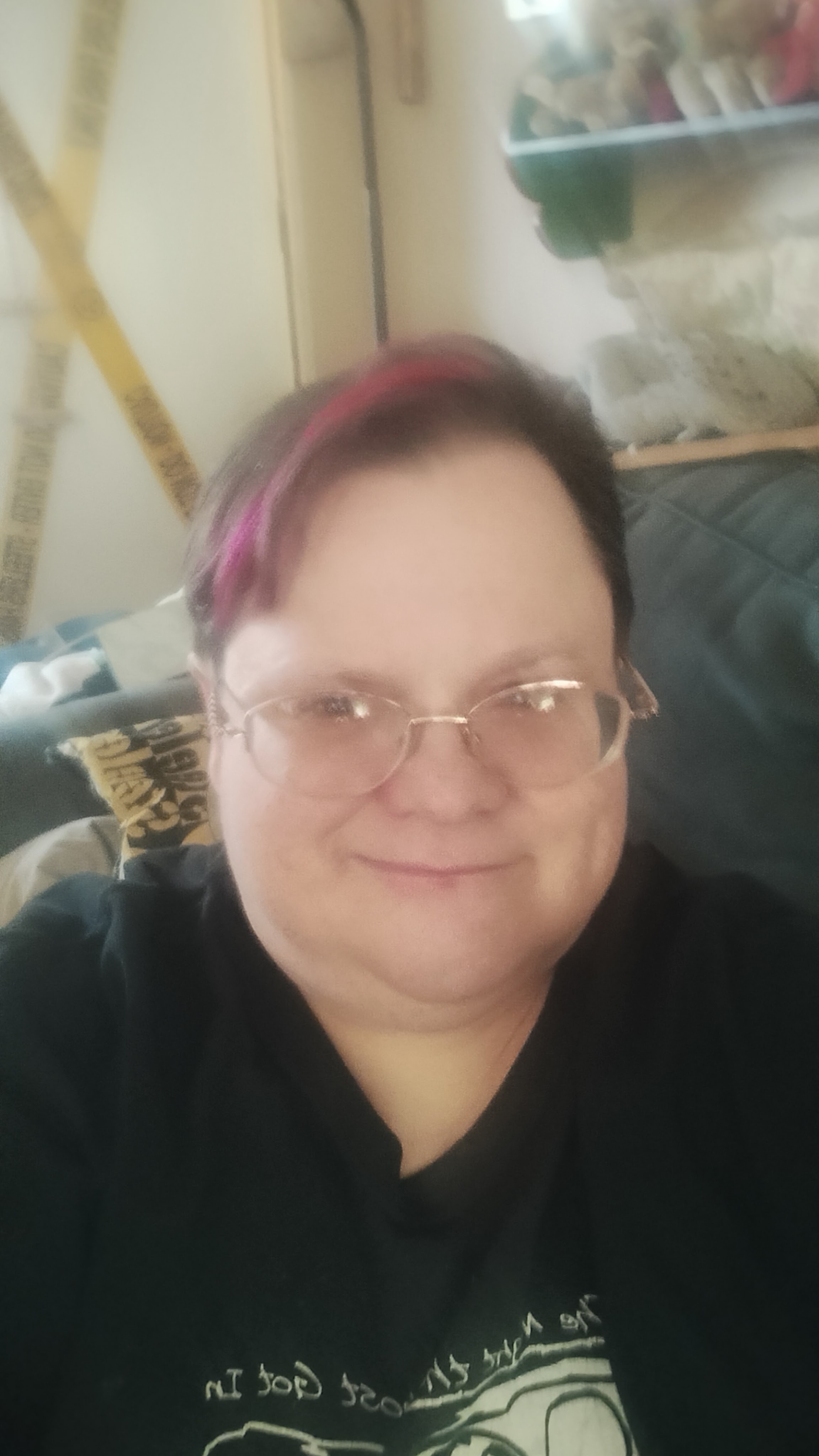
Being myself is what lifts my self-esteem and carries me in the light of recovery.

EMOTIONS FROM THE PAST

Wounds on the soul from the past can heal, but a scar remains. We can move on from abuse, forgive those who have hurt us and heal, but the memory and the scar inside us never goes completely away. Sometimes things that happen in our lives reopen the wound and a storm of emotions flood us. How we handle the feelings is what matters the most.

I was looking at my reviews on Amazon for my book, Escape to the Garage: Family Love Overcomes Bullying, and realized I got a five star review last month. There was no name to tell who wrote the review. The review stated that he or she was a classmate of mine and had good memories of me. Then it stated that he or she hoped he or she was not one of those I wrote about. This opened an old wound. Who could have good memories of me, but not know if he or she was one of the bullies? I had friends that moved away when I was younger, and the few friends that I kept more than a year would know they were not one of the bullies.

Who would have good memories of me when I didn’t talk to my classmates? We had a very small class and often kids follow the crowd when it comes to bullying even if they don’t agree. That doesn’t make what they did okay. Even when you don’t agree yet you participate, you’re as bad as the bullies. Was this one of those type of people from my class? Was it someone who didn’t even try to talk to me because he or she was afraid of getting bullied? Or was it one of the friends who turned their back on me? I went over and over in my mind who it could be who wrote the review.

I want my classmates and the bullies to read my book and see what they put me through. The person did acknowledge that he or she is happy to see my success which made me feel good. Then the person wrote that now that he or she is an adult, none of that horrible kid’s stuff matters. He or she didn’t seem to understand that it’s not just horrible kids’ stuff. When I was younger in the eighties and nineties when kids were mean to others, they didn’t recognize it as bullying. It was kids being kids, but it’s more than that. Bullying doesn’t just happen with children; it happens to adults too. Adults also can be bullies. Plus, what happens to a victim of bullying can affect them into adulthood. The reader of my book obviously doesn’t understand that bullying isn’t just kids’ stuff and that angered me.

To me saying It’s kids’ stuff is just like saying kids will be kids, and the pain and damage I had to struggle with into my adulthood didn’t matter. I spent many years in therapy learning to love myself, change my negative thinking, mend the inner wounds, and forgive and move on from the abuse I faced as a child. Years of being put down by classmates and teachers destroyed my self-esteem, led me into a mental war with myself, and caused wounds no one could see. It also led me into bad relationships, made me afraid to stand up for myself, made it hard for me to trust, and made me agree to things I wasn’t comfortable with because I was too afraid to speak up and so much more. This led into my adulthood. The pain of that resurfaced with the five-star review.

The song “Because of You” by Kelly Clarkson is about someone who was abused, and the lyrics hold true for bullying too. Think about the lyrics as you read them and imagine that child or adult who is being bullied. Here are the lyrics:

Because of you

I never stray too far from the sidewalk

Because of you

I learned to play on the safe side,

so I don’t get hurt

Because of you

I find it hard to trust not only me,

But everyone around me

Because of you

I am afraid

It took me years to overcome these things the song talks about. I had to go through therapy and take antidepressants, and even now I fear being hurt again. I am an adult now and my wounds are scars that at times reopen. The scars are from the bullies who verbally and physically abused me and the bad relationships I got into as an adult because I didn’t know how to have a healthy relationship.

Because of you (my bullies), sometimes my scars open up and the pain floods back, but because I’m stronger I can handle the pain and I stitch that wound up. When I read that review, I texted my friends who are also part of my support team, Cheryl and Amy. They both mentioned the positive side of the review and told me not to dwell on who it might be. I didn’t want to hear the positive, but I listened, or more like read it. Amy suggested I write this post about it, and it is very healing.

To my classmate who wrote the review you’re right; I have succeeded. I am not done yet. I have more books to write, and I am working hard at giving talks to bring awareness to bullying. Thank you for your review.

If old wounds are reopened, turn to your support system, don’t let the wounds push you down, and stitch them back up. Because I stitched my old wounds back up, I stand tall in the light of recovery.

I THOUGHT I WAS WATCHING SOMEONE DIE

Today seemed like a normal day, but it wasn’t. A man stood inches from me, his eyes rolled back, his body unable to move, and his legs buckling. I called for help. Help came and they moved him into a chair, but suddenly his face went white, and someone said he was not breathing. They moved him to the floor and started CPR. He lay still with all the life drawn from his face. My hands shook and I silently asked God, “Please don’t let him die.” He looked like he had already died. I thought he was gone. I thought I was watching a man die today.

When I looked at the man lying nearly lifeless on the floor, I thought about how precious life is and how fleeting it is. It’s easy to give up on living when depression clouds the mind. It’s hard to think straight, to see past the deep darkness inside, and to see that your life is special. I know because I was there at the breaking edge, ready to throw away the life God gave me because I couldn’t see past my inner agony. I thought everyone’s life would be better without me in it, I thought there was no way out of my darkness, and I thought I was doomed to a life of agonizing inner pain.

I took a bottle of pills. I felt dizzy and sick. Some how I drove to college and back in a snowstorm. I had no idea how. I didn’t even remember driving. I just knew I got there and back. It took me years to realize God was at the wheel of my car that night. It was then that I realized how important my life is and how foolish it was of me to try and end it.

I thought about how important that guy’s life was as I watched a woman breathe air into the guy who lay so lifeless. I felt my body tremble and my heart race as I watched them struggle to save a stranger’s life. If I had gotten into an accident after taking those pills, how many people would have struggled to save my life? How would they feel watching the life drain from me? Would they have been traumatized? What if my grandparents had found me dead from taking all those pills? Would they have been crying endlessly? Trying whatever they could to save me? Would their hearts be torn from their chests and their tears be endless? Would they be traumatized for life? How would they have told my parents that their daughter  had committed suicide in their home?

I saw the man’s eyes open. The people talked to him while paramedics put oxygen on him. They loaded him on a stretcher and took him away. I went on with my day wondering if he lived or died. Then I thought about how if I had succeeded at taking my life how many strangers who tried to save my life would be left disheartened and broken.  I thought about how many of my own family members’ lives would have been ruined because I took away what God gave me. In that moment I thanked God for my precious life and for allowing me to live when I wanted to die.

Later that day I heard the man I saw nearly die in front of me was seen out and about. He lived. I thought I was watching him die, yet God choose for him to live. Just like he chose for me to live the day I went to college in a snowstorm after taking a bottle of pills. God had a purpose for that man to survive just like he had a reason for me to live. If I had died, I would have never gotten to see my nieces and nephews grow up and some of them have children of their own. I would have never fallen in love with the man of my dreams and created many wonderful memories with him. I would have never written my book to help others with bullying. I wouldn’t be writing this blog. I wouldn’t have been able to help my siblings surprise my parents with a fiftieth anniversary party. There is so much more I would have missed out on if I had taken my life.

I thought I was watching a man die today, but he lived. It was a reminder of how precious life is and how important it is to fight for it. Live for the future that awaits you. Live for a chance to reach recovery. Live to make your dreams come true. Live to watch your family members grow and change. Live to create beautiful memories. Put those pills away, put that knife down, and put that gun aside. Look beyond your pain and see how precious your life is. God gave you life for a purpose; live so you can find the purpose.

This scary experience woke me up and reminded me why God chose for me to live so many years ago. God gives us little reminders of how important we are to him. His reminder shook me up pretty good but showed me how special life is. I live to fulfill God’s purpose and I fight my illness to stand in the light of recovery.

YOU ARE WORTHY

When you’re in the deepest part of your hole of depression it is hard to see your own self-worth. It’s easy to lose all your self-esteem. You see yourself as useless, hopeless, and an awful person. It’s nearly impossible to find anything that is good about yourself. The truth is: you are none of the things your sick mind tells you that you are. You are so much more than your illness and the dark lenses you are looking through. You are a worthy, special person.

I know many of you need reassurance that despite the illness that tortures your mind, you are a wonderful person. Below is a list of reasons why you are worthy. Maybe this is the moment you need to read this or maybe you need a reminder to fuel your determination to fight this awful illness. Whatever your reasons are, please read on.

Reasons you are worthy:

  • You are worthy of living. Your life is valuable and even though it doesn’t seem like it You are an important part of this world. You have people who love you. They would be broken-hearted if you were to die. You can get better and make a big difference in people’s lives. You’re important.   
  • You are worthy of happiness.

You might think you’re doomed to a life of sadness, but you’re not. You can reach recovery and live a happy life. You deserve happiness and it’s up to you to strive for it. Don’t be afraid to be happy and to search for happiness.

  • You are worthy of being loved.

You might hate yourself right now and think you don’t deserve love, but you are wrong. Everyone deserves to be loved, even you. Those sad, hopeless, and miserable feelings you have are not you. It’s your illness. The person you are is a beautiful person who is kind, caring, fun and much more. That person is worthy of love.

  • You are worthy of kindness.

You don’t deserve to be called names, to be hurt physically or to be used. You are worthy of people who will care for you, give you a shoulder to lean on, spend time with you and are willing to get to know you.

  • You are worthy of respect.

You don’t deserve to be treated like you are dangerous or a loss cause.
You deserve to be admired for your strength to fight this illness and for the person you are. You are special and are worthy of others’ respect. You deserve to be admired for your strength to fight this illness and for the person you are. You are special and are worthy of others’ respect.

  • You are worthy of recovery.
    You’re not meant to spend your life stuck in deep sadness and emotional pain. You deserve to learn coping techniques, learn new ways of thinking and of finding the right medication that helps you manage your illness. Recovery means managing your illness well enough that you can function and live a happy life and you deserve that.
  • You are worthy of loving yourself.
    Right now, you might hate yourself, but you don’t deserve the self-hatred. That person you are despite your illness is a beautiful person deserving of your love. Fight to find yourself and look inside you. See yourself for the person you are, not the person your illness makes you think of yourself. Inside you is a person craving to be loved by you.

Read through this list every time you feel unworthy.

Remind yourself of how worthy you are, each time you feel like giving up.

Write theses down on index cards and put them in different spots in your home where you’ll remember to read them.

Write each thing out on a piece of paper you are worthy of, if necessary.

Do this until you believe them to be true.

I am worthy of all of these and much more. Knowing this keeps me in the light of recovery.
TIPS FOR HELPING YOUR CHILD WITH BULLYING

Unfortunately, bullying is a big problem in our schools. Children are being abused physically and verbally for being different. This abuse leads to mental health problems, behavioral problems, drug and alcohol abuse, and academic problems. Many parents are lost, not knowing how they can help their child.

From personal experience as a bullying survivor and through research, I put together some tips for parents to help their children. Below are my tips:

  • Look for signs of bullying. Some of the signs that your child is being bullied are: missing or destroyed belongings and clothing, loss of friends, spending time alone, loss of self-esteem, not sleeping or having nightmares, trying to avoid going to school, unexplained injuries, and so on. You can find out more at this site What are common signs of being bullied? | NICHD – Eunice Kennedy Shriver National Institute of Child Health and Human Development (nih.gov)
  • Keep an open communication with your children. Talk to your children about school. Ask them about their day and friends. Tell your children they can talk to you if they need to. Be interested in their activities and what is going on in their lives. If you have a busy lifestyle, make a special time each day to sit and talk with your children.
  • Be willing to listen. If your child wants to talk, then make time to listen. Let your children know you’re always willing to listen to them. Sometimes they just need a shoulder to cry on and someone to listen while they let out their feelings.
  • Encourage children to share their feelings with other adults. Understand children don’t tell their parents everything. Let your child know if they can’t tell you something, they can tell an aunt, uncle, grandparents, or another adult they feel close to.
  • Look for signs of mental health problems. Many children who are bullied struggle with depression and anxiety. Learn about the signs of depression and anxiety such as nausea, frequent shaking, tightness in the chest, irritability, hopelessness, talk of suicide, excessive worrying, and feelings of sadness. You can find out more at Identifying anxiety, depression signs – Mayo Clinic Health System.
  • Seek professional help. If you notice signs of continuous bullying or signs of depression and anxiety, look into therapy for your child. Bullying is a form of abuse that rips apart a child’s self-esteem and mental well-being. A therapist can help your child cope and talk about what is happening to them. If you don’t feel confident with the school therapist, look for another professional. If you do not have health insurance, look into state funded programs. Many state programs offer help at low cost or no cost. The sooner you get your child help, the better chances you have of combating the effects of bullying.
  • Fight for your child. Talk to teachers, principal, school administration, or school board to put a stop to the bullying your child is facing. If no one will listen then document what is happening and talk to the news. Do what it takes to end the abuse your child is facing.

If your child is being bullied, use these tips to help them deal with what is happening to them. It’s your job as a parent to do what it takes to help your child. No matter how busy your life is, make time for your children and be aware of what is going on in their lives. Lean on friends and family for support. Let’s stop what we are doing and speak out for our children.

I wrote my book Escape to the Garage: Family Love Overcomes Bullying to show not only the effects of bullying, but also the importance of family. My mom fought endlessly for me, but unfortunately back then she didn’t have the resources we have now. My family and my parents got me through many hard times as a child. The only regret I have is I should have never kept so much to myself. Writing my book and speaking out against bullying helps me heal in the light of recovery.

TIPS ON HANDLING LIFE’S CHALLENGES

Life is very unpredictable. Sickness hits us when we least expect it, and other things seem to go wrong all at once. Our car breaks down, our roof leaks, a friend walks away, or a husband gets hurt. When you’re struggling with mental illness, life’s challenges can worsen your illness. If you’re in recovery or on the road to recovery from mental illness, life’s challenges can threaten to push you down that dark hole.

If you have been following my blog, you know I have faced a lot of health problems and challenges that have tested my ability to stay in the light of recovery. If you’re new to my blog, check out some of my older posts. I developed ways to cope with life’s challenges that I faced. Below are a few tips on how to handle challenges.

  • Allow yourself time to feel. Give yourself time to get sad, cry, scream, and let out your emotions. Holding in your feelings can only send you further into that hole of darkness. Do what you need to get those feelings out even if it means spending a day in bed.
  • Pull yourself together. Don’t let yourself stay stuck in your emotional state of mind. Remind yourself of how strong you are and what it took you to get where you are, whether it would be on the road to recovery or in recovery. Wipe those tears away, get out of bed, get dressed, and remember how strong you are.
  • Focus on the positive. Even though things are tough and seem hopeless, there are positive things. Pull out a piece of paper and write down the positive things in your life like you have a home, you got up that morning, the sun is shining, and you have food. Even the smallest things can be positive. It might be hard to find good things during the hard times, but don’t give up.
  • Turn to coping techniques. What kind of coping techniques did you learn in therapy? Do you do deep breathing, or grounding techniques? Do you have a hobby, do you journal, or do you go for a walk? Whatever coping techniques work for you, use them. If you don’t know of any techniques, then research some on the internet or talk to your therapist.
  • Lean on your support system. Talk or text your friends or family members who are part of your support team. Often, they can give you good advice or guide you to a healthier path. Sometimes it’s just good to have someone listen to you.
  • Push forward. When life hits you hard, it’s easy to give up and go backwards, but remember you’re strong. Stand up tall and push forward. See the hard times as something you can find away around. Be determined that you won’t let the struggles pull you down. You can get through this, and life will get better.
  • Seek help or talk to your therapist. If you find that you can’t get through this difficult time in your life on your own, call your therapist and make an appointment. If you’re in recovery and you no longer have a therapist, find one. There is no shame in seeking help. A therapist will have lots of ways to help you through and can guide you through the challenges that face you. Don’t be afraid to ask for help.

Remember no matter how difficult things can get, you can get through it. Don’t let life’s challenges push you down that dark hole. Your road to recovery or remaining in recovery is too important to risk. Follow these tips or find your own ways to handle life’s challenges.

I have been through numerous illnesses, surgeries, and hard times and through it all I used these tips to keep me in recovery. I face life’s challenges with strength in the light of recovery.

STARTING COLLEGE WITH MENTAL ILLNESS

Mental illness knows no age limits. It can happen to anyone at any age, even to children and teenagers. Some teens receive counseling, and some keep their struggles quiet out of fear. The mental illness doesn’t just weaken after high school especially if it’s untreated. Many young adults experience worsening of their mental illness or the onset of the illness when they start college. They are starting out on their own as adults, they have heavy work loads, long schedules, peer pressure, and a hard time fitting in.

During my senior year of high school, my cousin was killed in a car accident. This sent me deeper into depression. I kept my inner pain to myself and only told one of my friends. My grandparents lived close to the college I planned to attend so I moved in with them. They lived forty-five minutes from my home and my friends. My grandparents were kind people who gave to me endlessly. Grandpa checked my oil, cleaned snow off my car in the winter, and made sure my car was running every morning. Grandma went out of her way to cook my favorite foods, spoil me with love, and refused to let me help around the house. She told me my college work was more important. I was spoiled, yet unhappy.

My cousin’s death left me in great sadness and the only person I thought understood lived miles away. I was used to having my three siblings around and my mom there to help me. Even though my grandparents would have done anything for me, I felt like I had just entered adulthood and had to handle things on my own, including the endless sadness that was engulfing me.

I thought I could handle going to college full-time taking daytime and evening classes. This proved to be overwhelming. I had more homework than I could handle. My learning disability made it impossible for me to keep up with the reading assignments. I’m slower than the average reader, plus I have to reread things to be able to remember them. I stayed up late trying to complete reading assignments, study, and translate lectures I recorded with a small tape recorder into notes. I was stressed out. I was falling behind and that brought up the fear that followed me from high school, the fear I was going to be a failure.

If I wasn’t working late into the night, I would be lying in bed staring into the darkness struggling with endless negative thoughts and worries. Every morning I felt nauseated and forced myself to eat breakfast before going to classes. In between classes I escaped to the bathroom to get sick. On top of my depression, I was home sick and put my deepest feelings in notes to a friend. That ended in a big mess that led to abuse by my friend. I was too sick to see what she was doing to me. I just knew I couldn’t lose any of my friends and I held on too tightly.

In elementary and high school, I self-injured by pulling my hair or punching a wall, but in college I started cutting. I was sick, in pain, fatigue, stressed out and in agony, and I needed to release all those painful feelings. The only way I knew how was to injure myself. I hid my injuries under long sleeve shirts, or I cut further up on my arm that no one could see them. I hurt myself just deep enough to free the emotional pain.

I also began to plan my death. I even wrote out my obituary and suicide note. My grandparents slept downstairs and I had the whole upstairs to myself. They had no idea what I was doing. I was an adult I couldn’t trouble them with my problems; besides I didn’t want to hurt them. I thought if I were dead, I wouldn’t hurt my family with my miserable existence. One night I took a bottle of pills. I felt dizzy and out of it, yet somehow, I drove to college in a snowstorm and back.

When my mom started to notice something was wrong, she began to visit each week to spend time with me. When I finally confided completely in her about how I was feeling, she moved me home and went on a search to get me help. Eventually I took a year off college to work on my mental health.

College is a new beginning and can be made especially difficult if you are struggling with mental illness. My advice is don’t start college until you have begun treatment for your mental illness and have learned coping techniques for the sudden change in your lifestyle. If you need to take a year to work a job and do therapy to get your mental illness under control, do it. There is no need to rush off to college until you’re mentally strong enough to cope with the new challenges. Take care of yourself first. You can go to college at any time.

Don’t keep your feelings to yourself and try to handle your illness on your own. Tell your parents, a family member, or a counselor at the college what is happening to you. Even adults need help and support managing mental illness. Don’t suffer alone. Don’t be afraid to ask for help, especially if you are suicidal.

If college is becoming too stressful and it’s taking a toll on your mental health, then consider cutting down on some of your classes. It might take you longer to complete your degree, but your mental well-being is more important. When I returned to college after a year off, I cut my class load down to part time. It took me longer to graduate, but I was less stressed and stronger mentally because of it.

I started a two-year college in the summer of 1993 and graduated in 1999. It took me much longer to get my degree, but my mental health was better because of it. I have my degree hanging on my wall to remind me of the huge accomplishment I made despite a learning disability and mental illness. I stand proudly in the light of recovery as a college graduate who is following her dreams.

LOVE YOURSELF FIRST

We all want to find the perfect partner to make our lives beautiful and to take our loneliness away. I’ve seen many posts on Facebook where people share their loneliness and if they could just find someone, they would be happy again. The thing is finding the right person is a very hard task. When you’re struggling with mental illness, you can’t have a healthy relationship until you take care of yourself, and you learn to love yourself.

When I was down into the dark depths of my illness, I daydreamed of the perfect man coming into my life and suddenly my sadness and loneliness would disappear. I wanted to find Mr. Right so badly that when a guy came along making phony promises, I thought I was in love with him. He asked me to move in with him and I did. Things changed quickly. It started with him saying I couldn’t use a certain pan because I would ruin it. Then it increased to verbal and physical abuse.

He was a narcissist, and he used my weakness to get pats on the back. He went to therapy with me and told the therapist how I abused him. He told his family and neighbors how hard it was on him to take care of a woman with mental illness so they would feel sorry for him. When he packed my bags to kick me out, I lost control and put my hand through a window. Instead of calling my mom, he called his. His mom sat there as the EMT bandaged my hand telling me if I had treated her son better, he wouldn’t have kicked me out.

I wanted to find the right guy so much that I missed all the signs that my ex-boyfriend was the wrong one for me. I didn’t love myself and I was so sick I couldn’t make clear decisions. After he threw me out, I went into a mental health hospital and started taking steps to take care of myself. When I got out of the hospital, I realized I couldn’t be in a healthy relationship with anyone until I decided I wanted to work towards recovery. How could I truly love a man if I didn’t love myself first?

After I got out of the hospital I started on a journey to recovery. I worked hard to change my thought processes and to learn to love myself. I was doing well, but I kept having bouts of depression. I started to see myself in a new light, but in the process to recovery, I had to end a lot of bad friendships. I was lonely. I was changing into a new person, and I had no one to share that with until I was set up on a blind date with my husband. When I met him, I finally loved myself enough to know I deserved a good man.

My husband has a friend who is struggling with mental illness. He talks continually about finding the right woman. He’s been in several bad relationships while looking for that special love. He tells my husband how lucky he is to have a woman like me. The problem is my husband’s friend does little to work on taking care of his illness and learning to love himself. I’ve told him several times, “Take care of yourself and learn to love yourself first, and in time you will find the love of your life.” Instead, he dwells on being single and goes out with all the wrong women who end up hurting him. I’m not sure if he will ever get the help he needs to work towards recovery and learn to love himself.

I belong to a mental health support group. Many people complain about how lonely they are and if they’d just find a partner, they will feel better. It’s not that easy. Loving someone else doesn’t cure mental illness and take away all their problems. We all want to be loved and cared for by someone special, but how can we give love if we don’t love the one important person in our lives, ourselves?

I know from experience that when we are deep down the dark hole of mental illness, the only thing we can see is our own horrible, miserable existence. We are so focused on hating our lives and ourselves, we can’t even be a good friend, let alone a good partner. When we’re at our worst we can’t even be supportive of the people we care about, let alone commit to a serious relationship. The first step you need to take is to decide if you want to work towards recovery. Secondly you need to find help, and thirdly you need to work hard to get better and learn to love yourself.

Once you learn to love yourself, you’re able to make clearer decisions about what type of person you want in your life. You’ll be able to see the flaws in the people you are dating, and you will be able to give equally to a relationship. Love yourself enough to find a partner who will love you the way you deserve.

Because I learned to love myself, I found a wonderful husband who spoils me every day and I dance in the light of recovery as a beautiful woman.

BULLYING AFFECTS MENTAL HEALTH

Bullying is aggressive behavior towards another person whether it be verbal or physical. It is a form of abuse. Many people can remember a time when they were bullied by another kid or an adult. When the bullying is a prolonged problem that expands over weeks, months, and years, it takes a toll on the person’s mental health, causing problems that may require medication and therapy to treat.

Bullying has effects on a person’s mental well-being that can last a long time or go away in a short time. It took therapy and medication to help me deal with the scars that bullying left on my soul. People can already be predisposed to mental illness through genetics and chemical imbalance, and the bullying brings it out.

I found lists of short-term and long-term effects of bullying on WebMD The Effects of Bullying on Mental Health: Impact and What To Do (webmd.com).

Here is a list of short-term effects of bullying:

  • Anxiety
  • Depression
  • Low self-esteem
  • Self-harm
  • Suicidal thoughts
  • Difficulty sleeping

The long-term effects are:

  • Generalized anxiety
  • Panic Disorder
  • Agoraphobia
  • Depression
  • Loneliness

Many of the short-term effects can go away in time, but sometimes they follow you into adulthood. I struggled from childhood to now as an adult with depression and anxiety. As a child I started self-harming by pulling my hair, pinching myself, and hitting myself. In my young adult years, I started cutting and burning myself.

 During my school, I struggled to sleep. I had nightmares about my bullies, my thoughts raced, and I was afraid to go to school the next day. I tried sleeping on the couch, snuggling with stuffed animals and I tried to fight my racing thoughts, but nothing helped. My sleeping problems continued into my adult years. I am currently on sleeping medication. Sometimes the medicine doesn’t even work. Instead of nightmares I struggle with obsessive worrying and racing thought.

I was also predisposed to psychological problems. Mental illness runs in my family and I have a chemical imbalance in my brain. These factors also made me more vulnerable to mental illness. The bullying was another factor that helped me slip down that dark hole. 

If you’re a parent or family member of a child or even an adult who is being bullied, look for the short and long-term effects of bullying. When you start to notice the short-term effects you should get the victim help. Also investigate your family history for mental illness. Know if it runs in your family, there is a chance you or your child may be predisposed to it. Tell your psychiatrist and therapist about your family history.

Any type of abuse takes a toll on a child’s or an adult’s well-being. We can save the victims of bullying by standing up for them, standing up against bullying, and helping the victims get help.

Speaking out against bullying and writing about it helps me stand proudly in the light of recovery.