TIPS ON HANDLING LIFE’S CHALLENGES

Life is very unpredictable. Sickness hits us when we least expect it, and other things seem to go wrong all at once. Our car breaks down, our roof leaks, a friend walks away, or a husband gets hurt. When you’re struggling with mental illness, life’s challenges can worsen your illness. If you’re in recovery or on the road to recovery from mental illness, life’s challenges can threaten to push you down that dark hole.

If you have been following my blog, you know I have faced a lot of health problems and challenges that have tested my ability to stay in the light of recovery. If you’re new to my blog, check out some of my older posts. I developed ways to cope with life’s challenges that I faced. Below are a few tips on how to handle challenges.

  • Allow yourself time to feel. Give yourself time to get sad, cry, scream, and let out your emotions. Holding in your feelings can only send you further into that hole of darkness. Do what you need to get those feelings out even if it means spending a day in bed.
  • Pull yourself together. Don’t let yourself stay stuck in your emotional state of mind. Remind yourself of how strong you are and what it took you to get where you are, whether it would be on the road to recovery or in recovery. Wipe those tears away, get out of bed, get dressed, and remember how strong you are.
  • Focus on the positive. Even though things are tough and seem hopeless, there are positive things. Pull out a piece of paper and write down the positive things in your life like you have a home, you got up that morning, the sun is shining, and you have food. Even the smallest things can be positive. It might be hard to find good things during the hard times, but don’t give up.
  • Turn to coping techniques. What kind of coping techniques did you learn in therapy? Do you do deep breathing, or grounding techniques? Do you have a hobby, do you journal, or do you go for a walk? Whatever coping techniques work for you, use them. If you don’t know of any techniques, then research some on the internet or talk to your therapist.
  • Lean on your support system. Talk or text your friends or family members who are part of your support team. Often, they can give you good advice or guide you to a healthier path. Sometimes it’s just good to have someone listen to you.
  • Push forward. When life hits you hard, it’s easy to give up and go backwards, but remember you’re strong. Stand up tall and push forward. See the hard times as something you can find away around. Be determined that you won’t let the struggles pull you down. You can get through this, and life will get better.
  • Seek help or talk to your therapist. If you find that you can’t get through this difficult time in your life on your own, call your therapist and make an appointment. If you’re in recovery and you no longer have a therapist, find one. There is no shame in seeking help. A therapist will have lots of ways to help you through and can guide you through the challenges that face you. Don’t be afraid to ask for help.

Remember no matter how difficult things can get, you can get through it. Don’t let life’s challenges push you down that dark hole. Your road to recovery or remaining in recovery is too important to risk. Follow these tips or find your own ways to handle life’s challenges.

I have been through numerous illnesses, surgeries, and hard times and through it all I used these tips to keep me in recovery. I face life’s challenges with strength in the light of recovery.

STARTING COLLEGE WITH MENTAL ILLNESS

Mental illness knows no age limits. It can happen to anyone at any age, even to children and teenagers. Some teens receive counseling, and some keep their struggles quiet out of fear. The mental illness doesn’t just weaken after high school especially if it’s untreated. Many young adults experience worsening of their mental illness or the onset of the illness when they start college. They are starting out on their own as adults, they have heavy work loads, long schedules, peer pressure, and a hard time fitting in.

During my senior year of high school, my cousin was killed in a car accident. This sent me deeper into depression. I kept my inner pain to myself and only told one of my friends. My grandparents lived close to the college I planned to attend so I moved in with them. They lived forty-five minutes from my home and my friends. My grandparents were kind people who gave to me endlessly. Grandpa checked my oil, cleaned snow off my car in the winter, and made sure my car was running every morning. Grandma went out of her way to cook my favorite foods, spoil me with love, and refused to let me help around the house. She told me my college work was more important. I was spoiled, yet unhappy.

My cousin’s death left me in great sadness and the only person I thought understood lived miles away. I was used to having my three siblings around and my mom there to help me. Even though my grandparents would have done anything for me, I felt like I had just entered adulthood and had to handle things on my own, including the endless sadness that was engulfing me.

I thought I could handle going to college full-time taking daytime and evening classes. This proved to be overwhelming. I had more homework than I could handle. My learning disability made it impossible for me to keep up with the reading assignments. I’m slower than the average reader, plus I have to reread things to be able to remember them. I stayed up late trying to complete reading assignments, study, and translate lectures I recorded with a small tape recorder into notes. I was stressed out. I was falling behind and that brought up the fear that followed me from high school, the fear I was going to be a failure.

If I wasn’t working late into the night, I would be lying in bed staring into the darkness struggling with endless negative thoughts and worries. Every morning I felt nauseated and forced myself to eat breakfast before going to classes. In between classes I escaped to the bathroom to get sick. On top of my depression, I was home sick and put my deepest feelings in notes to a friend. That ended in a big mess that led to abuse by my friend. I was too sick to see what she was doing to me. I just knew I couldn’t lose any of my friends and I held on too tightly.

In elementary and high school, I self-injured by pulling my hair or punching a wall, but in college I started cutting. I was sick, in pain, fatigue, stressed out and in agony, and I needed to release all those painful feelings. The only way I knew how was to injure myself. I hid my injuries under long sleeve shirts, or I cut further up on my arm that no one could see them. I hurt myself just deep enough to free the emotional pain.

I also began to plan my death. I even wrote out my obituary and suicide note. My grandparents slept downstairs and I had the whole upstairs to myself. They had no idea what I was doing. I was an adult I couldn’t trouble them with my problems; besides I didn’t want to hurt them. I thought if I were dead, I wouldn’t hurt my family with my miserable existence. One night I took a bottle of pills. I felt dizzy and out of it, yet somehow, I drove to college in a snowstorm and back.

When my mom started to notice something was wrong, she began to visit each week to spend time with me. When I finally confided completely in her about how I was feeling, she moved me home and went on a search to get me help. Eventually I took a year off college to work on my mental health.

College is a new beginning and can be made especially difficult if you are struggling with mental illness. My advice is don’t start college until you have begun treatment for your mental illness and have learned coping techniques for the sudden change in your lifestyle. If you need to take a year to work a job and do therapy to get your mental illness under control, do it. There is no need to rush off to college until you’re mentally strong enough to cope with the new challenges. Take care of yourself first. You can go to college at any time.

Don’t keep your feelings to yourself and try to handle your illness on your own. Tell your parents, a family member, or a counselor at the college what is happening to you. Even adults need help and support managing mental illness. Don’t suffer alone. Don’t be afraid to ask for help, especially if you are suicidal.

If college is becoming too stressful and it’s taking a toll on your mental health, then consider cutting down on some of your classes. It might take you longer to complete your degree, but your mental well-being is more important. When I returned to college after a year off, I cut my class load down to part time. It took me longer to graduate, but I was less stressed and stronger mentally because of it.

I started a two-year college in the summer of 1993 and graduated in 1999. It took me much longer to get my degree, but my mental health was better because of it. I have my degree hanging on my wall to remind me of the huge accomplishment I made despite a learning disability and mental illness. I stand proudly in the light of recovery as a college graduate who is following her dreams.

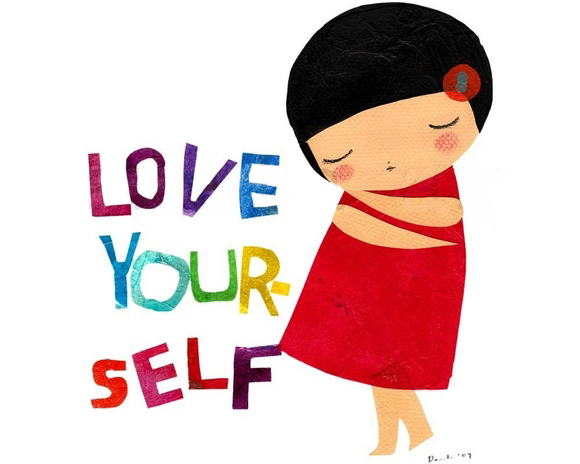
LOVE YOURSELF FIRST

We all want to find the perfect partner to make our lives beautiful and to take our loneliness away. I’ve seen many posts on Facebook where people share their loneliness and if they could just find someone, they would be happy again. The thing is finding the right person is a very hard task. When you’re struggling with mental illness, you can’t have a healthy relationship until you take care of yourself, and you learn to love yourself.

When I was down into the dark depths of my illness, I daydreamed of the perfect man coming into my life and suddenly my sadness and loneliness would disappear. I wanted to find Mr. Right so badly that when a guy came along making phony promises, I thought I was in love with him. He asked me to move in with him and I did. Things changed quickly. It started with him saying I couldn’t use a certain pan because I would ruin it. Then it increased to verbal and physical abuse.

He was a narcissist, and he used my weakness to get pats on the back. He went to therapy with me and told the therapist how I abused him. He told his family and neighbors how hard it was on him to take care of a woman with mental illness so they would feel sorry for him. When he packed my bags to kick me out, I lost control and put my hand through a window. Instead of calling my mom, he called his. His mom sat there as the EMT bandaged my hand telling me if I had treated her son better, he wouldn’t have kicked me out.

I wanted to find the right guy so much that I missed all the signs that my ex-boyfriend was the wrong one for me. I didn’t love myself and I was so sick I couldn’t make clear decisions. After he threw me out, I went into a mental health hospital and started taking steps to take care of myself. When I got out of the hospital, I realized I couldn’t be in a healthy relationship with anyone until I decided I wanted to work towards recovery. How could I truly love a man if I didn’t love myself first?

After I got out of the hospital I started on a journey to recovery. I worked hard to change my thought processes and to learn to love myself. I was doing well, but I kept having bouts of depression. I started to see myself in a new light, but in the process to recovery, I had to end a lot of bad friendships. I was lonely. I was changing into a new person, and I had no one to share that with until I was set up on a blind date with my husband. When I met him, I finally loved myself enough to know I deserved a good man.

My husband has a friend who is struggling with mental illness. He talks continually about finding the right woman. He’s been in several bad relationships while looking for that special love. He tells my husband how lucky he is to have a woman like me. The problem is my husband’s friend does little to work on taking care of his illness and learning to love himself. I’ve told him several times, “Take care of yourself and learn to love yourself first, and in time you will find the love of your life.” Instead, he dwells on being single and goes out with all the wrong women who end up hurting him. I’m not sure if he will ever get the help he needs to work towards recovery and learn to love himself.

I belong to a mental health support group. Many people complain about how lonely they are and if they’d just find a partner, they will feel better. It’s not that easy. Loving someone else doesn’t cure mental illness and take away all their problems. We all want to be loved and cared for by someone special, but how can we give love if we don’t love the one important person in our lives, ourselves?

I know from experience that when we are deep down the dark hole of mental illness, the only thing we can see is our own horrible, miserable existence. We are so focused on hating our lives and ourselves, we can’t even be a good friend, let alone a good partner. When we’re at our worst we can’t even be supportive of the people we care about, let alone commit to a serious relationship. The first step you need to take is to decide if you want to work towards recovery. Secondly you need to find help, and thirdly you need to work hard to get better and learn to love yourself.

Once you learn to love yourself, you’re able to make clearer decisions about what type of person you want in your life. You’ll be able to see the flaws in the people you are dating, and you will be able to give equally to a relationship. Love yourself enough to find a partner who will love you the way you deserve.

Because I learned to love myself, I found a wonderful husband who spoils me every day and I dance in the light of recovery as a beautiful woman.

BULLYING AFFECTS MENTAL HEALTH

Bullying is aggressive behavior towards another person whether it be verbal or physical. It is a form of abuse. Many people can remember a time when they were bullied by another kid or an adult. When the bullying is a prolonged problem that expands over weeks, months, and years, it takes a toll on the person’s mental health, causing problems that may require medication and therapy to treat.

Bullying has effects on a person’s mental well-being that can last a long time or go away in a short time. It took therapy and medication to help me deal with the scars that bullying left on my soul. People can already be predisposed to mental illness through genetics and chemical imbalance, and the bullying brings it out.

I found lists of short-term and long-term effects of bullying on WebMD The Effects of Bullying on Mental Health: Impact and What To Do (webmd.com).

Here is a list of short-term effects of bullying:

  • Anxiety
  • Depression
  • Low self-esteem
  • Self-harm
  • Suicidal thoughts
  • Difficulty sleeping

The long-term effects are:

  • Generalized anxiety
  • Panic Disorder
  • Agoraphobia
  • Depression
  • Loneliness

Many of the short-term effects can go away in time, but sometimes they follow you into adulthood. I struggled from childhood to now as an adult with depression and anxiety. As a child I started self-harming by pulling my hair, pinching myself, and hitting myself. In my young adult years, I started cutting and burning myself.

 During my school, I struggled to sleep. I had nightmares about my bullies, my thoughts raced, and I was afraid to go to school the next day. I tried sleeping on the couch, snuggling with stuffed animals and I tried to fight my racing thoughts, but nothing helped. My sleeping problems continued into my adult years. I am currently on sleeping medication. Sometimes the medicine doesn’t even work. Instead of nightmares I struggle with obsessive worrying and racing thought.

I was also predisposed to psychological problems. Mental illness runs in my family and I have a chemical imbalance in my brain. These factors also made me more vulnerable to mental illness. The bullying was another factor that helped me slip down that dark hole. 

If you’re a parent or family member of a child or even an adult who is being bullied, look for the short and long-term effects of bullying. When you start to notice the short-term effects you should get the victim help. Also investigate your family history for mental illness. Know if it runs in your family, there is a chance you or your child may be predisposed to it. Tell your psychiatrist and therapist about your family history.

Any type of abuse takes a toll on a child’s or an adult’s well-being. We can save the victims of bullying by standing up for them, standing up against bullying, and helping the victims get help.

Speaking out against bullying and writing about it helps me stand proudly in the light of recovery.