THE POWER OF PUTTING MY FEELINGS INTO WORDS

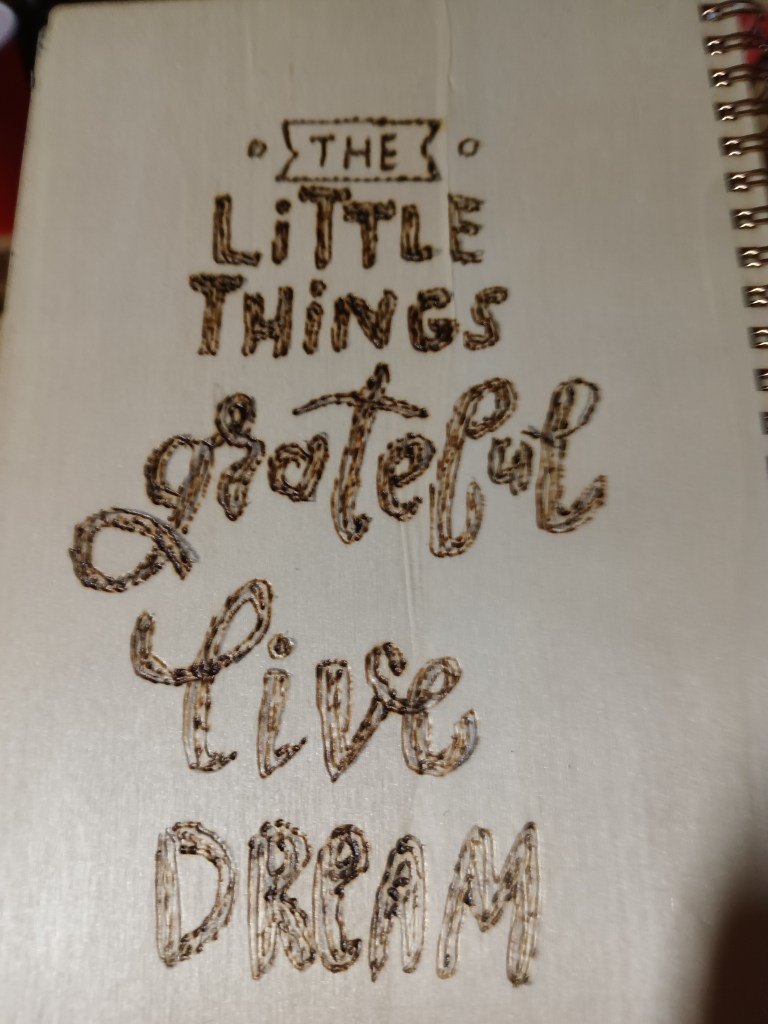
Journaling has become an important part of my life and recovery process. It’s more than just putting words on paper. It’s away for me to express my feelings, to explore myself, and to better understand my emotions. It’s opening my soul and pouring out its secrets, deepest feelings, and strongest emotions. It’s a release of the pain inside me and the discovery of who I am.

I was hospitalized after my ex-boyfriend packed up my belongings while I was at work. He told me I had given up and he couldn’t help me anymore. I fell apart and put my hand through a window. I spent a few days at home with my parents until there was an opening in a mental health hospital. I felt hopeless, worthless, deeply depressed, and suicidal. When my friend came to visit me in the hospital, she brought me a journal and pens. She told me the journal would help me get through this difficult time. She was right.

I couldn’t talk about what I was feeling. I didn’t understand the powerful emotions that filled me. I didn’t even know who I was at that point in my life. All I knew was the pain inside me was unbearable. The only way I knew how to release my pain was to self-injure. In the hospital I couldn’t have a razor to shave my legs or shoelaces in my shoes. I saw the journal as a way to make sense of what was happening to me and to release my feelings and emotions.

In the hospital I filled page after page of how I felt about what my ex-boyfriend had done to me, my feelings, and anguish. With each word I wrote I felt the heavy weight of my mental illness lighten. After I left the hospital, my journal became my lifeline. I took it with me everywhere I went. I journaled while waiting for the doctor, between customers at work, on my break, and during any free time I had. Everything I held sacred and everything pent up inside me came out in the pages of my journal.

My therapist used journaling as part of my therapy. In a separate journal I wrote about things I was struggling with. Then during my sessions, my therapist and I discussed what I had written. She helped me find ways to cope with my struggles. Journaling became more than just a private place for me to express myself without judgment; it became a way to communicate with my therapist. I couldn’t tell her what I was feeling or what my fears and thoughts were, so I wrote them down. She used what I wrote to teach me coping techniques and to work through the things I struggled with. I still use journaling in therapy.

There is power in putting my feelings down on paper. It gives me the power to express myself openly without judgment. It gives me the power to work through my feelings and understand my emotions. It gives me the power to explore myself and my identity. It gives me a powerful voice to speak out to my therapist when I cannot do it vocally. It gives me the power to stay in recovery.

I don’t carry my journal everywhere with me anymore, but I still journal. I use it on my tough days when I’m struggling with powerful emotions and feelings. It helps me identify what my emotions are and to release my feelings. It is part of my coping techniques. I can’t get through the bad days without writing about them. Now I try to find something good about the bad days and I write them down in my journal.

You don’t have to be good at spelling or writing to journal. What you put in your journal is private. It helps to put your feelings down and to release your soul of its pain. There is power in putting your feelings down on paper. It gives you the power to take the journey toward recovery, the power to discover yourself, and the power to release your feelings. When you can’t talk about your feelings, write them down. Don’t let them rip you up inside; release them.

I will always use my journal to help me during the bad days of my mental illness. Journaling helps me stand in the light of recovery.
RELEASE YOUR FEELINGS IN A JOURNAL

When struggling with mental illness, many are bombarded by racing thoughts, painful emotions, and an overload of feelings. Our thoughts trigger our emotions and feelings. Together they can cause physical problems such as achy shoulders, chest pain, upset stomach, and labored breathing. Often feelings become trapped within, causing anxiety, panic attacks, and unhealthy coping techniques like self-injury. A good way to release those feelings is to put them in a journal.

When I was in a mental health hospital, a friend brought me a journal and a pen. I began to journal every day. I poured out all my feelings on the pages. It felt like a weight was being lifted off my shoulders. When I got out of the hospital, I took my journal everywhere like a security blanket. I wrote in it at restaurants, on my break at work, sitting at a park, in my car, and other places.

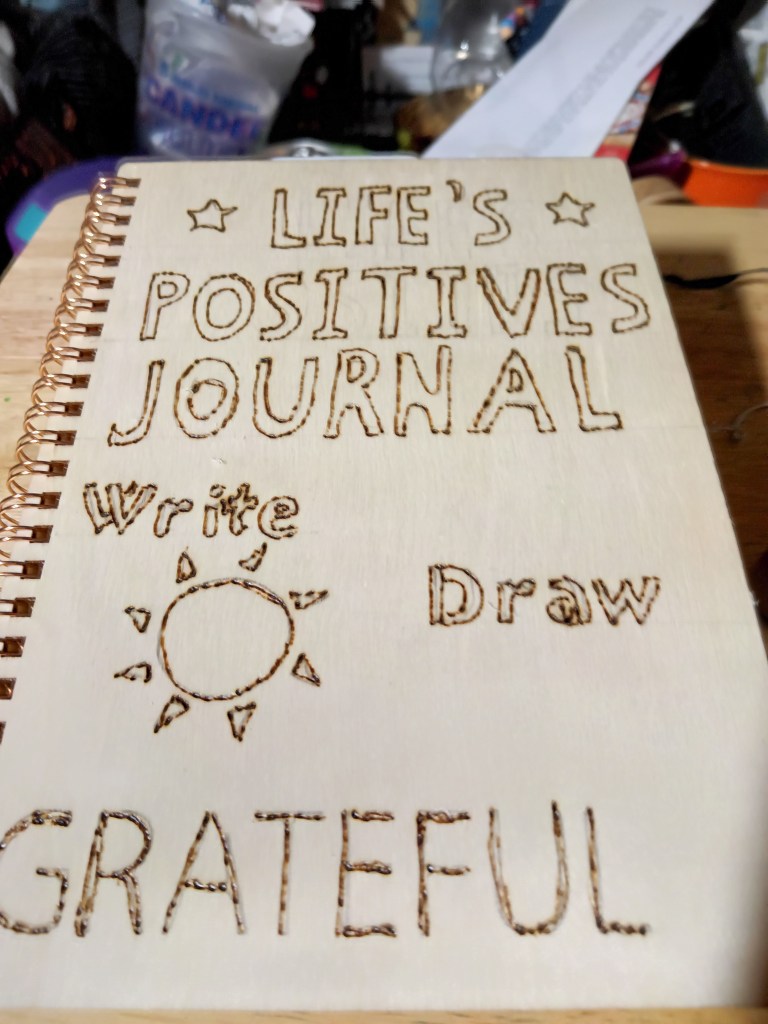
My therapist gave me assignments to write journal entries about certain things that were bothering me and then we would discuss them in our sessions. She used them to develop a plan on how to teach me coping techniques and to learn how to change my pattern of thinking. She even had me keep a separate journal to write positive things in each day. It was very hard to come up with things good about my life at that time, but I worked hard at it.

You might think, “I don’t know what to write in a journal,” “I’m not good at writing,” Or “I’d rather draw.” You can start by writing, “Today I feel..” and let your thoughts and feelings flow. You could even put an emotion down like “I am sad and that makes me feel…” You could write a letter to yourself or to someone who hurt you. The possibilities are endless.

The good thing about journals is that you don’t have to be a good writer and you don’t even have to be grammatically correct. You could even write so badly that you can’t read your own writing. Just write. No one is going to read it but you.  

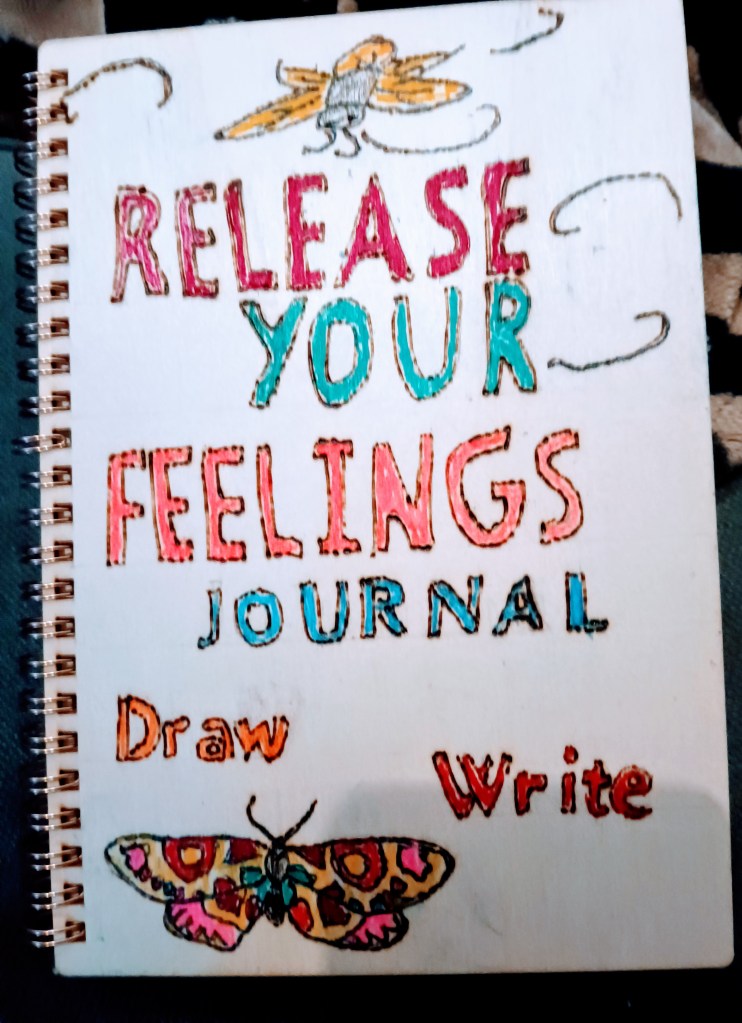
If you’re not good at putting your feelings in words but you like to draw, then draw pictures that portray your feelings. Get a journal with blank pages and fill it with your artwork. Express yourself with pencils, colored pencils, markers, or whatever works best for you. If you’re feeling like your world is falling apart, then put it into your drawings in your journal. Release your feelings in the way that works best for you, whether it be writing or drawing.

As I mentioned earlier, therapy my therapist had me keep a second journal where I wrote positive things about my day. At first it was very hard to come up with good things, but in time it got easier. If you decide to keep a separate positive journal, that’s fine. You could also write out your feelings in your journal and then add five positive things at the end of each entry.

You might be so far down in the hole of your mental illness that coming up with positive things seems impossible. Start small like “I got out of bed today” or “I took a shower.” For many with mental illness it’s a struggle just to get up and moving. Some find it takes a lot of energy just to take a shower. To accomplish these things is wonderful. As you work hard towards recovery, the positives become easier to come up with.

You can become creative with your journal, you can use stickers or pictures. You can cut out inspirational sayings from a magazine or news articles and put them in your journal. I have put obituaries for people I have lost and compliments from my customers in some of my journals. It’s your journal; you can put whatever you want in it and decorate it to your liking.

Journaling isn’t for everyone. If you’ve tried journaling and found it didn’t help you or you just couldn’t keep up with it, then investigate other ways of expressing your feelings like painting, playing a musical instrument, singing, or walking. Don’t keep your feelings inside you. They only cause more harm when you let them fester and build up with no release.

For me journaling has become a healthy coping technique. I no longer carry my journal with me everywhere and I don’t journal every day, but it still gets me through rough days. When I’m going through a hard time, I sit and journal. I not only put my feelings in it, but I problem solve, I brainstorm story ideas, and so much more. That’s how I came up with these blog posts. Journals can have several purposes. So, use your journal in whatever way works best for you.

Because I release my feelings in my journals, the light of recovery fills me.