SUICIDE AND SELF-INJURY

Many people don’t understand self-injury or even know anything about it. Many who hurt themselves do so in private and then they hide their injuries from others. It’s hard to understand why people would harm themselves on purpose. It is a misunderstood coping technique. Many people mistake self-injury for a suicide attempt, but it is not. However, suicide is still a risk factor.

Even though those who harm themselves do not injure to take their lives, that doesn’t mean they are not at risk. People who injure are sick and in pain. They have a mental illness, and with mental illness comes the risk of suicide. It’s important to take self-injury seriously. Don’t think it’s a way to get attention, don’t ignore the person, and make a joke about it. Look at it as if the person is suffering and needs help.

When I was self-injuring, I didn’t hurt myself to take my life. The physical pain released my inner pain. I felt so many overwhelming emotions that tore me apart inside. I was in agony. The only thing that eased that pain was hurting myself. Even though hurting myself wasn’t an attempt at suicide, I was suicidal. I suffered with depression, borderline personality disorder, and anxiety. My thoughts raced, I felt hopeless, I thought I was worthless, and I thought I was hurting my family by living.

When I was in college, I wrote a suicide note and planned my death. I thought of ways to take my life. One time I took a bottle of pills and got sick. I lived with my grandparents while I was in college, and my grandma thought I had the flu. I wanted to die because I was very sick. My mind was plagued with an awful illness that distorted my thinking.

No one injures themselves just for attention or for fun. They harm themselves because they have an illness that causes them a lot of emotional pain and suffering. It’s not a game or a joke. Every person who hurts themselves on purpose is suffering from some type of sickness and needs help. If they are hurting themselves, they are also at risk of being or becoming suicidal. So don’t walk away or laugh at them. Take it seriously.

The person might not be thinking about suicide when they are injuring. Self-harming releases endorphins that make the person feel better. The person could just be coping with his or her pain, but he or she is also struggling with a mental illness and can become suicidal at some point. By not ignoring self-injury you maybe saving a person from committing suicide in the future.

If a person shows you his or her injuries or you happen to see them, ask him or her if they would like to talk about it. Be willing to listen without judging. Encourage the person to get help. Tell someone who can help him or her. Don’t minimize the person’s feelings or pain. Look for the phone number for crisis or a helpline.

It took a while before I admitted to my mom I was self-injuring and that I was sick. When I told her, she went to great lengths to get me help. Because of my mom’s determination to get me help, I have not hurt myself in twenty-three years and I am alive. I stand in the light of recovery because I got help.


SELF-INJURY AND STIGMA

Due to the news, TV shows, and society’s misinformed ideas, there is a lot of stigma surrounding mental illness. Because of this, many who are struggling do so in silence, fearing what others would think of them. The sad part is many never get the help they need and end up using unhealthy coping techniques like drugs, alcohol, and self-injury. The problem is that stigma follows the unhealthy coping techniques too.

Self-injury is plagued with stigma and myths. People do not understand what it is, and they make untrue assumptions about it. Those assumptions leave the one self-harming feeling scared and alone.

Below are some myths that lead to the stigma surrounding self-injury.

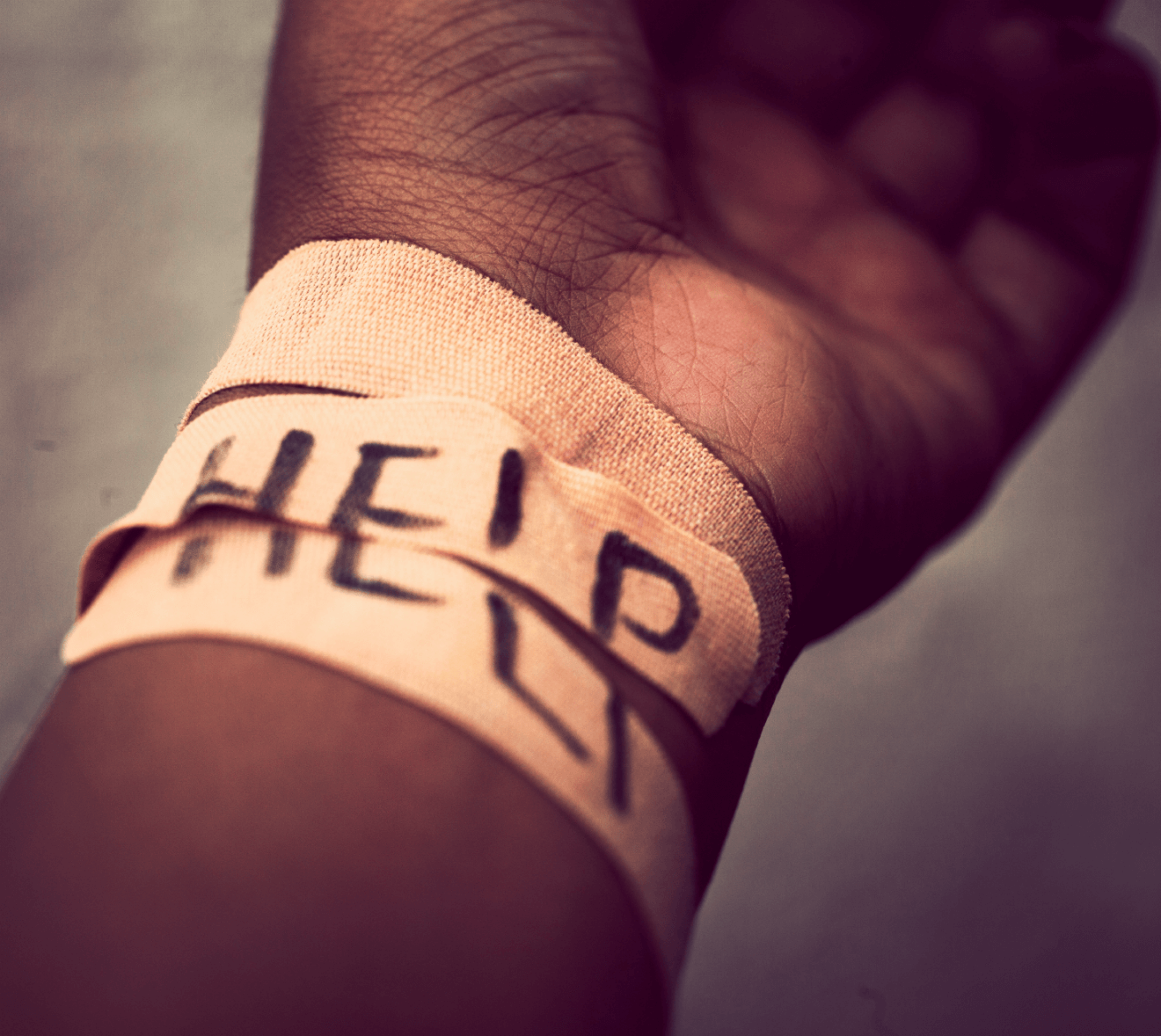
  • It’s done for attention. Many think people hurt themselves just so others will feel sorry for them and give them the attention they desire. This is completely untrue. Self-injury is an unhealthy coping technique, a sign someone is struggling, and a silent call for help. It is often hidden so as not to bring attention to oneself.
  • It’s a suicide attempt. Self-injurers are not hurting themselves as a means to take their lives. It’s not a failed attempt at suicide. They are doing it to control powerful emotions, to feel something, or to punish themselves.
  • It’s done to hurt others. The only person the self-harmer wants to hurt is himself or herself. They have no intention to hurt anyone else. They usually hide their injuries under long sleeves or do it on parts of their bodies where no one can see it. If he or she shows his or her injuries, the person is telling you he or she is really struggling and needs help.
  • The injurer likes pain. Just because the person harms him or herself does not mean he or she likes pain. Many do not like pain at all, but they don’t know any other way to deal with their illness. The injury is a temporary relief and often the harmer feels guilty, ashamed, and sad afterwards. If a self-harmer gets an unintentional injury and needs stitches, he or she still needs to be numb. They don’t willingly want that kind of pain.
  • It’s caused by past abuse. It’s not done because a person was abused in the past. People who have never been abused self-injure. Anyone with a mental illness may turn to self-harm as an unhealthy coping technique or as a cry for help.
  • The self-injurer is crazy. People who harm themselves are not crazy. People with mental illness are often referred to as crazy when they are not. The dictionary defines crazy as mentally deranged, especially as manifested in a wild, aggressive way. People who injure and have a mental illness do not fit this description. They are struggling with an illness like any other illness, except it’s of the mind. They are in no way deranged.
  • Ignore self-injurers and they will stop. They may stop eventually with the right help, but you should never ignore them. The self-harmer is crying out for help and is silently struggling with something awful. Acknowledge that the person is struggling and help him or her find someone that can help the person. By ignoring them, you are telling them you don’t care, and this leads to more isolation and pain. Be supportive.

The best thing you can do for a friend or family member who is struggling with mental illness and self-harming is to educate yourself, be supportive, encourage him or her to find help, and be willing to help them get help. Don’t believe stigma or myths. Look for the truth. Knowing the facts can save a person from struggling alone.

The more we know about self-harming and the more strugglers tell their stories, the better we can fight stigma. We need to open doors so we can talk about this illness without judgment. Then maybe more strugglers will get the help they need.

It took me a while to ask for help with my self-injuring. I didn’t understand it and I didn’t know how to ask for help. When I finally asked for help, I found it and have not injured in twenty-three years. I stand in the light of recovery with healthy coping techniques.

A PRIVATE SPOT TO INJURE

     Typically, a person who self-injures does so in privacy, picking a spot where he or she feels safe from interruptions. This becomes like a sanctuary. It could be a bathroom, a bedroom, an office in the house, a sewing room, or any place where the person can be alone. A self-injurer will spend a lot of time in the place he or she chooses to harm him or herself.

     When I self-injured, I did it in my bedroom. When I lived with my grandparents, my room was upstairs and theirs was downstairs. They hardly ever went up there, so I knew I had all the privacy I needed. I told my grandparents I was spending endless hours studying in my room. I did study, but I also injured. I sat alone ripping at my flesh and feeling my soul free of pain for a little while. I even had a spot in my bedroom where I stored the tools I used to harm myself.

     My room was my hideaway from the world. No one would bother me, and no one would see what I was doing. I was ashamed of my self-injuring and I was ashamed of myself. What would people think of me? What kind of person was I? But in my room I was free of shame and I had nothing to hide. Outside of my room I wore long-sleeved shirts and told no one what I was doing. Since I was in college, my grandparents never asked why I spent so much time in my bedroom.

     Years later when I fell into the hole again and I lived with my ex-boyfriend, I hurt myself late at night in the living room. My ex-boyfriend went to bed early so I had the living room to myself. My ex was a sound sleeper, and I knew he would not wake up and see what I was doing. I’d stay up late at night hurting myself. The darkness surrounded me and the urges, desire, and need to free my inner pain took over my rational thinking.

     After my ex-boyfriend threw me out, I moved back home with my parents. All my siblings had moved away from home, and once again I hid in my bedroom. I spent many hours alone in my room hurting myself. I made excuses to my parents as to why I spent so much time up there.

     I learned in therapy that isolating myself was only giving me an excuse to injure. I needed to spend more time away from the place I felt safe and free to do such horrible things to my body. I had to walk away from my comfort zone and face the world around me. I learned that when I felt the need to escape from my inner pain, I needed to be around people and communicate with them. The more I shared with people how I felt and the more time I spent with friends and family, the easier the fight to stop injuring became.

     Take a step towards your recovery and come out of your hideaway. When you get the urge to hurt yourself, go to a friend’s house, or spend time with your family. If you feel as if you have no one to, go to then find somewhere public. Do what you can to stay away from the place you injure. Search for a therapist who has dealt with self-injury and he or she can help you walk towards the light of recovery.

     The more time I spent away from the area where I hurt myself the stronger I became at fighting my need to injure. With determination, I overcame self-injuring and I now stand within the light.

STARTING COLLEGE WITH MENTAL ILLNESS

Mental illness knows no age limits. It can happen to anyone at any age, even to children and teenagers. Some teens receive counseling, and some keep their struggles quiet out of fear. The mental illness doesn’t just weaken after high school especially if it’s untreated. Many young adults experience worsening of their mental illness or the onset of the illness when they start college. They are starting out on their own as adults, they have heavy work loads, long schedules, peer pressure, and a hard time fitting in.

During my senior year of high school, my cousin was killed in a car accident. This sent me deeper into depression. I kept my inner pain to myself and only told one of my friends. My grandparents lived close to the college I planned to attend so I moved in with them. They lived forty-five minutes from my home and my friends. My grandparents were kind people who gave to me endlessly. Grandpa checked my oil, cleaned snow off my car in the winter, and made sure my car was running every morning. Grandma went out of her way to cook my favorite foods, spoil me with love, and refused to let me help around the house. She told me my college work was more important. I was spoiled, yet unhappy.

My cousin’s death left me in great sadness and the only person I thought understood lived miles away. I was used to having my three siblings around and my mom there to help me. Even though my grandparents would have done anything for me, I felt like I had just entered adulthood and had to handle things on my own, including the endless sadness that was engulfing me.

I thought I could handle going to college full-time taking daytime and evening classes. This proved to be overwhelming. I had more homework than I could handle. My learning disability made it impossible for me to keep up with the reading assignments. I’m slower than the average reader, plus I have to reread things to be able to remember them. I stayed up late trying to complete reading assignments, study, and translate lectures I recorded with a small tape recorder into notes. I was stressed out. I was falling behind and that brought up the fear that followed me from high school, the fear I was going to be a failure.

If I wasn’t working late into the night, I would be lying in bed staring into the darkness struggling with endless negative thoughts and worries. Every morning I felt nauseated and forced myself to eat breakfast before going to classes. In between classes I escaped to the bathroom to get sick. On top of my depression, I was home sick and put my deepest feelings in notes to a friend. That ended in a big mess that led to abuse by my friend. I was too sick to see what she was doing to me. I just knew I couldn’t lose any of my friends and I held on too tightly.

In elementary and high school, I self-injured by pulling my hair or punching a wall, but in college I started cutting. I was sick, in pain, fatigue, stressed out and in agony, and I needed to release all those painful feelings. The only way I knew how was to injure myself. I hid my injuries under long sleeve shirts, or I cut further up on my arm that no one could see them. I hurt myself just deep enough to free the emotional pain.

I also began to plan my death. I even wrote out my obituary and suicide note. My grandparents slept downstairs and I had the whole upstairs to myself. They had no idea what I was doing. I was an adult I couldn’t trouble them with my problems; besides I didn’t want to hurt them. I thought if I were dead, I wouldn’t hurt my family with my miserable existence. One night I took a bottle of pills. I felt dizzy and out of it, yet somehow, I drove to college in a snowstorm and back.

When my mom started to notice something was wrong, she began to visit each week to spend time with me. When I finally confided completely in her about how I was feeling, she moved me home and went on a search to get me help. Eventually I took a year off college to work on my mental health.

College is a new beginning and can be made especially difficult if you are struggling with mental illness. My advice is don’t start college until you have begun treatment for your mental illness and have learned coping techniques for the sudden change in your lifestyle. If you need to take a year to work a job and do therapy to get your mental illness under control, do it. There is no need to rush off to college until you’re mentally strong enough to cope with the new challenges. Take care of yourself first. You can go to college at any time.

Don’t keep your feelings to yourself and try to handle your illness on your own. Tell your parents, a family member, or a counselor at the college what is happening to you. Even adults need help and support managing mental illness. Don’t suffer alone. Don’t be afraid to ask for help, especially if you are suicidal.

If college is becoming too stressful and it’s taking a toll on your mental health, then consider cutting down on some of your classes. It might take you longer to complete your degree, but your mental well-being is more important. When I returned to college after a year off, I cut my class load down to part time. It took me longer to graduate, but I was less stressed and stronger mentally because of it.

I started a two-year college in the summer of 1993 and graduated in 1999. It took me much longer to get my degree, but my mental health was better because of it. I have my degree hanging on my wall to remind me of the huge accomplishment I made despite a learning disability and mental illness. I stand proudly in the light of recovery as a college graduate who is following her dreams.

SELF-INJURY IS NOT A JOKE

Many do not understand self-injury. It’s hard to comprehend why a person would intentionally hurt him or herself. It just seems illogical, and some think it’s a joke or just a way to get attention, but it’s not. It is very serious. It’s a silent cry for help, a way to ease pain and for some, a way just to feel something. Self-injury in any form should not be taken lightly and should not become a source for jokes, teasing, or gossip.

funny-clipart-4

When I was very sick and injuring my mom found a therapist for me in a nearby town. At first the appointments centered on my depression and an unhealthy friendship I was in, but when I confided in her about my self-injuring, things got rocky. She asked me questions about my injuring and I answered them.

During one of our appointments, my therapist sat across from me and looked into my eyes. “Could you be harming yourself to hurt others? Like your friend?”

bigstock-therapist-comforting-a-patient-45837694_0

I was speechless. My mind whirled. At that time I wasn’t even sure why I was injuring. I just knew I was hurting badly inside and it was the only thing that relieved the pain. I started asking myself questions. Am I trying to hurt my friend for hurting me? Am I trying to hurt my family? Was I that kind of person who would hurt people on purpose? Was I that mean?

I didn’t answer her. Tears threatened to fall, but I fought to hold them back.

She continued on. “Sometimes people feel helpless and lash out in different ways to hurt those they care about. Your friendship is troublesome and maybe the only way you can get back at her is by harming yourself.”

aid3825713-v4-728px-get-rid-of-self-harm-scars-step-1-version-3

My mom picked me up from therapy and I cried all the way home. That’s when my mother decided to find me a new therapist. She called a hospital to find me better help.

Mom rubbed my back and told me, “If you were doing this to hurt us, you wouldn’t have hid it for so long and it wouldn’t have taken you all this time to tell us about it. There is a reason for it and we’ll find out what it is.”

what-self-injury-healthyplace

When I found a new therapist, I learned that my self-injuring was an unhealthy coping technique I used to release the intense pain inside me. The pain of hurting myself physically took away from the hurt within me for just a little while. She said I was crying out for help without even knowing it.

Years later I went to dinner at a co-worker’s house. She had invited a few other co-workers. We went outside for some of them to smoke and talk. One of them started telling me that a fellow employee self-injured. They laughed about it like it was a joke.

800px_colourbox7520367

One of the women took a puff of her cigarette. “She does it for attention. When I was in school I knew of a girl who hurt herself just so people would pay attention to her. It’s all a joke. Like doing something that dumb is going to make us care anymore.”

I was angry, but calmly explained to them what self-injury was and that it was not a joke. I even told them I had once harmed myself.

Another girl spoke up. “I understand you have a reason, but I had a friend show me her cuts like it was no big deal.”

I looked at her. “She was asking you for help. Self-injurers hurt themselves in private and try hard to hide their wounds. If they become brave enough to tell or show them, then he or she is crying out for help. He or she doesn’t know how to ask any other way. Self-injuring is not a joke.”

self-injury-bandage-feature_1320w_jr-1

They all went silent.

Later I talked to the girl from work who injured. I told her how I struggled with it for many years and how I worked hard to stop. She confided in me about how depressed she was and the problems she faced within her life. Like me, she turned to self-injury to cope with the pain within her. I encouraged her to seek help.

Self-injury is not a joke; it’s not a way to hurt others or a way to get attention. It is serious. It is an unhealthy coping technique for either a deep inner pain or for the inability to feel anything. It becomes an addiction and the person can’t stop without help and support. If someone is showing you what he or she has done to him or herself, then that person is asking for help the only way he or she knows how. If you know someone who is harming him or herself, don’t brush it off. Encourage the person to get help and to tell someone they trust who can help him or her find the right therapist.

38_self_injury_self_harm_quotes

It took me time to tell my mom about my self-injuring, but because I did, I got help. I also confided in a friend who helped me to set a goal to stop injuring, and when I reached it we celebrated. Now I have gone 17 years without hurting myself. Because I asked for help, was taken seriously and worked hard I am standing in the light injury free.


NEGATIVE CONSEQUENCES TO SELF-INJURY


   When you’re self-injuring, you have a lot of reasons why you do it. You try to make it, to yourself, sound like a good way to cope, when in fact it’s not. You’re too caught up in your own inner pain and emotional turmoil to see how bad for you injuring is. All you think about is that high and those few moments of relief.

   In my process of reaching for recovery from self-injuring, I came up with reasons why it was bad for me. I needed to see the negative side to injuring. Below is my list of Reasons to NOT Self-injure.

  • After injuring there are feelings of self-hate, anger, and guilt. Once the high is over, I was flooded with bad feelings. I had tried to relive my pain, but only caused more.

  • You become stuck in a circle of lying. I found myself continuously lying to friends and family about why I was wearing long sleeve shirts. When they happened to see my injuries, I lied about how I received them. I once told my mom I got caught in thorn bushes. By lying, I was losing trust in myself and I was betraying the trust of my family and friends.

  • You isolate yourself from friends and family. By running off to my private spot to injure, I was isolating myself. I was spending a lot of time alone when I could have been with the people who cared about me the most.

  • You Keep a secret. I carried a heavy load on my soul by keeping my inner pain a secret and by hiding what I was doing to myself. I became paranoid that others would find out about my self-injuring and that led to more lying. By keeping a secret, my anguish ate at my insides and only drove me down deeper into my dark hole.

  • Injuring is only short term relief. Ripping at my skin gave me relief, but only briefly. Once my high was over, I was back inside my internal hell, and now I had new bad feelings to add to my overload of emotions. Injuring could not permanently fix my mental agony; it only added to it.

  • Injuring is a form of self-abuse. Even though I used injuring as a coping technique, in all reality I was abusing myself. It’s just like when my friend and ex-boyfriend abused me. I was hurting myself and in time I realized I didn’t deserve it. I was doing the same things an abused person does, I was lying, keeping a secret and hiding my injuries. I owed myself a lot more respect and kindness then I was giving myself.

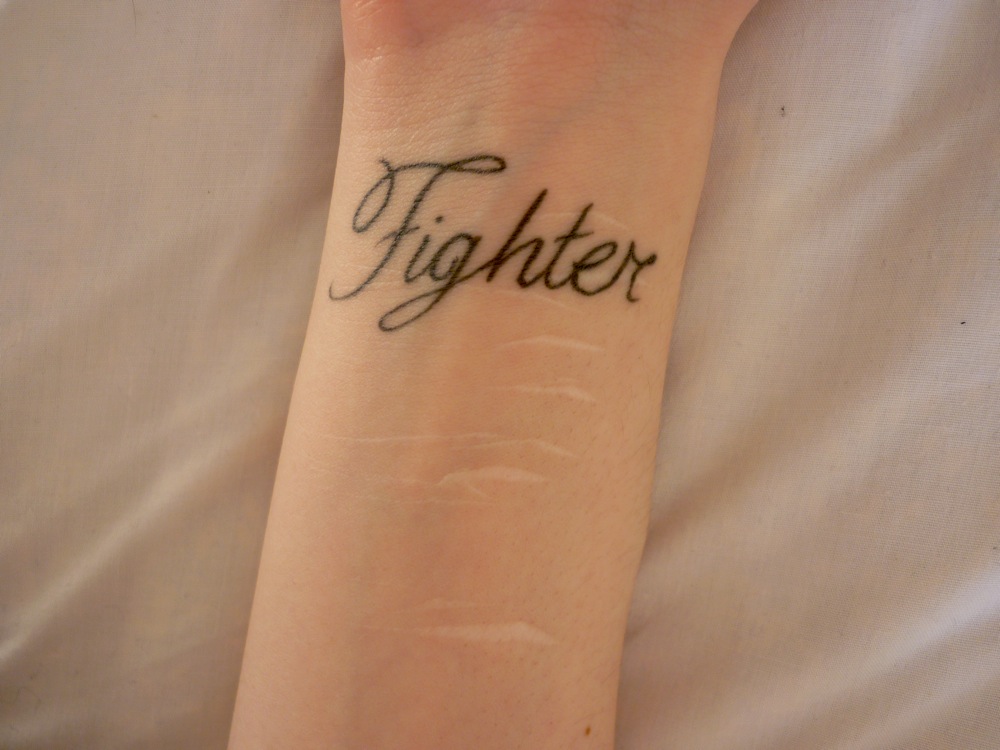
  • You have scars and injuries. I never cut deep enough to scar myself, but for those who do, scars are with you forever and a constant reminder of what you did to yourself. For me, my wounds were reminders of my bad coping techniques. I looked at my injuries and wondered what I was thinking. They reminded me of my inability to handle the pain inside me and the regret I felt after each time I injured.

   If these are not good enough reasons to make you want to stop self-injury, then come up with a list of your own. Don’t think about how you feel when you injure, but how you feel afterwards. Look at what you’re doing to yourself and ask yourself, “Is it worth it?” Are a few minutes of relief worth the feelings you have afterwards? Don’t you deserve better? Don’t you owe it to yourself to find better coping techniques? Take that step toward stopping self-injuring by getting help and exploring new ways to deal with your illness.

  I took the step I needed to stop self-injuring. I found healthy ways to cope with my illness and now I stand tall within the light.

THE SHAME OF SELF-INJURING


   At one point or another we feel shame for some stupid thing we did or said. Shame is a natural human feeling, but it’s an awful feeling that makes us want to hide from the world. Self-injury brings on feelings of shame. These feelings are sometimes due to the stigma attached to self-injury. They are also brought on by past trauma. We sometimes think the abuse we suffered in the past was our own fault and the injuring is, in a way, a punishment we believe we deserve. Our own wounds and scars produce feelings of shame for what we have done to ourselves and shame from questions from curious observers.

   When I self-injured, I would rip into my skin, and once the high was gone, I was left with a wound. How would I explain my injury to others? People always ask questions when they see a cut, a bandage, or some kind of injury. I couldn’t just tell them I did it to myself. They would judge me. They would think I was crazy or even dangerous.

   I was judged throughout my childhood. Not too many understood what a learning disability was. I was marked as a retard who would never amount to anything. I struggled with the labels and stigma that were attached to my disability throughout grade school and into high school. I didn’t want to face judgment again as a young adult, this time related to my self-injury. I had worked hard to rise above the prejudice I faced in school and I didn’t want to fight a similar battle again.

   When I injured, I wore long sleeves to hide my injuries, or I cut in places where I could cover them up easily. I never cut myself deep enough to cause scars. Scars raised too many questions that I did not want to answer or lie about. I also didn’t want the constant reminder of my own stupidity. The shame of my wounds was hard enough to deal with.

   After every time I hurt myself, anguish, guilt, and shame tore at my insides. My thoughts raced as my stomach twisted. What if my mom walks in while I’m in the shower or changing shirts? What would she say? What would she think? What if a friend noticed a bandage peeking out from under my shirt? What excuse could I give him or her? I couldn’t let them see what I had done. Would my self-injuring prove I was a loser? I couldn’t be judged again. I wouldn’t allow myself to face my school years all over again.

   I hated myself for injuring, but I didn’t know any other way to deal with my internal pain. With each cut came shame, secrets, and lies. One day my mom saw cuts on my arm. I lied to her and told her I had fallen into some thorn bushes. I was too ashamed to tell her, “I did it to myself because I hurt so bad inside and I need help.” If I would have stood above my shame and told the truth, my mother could have found me help sooner.

   By educating people about self-injury through our own stories, we are taking the steps to reduce the stigma surrounding self-injury. With less stigma, maybe injurers will be more comfortable telling others what they are doing and that they need help.

  Don’t let shame keep you from getting the help you need to stop hurting yourself. Find a therapist, a good friend, or a family member to confide in. When I finally turned to my mother and told her what I was doing, she went out of her way to find me a therapist who could help me. She never judged me the way I feared she would. Instead, she embraced me with love.

   Facing my shame and reaching out for help is what led me to the light and allows me to dance within the light.

  I found my information about shame from self-injury in the book, The Scarred Soul: Understanding and Ending Self-inflicted Violence By Tracy Alderman, Ph.D.