CONQUERING FEAR

Everyone has a fear or more than one. Some fears have special names like acrophobia (fear of heights) or arachnophobia (fear of spiders and some fears are personal). We all avoid things that make us feel uncomfortable. We’ll stay away from high places when we have acrophobia, or we’ll avoid spiders if we have arachnophobia. When fears grow bigger in our mind or prevent us from living a happy life, then they become a problem.

All fears are irrational feelings that are very real to the person facing them. When these fears build on top of each other or grow from a small fear to a big one, they cause anxiety. They prevent us from falling in love, leaving our homes, reaching our dreams, and starting something new. When fears paralyze our lives when we need to get help and learn to stand up to them.

In high school I developed a fear of getting sick. I was obsessed with proving to my classmates that I was not dumb and getting the highest grades. At the end of the school year, I listened to the kids in my school receive multiple awards for their success in school. I decided to get awards and to succeed I had to stay healthy and not miss a day of school. In my mind getting sick meant I was weak and a failure. When my siblings got sick, I avoided them and was nasty to them. At night I begged God to keep me healthy, and at home I cleaned my hands frequently and became unbearable to be around.

That fear was built from my irrational thinking. Sickness didn’t make me weak; it wouldn’t have prevented me from proving to everyone I was smart. It prevented me from being kind to my siblings. It made me into an awful sister who treated my siblings horribly for something they couldn’t control. This fear followed me into adulthood and when I was dating my husband and he got sick, I left the house and drove around for hours. He called me several times and I ignored the calls. In time I learned to handle illnesses better.

I’m a director of One Life Project and we’re in the process of planning events. I’ve always been the person who likes to sit in the background unnoticed. Then I published my book and I’ve been standing in front of people giving speeches about bullying and now the founder of One Life, Alex, wants me to take a step further into the public. He wants me to learn to be a leader and to contact organizations. This scares me. I’d rather sit in the background and follow someone, but I can’t do that. Alex sees something in me I don’t see. He wouldn’t have chosen me if he didn’t. I could let my fear take control and prevent me from helping many with mental illness and making changes in others lives, or I can stand up to my fear.

I learned through my friend, Denise, and through therapy, you cannot let fear stop you. Denise picked me up from home one day and drove me to a resort that has many activities. When we got there, she turned to me and said, “You’re not afraid of heights are you?”

“Yes, I am,” I replied.

“Well, then you’re going to face it because we are going ziplining,” she said.

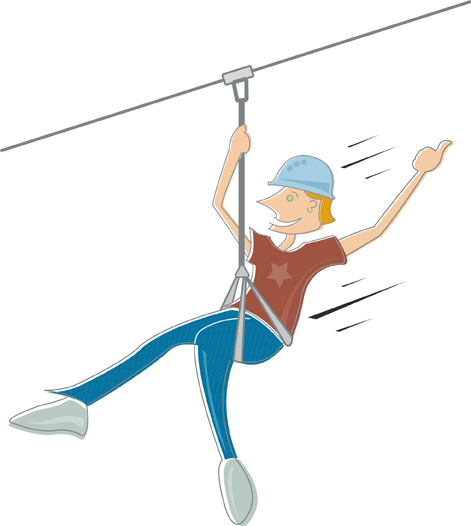
The whole time we rode the ski lift up the mountain side and I slowly climbed the tower to the zipline I kept telling myself, “I can’t do this.” Denise encouraged me all the way up and even until I jumped off the tower. I felt a rush of excitement as I sped down the mountain hooked to a cable. Through Denise I learned not to let fear stand in my way of doing things.

Instead of letting my fear of becoming a leader grow bigger and bigger until it paralyzes me, I’m going to face it. I will learn, I will ask questions, I will take it step by step and in time I will lead and be confident in contacting organizations.

Facing our fears helps us grow as a person. We grow stronger and more confident. I can’t tell you that fears will completely disappear. I still don’t like heights, but I’m more willing to tackle them. Facing your fears and pushing through them will open you up to new opportunities, new ways of thinking, and new beginnings.

Don’t let your fears cripple you from living, doing something new, from enjoying life, and from discovering yourself. Stand up to your fear and say, “You will not defeat me. I can overcome you.” Stop those little fears in their track before they grow into huge ones and leave you sick with anxiety. This is hard to do. I am still working on standing up to the little fears, but we can do it together.

Standing up to fears makes me a stronger person. Each day I take that step towards a fear I grow inside, and this helps me soar in the light of recovery.

A PRIVATE SPOT TO INJURE

     Typically, a person who self-injures does so in privacy, picking a spot where he or she feels safe from interruptions. This becomes like a sanctuary. It could be a bathroom, a bedroom, an office in the house, a sewing room, or any place where the person can be alone. A self-injurer will spend a lot of time in the place he or she chooses to harm him or herself.

     When I self-injured, I did it in my bedroom. When I lived with my grandparents, my room was upstairs and theirs was downstairs. They hardly ever went up there, so I knew I had all the privacy I needed. I told my grandparents I was spending endless hours studying in my room. I did study, but I also injured. I sat alone ripping at my flesh and feeling my soul free of pain for a little while. I even had a spot in my bedroom where I stored the tools I used to harm myself.

     My room was my hideaway from the world. No one would bother me, and no one would see what I was doing. I was ashamed of my self-injuring and I was ashamed of myself. What would people think of me? What kind of person was I? But in my room I was free of shame and I had nothing to hide. Outside of my room I wore long-sleeved shirts and told no one what I was doing. Since I was in college, my grandparents never asked why I spent so much time in my bedroom.

     Years later when I fell into the hole again and I lived with my ex-boyfriend, I hurt myself late at night in the living room. My ex-boyfriend went to bed early so I had the living room to myself. My ex was a sound sleeper, and I knew he would not wake up and see what I was doing. I’d stay up late at night hurting myself. The darkness surrounded me and the urges, desire, and need to free my inner pain took over my rational thinking.

     After my ex-boyfriend threw me out, I moved back home with my parents. All my siblings had moved away from home, and once again I hid in my bedroom. I spent many hours alone in my room hurting myself. I made excuses to my parents as to why I spent so much time up there.

     I learned in therapy that isolating myself was only giving me an excuse to injure. I needed to spend more time away from the place I felt safe and free to do such horrible things to my body. I had to walk away from my comfort zone and face the world around me. I learned that when I felt the need to escape from my inner pain, I needed to be around people and communicate with them. The more I shared with people how I felt and the more time I spent with friends and family, the easier the fight to stop injuring became.

     Take a step towards your recovery and come out of your hideaway. When you get the urge to hurt yourself, go to a friend’s house, or spend time with your family. If you feel as if you have no one to, go to then find somewhere public. Do what you can to stay away from the place you injure. Search for a therapist who has dealt with self-injury and he or she can help you walk towards the light of recovery.

     The more time I spent away from the area where I hurt myself the stronger I became at fighting my need to injure. With determination, I overcame self-injuring and I now stand within the light.

SIGNS OF MENTAL ILLNESS IN TEENS

Mental illness knows no age limit. Anyone at any age can suffer with mental illness, even kids and teenagers. As parents, family members, and caregivers of teens, it’s important to be familiar with the signs of mental illness. If we catch the symptoms early and get the teen help, it will save the child years of agony and will also prevent suicide.

When I was a teenager, mental illness wasn’t talked about much. Parents didn’t know a lot about mental illness and had no idea how to help their children. Mental illness wasn’t even discussed in schools. When I was struggling with mental illness, I didn’t know what was happening to me. My parents knew something was wrong, but they didn’t know what. I also kept my feelings to myself because I feared my parents wouldn’t understand.

Now society has brought more awareness to mental illness and it is discussed in some schools, but stigma clouds peoples’ minds. I want to make everyone aware of the symptoms of mental illness in teens so we can prevent them from suffering into adulthood. If they receive treatment as teens, they can reach recovery sooner.

Below are some of the signs of mental illness in teens:

  • Problems with concentration, memory, or ability to think clearly
  • Changes in appetite
  • Feeling sad, empty, hopeless, or worthless (I was sad, and I thought I was worthless as a teenager. I struggled with feelings of hopelessness also.)
  • Loss of interest in things that they used to enjoy (As a teen I once enjoyed going outside and spending time with family, but suddenly that joy faded and all I felt was deep sadness. I spent more time hiding in my room.)
  • Excessive worry (I worried constantly sometimes so often that it kept me up at night. I am still a worrier, but now I have coping techniques to deal with it.)
  • Irritability or restlessness (I was grumpy often as a teen. I was irritated with the simplest things.)
  • Changes in sleep (I had problems sleeping at night. I spent most of my nights either fighting to fall asleep or having nightmares.)
  • Angry outbursts (It didn’t take much to set me off into an angry outburst. I threw things, argued with my parents, and got into fights with my siblings.)
  • Not wanting to be around people or take part in activities (I spent a lot of time alone. I didn’t go to school activities, but that was mostly because I was afraid I would be bullied if I went.)

Other things to look out for:

  • Hearing or seeing things that other people don’t like hearing voices or having hallucinations
  • Extreme panic
  • Onset of new behaviors or rituals that are repeated
  • Mood swings or frequent shifts in energy (My moods changed quickly. I went from being all right to being angry and depressed.)
  • Changes in how they dress–if your child starts wearing long pants and sleeves in hot weather, or hats all of a sudden, they could be hiding signs of self-injury like cutting or hair pulling. (In my child and teenage years I punched things and pulled my hair. I never hurt myself bad enough that others would notice. In college I started cutting and hiding it with long sleeve shirts.)

These were found on Mental Health America website Know the Signs: Recognizing Mental Health Concerns in Kids and Teens | Mental Health America (mhanational.org).

Teens think parents are embarrassing and often don’t confide in them, so parents need to be extra aware of these signs that something is wrong. If you see any of these symptoms in your teens, take action by getting them mental health screening; look into therapy and a psychiatrist. Let your teen know you sense something is wrong and you’re willing to listen. Tell them if they don’t feel comfortable talking to you then it is okay for them to confide in others. Getting your teen help as soon as possible will help them reach recovery sooner instead of struggling into adulthood.

My parents would have done anything in their power to help me if they had known more about mental illness and if I would have told them what was going on with me. If I knew what mental illness was, I may have been able to communicate to my parents what was going on. So, educate your children about mental illness. Don’t believe the stigma that follows this illness. Do some research.

Get immediate help for your child if they are threatening suicide, obsessing over death, withdrawing from life, exhibiting drastic personality changes, and increasing use of alcohol or drugs. This can also be found on the Mental Health America website.

When I was in college, I hit rock bottom of my mental illness and I finally confided in my mom. She went to great lengths to get me help. If it weren’t for her, I would not be in recovery. I can’t thank my mom enough. Thanks to her I am standing in the light of recovery surrounded by her enduring love.

UP FROM THE DARK

I’ve fallen all the way down

Into the dark hole of despair

Sadness engulfs me

I can’t breathe

Thoughts race

Tormenting my mind

Hopeless as a fog

I can not see through or around

Emotions stab me like knives

I ponder death

I see no reason to go on

I dig deep down inside me

For my determination

I reach for the sides of my hole

I climb I fight I fall

And get back up

And climb some more

Through the fog I push forward

Out of the darkness I rise

Into the light of recovery I stand

STEPS TO A BETTER SLEEP

All people stop breathing while they are sleeping, but when a person stops breathing frequently during the night, that is called sleep apnea and he or she needs a CPAP machine. A CPAP machine can be difficult to get used to, and some people can’t get used to them at all. Others who get used to their machine find they get a better sleep at night and can get off sleeping medication. Some can sleep with their machine, but feel no difference in how they sleep or feel the next day.

I got my CPAP machine in August. In an earlier post I wrote about how I had to change masks because the one I had was giving me anxiety attacks. Once I found the mask that worked for me, it took a week or two to get used to sleeping with a mask over my nose and head, but once I felt comfortable with it, I noticed I was falling asleep sooner. Before my mask, with sleeping medication, it took me a half hour or longer to fall asleep. With the mask and my sleeping medication, I fell asleep within fifteen minutes. I was sleeping better, but I still felt groggy in the morning and yawned at work. I figured it was probably my sleeping medication.

A month after I got my machine, I talked to my psychiatrist on the phone. He asked questions about how I was sleeping with the CPAP. I told him I was falling asleep sooner and sleeping soundly through the night. I take medication that dissolves under your tongue. My psychiatrist had me taking a 5-milligram tablet cut in half. I had been on sleeping medication for many years. Anxiety and racing thoughts kept me up at night, and the sleeping medicine helped me relax so I could sleep, but sometimes my worrying and racing thoughts were so bad that I had a hard time sleeping with medication. Over a month’s time on my machine, I didn’t struggle with my thoughts. I just fell asleep.

My psychiatrist’s voice sounded confident over the phone. “I would like you to cut your pill into quarters. You should have four pieces to take once a day.”

I swallowed hard. Worries filled my mind. Could I sleep on less medication? What happens if I end up staying up all night and I start making mistakes at work? This can’t be a good idea. I have been on this medication for years; how could a CPAP machine help me sleep without it? I can’t go back to staying up all night begging God to let me sleep.

It was my day off. I tried to keep myself busy all day so I wouldn’t worry about the change in my medication. I did laundry and other housework. Later that night I cut my pill into quarters. I put one quarter under my tongue and crawled in bed beside my husband. I prayed to God to let me sleep. Fifteen minutes after I went to bed, I fell asleep.

For two months I slept well on a quarter of my medication. In November I had another call from my psychiatrist. I gave him a report on how I was sleeping. He then told me to break the four pieces in half so there would be eight small pieces. Then to take one a night. That amounts to a very small piece of medication. I was sure this would not work. It wasn’t enough medication to relax me. I was determined I would be up all night. There was no way a little piece of medicine could help me sleep. I’d be tossing and turning all night. That night I took my medicine and put my CPAP mask on and once again I was asleep in fifteen minutes.

During November I got a cold and had to miss work and then the cold went into a sinus infection. In December I got sick two more times and had to miss work. In the meantime, my husband went from forty hours to thirty-two and the place he works at was shut down for a week. We were behind in bills and deep in debt. We started going to the food bank and I tried to make arrangements with the bill companies. I was under a lot of stress and my anxiety was high. Normally under this kind of stress I would struggle to sleep even with my medication, but with my CPAP and a little piece of medicine I slept well.

I’ve had problems sleeping since I was a child, and throughout my adulthood, I have been on sleeping medication. To get to the point where I could sleep on just a very small amount was a miracle to me. I thought I would be on sleeping medicine for the rest of my life, but as I cut my medicine down, I began to hope that soon I would no longer need my medication. My next talk with my psychiatrist is at this end of the month. I have a feeling he will discontinue my sleeping medication. I’m excited and a little scared. The “What ifs” are filling my mind, but I’m trying to stay positive.

Not everyone has sleep apnea and needs a CPAP, but if you need one, it might change your life and sleep. A CPAP machine seems like a hassle, and you might think you could never sleep with a mask on your face, but give it a chance. It may help you take big steps in how you sleep and help you get off medication.

With my CPAP machine I sleep much better, and a good night’s sleep helps me function better during the day. With steps to a better sleep, I am standing tall in the light of recovery.

I THOUGHT I WAS WATCHING SOMEONE DIE

Today seemed like a normal day, but it wasn’t. A man stood inches from me, his eyes rolled back, his body unable to move, and his legs buckling. I called for help. Help came and they moved him into a chair, but suddenly his face went white, and someone said he was not breathing. They moved him to the floor and started CPR. He lay still with all the life drawn from his face. My hands shook and I silently asked God, “Please don’t let him die.” He looked like he had already died. I thought he was gone. I thought I was watching a man die today.

When I looked at the man lying nearly lifeless on the floor, I thought about how precious life is and how fleeting it is. It’s easy to give up on living when depression clouds the mind. It’s hard to think straight, to see past the deep darkness inside, and to see that your life is special. I know because I was there at the breaking edge, ready to throw away the life God gave me because I couldn’t see past my inner agony. I thought everyone’s life would be better without me in it, I thought there was no way out of my darkness, and I thought I was doomed to a life of agonizing inner pain.

I took a bottle of pills. I felt dizzy and sick. Some how I drove to college and back in a snowstorm. I had no idea how. I didn’t even remember driving. I just knew I got there and back. It took me years to realize God was at the wheel of my car that night. It was then that I realized how important my life is and how foolish it was of me to try and end it.

I thought about how important that guy’s life was as I watched a woman breathe air into the guy who lay so lifeless. I felt my body tremble and my heart race as I watched them struggle to save a stranger’s life. If I had gotten into an accident after taking those pills, how many people would have struggled to save my life? How would they feel watching the life drain from me? Would they have been traumatized? What if my grandparents had found me dead from taking all those pills? Would they have been crying endlessly? Trying whatever they could to save me? Would their hearts be torn from their chests and their tears be endless? Would they be traumatized for life? How would they have told my parents that their daughter  had committed suicide in their home?

I saw the man’s eyes open. The people talked to him while paramedics put oxygen on him. They loaded him on a stretcher and took him away. I went on with my day wondering if he lived or died. Then I thought about how if I had succeeded at taking my life how many strangers who tried to save my life would be left disheartened and broken.  I thought about how many of my own family members’ lives would have been ruined because I took away what God gave me. In that moment I thanked God for my precious life and for allowing me to live when I wanted to die.

Later that day I heard the man I saw nearly die in front of me was seen out and about. He lived. I thought I was watching him die, yet God choose for him to live. Just like he chose for me to live the day I went to college in a snowstorm after taking a bottle of pills. God had a purpose for that man to survive just like he had a reason for me to live. If I had died, I would have never gotten to see my nieces and nephews grow up and some of them have children of their own. I would have never fallen in love with the man of my dreams and created many wonderful memories with him. I would have never written my book to help others with bullying. I wouldn’t be writing this blog. I wouldn’t have been able to help my siblings surprise my parents with a fiftieth anniversary party. There is so much more I would have missed out on if I had taken my life.

I thought I was watching a man die today, but he lived. It was a reminder of how precious life is and how important it is to fight for it. Live for the future that awaits you. Live for a chance to reach recovery. Live to make your dreams come true. Live to watch your family members grow and change. Live to create beautiful memories. Put those pills away, put that knife down, and put that gun aside. Look beyond your pain and see how precious your life is. God gave you life for a purpose; live so you can find the purpose.

This scary experience woke me up and reminded me why God chose for me to live so many years ago. God gives us little reminders of how important we are to him. His reminder shook me up pretty good but showed me how special life is. I live to fulfill God’s purpose and I fight my illness to stand in the light of recovery.

DEAREST DAUGHTER

 There has been a lot going on in my life, so I decided to repost a poem my mother had written a few years ago. Enjoy.

    My mother was given an assignment in Sunday School on a few years ago to write a poem or song about an experience she had that strengthened her faith in God. I was touched she choose to write a poem about her experience with my illness. Below is the poem my mother shared with her Sunday School class; she gave me permission to share with you. God strengthens faith not only in those who struggle with mental illness, but also in those who face it with you.

MY DEAREST DAUGHTER

BY Julie Eddy

Nights of tears

All I could do

Is hold your hand

God was beside you

He had other plans

After years of fighting

This awful disease

A battle almost won

Finally Victory

I see a smile

In place of a tear

Through your writings

He made you whole

Giving to others by way

Of word

I now see the glory

In God’s plan

SICK AGAIN

Once again I got sick. I was sleeping a lot. I’m doing much better but I’m weak. No post this week. Remember to find something positive about the holiday season. If you’re going through a hard time do your coping techniques, turn to your support team and take care of yourself. Remember the reason for the season. It’s much more than gifts and parties.

If you haven’t signed up for my newsletter do so now. My newsletter will keep you up to date on my writing, it’ll keep you informed of my events and advocacy. It comes out once a month.

Sign up for Aimee Eddy Author to keep in touch: http://eepurl.com/iuzWqw

COPING TIPS FOR THE HOLIDAYS

With the holidays come stress, anxiety, and depression. For many with mental illness the holidays are a very rough time of year bringing many expectations. We are often put out of our comfort zone, we feel lonely, we expect more out of ourselves than we can do, and so on. Many with mental illness find themselves falling deeper into that hole while others are celebrating and having fun.

How do we cope with the holidays? How do we make it through Christmas without having a breakdown? The answer to these questions is to use coping techniques. Below are a few coping techniques that may help you.

Coping techniques:

  • Don’t overexert yourself. If your house isn’t sparkling clean, that’s okay. People do not come to see your home, but to see you. Do the best you can and let it be. If cooking a whole meal is too much for you, ask others to bring a dish or get one of those already cooked meals from a restaurant or store. Doing more than you are able to do can deepen your illness.
  • Do something special for a loved one you lost. Holidays are hard when you have lost a loved one. Do something special in remembrance of your loved one like light a candle, make his or her favorite dish, put a stocking up for him or her, go to a service for those who lost loved ones, and so on. Make their memory a special part of your holiday.
  • It’s okay to say no. If you are feeling overwhelmed by large crowds and your friends want you to go to a party, it’s okay to say no. Don’t punish yourself for saying no. Ask your friend to do something with just the two of you. If your family wants you to make Christmas dinner and it’s too much stress and anxiety for you to handle, it’s okay to say no.
  • Take care of yourself. If you’re feeling down because of the holidays, make it a point to get up in the morning, be sure to eat, and take a shower. Get out of bed and find something to do that is relaxing to you like a craft, adult coloring book, or crossword puzzles. If you feel overwhelmed, take a relaxing bath, or play your favorite music. Don’t forget to take your medication.
  • Don’t isolate yourself. If being alone triggers your illness and makes it worse, then find a friend or family member who can visit you or you can visit. Don’t dodge phone calls from your family and friends. Make extra therapy appointments. Try treating yourself to a movie or a Christmas show. Don’t hide in your home or room, sinking deeper and deeper down the hole. If you need to call a crisis hotline, call it.
  • Lean on your support team. Your support team should be friends and family members whom you’ve educated about your illness. They are there for you to lean on. Confide in them and listen to their advice. Don’t worry about ruining their holidays or being a burden. You chose them to help you for a reason so call, text, or visit them.
  • Keep a budget. Gifts and dinner supplies along with your normal bills are expensive. Decide on a budget for your holiday supplies and gifts and don’t go over it. It’s not how much you spend that counts; it’s the love that goes into it that’s important. It’s okay to buy cheaper gifts or to even make your own gifts. Going broke buying the best and most popular gifts and supplies isn’t wise if you can’t afford it. Adding to credit card bills, skipping household bills, and going without essentials to buy gifts only increases stress, anxiety, and depression. Keeping to a budget you can afford will help you feel better.
  • Be proud of the small steps. If you overcome your depression to get out of bed, pat yourself on the back. If you went out of the house, even if it was to put a Christmas card in the neighbor’s mailbox, be proud of yourself. If you take a shower, be proud of yourself. If you went online and bought a loved one a Christmas gift, pat yourself on the back. Small steps are important ones. Don’t shrug them off; be happy that you were able to accomplish them and celebrate them.
  • If you have no family, still celebrate. If your family lives far away or you have no, one don’t sit alone and dwell on being by yourself. Many places offer free meals and restaurants serve holiday meals; take part in those. Have your own celebration and invite a lonely neighbor or co-worker. Remember the reason for the holiday and celebrate that.

Holidays are supposed to be a joyous time of year. With commercialism we put too much into things we buy, and this can cause mental illness to worsen. Follow some of these coping techniques and talk to your therapist about other techniques to help you get through the holidays.

The holidays increase my stress and anxiety, but by practicing coping techniques I can find the joy in them. Finding the joy in the holidays helps me celebrate in God’s gifts and the light of recovery.