
USING YOUR CREATIVITY TO EXPRESS FEELINGS

Most people are creative. They find joy in art, music, writing, dance, and crafts. Many people use their creative skills to relax and escape from the stressors of life. For people struggling with mental illness, using the creative side of your brain can be a way to express pent up feelings or to tell others how you are is feeling. It’s an excellent coping mechanism.

When I was in high school, I turned to writing to cope with the feelings built up inside me. Feelings of loneliness, sadness, anger, and much more. I poured my feelings out in folders of college ruled paper. I created worlds I could escape to; I filled my characters with the feelings I felt and then I created happy endings. With my stories I felt like I was in control while in real life I felt like I was out of control.

In high school many of my stories were dark and depressing, because that’s how I felt. My mom even suggested that I try adding positivity in my writing. When I was caught in an abusive friendship, I wrote poems about how I felt about the friend. Some of my feelings were distorted and confusing, but I worked them out in my writing. I filled a folder full of poems trying to deal with my feelings about the friend and to understand what she was doing to me.

When my uncle was killed, I wrote about him and what he meant to me and how his loss affected me. I still write about the loved ones I lost in my life. It helps me deal with my grief. It helps me release my feelings and commemorate my loved one’s memory.

I joined a support group for mental illness. One of the strugglers in the group posts a drawing of how she feels each day. Others post drawings and paintings of things that express their feelings. There are also art therapy groups that focus on using art to help people express themselves, explore emotions, and improve mental health.

I use woodburning to express my emotions. I pick out patterns that show my feelings and help me explore my emotions in an imaginative and creative way. Sometimes I combine patterns to make a picture that expresses my feelings the best. The weight of my emotions pours out in the careful twist of my woodburning pen. The smell of burning wood eases my anxiety. As I create my woodburnings, my bad feelings are set free, and excitement and joy replace them.

Other arts that help express emotions are:

  • Painting uses colors and brush strokes to express emotions.
  • Music lets individuals express emotions in a way that is accessible and less inhibiting than words.
  • Dance can help an individual channel emotion in a way that is both expressive and freeing.
  • Collage and craft help an individual express emotion in an imaginative and creative way.

How can you express your feelings creatively through forms of art? You might not be very creative, and your drawings might be stick figures, but it doesn’t matter. You can doodle, you can just dance around your living room, you can scribble, you can knit a sweater with uneven arms, and you can journal random thoughts to express yourself. It doesn’t matter how good your art is. All that matters is that you express your feelings.

Writing my book, Escape from the Garage: Family Love Overcomes Bullying, helped me express my feelings about the bullying I faced as a child. By expressing my feelings, I was able to heal myself and find peace with my past. Writing is my creative outlet for my emotions, and it helps me stand in the light of recovery.
VALIDATING FEELINGS

A person with mental illness struggles with a lot of feelings. To others not struggling, those emotions seem minor or confusing. They might not understand why a person is feeling depressed without a reason or when the person’s life seems to be good. It sometimes becomes too easy for others to brush off or minimize the feelings of the one who is struggling. Even though you don’t see a reason for a person’s feelings, to the one who is sick those emotions are real and powerful. How you handle the person’s feelings is crucial.

When you brush off a person’s emotions, you make him or her feel like he or she is not important. When a person who is sick is made to feel like what he or she is going through is not significant, it can deepen depression, lead to suicide, or cause the person to turn to unhealthy coping techniques. It’s very important that you validate the person’s feelings.

What you say to a person who is struggling is meaningful. Don’t say, “What do you have to be depressed about?” or “Oh well, it will get better.” By saying this, you are dismissing how the person feels. Even though you don’t understand why a person is depressed, those emotions are very real.

Here is a list of ways to validate a person’s feelings:

  • Listen actively. Nod your head and maintain eye contact. Don’t interrupt the person as she or he talks. By showing you are listening, you are making the person feel like he or she is being heard. The person will be more willing to confide in you.
  • Show sympathy. Tell the person, “I’m sorry you’re feeling this way. Is there anything I can do to help you?” Showing sympathy helps him or her feel like you care, and you are willing to help. Too often a person who is sick feels like nobody in the world cares about him or her.
  • Acknowledge the feelings. Tell the person you accept his or her feelings even if you don’t understand or if you have another perspective. By doing this, you are telling the person that you know his or her feelings are real to them and important.
  • Identify the problem. Ask the person about what is going on in his or her life that could cause these feelings. This can help you understand better. Helping the person identify the reason for his or her feelings; this can open a door for him or her to understand what is going on inside.
  • Don’t be judgmental. Don’t give advice or offer solutions unless you understand what the person is going through. Don’t form your own opinions about why the person is feeling the way she or he feels. Judging can make the person feel angry and more depressed.
  • Use validating statements. Use statements like “This must be hard for you,” “I understand how you would feel this way,” “I’m truly sorry you had to deal with…” and “I too would feel that way if I were in your situation.” These and other validating statements can be found at 25 Examples of Validating Statements to Show Empathy – Happier Human
  • Don’t minimize. Don’t make the person’s feelings seem small and unimportant. To the person, what he or she is going through is a big thing. If you make him or her sound small, you will cause more pain and make him or her feel dismissed.

.

By validating a person who is struggling with feelings, you are showing him or her you care, he or she can confide in you, the person is not alone, and he or she is important. If you have a friend or loved one struggling with mental illness, use this list to help the person feel seen, cared for, and heard. By doing this you can help your friends and loved ones through their rough times without sending them deeper into their illness.

I have a friend and husband who is very good at validating my feelings, and they get me through many rough times. This helps me stand in the light of recovery.
*Information for this blog post can be found at how to validate someone with mental illness feelings – Search

ALL FEELINGS ARE VALID

We all experience life with different perceptions. We go through life’s struggles and each person’s journey is different. What may seem like a minor bad point in a person’s life may seem like a major one in another person’s life. Someone may feel sad about a situation, while another person may feel happy. No person on earth experiences life the same or feels the same emotions as another. Everyone’s feelings are valid even if we don’t feel the same or understand them.

Feelings are a tricky thing especially when it comes to mental illness. It is so hard to understand why a person with a good life could fall deep into sadness. It’s even more difficult to understand how a person could feel so hopeless and depressed that he or she would want to commit suicide.

A friend’s aunt came in my line at work. I told her that her nephew was really struggling with depression.

She looked at me and said, “What does he have to be depressed about?”

I was taken back by her response. It was like she couldn’t understand her nephew’s feelings of sadness. This happens a lot to people with mental illness. Many don’t understand those struggling and they shrug them off like their feelings are not important, when they are very important.

After my mastectomy I struggled with grief for the loss of my breasts. Many of my friends told me that I didn’t need them anyway and I should be happy they were gone. Some said they were envious of me and would love to get rid of theirs. I felt like they didn’t validate my feelings of grief and depression.  This made me feel even worse. It’s like my loss was a joke to them, and it wasn’t. I lost a part of my body, a part that made me a woman, and yes at times I wished I didn’t have them, but when it came to having them removed, it was like a piece of me was stolen from me. The hardest battle for me with breast cancer was dealing with my loss, and having friends who didn’t take my grief seriously made me feel even worse.

This has happened with my mental illness too. I had lived two years in recovery from mental illness. I had friends, I was living in an apartment with a friend, and I had a boyfriend. Then suddenly I fell down that hole of depression. I felt hopeless, depressed, useless, and worthless. Some people didn’t take my feelings seriously. It didn’t make sense to them that I would feel those emotions when it seemed like I had a good life. To them I had no reason to feel bad. This made me feel even more alone. The more my feelings were not taken seriously, the worse my depression got.

Years after I recovered from mental illness, I went to a friend’s house for a dinner. There was a group of us. They talked about a girl we all knew. The girl got upset and locked herself in the bathroom during a party. The girl told them her life was hopeless and she felt like she had nothing to live for. The group of girls who told me about it said that she was doing it for attention. They didn’t take her feelings seriously. They thought she was a joke when she was crying for help. To the girl her feelings were real and very overpowering. By locking herself in the bathroom and telling the group her feelings she was begging for help, and they didn’t listen. By not validating her feelings and noticing her call for help they made her feel more depressed, and she injured herself.

When I was in school there was a girl who kept talking about taking her life. I knew nothing about mental illness or that I was suffering with it. I thought she was telling us that for attention. She told me she was sad, and I thought she was a spoiled child craving attention. The teachers at my school never took her cries for help and feelings seriously either. She never got the help she needed because no one would listen to her or validate her feelings. I found out many years later she struggled with mental illness and was never able to get the proper help she needed. She has been living in an inner hell since she was a kid and it led to a very rough life.

     Everyone’s feelings are real and valid even if we don’t understand them or find a good reason for them. With mental illness the darkness, the feeling of hopelessness, the worthlessness, and inner anguish is very real. Not recognizing the person’s feelings and letting him or her know you acknowledge how they feel can be detrimental. It can lead a person deeper into his or her mental illness and can lead to suicide attempts or suicide.

When a person turns to you and tells you he or she is feeling depressed, that person is confiding in you and asking for help. Say you’re there for him or her, suggest he or she gets help, and listen to him or her. Don’t brush the person off or ask them, “What do you have to be depressed about?” Never assume the person is just trying to get attention. Don’t turn that person in to a joke you can talk about with your friends. Those feelings the person has been struggling with are very real, and if he or she is telling you about them then it is to ask you for help. Don’t ignore him or her. Validate his or her feelings.

Many years ago, when I confided in my mom my feelings, she went out of her way to get me help. Because people who care about me, friends, and family, validated my feelings, I got help and I dance in the light of recovery.

RELEASE YOUR FEELINGS IN A JOURNAL

When struggling with mental illness, many are bombarded by racing thoughts, painful emotions, and an overload of feelings. Our thoughts trigger our emotions and feelings. Together they can cause physical problems such as achy shoulders, chest pain, upset stomach, and labored breathing. Often feelings become trapped within, causing anxiety, panic attacks, and unhealthy coping techniques like self-injury. A good way to release those feelings is to put them in a journal.

When I was in a mental health hospital, a friend brought me a journal and a pen. I began to journal every day. I poured out all my feelings on the pages. It felt like a weight was being lifted off my shoulders. When I got out of the hospital, I took my journal everywhere like a security blanket. I wrote in it at restaurants, on my break at work, sitting at a park, in my car, and other places.

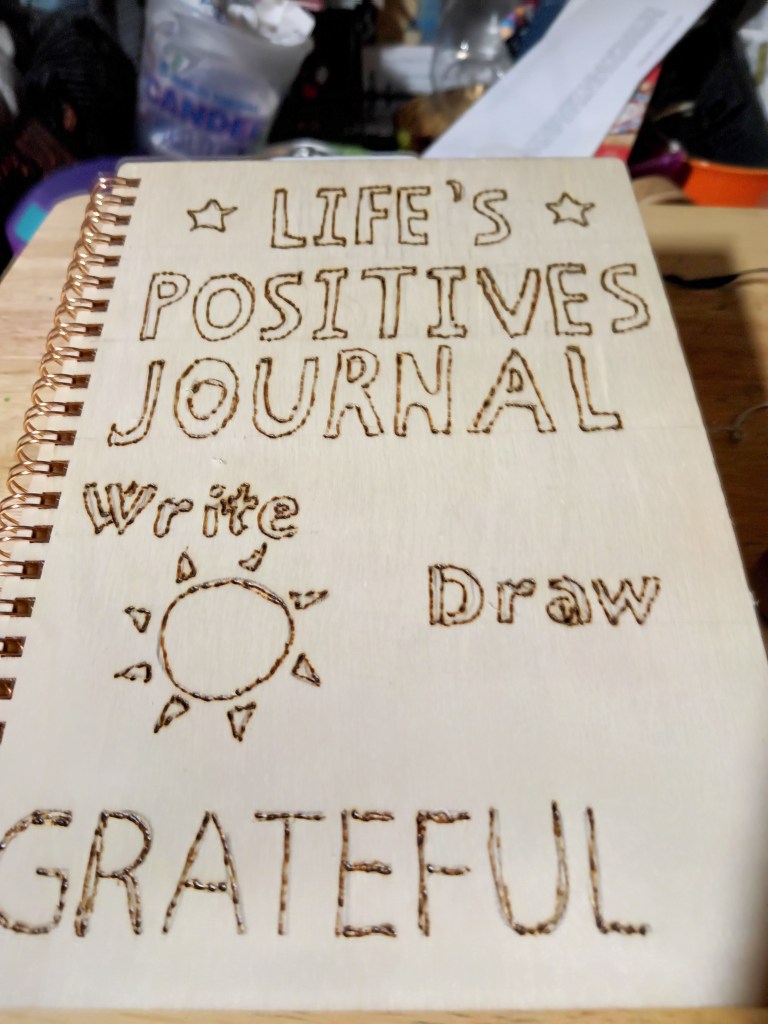
My therapist gave me assignments to write journal entries about certain things that were bothering me and then we would discuss them in our sessions. She used them to develop a plan on how to teach me coping techniques and to learn how to change my pattern of thinking. She even had me keep a separate journal to write positive things in each day. It was very hard to come up with things good about my life at that time, but I worked hard at it.

You might think, “I don’t know what to write in a journal,” “I’m not good at writing,” Or “I’d rather draw.” You can start by writing, “Today I feel..” and let your thoughts and feelings flow. You could even put an emotion down like “I am sad and that makes me feel…” You could write a letter to yourself or to someone who hurt you. The possibilities are endless.

The good thing about journals is that you don’t have to be a good writer and you don’t even have to be grammatically correct. You could even write so badly that you can’t read your own writing. Just write. No one is going to read it but you.  

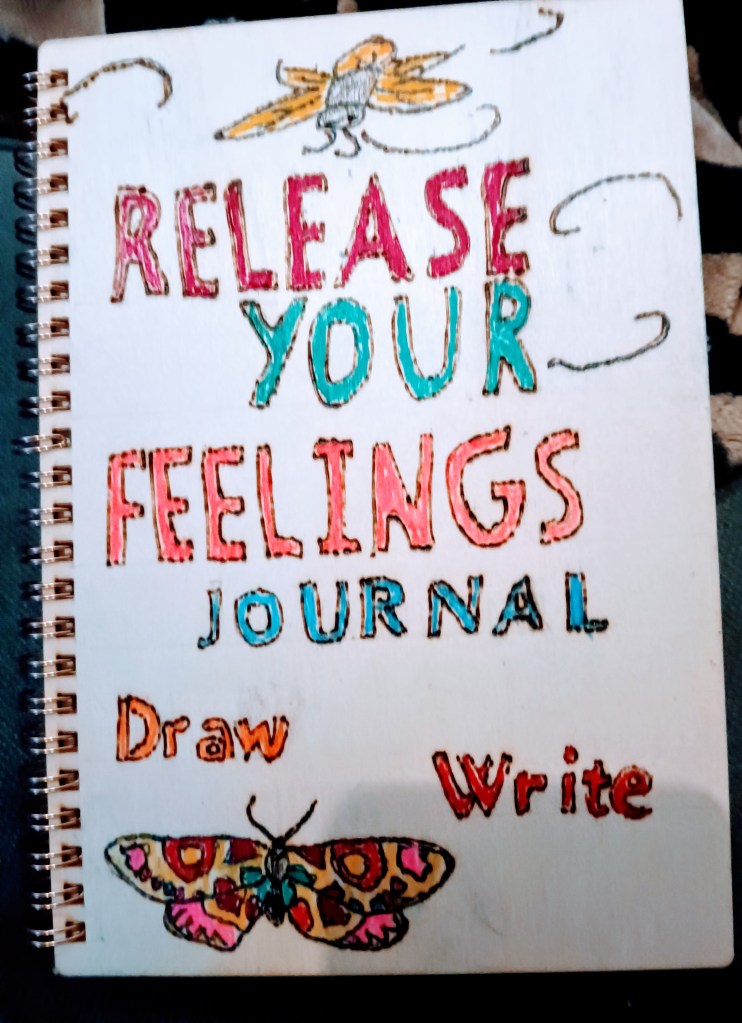
If you’re not good at putting your feelings in words but you like to draw, then draw pictures that portray your feelings. Get a journal with blank pages and fill it with your artwork. Express yourself with pencils, colored pencils, markers, or whatever works best for you. If you’re feeling like your world is falling apart, then put it into your drawings in your journal. Release your feelings in the way that works best for you, whether it be writing or drawing.

As I mentioned earlier, therapy my therapist had me keep a second journal where I wrote positive things about my day. At first it was very hard to come up with good things, but in time it got easier. If you decide to keep a separate positive journal, that’s fine. You could also write out your feelings in your journal and then add five positive things at the end of each entry.

You might be so far down in the hole of your mental illness that coming up with positive things seems impossible. Start small like “I got out of bed today” or “I took a shower.” For many with mental illness it’s a struggle just to get up and moving. Some find it takes a lot of energy just to take a shower. To accomplish these things is wonderful. As you work hard towards recovery, the positives become easier to come up with.

You can become creative with your journal, you can use stickers or pictures. You can cut out inspirational sayings from a magazine or news articles and put them in your journal. I have put obituaries for people I have lost and compliments from my customers in some of my journals. It’s your journal; you can put whatever you want in it and decorate it to your liking.

Journaling isn’t for everyone. If you’ve tried journaling and found it didn’t help you or you just couldn’t keep up with it, then investigate other ways of expressing your feelings like painting, playing a musical instrument, singing, or walking. Don’t keep your feelings inside you. They only cause more harm when you let them fester and build up with no release.

For me journaling has become a healthy coping technique. I no longer carry my journal with me everywhere and I don’t journal every day, but it still gets me through rough days. When I’m going through a hard time, I sit and journal. I not only put my feelings in it, but I problem solve, I brainstorm story ideas, and so much more. That’s how I came up with these blog posts. Journals can have several purposes. So, use your journal in whatever way works best for you.

Because I release my feelings in my journals, the light of recovery fills me.