SELF-CARE FOR MENTAL HEALTH

While struggling with mental illness, we may be so busy with jobs, college, children, and other responsibilities that taking care of ourselves gets pushed away. Or we could be struggling so much that we give up on ourselves. Wherever you are at with the mental illness you are fighting, you must take time out to care for yourself. Self-care is important in all aspects of mental illness, even in recovery.

In my journey through mental illness and as I work to stay in recovery, I came up with a few ways to practice self-care. Here are some important ways to take care of yourself.

  • Eat healthy meals. This is something I am working on. It’s important to watch how much sugary food you place into your body and to put together healthy meals. Add vegetables to your meals, snack on fruits, limit late night snacks, eat out less, and look into preparing wholesome meals.
  • Make time for meals. I always make sure I have three meals a day. If you’re busy, make a plan to take time out of your schedule to eat three meals daily. If you feel depressed and are avoiding eating, then force yourself to take time to eat. Put it on the calendar or set an alarm in your phone to remind you to take the time to eat. Food gives you the nutrients and strength you need to fight this illness. If you don’t eat regularly or avoid eating, you can cause physical health problems for yourself.
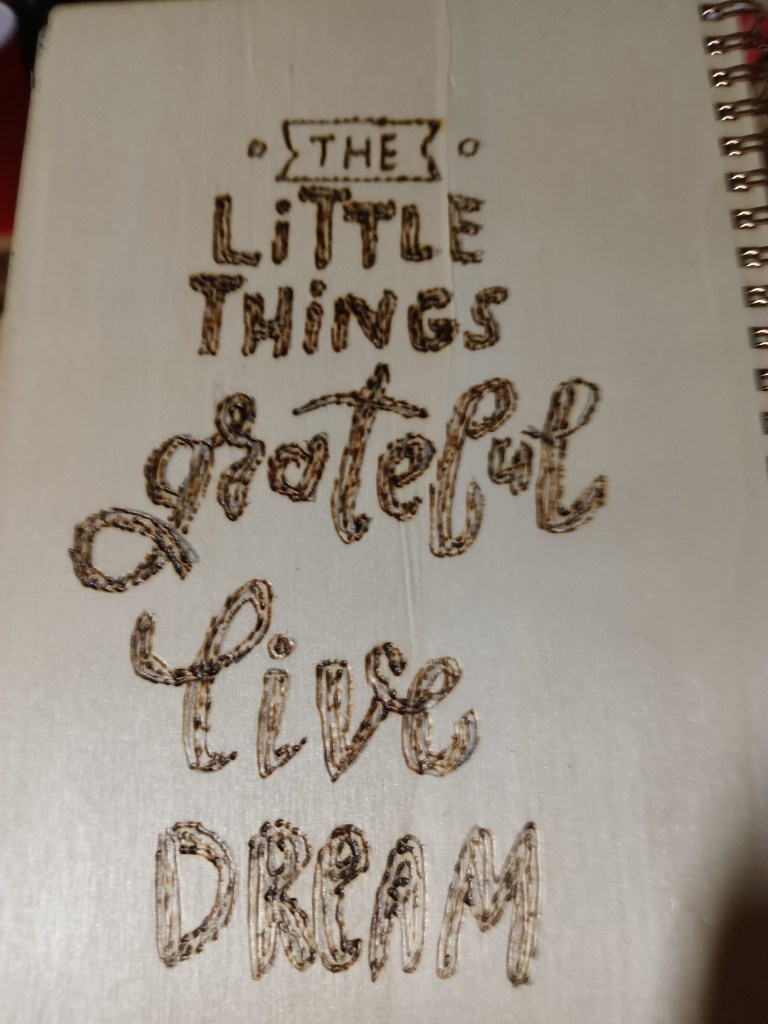
  • Take time for relaxation. You can spend money on a spa day, a massage, or a manicure. You can also relax without spending much money at all by taking a bubble bath, doing crafts, watching a funny movie, or listening to music. To relax I woodburn, soak in a bath, or write.
  • Take care of your mental and physical health. Listen to your body; if something doesn’t feel right or you feel sick, take care of yourself. Call off from work, go to the doctor when you need to, and allow yourself time for rest. When you notice you’re not handling your illness well or you’re getting worse, ask for help. Go to your therapist, take your medicine, turn to your support team, or build one, and do coping techniques. I go to the doctor when I need to, and if I don’t, my husband makes sure I do. My husband never lets me work when I’m sick, and when I struggle with my mental illness, I have coping techniques and a wonderful support team.
  • Get plenty of sleep. If you’re having trouble sleeping, talk to your psychiatrist for medications that can help you. Pick a set time at night to go to bed. Shut off your TV, social media, and phone. If you struggle with anxiety or racing thoughts, find a relaxation technique to try like deep breathing, listening to relaxing music, or muscle relaxation. I like to imagine myself lying on a beach with water coming up around me and I do deep breathing.
  • Take care of your basic needs. If you’re really struggling, you might not get out of bed, take a shower, comb your hair, or take care of your hygiene. Make a plan to get out of bed and sit in the living room, or get up and take a shower, or comb your hair, and brush your teeth. Taking care of these needs is important in self-care. When I was at my worst, I neglected to shower regularly, and I felt filthy. When I took a shower I felt refreshed.
  • Take time to socialize. Spend some time with people you care about. If your anxiety keeps you from going to places or events that involve a lot of people, then ask a friend to hang out with just you. Sitting alone at home leaves the mind to wander and makes you feel lonely. Go out and have some fun. You deserve to have a good time. When I’m home alone my mind wanders and I feel more depressed. My husband and I like to go out to dinner, to events, and the movies. Sometimes I go to dinner with friends at another friend’s house.
  • Take some time to be alone. If you live with other people and you get overwhelmed with things going on with them take some time to be alone. Take a walk, go to your room, sit out on the porch, or find a place you can go to be by yourself. Sometimes you just need a break from the people in your life, and that is okay. Take time to be alone and de-stress. My alone time is at night when my husband goes to bed. It’s when I write, when I journal, and when I snuggle with my dog. It gives me time to focus just on myself and my own needs.

These are only a few things you can do to take care of yourself. You are important and you owe it to your physical and mental health to practice self-care. Your mental health is connected to your physical health. If you don’t take care of both, you will not only struggle with mental illness, but also physical illness.  Taking care of the body and mind will help make you stronger to reach or stay in recovery.

I make self-care an important part of my life, and because I do I dance in the light of recovery.
RELEASE YOUR FEELINGS IN A JOURNAL

When struggling with mental illness, many are bombarded by racing thoughts, painful emotions, and an overload of feelings. Our thoughts trigger our emotions and feelings. Together they can cause physical problems such as achy shoulders, chest pain, upset stomach, and labored breathing. Often feelings become trapped within, causing anxiety, panic attacks, and unhealthy coping techniques like self-injury. A good way to release those feelings is to put them in a journal.

When I was in a mental health hospital, a friend brought me a journal and a pen. I began to journal every day. I poured out all my feelings on the pages. It felt like a weight was being lifted off my shoulders. When I got out of the hospital, I took my journal everywhere like a security blanket. I wrote in it at restaurants, on my break at work, sitting at a park, in my car, and other places.

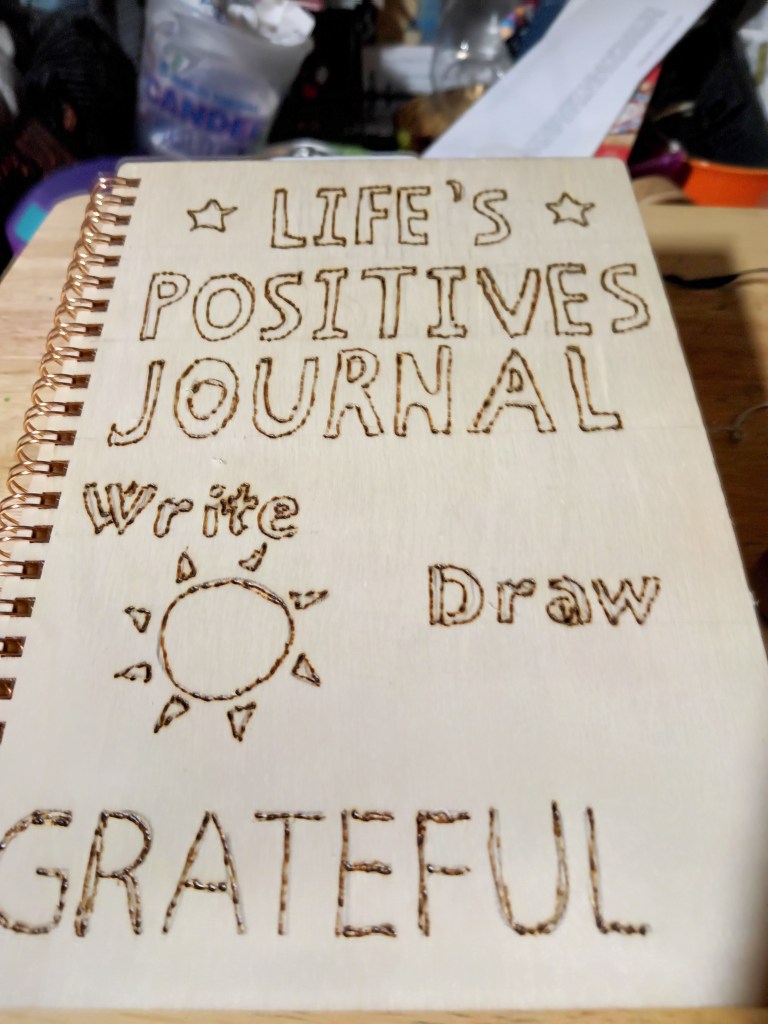
My therapist gave me assignments to write journal entries about certain things that were bothering me and then we would discuss them in our sessions. She used them to develop a plan on how to teach me coping techniques and to learn how to change my pattern of thinking. She even had me keep a separate journal to write positive things in each day. It was very hard to come up with things good about my life at that time, but I worked hard at it.

You might think, “I don’t know what to write in a journal,” “I’m not good at writing,” Or “I’d rather draw.” You can start by writing, “Today I feel..” and let your thoughts and feelings flow. You could even put an emotion down like “I am sad and that makes me feel…” You could write a letter to yourself or to someone who hurt you. The possibilities are endless.

The good thing about journals is that you don’t have to be a good writer and you don’t even have to be grammatically correct. You could even write so badly that you can’t read your own writing. Just write. No one is going to read it but you.  

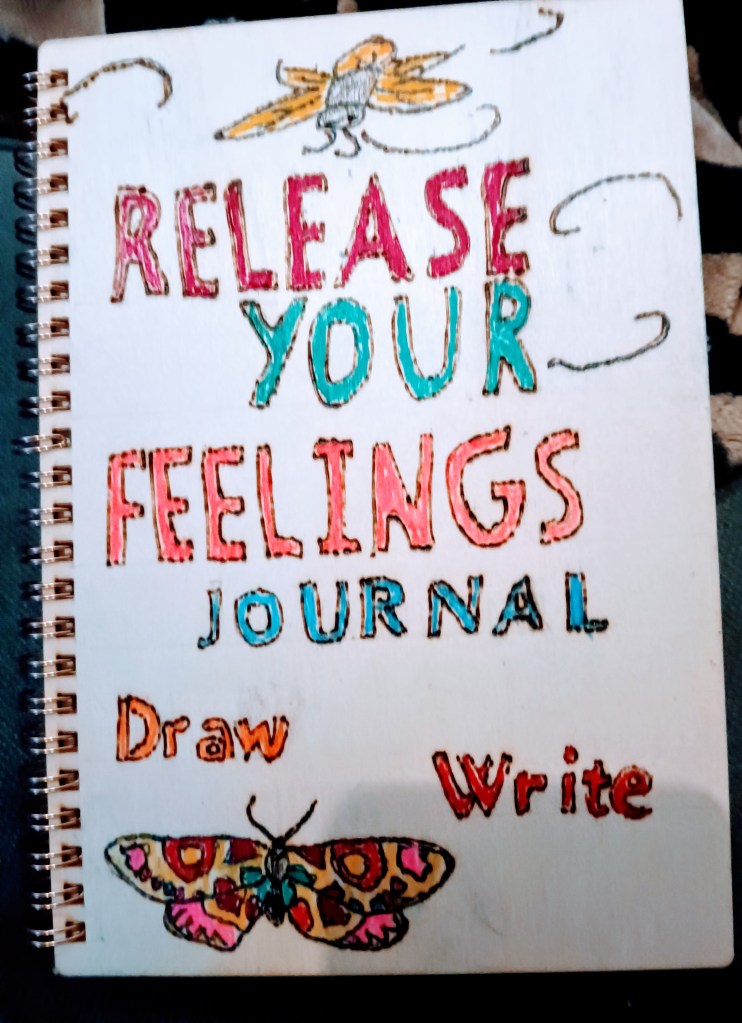
If you’re not good at putting your feelings in words but you like to draw, then draw pictures that portray your feelings. Get a journal with blank pages and fill it with your artwork. Express yourself with pencils, colored pencils, markers, or whatever works best for you. If you’re feeling like your world is falling apart, then put it into your drawings in your journal. Release your feelings in the way that works best for you, whether it be writing or drawing.

As I mentioned earlier, therapy my therapist had me keep a second journal where I wrote positive things about my day. At first it was very hard to come up with good things, but in time it got easier. If you decide to keep a separate positive journal, that’s fine. You could also write out your feelings in your journal and then add five positive things at the end of each entry.

You might be so far down in the hole of your mental illness that coming up with positive things seems impossible. Start small like “I got out of bed today” or “I took a shower.” For many with mental illness it’s a struggle just to get up and moving. Some find it takes a lot of energy just to take a shower. To accomplish these things is wonderful. As you work hard towards recovery, the positives become easier to come up with.

You can become creative with your journal, you can use stickers or pictures. You can cut out inspirational sayings from a magazine or news articles and put them in your journal. I have put obituaries for people I have lost and compliments from my customers in some of my journals. It’s your journal; you can put whatever you want in it and decorate it to your liking.

Journaling isn’t for everyone. If you’ve tried journaling and found it didn’t help you or you just couldn’t keep up with it, then investigate other ways of expressing your feelings like painting, playing a musical instrument, singing, or walking. Don’t keep your feelings inside you. They only cause more harm when you let them fester and build up with no release.

For me journaling has become a healthy coping technique. I no longer carry my journal with me everywhere and I don’t journal every day, but it still gets me through rough days. When I’m going through a hard time, I sit and journal. I not only put my feelings in it, but I problem solve, I brainstorm story ideas, and so much more. That’s how I came up with these blog posts. Journals can have several purposes. So, use your journal in whatever way works best for you.

Because I release my feelings in my journals, the light of recovery fills me.

YOU CAN DO IT

When you are struggling with depression, you lose interest in everyday things and you have feelings of hopelessness and worthlessness. It becomes too easy to neglect your health and daily routines and tasks. You get stuck in a rut you can’t get out of. Even getting out of bed becomes very difficult. You feel as if you can’t move past this horrible sadness that has taken over your life.

I grew up with parents and grandparents who didn’t believe in the words, “I can’t.” Whenever my siblings or I said I can’t do something, my mom would look us in the eyes and tell us “There’s no such thing as can’t. You can do anything you put your mind to.” Her words were my inspiration and became my motto. If someone told me, I couldn’t do something I found a way to prove that person wrong. Throughout elementary they told me I couldn’t read, so I worked hard to learn how to read; they told me I couldn’t longer pass classes on my own, and in high school I passed my classes with “As” and “Bs.” My teachers said I would be on welfare when I grew up, but I graduated from college, I have worked the same job for twenty-eight years and I have written a book.

When I realized I had major depression in college, I felt like my life was doomed. I couldn’t sleep at night, I got sick every morning, I became suicidal, and I self-injured. It took all my strength to get out of bed each morning and go to my classes, yet I continued to get high grades. My life seemed like an endless cycle of hopelessness and inner agony, but I refused to fail at college. It was hard to pass my classes when I was so sick, but I could still hear those teachers from school saying, “You can’t succeed.” This drove me to study long hours to pass my classes.

For many who are struggling with depression, the simplest routine tasks like taking a shower, combing hair, eating, or getting out of bed seem impossible. It’s easy to give up and say, “I can’t do it.” The thing is if you dig deep down inside yourself, you’ll realize you can do it. You can get out of bed, you can take a shower, you can eat, and you can stand up to depression. Remember there is no such thing as, “I can’t.”

Are you lying in bed feeling too tired and depressed to get up? Then say to yourself, “I can get up,” several times. Dig deep down inside you until you get the determination to slip out of bed. Take small steps. Be proud of yourself for each step you take and shout out, “I did it!” Your illness doesn’t have to run your life. You can fight it, you can work towards getting better, and you can reach recovery.

Reaching recovery was the hardest battle I have ever fought. So many times I felt like I just couldn’t go on and I didn’t want to go on. I felt like I was doomed to a life of misery. My mom’s words, “There’s no such thing as can’t. You can do anything you put your mind to,” kept me pushing forward.

When I got home from work and the man I was living with told me he was kicking me out, I ended up in a mental health hospital. He told me he couldn’t help me because I could never get better. His words inspired me to fight harder. In a week I got out of the hospital and started on the path to recovery. I moved back home, I started going to group therapy, and I found a new therapist. Through several years I took steps towards recovery.

You might feel like reaching recovery is impossible and there is no way you can reach it, but you can. Take the first steps now. Start slowly and build your way up. Recovery doesn’t come easily so plan on fighting hard. Remember there is no such thing as can’t. “You can do anything you put your mind to.” Fight for happiness, fight for a new beginning, and fight for yourself. I believe in you. “You can do it.”

I believed I could get better, and I fought hard for it and I reached it. I stand in the light of recovery shouting, “I did it!”

EMOTIONS FROM THE PAST

Wounds on the soul from the past can heal, but a scar remains. We can move on from abuse, forgive those who have hurt us and heal, but the memory and the scar inside us never goes completely away. Sometimes things that happen in our lives reopen the wound and a storm of emotions flood us. How we handle the feelings is what matters the most.

I was looking at my reviews on Amazon for my book, Escape to the Garage: Family Love Overcomes Bullying, and realized I got a five star review last month. There was no name to tell who wrote the review. The review stated that he or she was a classmate of mine and had good memories of me. Then it stated that he or she hoped he or she was not one of those I wrote about. This opened an old wound. Who could have good memories of me, but not know if he or she was one of the bullies? I had friends that moved away when I was younger, and the few friends that I kept more than a year would know they were not one of the bullies.

Who would have good memories of me when I didn’t talk to my classmates? We had a very small class and often kids follow the crowd when it comes to bullying even if they don’t agree. That doesn’t make what they did okay. Even when you don’t agree yet you participate, you’re as bad as the bullies. Was this one of those type of people from my class? Was it someone who didn’t even try to talk to me because he or she was afraid of getting bullied? Or was it one of the friends who turned their back on me? I went over and over in my mind who it could be who wrote the review.

I want my classmates and the bullies to read my book and see what they put me through. The person did acknowledge that he or she is happy to see my success which made me feel good. Then the person wrote that now that he or she is an adult, none of that horrible kid’s stuff matters. He or she didn’t seem to understand that it’s not just horrible kids’ stuff. When I was younger in the eighties and nineties when kids were mean to others, they didn’t recognize it as bullying. It was kids being kids, but it’s more than that. Bullying doesn’t just happen with children; it happens to adults too. Adults also can be bullies. Plus, what happens to a victim of bullying can affect them into adulthood. The reader of my book obviously doesn’t understand that bullying isn’t just kids’ stuff and that angered me.

To me saying It’s kids’ stuff is just like saying kids will be kids, and the pain and damage I had to struggle with into my adulthood didn’t matter. I spent many years in therapy learning to love myself, change my negative thinking, mend the inner wounds, and forgive and move on from the abuse I faced as a child. Years of being put down by classmates and teachers destroyed my self-esteem, led me into a mental war with myself, and caused wounds no one could see. It also led me into bad relationships, made me afraid to stand up for myself, made it hard for me to trust, and made me agree to things I wasn’t comfortable with because I was too afraid to speak up and so much more. This led into my adulthood. The pain of that resurfaced with the five-star review.

The song “Because of You” by Kelly Clarkson is about someone who was abused, and the lyrics hold true for bullying too. Think about the lyrics as you read them and imagine that child or adult who is being bullied. Here are the lyrics:

Because of you

I never stray too far from the sidewalk

Because of you

I learned to play on the safe side,

so I don’t get hurt

Because of you

I find it hard to trust not only me,

But everyone around me

Because of you

I am afraid

It took me years to overcome these things the song talks about. I had to go through therapy and take antidepressants, and even now I fear being hurt again. I am an adult now and my wounds are scars that at times reopen. The scars are from the bullies who verbally and physically abused me and the bad relationships I got into as an adult because I didn’t know how to have a healthy relationship.

Because of you (my bullies), sometimes my scars open up and the pain floods back, but because I’m stronger I can handle the pain and I stitch that wound up. When I read that review, I texted my friends who are also part of my support team, Cheryl and Amy. They both mentioned the positive side of the review and told me not to dwell on who it might be. I didn’t want to hear the positive, but I listened, or more like read it. Amy suggested I write this post about it, and it is very healing.

To my classmate who wrote the review you’re right; I have succeeded. I am not done yet. I have more books to write, and I am working hard at giving talks to bring awareness to bullying. Thank you for your review.

If old wounds are reopened, turn to your support system, don’t let the wounds push you down, and stitch them back up. Because I stitched my old wounds back up, I stand tall in the light of recovery.

CONQUERING FEAR

Everyone has a fear or more than one. Some fears have special names like acrophobia (fear of heights) or arachnophobia (fear of spiders and some fears are personal). We all avoid things that make us feel uncomfortable. We’ll stay away from high places when we have acrophobia, or we’ll avoid spiders if we have arachnophobia. When fears grow bigger in our mind or prevent us from living a happy life, then they become a problem.

All fears are irrational feelings that are very real to the person facing them. When these fears build on top of each other or grow from a small fear to a big one, they cause anxiety. They prevent us from falling in love, leaving our homes, reaching our dreams, and starting something new. When fears paralyze our lives when we need to get help and learn to stand up to them.

In high school I developed a fear of getting sick. I was obsessed with proving to my classmates that I was not dumb and getting the highest grades. At the end of the school year, I listened to the kids in my school receive multiple awards for their success in school. I decided to get awards and to succeed I had to stay healthy and not miss a day of school. In my mind getting sick meant I was weak and a failure. When my siblings got sick, I avoided them and was nasty to them. At night I begged God to keep me healthy, and at home I cleaned my hands frequently and became unbearable to be around.

That fear was built from my irrational thinking. Sickness didn’t make me weak; it wouldn’t have prevented me from proving to everyone I was smart. It prevented me from being kind to my siblings. It made me into an awful sister who treated my siblings horribly for something they couldn’t control. This fear followed me into adulthood and when I was dating my husband and he got sick, I left the house and drove around for hours. He called me several times and I ignored the calls. In time I learned to handle illnesses better.

I’m a director of One Life Project and we’re in the process of planning events. I’ve always been the person who likes to sit in the background unnoticed. Then I published my book and I’ve been standing in front of people giving speeches about bullying and now the founder of One Life, Alex, wants me to take a step further into the public. He wants me to learn to be a leader and to contact organizations. This scares me. I’d rather sit in the background and follow someone, but I can’t do that. Alex sees something in me I don’t see. He wouldn’t have chosen me if he didn’t. I could let my fear take control and prevent me from helping many with mental illness and making changes in others lives, or I can stand up to my fear.

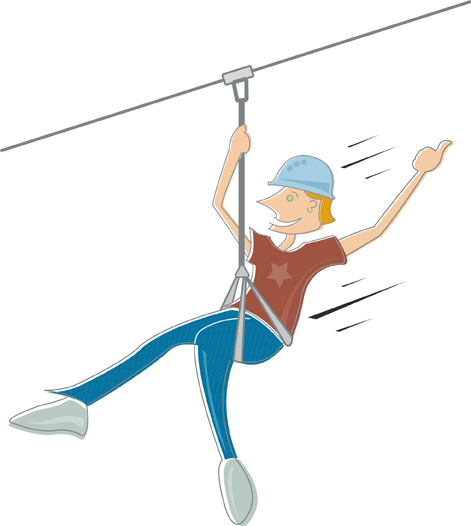
I learned through my friend, Denise, and through therapy, you cannot let fear stop you. Denise picked me up from home one day and drove me to a resort that has many activities. When we got there, she turned to me and said, “You’re not afraid of heights are you?”

“Yes, I am,” I replied.

“Well, then you’re going to face it because we are going ziplining,” she said.

The whole time we rode the ski lift up the mountain side and I slowly climbed the tower to the zipline I kept telling myself, “I can’t do this.” Denise encouraged me all the way up and even until I jumped off the tower. I felt a rush of excitement as I sped down the mountain hooked to a cable. Through Denise I learned not to let fear stand in my way of doing things.

Instead of letting my fear of becoming a leader grow bigger and bigger until it paralyzes me, I’m going to face it. I will learn, I will ask questions, I will take it step by step and in time I will lead and be confident in contacting organizations.

Facing our fears helps us grow as a person. We grow stronger and more confident. I can’t tell you that fears will completely disappear. I still don’t like heights, but I’m more willing to tackle them. Facing your fears and pushing through them will open you up to new opportunities, new ways of thinking, and new beginnings.

Don’t let your fears cripple you from living, doing something new, from enjoying life, and from discovering yourself. Stand up to your fear and say, “You will not defeat me. I can overcome you.” Stop those little fears in their track before they grow into huge ones and leave you sick with anxiety. This is hard to do. I am still working on standing up to the little fears, but we can do it together.

Standing up to fears makes me a stronger person. Each day I take that step towards a fear I grow inside, and this helps me soar in the light of recovery.

STEPS TO A BETTER SLEEP

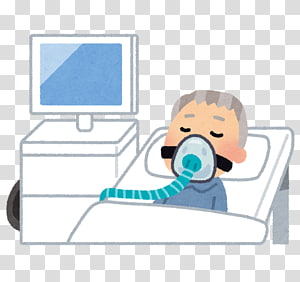
All people stop breathing while they are sleeping, but when a person stops breathing frequently during the night, that is called sleep apnea and he or she needs a CPAP machine. A CPAP machine can be difficult to get used to, and some people can’t get used to them at all. Others who get used to their machine find they get a better sleep at night and can get off sleeping medication. Some can sleep with their machine, but feel no difference in how they sleep or feel the next day.

I got my CPAP machine in August. In an earlier post I wrote about how I had to change masks because the one I had was giving me anxiety attacks. Once I found the mask that worked for me, it took a week or two to get used to sleeping with a mask over my nose and head, but once I felt comfortable with it, I noticed I was falling asleep sooner. Before my mask, with sleeping medication, it took me a half hour or longer to fall asleep. With the mask and my sleeping medication, I fell asleep within fifteen minutes. I was sleeping better, but I still felt groggy in the morning and yawned at work. I figured it was probably my sleeping medication.

A month after I got my machine, I talked to my psychiatrist on the phone. He asked questions about how I was sleeping with the CPAP. I told him I was falling asleep sooner and sleeping soundly through the night. I take medication that dissolves under your tongue. My psychiatrist had me taking a 5-milligram tablet cut in half. I had been on sleeping medication for many years. Anxiety and racing thoughts kept me up at night, and the sleeping medicine helped me relax so I could sleep, but sometimes my worrying and racing thoughts were so bad that I had a hard time sleeping with medication. Over a month’s time on my machine, I didn’t struggle with my thoughts. I just fell asleep.

My psychiatrist’s voice sounded confident over the phone. “I would like you to cut your pill into quarters. You should have four pieces to take once a day.”

I swallowed hard. Worries filled my mind. Could I sleep on less medication? What happens if I end up staying up all night and I start making mistakes at work? This can’t be a good idea. I have been on this medication for years; how could a CPAP machine help me sleep without it? I can’t go back to staying up all night begging God to let me sleep.

It was my day off. I tried to keep myself busy all day so I wouldn’t worry about the change in my medication. I did laundry and other housework. Later that night I cut my pill into quarters. I put one quarter under my tongue and crawled in bed beside my husband. I prayed to God to let me sleep. Fifteen minutes after I went to bed, I fell asleep.

For two months I slept well on a quarter of my medication. In November I had another call from my psychiatrist. I gave him a report on how I was sleeping. He then told me to break the four pieces in half so there would be eight small pieces. Then to take one a night. That amounts to a very small piece of medication. I was sure this would not work. It wasn’t enough medication to relax me. I was determined I would be up all night. There was no way a little piece of medicine could help me sleep. I’d be tossing and turning all night. That night I took my medicine and put my CPAP mask on and once again I was asleep in fifteen minutes.

During November I got a cold and had to miss work and then the cold went into a sinus infection. In December I got sick two more times and had to miss work. In the meantime, my husband went from forty hours to thirty-two and the place he works at was shut down for a week. We were behind in bills and deep in debt. We started going to the food bank and I tried to make arrangements with the bill companies. I was under a lot of stress and my anxiety was high. Normally under this kind of stress I would struggle to sleep even with my medication, but with my CPAP and a little piece of medicine I slept well.

I’ve had problems sleeping since I was a child, and throughout my adulthood, I have been on sleeping medication. To get to the point where I could sleep on just a very small amount was a miracle to me. I thought I would be on sleeping medicine for the rest of my life, but as I cut my medicine down, I began to hope that soon I would no longer need my medication. My next talk with my psychiatrist is at this end of the month. I have a feeling he will discontinue my sleeping medication. I’m excited and a little scared. The “What ifs” are filling my mind, but I’m trying to stay positive.

Not everyone has sleep apnea and needs a CPAP, but if you need one, it might change your life and sleep. A CPAP machine seems like a hassle, and you might think you could never sleep with a mask on your face, but give it a chance. It may help you take big steps in how you sleep and help you get off medication.

With my CPAP machine I sleep much better, and a good night’s sleep helps me function better during the day. With steps to a better sleep, I am standing tall in the light of recovery.

HOLIDAY STRESS AND DEPRESSION

Holidays are a joyous time of year, but also a stressful time, especially this year. With inflation being so high, people are extra stressed about affording the fixings for dinners, for buying gifts, and paying bills. We work hard to keep family traditions going and giving our best to our loved ones. Such stressors like these can increase sadness in those who have depression. It can make the holidays seem bleak and hopeless.

When I was a child, the holidays sent me into a deep hole of depression. When we exchanged names for gifts, I usually got a gag gift and became the joke of the class. Everyone laughed but me. During the holidays I spent a lot of time alone, I got upset easily, and I got into fights with my siblings. I even argued with my parents and cried silently at night.

 I felt so alone. I was bullied in school and had very few friends, which worsened my depression. One year I asked for a Ventriloquist puppet so I could have a friend. I got the puppet for Christmas and worked on having it talk without moving my lips. I carried on conversations with it, but it wasn’t the same as having a human friend.

When I met my husband, my holiday depression faded away. He goes out of his way to spoil me with love and gifts. With him I’m never alone and I get wonderful gifts instead of gag gifts. I’m the sparkle in his eyes and he is the sparkle in mine. I enjoy spoiling him too. But this year is extremely hard and stressful. We’ve had a rough year financial. There has been a lot of unexpected problems throughout 2023.

Every year my husband and dad have a tradition of going together to pick out Christmas trees, but this year we don’t have the money for a real tree. My older sister is giving us a fake tree to put up. It’ll be our first fake tree since we got married.

We are struggling to pay bills and put food on the table. Each week I sit down to pay the bills and tears fall because the money won’t stretch far enough. Bills keep coming in that we can’t pay and my stress increases. By the time I pay what I can, we have little money for food. My parents help us out by bringing us some food and we go to our church food bank. I fear my biggest nightmare is coming true. I fear we’re going to go bankrupt and lose everything. This stirs up my anxiety and leaves me struggling with obsessive worrying when I should be sleeping at night.

Stress has led to bouts of depression. I feel like I have failed us. I take care of the bills and I have always been able to pay them until now. What have I done wrong? How will we ever get out of this mess? Will we have to skip Christmas? Will we end up living in a box in an alley? The worries are nonstop day and night. I feel like I can’t breathe.

I’ve been asking to work overtime at work to get more hours. Sometimes they say yes and other times no. I’ve tried an author event in a town forty-five minutes away, hoping to sell some books, but unfortunately very few people showed up. I did sell some bookmarks, that were meant to be given free, to fellow authors. That money got us supper on our trip home. I’m woodburning Christmas ornaments, hoping those will sell to give us a little extra money. I’ve sold two so far.

We have a Christmas account at our bank. I used some of the money to pay some bills, but Lou insisted we keep a little money to get each other a few gifts. We’ll be having Thanksgiving dinner at my parent’s. My parents always send us home with leftovers.

To cope with my stress, bouts of depression, and the holidays, I journal out my feelings and I list five positive things each day. I also turn to my support system, I pray, and I keep myself busy with my writing and woodburning. Most importantly, I take care of myself. I remind myself that money doesn’t make the holidays happy; love does. I rely on God to see us through our difficult times, and I thank God for all who have been helping us in out time of need. Traditions can change, gifts can be small, but love is the largest gift of all. God’s love is what shines in every holiday.

If you’re struggling with the holidays, then write a list of the positive things in your life. Do things that make you happy. Take care of yourself. Remember the holidays are about much more than large meals and fancy gifts. Sometimes the best gifts are those from the heart. Make do with what you do have and be grateful that God gave you that. Worry about your stressors for a few minutes and then let them go. Focus on the positive.

These holidays are different for us, but this Thanksgiving I am thankful. I’m thankful for the help of family, for my husband’s love, for having a home, for the support of friends, and for God’s love. Holding onto the positive is what is getting me through the holidays and keeping me standing in the light of recovery.

YOU ARE WORTHY

When you’re in the deepest part of your hole of depression it is hard to see your own self-worth. It’s easy to lose all your self-esteem. You see yourself as useless, hopeless, and an awful person. It’s nearly impossible to find anything that is good about yourself. The truth is: you are none of the things your sick mind tells you that you are. You are so much more than your illness and the dark lenses you are looking through. You are a worthy, special person.

I know many of you need reassurance that despite the illness that tortures your mind, you are a wonderful person. Below is a list of reasons why you are worthy. Maybe this is the moment you need to read this or maybe you need a reminder to fuel your determination to fight this awful illness. Whatever your reasons are, please read on.

Reasons you are worthy:

  • You are worthy of living. Your life is valuable and even though it doesn’t seem like it You are an important part of this world. You have people who love you. They would be broken-hearted if you were to die. You can get better and make a big difference in people’s lives. You’re important.   
  • You are worthy of happiness.

You might think you’re doomed to a life of sadness, but you’re not. You can reach recovery and live a happy life. You deserve happiness and it’s up to you to strive for it. Don’t be afraid to be happy and to search for happiness.

  • You are worthy of being loved.

You might hate yourself right now and think you don’t deserve love, but you are wrong. Everyone deserves to be loved, even you. Those sad, hopeless, and miserable feelings you have are not you. It’s your illness. The person you are is a beautiful person who is kind, caring, fun and much more. That person is worthy of love.

  • You are worthy of kindness.

You don’t deserve to be called names, to be hurt physically or to be used. You are worthy of people who will care for you, give you a shoulder to lean on, spend time with you and are willing to get to know you.

  • You are worthy of respect.

You don’t deserve to be treated like you are dangerous or a loss cause.
You deserve to be admired for your strength to fight this illness and for the person you are. You are special and are worthy of others’ respect. You deserve to be admired for your strength to fight this illness and for the person you are. You are special and are worthy of others’ respect.

  • You are worthy of recovery.
    You’re not meant to spend your life stuck in deep sadness and emotional pain. You deserve to learn coping techniques, learn new ways of thinking and of finding the right medication that helps you manage your illness. Recovery means managing your illness well enough that you can function and live a happy life and you deserve that.
  • You are worthy of loving yourself.
    Right now, you might hate yourself, but you don’t deserve the self-hatred. That person you are despite your illness is a beautiful person deserving of your love. Fight to find yourself and look inside you. See yourself for the person you are, not the person your illness makes you think of yourself. Inside you is a person craving to be loved by you.

Read through this list every time you feel unworthy.

Remind yourself of how worthy you are, each time you feel like giving up.

Write theses down on index cards and put them in different spots in your home where you’ll remember to read them.

Write each thing out on a piece of paper you are worthy of, if necessary.

Do this until you believe them to be true.

I am worthy of all of these and much more. Knowing this keeps me in the light of recovery.

TIPS FOR HELPING YOUR CHILD WITH BULLYING

Unfortunately, bullying is a big problem in our schools. Children are being abused physically and verbally for being different. This abuse leads to mental health problems, behavioral problems, drug and alcohol abuse, and academic problems. Many parents are lost, not knowing how they can help their child.

From personal experience as a bullying survivor and through research, I put together some tips for parents to help their children. Below are my tips:

  • Look for signs of bullying. Some of the signs that your child is being bullied are: missing or destroyed belongings and clothing, loss of friends, spending time alone, loss of self-esteem, not sleeping or having nightmares, trying to avoid going to school, unexplained injuries, and so on. You can find out more at this site What are common signs of being bullied? | NICHD – Eunice Kennedy Shriver National Institute of Child Health and Human Development (nih.gov)
  • Keep an open communication with your children. Talk to your children about school. Ask them about their day and friends. Tell your children they can talk to you if they need to. Be interested in their activities and what is going on in their lives. If you have a busy lifestyle, make a special time each day to sit and talk with your children.
  • Be willing to listen. If your child wants to talk, then make time to listen. Let your children know you’re always willing to listen to them. Sometimes they just need a shoulder to cry on and someone to listen while they let out their feelings.
  • Encourage children to share their feelings with other adults. Understand children don’t tell their parents everything. Let your child know if they can’t tell you something, they can tell an aunt, uncle, grandparents, or another adult they feel close to.
  • Look for signs of mental health problems. Many children who are bullied struggle with depression and anxiety. Learn about the signs of depression and anxiety such as nausea, frequent shaking, tightness in the chest, irritability, hopelessness, talk of suicide, excessive worrying, and feelings of sadness. You can find out more at Identifying anxiety, depression signs – Mayo Clinic Health System.
  • Seek professional help. If you notice signs of continuous bullying or signs of depression and anxiety, look into therapy for your child. Bullying is a form of abuse that rips apart a child’s self-esteem and mental well-being. A therapist can help your child cope and talk about what is happening to them. If you don’t feel confident with the school therapist, look for another professional. If you do not have health insurance, look into state funded programs. Many state programs offer help at low cost or no cost. The sooner you get your child help, the better chances you have of combating the effects of bullying.
  • Fight for your child. Talk to teachers, principal, school administration, or school board to put a stop to the bullying your child is facing. If no one will listen then document what is happening and talk to the news. Do what it takes to end the abuse your child is facing.

If your child is being bullied, use these tips to help them deal with what is happening to them. It’s your job as a parent to do what it takes to help your child. No matter how busy your life is, make time for your children and be aware of what is going on in their lives. Lean on friends and family for support. Let’s stop what we are doing and speak out for our children.

I wrote my book Escape to the Garage: Family Love Overcomes Bullying to show not only the effects of bullying, but also the importance of family. My mom fought endlessly for me, but unfortunately back then she didn’t have the resources we have now. My family and my parents got me through many hard times as a child. The only regret I have is I should have never kept so much to myself. Writing my book and speaking out against bullying helps me heal in the light of recovery.

TIPS ON HANDLING LIFE’S CHALLENGES

Life is very unpredictable. Sickness hits us when we least expect it, and other things seem to go wrong all at once. Our car breaks down, our roof leaks, a friend walks away, or a husband gets hurt. When you’re struggling with mental illness, life’s challenges can worsen your illness. If you’re in recovery or on the road to recovery from mental illness, life’s challenges can threaten to push you down that dark hole.

If you have been following my blog, you know I have faced a lot of health problems and challenges that have tested my ability to stay in the light of recovery. If you’re new to my blog, check out some of my older posts. I developed ways to cope with life’s challenges that I faced. Below are a few tips on how to handle challenges.

  • Allow yourself time to feel. Give yourself time to get sad, cry, scream, and let out your emotions. Holding in your feelings can only send you further into that hole of darkness. Do what you need to get those feelings out even if it means spending a day in bed.
  • Pull yourself together. Don’t let yourself stay stuck in your emotional state of mind. Remind yourself of how strong you are and what it took you to get where you are, whether it would be on the road to recovery or in recovery. Wipe those tears away, get out of bed, get dressed, and remember how strong you are.
  • Focus on the positive. Even though things are tough and seem hopeless, there are positive things. Pull out a piece of paper and write down the positive things in your life like you have a home, you got up that morning, the sun is shining, and you have food. Even the smallest things can be positive. It might be hard to find good things during the hard times, but don’t give up.
  • Turn to coping techniques. What kind of coping techniques did you learn in therapy? Do you do deep breathing, or grounding techniques? Do you have a hobby, do you journal, or do you go for a walk? Whatever coping techniques work for you, use them. If you don’t know of any techniques, then research some on the internet or talk to your therapist.
  • Lean on your support system. Talk or text your friends or family members who are part of your support team. Often, they can give you good advice or guide you to a healthier path. Sometimes it’s just good to have someone listen to you.
  • Push forward. When life hits you hard, it’s easy to give up and go backwards, but remember you’re strong. Stand up tall and push forward. See the hard times as something you can find away around. Be determined that you won’t let the struggles pull you down. You can get through this, and life will get better.
  • Seek help or talk to your therapist. If you find that you can’t get through this difficult time in your life on your own, call your therapist and make an appointment. If you’re in recovery and you no longer have a therapist, find one. There is no shame in seeking help. A therapist will have lots of ways to help you through and can guide you through the challenges that face you. Don’t be afraid to ask for help.

Remember no matter how difficult things can get, you can get through it. Don’t let life’s challenges push you down that dark hole. Your road to recovery or remaining in recovery is too important to risk. Follow these tips or find your own ways to handle life’s challenges.

I have been through numerous illnesses, surgeries, and hard times and through it all I used these tips to keep me in recovery. I face life’s challenges with strength in the light of recovery.