I survived my first cataract surgery. It was pretty easy compared to other surgeries I have been through. I think the best part was relaxing the week of Thanksgiving. For each of my nine other surgeries I found different ways to cope with my recovery, and with this one I also found a way to cope.
The Sunday before my surgery my husband and I spent the night at my parents’ house so they could drive me to the surgery center. We enjoyed spending time with my parents. At the surgery center the nurse put the needle in for an IV and then hooked up the IV line. The IV line had a leak in it and blood started dripping down my hand. The nurse called another nurse in. One nurse held the needle in my hand while the other tried to unhook the line. It pulled on the needle, and it hurt. After several tries and lots of blood, they were able to unhook the line and put a new one in. Afterwards they had to clean me up and get me a new blanket.
I heard the doctors talk throughout my surgery, but I couldn’t understand what they were saying. Before I knew it, they were taking me to the recovery room and my left eye and face were numb. I had a patch over my eye, and everything looked blurry with my other eye. When I got home, I took a long nap.
That night I just listened to the TV. I couldn’t see out of my patched eye, and I couldn’t see well with my other one. The patch was so big I couldn’t fit the mask of my CPAP machine over it, but luckily I was drowsy enough to fall asleep easily that night.
I got the patch off the next day, thank God. I had to go to the eye doctor to get the left lens popped out of my glasses. I no longer needed a lens for my left eye. With one eye recovering from surgery and one eye still having a cataract I was very unbalanced. With the surgery eye everything looked brighter and clearer than the right eye. It didn’t take much for me to get dizzy.
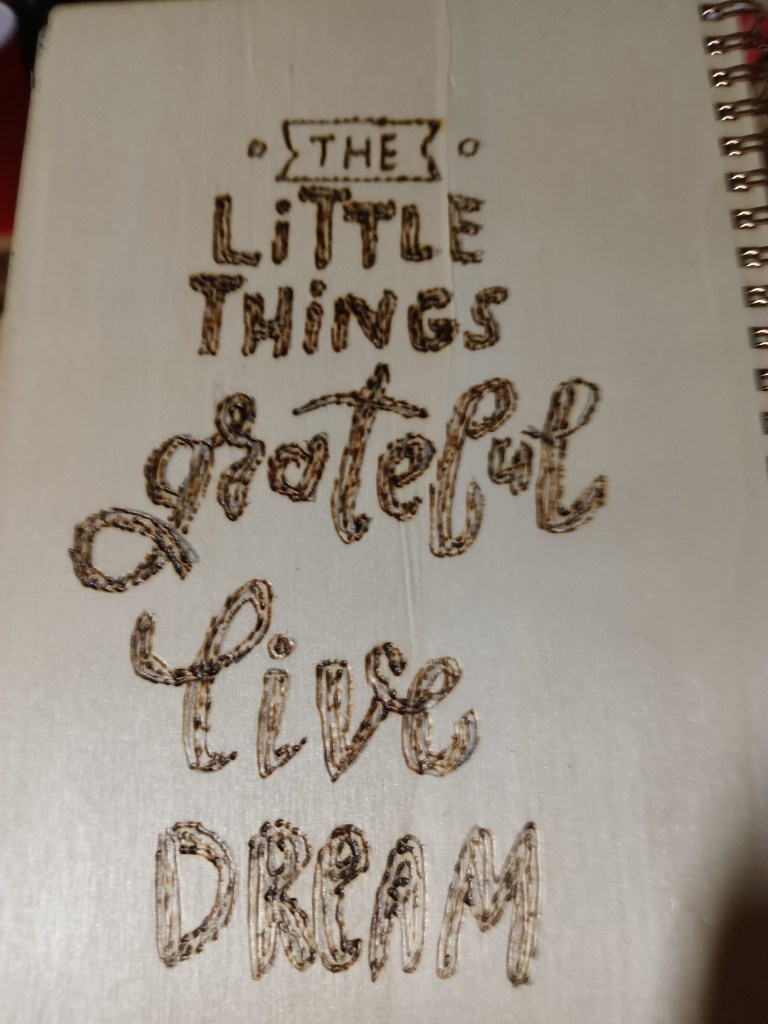
With my other surgeries I coped by doing woodburnings, adult coloring books, and writing. With my uneven vision I can’t color or woodburn. I haven’t done any writing until now. I have been coping by watching Netflix, talking to my support team, spending time with my husband, and enjoying the week off.
We spent Thanksgiving at my parents’ house. When I tried to pour a drink into my glass, it ended up on the table. I tried again and my poor dad got a lap full of apple cider. My husband told me that I am no longer allowed to pour drinks. My spirits have been good. It’s been a long time since I have been able to enjoy having Thanksgiving week off. I can’t
wait until December 8 to have my right eye done. I’m ready for balanced vision and to be able to see well without glasses. I’m standing in the light of recovery being able to see the light better.
Due to the news, TV shows, and society’s misinformed ideas, there is a lot of stigma surrounding mental illness. Because of this, many who are struggling do so in silence, fearing what others would think of them. The sad part is many never get the help they need and end up using unhealthy coping techniques like drugs, alcohol, and self-injury. The problem is that stigma follows the unhealthy coping techniques too.
Self-injury is plagued with stigma and myths. People do not understand what it is, and they make untrue assumptions about it. Those assumptions leave the one self-harming feeling scared and alone.
Below are some myths that lead to the stigma surrounding self-injury.
It’s done for attention. Many think people hurt themselves just so others will feel sorry for them and give them the attention they desire. This is completely untrue. Self-injury is an unhealthy coping technique, a sign someone is struggling, and a silent call for help. It is often hidden so as not to bring attention to oneself.
It’s a suicide attempt. Self-injurers are not hurting themselves as a means to take their lives. It’s not a failed attempt at suicide. They are doing it to control powerful emotions, to feel something, or to punish themselves.
It’s done to hurt others. The only person the self-harmer wants to hurt is himself or herself. They have no intention to hurt anyone else. They usually hide their injuries under long sleeves or do it on parts of their bodies where no one can see it. If he or she shows his or her injuries, the person is telling you he or she is really struggling and needs help.
The injurer likes pain. Just because the person harms him or herself does not mean he or she likes pain. Many do not like pain at all, but they don’t know any other way to deal with their illness. The injury is a temporary relief and often the harmer feels guilty, ashamed, and sad afterwards. If a self-harmer gets an unintentional injury and needs stitches, he or she still needs to be numb. They don’t willingly want that kind of pain.
It’s caused by past abuse. It’s not done because a person was abused in the past. People who have never been abused self-injure. Anyone with a mental illness may turn to self-harm as an unhealthy coping technique or as a cry for help.
The self-injurer is crazy. People who harm themselves are not crazy. People with mental illness are often referred to as crazy when they are not. The dictionary defines crazy as mentally deranged, especially as manifested in a wild, aggressive way. People who injure and have a mental illness do not fit this description. They are struggling with an illness like any other illness, except it’s of the mind. They are in no way deranged.
Ignore self-injurers and they will stop. They may stop eventually with the right help, but you should never ignore them. The self-harmer is crying out for help and is silently struggling with something awful. Acknowledge that the person is struggling and help him or her find someone that can help the person. By ignoring them, you are telling them you don’t care, and this leads to more isolation and pain. Be supportive.
The best thing you can do for a friend or family member who is struggling with mental illness and self-harming is to educate yourself, be supportive, encourage him or her to find help, and be willing to help them get help. Don’t believe stigma or myths. Look for the truth. Knowing the facts can save a person from struggling alone.
The more we know about self-harming and the more strugglers tell their stories, the better we can fight stigma. We need to open doors so we can talk about this illness without judgment. Then maybe more strugglers will get the help they need.
It took me a while to ask for help with my self-injuring. I didn’t understand it and I didn’t know how to ask for help. When I finally asked for help, I found it and have not injured in twenty-three years. I stand in the light of recovery with healthy coping techniques.
Living by one of the great lakes, Lake Erie, makes weather in Erie PA and the regions nearby unpredictable. In 2017 we had nearly five feet of snow dumped on us on Christmas day, and my husband and I were stranded over night at my parents. Over the past few years, we have been lucky and had mild winters. I hoped this year would be easy too, but the unpredictable lake had other plans for us.
Thanksgiving Day was a clear and calm day. Then I woke up Friday morning to snow falling like God was dumping it from heaven in truck loads. My husband, Lou, was supposed to have an interview that afternoon. He drove me to work in slim visibility. I told him not to go to the interview and try to call them instead. I started work while he attempted to call, but he just got an answering machine. He then left to go home. I cashed out customers and Lou came to me upset. The vehicle would not start, and alarms were going off.
I handed a customer a bag of groceries and turned to my husband. “Maybe the steering wheel is locked. Try moving it around.”
For an hour Lou was in and out of the store trying everything he could think of to get our SUV to start. He came to me upset and soaked. Since I was working, I couldn’t help him. I told him to stay inside and dry off in the café until I got my break. When I got my break, we both went out to our SUV. This time we couldn’t open the doors. We went inside and I tried to call a few garages, but I only got answering machines. The snow just kept coming down, so I told Lou to just relax in the café until I got off work.
Fifteen minutes before my shift ended Lou found a friend to take us home. My boss let me go early. He drove us to the end of our road, but the snow was so deep that cars were stuck in the road. We had to walk up a block to our home wile snow pounded us in the face. We only had the back door key, but our neighbor had the sidewalk to the front shoveled. We live in a row house, which is like a condominium. One side we are attached to a block of row houses, and on the other we have a small fenced in yard. On the other side of the fences was a long row of more houses. The yard was too deep to walk through and the alley where we usually park our cars was unplowed. Our neighbor let me walk through their house to the back. I waded through snow past my knees to our driveway. I pulled the gate to our fence, opened it a little, and squeezed through. I waded through more snow until I got on our deck and into the house. I let Lou in the front door.
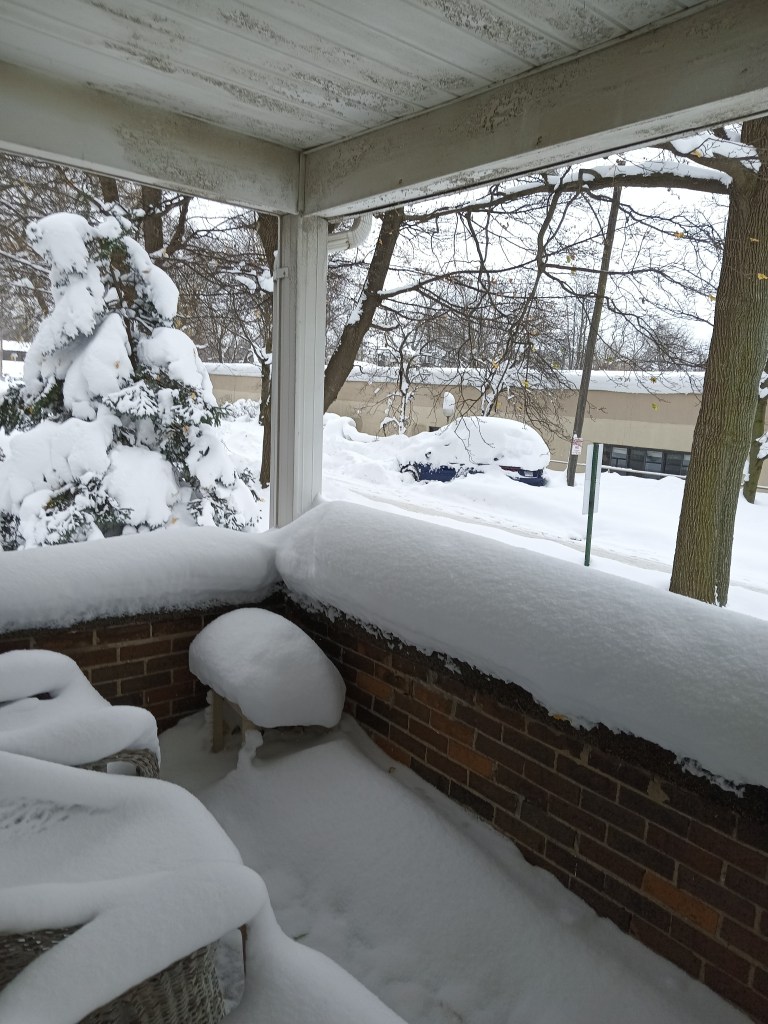
Our front porch.
The next two days I was off work. I didn’t leave the house on Saturday and on Sunday my neighbor took me to the store to get a few things. The snow continued to pile up. I binged on Netflix, worked on workbooks for One Life Project, texted with my friends, and watched Christmas movies with my husband. We watched the news to find that they declared a snow emergency for Erie and called in the National Guard. People were stranded on the major highways and warming centers were being put in place.
Monday it stopped snowing during the day, but the roads were bad. Buses were canceled so I called off work. I had no way of getting there. My dad traveled from Ripley NY, a half hour away for his treatment at the cancer center. Afterwards he tried to get our vehicle started with no luck. My parents took us back to Ripley with them and my dad lent us his pickup. It was nice to have a vehicle to drive, but since I’m short, getting into my dad’s pickup was like climbing a mountain. Getting out I had to slide off the edge of the seat until I reached the ground.
The next day my dad had our vehicle towed. On Wednesday he told us to bring our spare key fob because the one we were using was causing our car problems. That night we drove our car home. The next day when we tried to start it, it wouldn’t start again. We tried to go back in the house, but I had accidentally locked us out. I had a spare key for the back door. So once again, we went through our neighbor’s house to the back of the house. This time the snow was waist deep, and we had to use our neighbor’s shovel to remove snow from around the gate in order for me to squeeze through. I got in the house and let my husband in the front door. We called my dad and spent the rest of the day at home.
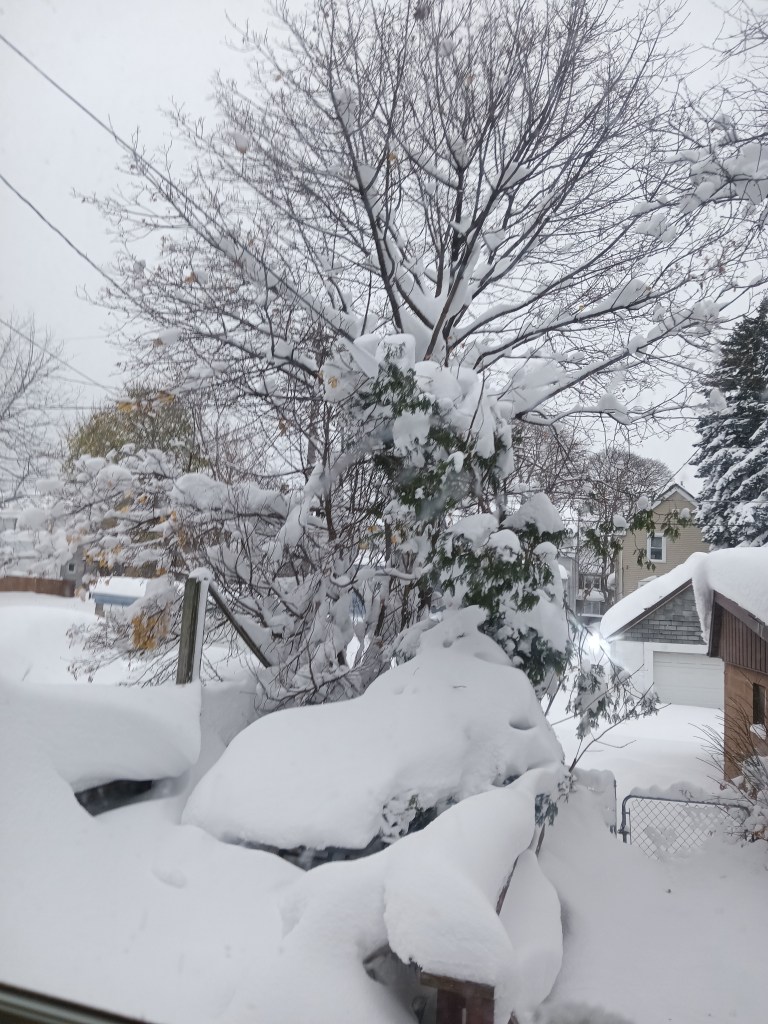
Our back yard and porch that I had to wade through
The next morning my parents came so my dad could check the battery in our car. The battery was dead. My dad dropped me off at work and went and got a battery. When my husband showed up for my break, I knew our SUV was running again.
For that whole week it snowed each night, adding to the snow total and back roads became narrower and narrower. The snowplows ran tirelessly, but there was no place to put the snow. By Tuesday the following week customers were starting to dig themselves out and were filling the aisles of the grocery stores. By Friday the news said we had a little over four feet of snow.
I could have gotten down and depressed with our situation, but instead I kept myself busy. I was stressed and frustrated with our car problems, but my dad, our hero, came to our rescue. We were in a bad situation, but as my friend Amy always says, “God will provide,” and he did. Each time I started to worry I texted a friend or found something to do. I kind of liked my two days off from work and away from reality. We were nice and warm in our home.
If you are feeling trapped by the winter weather and dealing with problems you can’t control, turn to your support system, find things to keep you busy, pamper yourself, and find ways to relax. Life throws us in a snowbank sometimes, and it’s up to us to dig ourselves out and to cope.
Next week they are predicting warmer temperatures and rain. We might be swimming our way around Erie. I stayed strong through our drama and because of that I am dancing in the light of recovery.
Stress causes physical and mental health problems such as stomach issues, weakened immune system, high blood pressure, tense muscles causing aches and pain, depression, and anxiety. We all deal with some type of stress in our lives, but when you have mental illness stress can make your illness worse. With mental illness minor things can stress you out and it can lead to self-injury, anxiety attacks, and suicide attempts.
The important thing is to know how to cope with stress so that you can reach towards the light of recovery or stay in the light of recovery. Here are some coping techniques I learned to deal with stress:
Identify your trigger. What types of things cause you to be stressed? Could it be dealing with family problems, could it be taking on too much responsibility, could it be making important decisions, or working long hours? List your triggers in a journal or on a sheet of paper. I keep a list of my triggers in my journal.
Reduce your to-do list. If you are doing too much, then cut your list down. See what is most important for you to complete, and leave the other things for another time. If work stresses you out, then determine if you need a different job or if you can reduce the number of hours you work. I work part time because working full time is too stressful for me and causes my anxiety to heighten.
Practice relaxation. Find something to do that relaxes you such as listening to music, deep breathing, trying yoga, practicing mindfulness, taking a bath, going for a walk, or doing a craft. Everyone has different ways or things they do that help them relax. Find something that works for you. I find woodburning, imagining lying on a beach, and deep breathing relaxing.
Turn to your support system. If you don’t have a support system, build one. Having friends and family that support you is very helpful with your mental illness and dealing with stress. If you’re feeling stressed, talk to someone in your support system, make plans to meet for lunch, send a text or invite them over. Leaning on others who can encourage you, listen to you, and who can help you see a different perspective will help you handle your feelings and stress better. When I’m stressed out, I lean on my husband and friends. My friend, Cheryl, and my husband always help me see things in a different way and find away to get me to laugh.
Ask for help. If you can’t deal with your stress on your own, consider going to therapy. A therapist can work with you on different coping techniques that will help you. If you are taking too much on, then ask a friend or family member to help you out. If you are making a decision that stresses you out ask someone to guide you with that decision. If you have too much to do, then ask a family member or friend to help you get it done. There is nothing wrong with asking for help. When I have problems with making a decision, I ask my husband for help, and when I have too much to do, I ask my husband to help me out.
Know your limits. Know how much you can handle before you get stressed out. Once you know your limits, stick to them. If a friend asks you to put together a baby shower for her and it pushes past your limits, kindly tell your friend you can’t do it. If working two jobs is too much, then just work one. If everyone is asking you to do something for them and it causes you stress, then only take on what you feel comfortable with and tell the others no. There is nothing wrong with limiting how much you do for your own wellbeing. I only do as much as I feel comfortable with. If it is more than I can handle, then I tell people no or I do less.
Take care of yourself. If you take care of your physical and mental health, you will be able to handle stress better. Get plenty of sleep, eat well, practice coping techniques, take your medicine, and pamper yourself when you need to. When I’m stressed it is easy to skip a meal or lose sleep by worrying too much. I try to journal out my worries before bed, and I make sure I eat three meals a day. If I’m worrying too much and can’t sleep, I talk to my husband, and he helps me talk things out so I can sleep.
Challenge your negative thoughts and practice positive thinking. If you’re thinking negative things, turn them into positive thoughts. Try to practice positive thinking to keep your spirits up. Bad thoughts only bring you down and make you feel hopeless. I journal out my negative thoughts and then change them to positive ones. When I’m negative, my husband reminds me to be positive. I notice when I focus on the positive, I feel better.
When stress starts to drag you down that dark hole, practice these coping techniques. Don’t let stress cause you physical health problems and worsen your mental health. You are important and it’s important to know how to take care of yourself by managing your stress with coping techniques. Sometimes there is stress in your life you just can’t avoid, but by coping with it you can handle it better.
By managing my stress, I relax in the light of recovery.
Cancer has affected almost everyone’s life in some way or another, whether it be a friend, co-worker, family member, or your own journey. Cancer likes to rear its ugly head and leave a wound or scar on the soul. It’s hard to face going through your own cancer and then face it again with a loved one. When you have depression and anxiety, facing hardships like this can deepen your illness or send you down that dark hole again.
When my grandpa got prostate cancer many years ago, they said he’d die of natural causes before he’d die of cancer. The sad thing is the cancer spread throughout his body and he struggled to the end. I kept breaking down so much when I went to see him in the hospital that I couldn’t go see him anymore.
Then when I learned I had breast cancer, my thoughts went back to my grandpa and I thought I was also going to die a miserable death, but I didn’t. I’m still here, proud to be a survivor.
I prayed cancer would never affect our family again, but it has. After a week long vacation, my husband and I came home to the news that my dad has bone cancer. I put on a brave face on for my parents, but when I got home, I broke down. I cried in Lou’s arms. Then in the days after the announcement, I went from okay to falling apart. It became a matter of waiting to see when they would start chemo and the next steps. I didn’t have to go through chemo when I had cancer, but there was a lot of dreaded waiting. Waiting to find out if I had the BRCA gene, waiting to find out what was next, and wondering what was going to happen to me. All those memories returned with my dad. The old emotions and fears resurfaced.
My dad is a handy man and a mechanic. He can fix almost anything. He fixes cars, lawn mowers, and even private airplanes. He has fixed and still fixes many of my vehicles. He does repairs around his own home, has helped remodel his church and has done repairs in my home. If he’s sitting down too long, he thinks he’s being lazy. He gives from the bottom of his heart to his family, friends, and strangers. I don’t always agree on his views, but I love him endlessly. Hearing he has bone cancer sent a knife deep in my heart.
My father has always been a healthy, active man even at seventy-four. Nothing kept him down. His oncologist said his cancer wasn’t life threatening, but they said something similar about Grandpa’s. I can’t bear the thought of losing my dad from a miserable struggle with this horrible disease. This troubled me greatly. I don’t want to lose my dad. I cried more tears in Lou’s arms.
Then my dad had to take a class about his treatment and start shots and chemo. My younger sister came to town to go to appointments with them. I was relieved but I felt guilty. I stress every six months when I go to the cancer center for my checkups, but going there for my dad seemed even more frightening. I just couldn’t do it, but I felt it was my responsibility. My older sister is struggling with health problems, and as the second oldest I should be at my parents’ side while my dad goes through his treatments, but emotionally I can’t handle it.
I remember making the decision to have a double mastectomy and then a full hysterectomy. I cried about it and agonized over it. Then there was the news that I would have to wait six months to do reconstruction and it would take several surgeries for it. I decided not to do reconstruction, and I had to learn to love myself as a woman without breasts. I felt like I was getting one let down one after another. My whole life was changing, and I fell into a depression. Those feelings came back as my dad faced his treatments.
When my sister told me the details of my dad’s treatments, I realized my dad’s life would be forever changed. His food had to be washed before being prepared, masks in public, washing his hands frequently, being susceptible to illnesses, and chemo every day. I felt that anguish inside me like the anguish I felt when I had cancer.
Then as we came closer to the beginning of his treatments, I began to worry obsessively how chemo would affect him. Would he no longer be that active and strong man I always knew? Would he get very sick? Would he need lots of extra care? The worries flooded me, and I felt the sadness of depression taking control. My muscles were tense, my stomach twisted, and the tears came expectantly. I struggled to sleep or even focus on everyday things.
When he made it through his first shots and chemo pill without many problems, I sighed with relief. Now I worry about him catching an illness and ending up in the hospital. I worry about my dad having more side effects from the chemo pill the longer he takes it. The worries flood my mind and I feel like I’m losing control of my illness. I feel the pain of my emotions searing throughout my soul. The tears, the endless worries, and my chest tightening has me struggling to hold on to the edge of my hole. I feel like I’m losing control, and I will be at the bottom of that hole again.
I remind myself this is just a rough time, and I can get back to the top of the hole again. I lean on my support system, I journal my feelings, and I plan to work on some woodburning projects and my next book. I talked to my psychiatrist about my struggles with my depression during this rough time, and he upped my medicine.
Rough times are part of recovery from mental illness and part of the struggle with this sickness. The important part of dealing with rough times is using coping techniques, leaning on your support team, and asking for extra help from your therapist or psychiatrist. There will always be bad things happening in our lives, threatening to make the struggle with or recovery from mental illness rougher, but the most important thing is how you handle it. Don’t let it destroy you or throw you down that hole again. You can get through life’s heartaches and still work towards recovery or stay in recovery.
My dad’s journey has just begun and what is to come is unknown. Our hopes are that he will reach recovery. My struggles with this rough time will take a lot of work and coping, but I will soon stand in the light of recovery again.
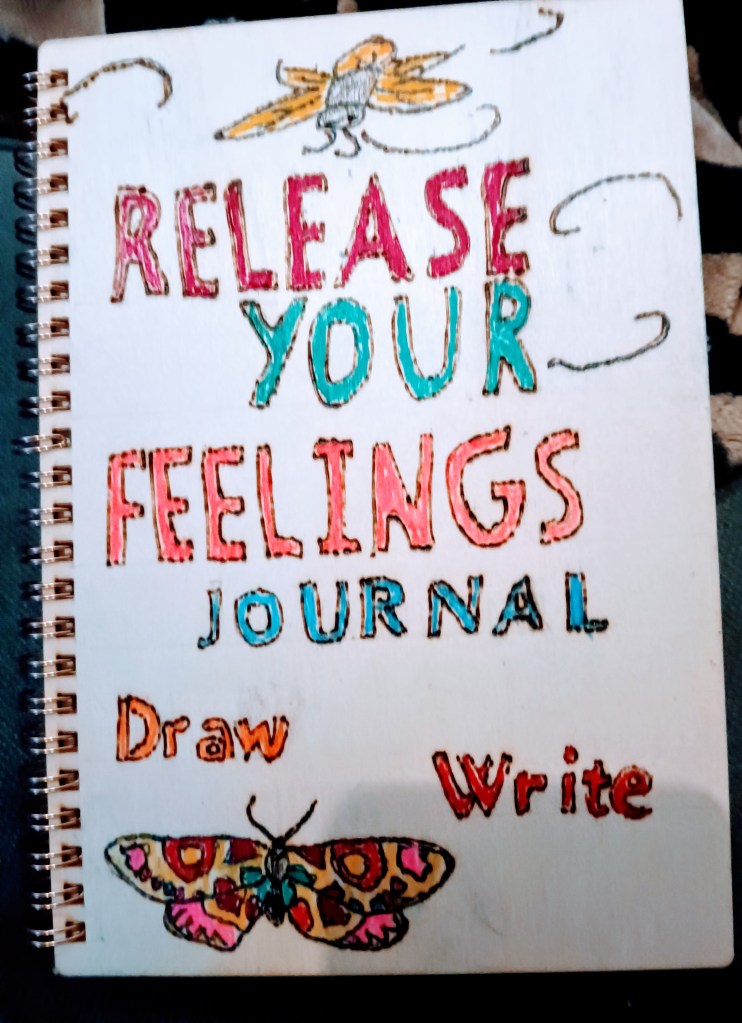
When struggling with mental illness, many are bombarded by racing thoughts, painful emotions, and an overload of feelings. Our thoughts trigger our emotions and feelings. Together they can cause physical problems such as achy shoulders, chest pain, upset stomach, and labored breathing. Often feelings become trapped within, causing anxiety, panic attacks, and unhealthy coping techniques like self-injury. A good way to release those feelings is to put them in a journal.
When I was in a mental health hospital, a friend brought me a journal and a pen. I began to journal every day. I poured out all my feelings on the pages. It felt like a weight was being lifted off my shoulders. When I got out of the hospital, I took my journal everywhere like a security blanket. I wrote in it at restaurants, on my break at work, sitting at a park, in my car, and other places.
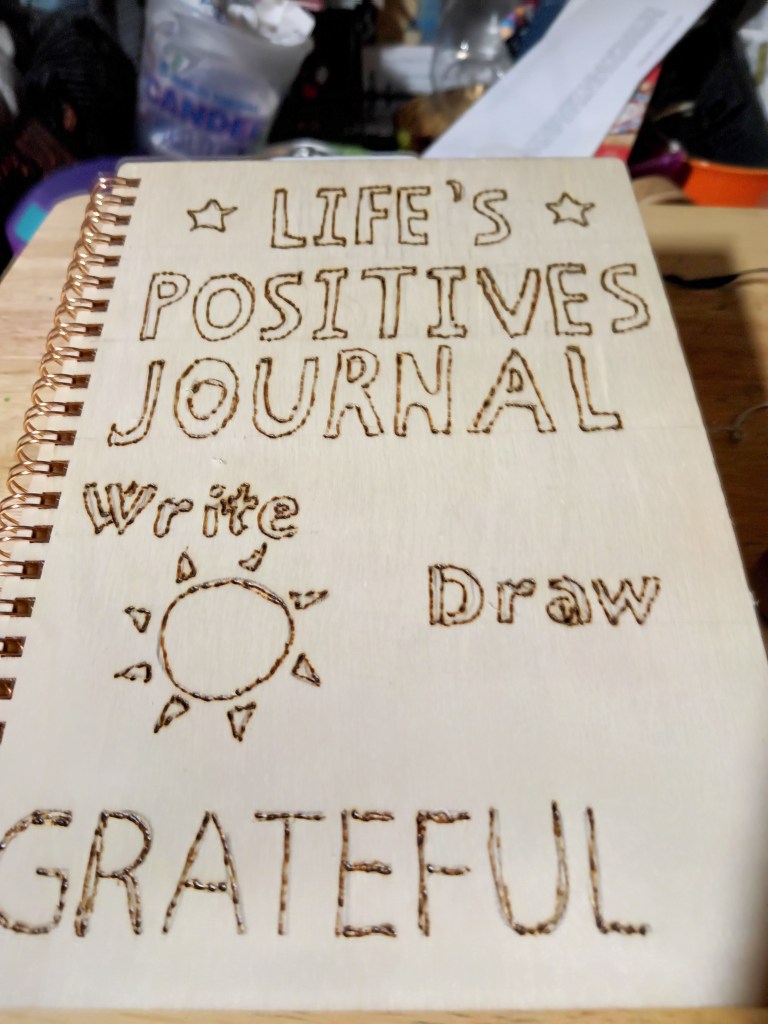
My therapist gave me assignments to write journal entries about certain things that were bothering me and then we would discuss them in our sessions. She used them to develop a plan on how to teach me coping techniques and to learn how to change my pattern of thinking. She even had me keep a separate journal to write positive things in each day. It was very hard to come up with things good about my life at that time, but I worked hard at it.
You might think, “I don’t know what to write in a journal,” “I’m not good at writing,” Or “I’d rather draw.” You can start by writing, “Today I feel..” and let your thoughts and feelings flow. You could even put an emotion down like “I am sad and that makes me feel…” You could write a letter to yourself or to someone who hurt you. The possibilities are endless.
The good thing about journals is that you don’t have to be a good writer and you don’t even have to be grammatically correct. You could even write so badly that you can’t read your own writing. Just write. No one is going to read it but you.
If you’re not good at putting your feelings in words but you like to draw, then draw pictures that portray your feelings. Get a journal with blank pages and fill it with your artwork. Express yourself with pencils, colored pencils, markers, or whatever works best for you. If you’re feeling like your world is falling apart, then put it into your drawings in your journal. Release your feelings in the way that works best for you, whether it be writing or drawing.
As I mentioned earlier, therapy my therapist had me keep a second journal where I wrote positive things about my day. At first it was very hard to come up with good things, but in time it got easier. If you decide to keep a separate positive journal, that’s fine. You could also write out your feelings in your journal and then add five positive things at the end of each entry.
You might be so far down in the hole of your mental illness that coming up with positive things seems impossible. Start small like “I got out of bed today” or “I took a shower.” For many with mental illness it’s a struggle just to get up and moving. Some find it takes a lot of energy just to take a shower. To accomplish these things is wonderful. As you work hard towards recovery, the positives become easier to come up with.
You can become creative with your journal, you can use stickers or pictures. You can cut out inspirational sayings from a magazine or news articles and put them in your journal. I have put obituaries for people I have lost and compliments from my customers in some of my journals. It’s your journal; you can put whatever you want in it and decorate it to your liking.
Journaling isn’t for everyone. If you’ve tried journaling and found it didn’t help you or you just couldn’t keep up with it, then investigate other ways of expressing your feelings like painting, playing a musical instrument, singing, or walking. Don’t keep your feelings inside you. They only cause more harm when you let them fester and build up with no release.
For me journaling has become a healthy coping technique. I no longer carry my journal with me everywhere and I don’t journal every day, but it still gets me through rough days. When I’m going through a hard time, I sit and journal. I not only put my feelings in it, but I problem solve, I brainstorm story ideas, and so much more. That’s how I came up with these blog posts. Journals can have several purposes. So, use your journal in whatever way works best for you.
Because I release my feelings in my journals, the light of recovery fills me.
With the holidays come stress, anxiety, and depression. For many with mental illness the holidays are a very rough time of year bringing many expectations. We are often put out of our comfort zone, we feel lonely, we expect more out of ourselves than we can do, and so on. Many with mental illness find themselves falling deeper into that hole while others are celebrating and having fun.
How do we cope with the holidays? How do we make it through Christmas without having a breakdown? The answer to these questions is to use coping techniques. Below are a few coping techniques that may help you.
Coping techniques:
Don’t overexert yourself. If your house isn’t sparkling clean, that’s okay. People do not come to see your home, but to see you. Do the best you can and let it be. If cooking a whole meal is too much for you, ask others to bring a dish or get one of those already cooked meals from a restaurant or store. Doing more than you are able to do can deepen your illness.
Do something special for a loved one you lost. Holidays are hard when you have lost a loved one. Do something special in remembrance of your loved one like light a candle, make his or her favorite dish, put a stocking up for him or her, go to a service for those who lost loved ones, and so on. Make their memory a special part of your holiday.
It’s okay to say no. If you are feeling overwhelmed by large crowds and your friends want you to go to a party, it’s okay to say no. Don’t punish yourself for saying no. Ask your friend to do something with just the two of you. If your family wants you to make Christmas dinner and it’s too much stress and anxiety for you to handle, it’s okay to say no.
Take care of yourself. If you’re feeling down because of the holidays, make it a point to get up in the morning, be sure to eat, and take a shower. Get out of bed and find something to do that is relaxing to you like a craft, adult coloring book, or crossword puzzles. If you feel overwhelmed, take a relaxing bath, or play your favorite music. Don’t forget to take your medication.
Don’t isolate yourself. If being alone triggers your illness and makes it worse, then find a friend or family member who can visit you or you can visit. Don’t dodge phone calls from your family and friends. Make extra therapy appointments. Try treating yourself to a movie or a Christmas show. Don’t hide in your home or room, sinking deeper and deeper down the hole. If you need to call a crisis hotline, call it.
Lean on your support team. Your support team should be friends and family members whom you’ve educated about your illness. They are there for you to lean on. Confide in them and listen to their advice. Don’t worry about ruining their holidays or being a burden. You chose them to help you for a reason so call, text, or visit them.
Keep a budget. Gifts and dinner supplies along with your normal bills are expensive. Decide on a budget for your holiday supplies and gifts and don’t go over it. It’s not how much you spend that counts; it’s the love that goes into it that’s important. It’s okay to buy cheaper gifts or to even make your own gifts. Going broke buying the best and most popular gifts and supplies isn’t wise if you can’t afford it. Adding to credit card bills, skipping household bills, and going without essentials to buy gifts only increases stress, anxiety, and depression. Keeping to a budget you can afford will help you feel better.
Be proud of the small steps. If you overcome your depression to get out of bed, pat yourself on the back. If you went out of the house, even if it was to put a Christmas card in the neighbor’s mailbox, be proud of yourself. If you take a shower, be proud of yourself. If you went online and bought a loved one a Christmas gift, pat yourself on the back. Small steps are important ones. Don’t shrug them off; be happy that you were able to accomplish them and celebrate them.
If you have no family, still celebrate. If your family lives far away or you have no, one don’t sit alone and dwell on being by yourself. Many places offer free meals and restaurants serve holiday meals; take part in those. Have your own celebration and invite a lonely neighbor or co-worker. Remember the reason for the holiday and celebrate that.
Holidays are supposed to be a joyous time of year. With commercialism we put too much into things we buy, and this can cause mental illness to worsen. Follow some of these coping techniques and talk to your therapist about other techniques to help you get through the holidays.
The holidays increase my stress and anxiety, but by practicing coping techniques I can find the joy in them. Finding the joy in the holidays helps me celebrate in God’s gifts and the light of recovery.








 aimeeeddy.com