MENTAL HEALTH COMES FIRST

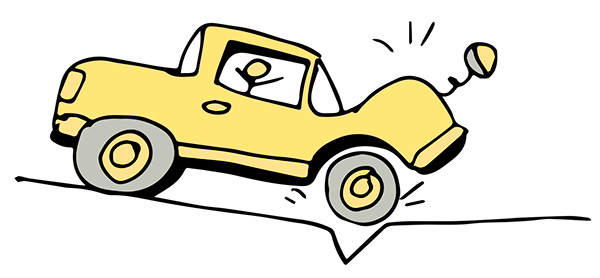
When I started my second book a year ago, my writers group told me the second book would be easier to write, and I would finish it sooner because now I know how to write a book. What no one could have predicted was life taking me down many bumpy roads. When I think things are going smoother, a big pothole forms and I must find my way around it. Luckily, I have lots of coping skills that help me stay above the potholes.

The road of life first started getting bumpy when my husband’s job started remodeling, and my husband got laid off. It went downhill from there. The potholes and bumps started getting bigger. He returned to work and put his back out of place, missing work. Then there were other health problems. Then he lost his job of thirty-four years. After that the potholes got deeper, and the bumps grew higher. I struggled to swerve around and climb over them. Writing my book started to trail behind me.

Then my dad got pneumonia and came very close to dying. At the same time my sister struggled with her vision. My sister needed someone to assist her in getting help. I took it upon myself to get her into a retina research doctor. My husband and I travel forty-five minutes to pick her up and then back again to take her to the doctor. Sometimes she spends the night at our house, which I enjoy.

I have been working hard to assist her in getting the help she needs. Since she lives in another state than the retina doctor we have to find her the specialist and tests the retina doctor, recommends in her state, so her insurance will pay. This has been a headache. I am trying to do my best to help her but the bumps in the road keep getting higher.

My husband got an illness that gave him no choice but to retire. He can no longer drive. I’m trying to be very supportive and comforting. He has been struggling to accept his diagnosis and accept having his freedom taken away from him. I’ve been trying to help him find a hobby and I give him things he can do while I’m at work. I take him for rides after work to get him out of the house. His illness has been very tough on him and hard on me. I’m climbing the bumps and swerving around the potholes the best I can.

Even though my dad has gotten better, he’s been struggling with bone cancer and chemo. April 9 he was admitted into Cleveland Clinic for a procedure that will hopefully put him into deep remission. He came home a week ago, but he is still recovering. He is weak and has some side effects from the procedure. The doctor says he will improve each day. I’m trying not to worry too much and be supportive. The potholes dare me to fall in, but I veer around them.

All these bumps in the road caused the potholes to only get deeper. I teetered on the edge coming close to falling in. My emotions have been strong, and I record them in my journal. The problem is my writing was left back down the road, always stuck in a rut. I can pour out my thoughts in these blog posts, but I can’t go back to reliving the pain of the past to write my book.

My second memoir, like my first, involves writing about some deep emotions and about very painful times in my life. It’s very hard to write about this when I’m climbing over the bumps and working to avoid the potholes in my present life. I can’t risk falling into the holes by adding the pain of the past with the bumpy roads of the present. So, I have not been working on my book. I’ve taken it out of the rut, and I’m allowing it to sit beside the road until things get better or when I feel like I can handle working on it again. Right now, my focus is on my family and taking care of my mental health. I will finish my book, but it must be when I’m sure I can handle reliving the past. Falling down a hole of any type is not an option. I can’t go in that direction again.

Life always has bumpy roads and big potholes, but you are strong. You can make it over the bumps and around the potholes. When things get tough, remember to use your coping techniques and make sure your mental health takes priority. If you have to leave things lingering on the side of the road while you’re avoiding the potholes, that’s okay. Your mental illness must come first.

Despite everything going on in my life, I have been using coping techniques I have learned, and I think I’m doing well. I’m very proud of how well I am handling everything. Coping helps me stand above the potholes and in the light of recovery.

FINDING NEW STRENGTH

Life’s tribulations tug

Me in different directions

Loved ones need me

I must be strong for them

In new shoes I stand

No longer the one

In need of extra support

Now the one standing tall

With new strength

Tears shed

Shoulders droop

Yet I stand tall

I do not crumble

I do not fall

I do not hide

I balance the challenges

I stand tall

With new strength

In the light

Of recovery

TIPS FOR MANAGING STRESS

Life is stressful and some things that happen in our lives heighten our stress. Stress can lead to anxiety, depression, and lack of sleep. Knowing how to manage your stress will help you handle it in healthy ways.

I’m not very good at handling stress. I become overwhelmed and end up having anxiety attacks. Right now, my life is very stressful with my husband being sick, my dad having bone cancer, and my older sister being vision-impaired. I have been helping my sister find help for her vision problems by taking her to specialists. Now my husband is sick I need to do extra things to help him out. With his illness I’m trying to figure out what all I need to do to prepare for when his illness gets worse. I’m also trying to help him cope with his diagnosis and keep him active. It’s a lot. I feel more anxious.

I did some research and came up with some stress management tips.

  • Know your triggers. Know what things in your life cause you extra stress and work on ways to manage them. List the things in your life that cause you stress like money, death, divorce, illnesses, homework, school, college, and so on. Finances are a big trigger for me and right now we’re struggling financially. I’m doing my best to deal with the anxiety this stressor causes. I’m looking for financial help and cutting things we can do without from our budget.
  • Practice relaxation techniques. If you’re feeling stressed out, do deep breathing, listen to soft music, do guided imagery, meditation, and so on. Find which technique works best for you. I do deep breathing and guided imagery.
  • Set boundaries. Learn to say no. You can only do so much, and when you have a lot to do, it’s okay to say no when someone asks you to do something extra. Know how much you can handle and stay firm on not going over that limit. I know I have a lot going on right now, so if someone were to ask for my help with something else, I know to nicely say no.
  • Reduce your workload. If you have a lot of things to do and it’s stressing you out, see how you can reduce that. If you’re running a club, doing choir on the weekend, and volunteering three times a week, and you feel overwhelmed, then see what you can cut or do less of. I work part-time because working full-time causes me extra stress, which causes anxiety and depression.
  • Lean on your support team. If you are really struggling and feeling stressed out, turn to your support team. Talk to them about what is going on in your life.  They may have some good advice and encouraging words for you. Right now, with everything going on in my life, I am leaning on my support team a lot. They remind me to slow down and take one day at a time.
  • Take breaks. If you have a lot of things to do at once, find time to take breaks. My days off are when we plan errands and appointments. Doing a lot of running around gets stressful. My husband and I plan breaks in between our errands. We go for a ride around the peninsula in our city or go down to the dock.
  • Take care of yourself. When life gets stressful, you must remember to take care of your needs. Make sure you eat regularly, make time to sleep, do a craft you like, and make sure you are taking care of your health. While helping my husband cope with his illness, I’m making sure I’m managing my mental health. I take my medication, I use coping techniques, and I lean on my support team.
  • Look for professional help. If things become too much for you to handle, there is no shame in seeking professional help. A good therapist can help you find coping techniques and work through the things that cause you stress. Right no I’m handling the stress in my life well, but I know when things get worse to look for a therapist. I see a psychiatrist and I keep him informed on how I’m doing so he can properly manage my medication.

If you are dealing with a lot of stress in your life, try these tips. Managing stress effectively can help you avoid becoming anxious and depressed. It can also ease tension and help you maintain a healthy mental and physical wellbeing.

I’m working on managing my stress, and doing so helps me stay in the light of recovery.

THROWN FOR A LOOP

Sometimes life throws us the unexpected, and we find ourselves overwhelmed with a flood of emotions. We try to wrap our minds around the situation: a sudden death, an unexpected illness, or something bad happening to a loved one. The unexpected throws us for a loop, and we are left asking how to cope? How do we process these emotions? What do we do next?

My husband has been my rock. He went to therapy with me while we were dating to learn how to manage my mental illness, and he handles it well. He’s taken care of me during many surgeries. He has emptied drains, changed bandages, emptied a potty chair, lifted me up to a walker, and pushed me in a wheelchair without any complaints. He even cried with me when I found out I had breast cancer. He’s sat in the waiting room for hours during my surgeries and tests. He comforted me when I grieved the loss of my breasts and cried because I got an infection in a surgery site. He has held me during emotional break downs when I have had bad days with my mental illness and continuously reminds me to be positive.

This Wednesday we found out Lou has a serious illness (he asked me not to tell what the illness is) that will get worse in time. We sat in the doctor’s office while he gave us results of a test Lou went through. Lou sat quietly with a sad look on his face and my heart broke. There is no cure. The doctor talked and I struggled to fight my tears. I tried to think of questions to ask. I managed to ask a few, but I felt like I needed to ask more, but my mind went blank. Lou sat in shock, unable to speak at all.

Our lives are about to change dramatically, especially Lou’s. He must give up his hope to find a job and his ability to drive. He is faced with a disease that will only get worse in time. I can’t imagine what it is like for him. I understand a little bit. When I was diagnosed with breast cancer, I was shocked, sad, and overwhelmed. I thought I was going to lose my hair and get extremely sick and die. Luckily I was in the early stages and a surgery got rid of my cancer. For Lou there is no surgery to take away his illness. There’s medication that can slow it down, but nothing to take it away.

He is feeling devastated, sad, and angry. He feels like his life is over. I find myself in a new position. I must be strong for him. There is no time for me to fall apart. Lou needs to lean on me, and he needs me to help him through this. I have to schedule his appointments, I have to make plans for future care for him, and I have to make sure I get time off work for his appointments. I have to do what is needed to protect my job in case I have to call off to take care of him. There is so much to do and to prepare for.

I want to lie in bed for a day and just cry, but I can’t. My husband needs me. Lou filed for early retirement, but our plans were for him to work part time to help with finances and to get him out of the house. Now he’s not going to be able to work at all. With my paycheck and his early retirement, we won’t have enough money to pay all our bills. I’m looking into financial assistance and ways to reduce some of our bills. I’m overwhelmed.

I feel sad. I wanted my husband to enjoy his retirement and work a part time job he would love. I can’t believe the love of my life, my rock, and my soulmate has to go through such a horrible sickness. It’s unfair. He deserves better. Am I strong enough to help him through this? Will I be able to manage his illness? Should I go back to therapy? When he gets really bad, will I be able to handle it without falling apart? I’m not used to being a caregiver. Can I do it?

I keep hearing the horrible things that can happen with his illness. I’m told in time I will have my hands full. Even TV shows portray the worst side of Lou’s illness. I just want someone to tell me that everything is going to be okay, and no matter what happens I will be able to handle it. I don’t want to think about the worst side of this illness, not now. I want someone to hold me and tell me to go ahead and let the tears flow. I need a few minutes to stop being strong. I want this to be just a bad dream.

If this happened several years ago, I would not have been able to be strong. I would have fallen apart and not been able to be there for my husband. I have come a long way. I know that I need to take one day at a time. I need to practice coping techniques to keep myself going. I need to lean on my support system. I need to go to therapy when things get harder. I need to practice self-care. It’s important to handle my mental health and to take care of myself as I take care of Lou. It’s important that I look into extra help options early so I will be prepared for when things get worse.

When you reach recovery from mental illness, it’s important to always manage your illness especially during the rough times. You can manage the unexpected as long as you remember to take care of yourself also. Don’t be afraid to go to therapy for extra support or to join support groups. Even though you must be strong, you are allowed time to fall apart as long as you pick yourself up.

My life is changing dramatically, but despite my mental illness I know I can handle it. I know when and how to ask for help. I’m taking one day at a time while I lean on the shoulders of my support team in the light of recovery.

CHILDHOOD MENTAL ILLNESS

    Mental illness knows no boundaries. It doesn’t pick a certain age group. Even children struggle with this serious sickness. Many children suffer in silence, afraid to tell parents, guardians, and teachers what’s happening within them. They may not even understand what is wrong. It’s a horrible struggle to face alone, but unfortunately many of our children feel they have no other choice.

     I never really realized how young I was when I started struggling with mental illness until I started writing my memoir. To write my book, I had to retrace and relive my childhood. Back then I didn’t know what mental illness was. My mom told me my grandmother, her mom, struggled with mental health problems, but I had little understanding of what that meant. I just knew she was sick and spent some time in hospitals. She came to visit once and a while, but I was young and only have a few memories of her.

     My mom told me I was a happy child until I started going to school. Some of that sadness was caused by serve bullying, and I believe that bullying triggered my illness. Many things can trigger such a sickness like abuse, tragedy, loss, poor living conditions, bullying, and so on. Bullying was my trigger. The bullying started in first grade and in my memoir, I could retrace the start of it.

     It was then I began to lose self-esteem. I couldn’t defend myself against the names I was called. I began to question if the things I was called were true or not. I felt a sadness, but it wasn’t overpowering. As the school years went on, my illness progressed. At night I struggled to sleep and when I did, I had nightmares. I started to put myself down internally and I began to hate myself. I broke out in angry fits. I would get into fights with my siblings, I would scream, cry, and throw things. Then I started pulling my hair to ease my pain inside. The hair pulling turned to punching a wall and pinching my skin.

     I knew there was a deep sadness in me and that I had emotions I couldn’t control, but I had no way of explaining it. My parents were and are very loving people. Dad worked long hours at the family garage and Mom worked hard taking care of four children and our home. They didn’t have much money, but they showered us with love. So, if I had such wonderful parents, why didn’t I turn to them? How could I tell them I was falling apart inside when I couldn’t comprehend it?

     I was afraid they wouldn’t understand. How could they when I didn’t even know what was happening? It seemed like a burden I was cursed to carry on my own. My parents thought I had a bad temper. I thought they were right, but when I broke out into those angry bursts it was like I lost all control of myself. There was no explanation for that other than I had pent up anger to let out from the kids teasing me at school. I argued with my parents and little things set me off into a fury. My parents and siblings suffered the wrath of my unexplainable temper-tantrums. My parents were at their wits’ end trying to figure out how to help me control my anger. It wasn’t until I was hospitalized as an adult that I learned the angry fits were emotional episodes caused by Borderline Personality Disorder.

     In eighth grade I felt the saddest I had ever felt. I thought I was having a nervous breakdown. I buried my depression in studying. The racing thoughts were nonstop. I tried to quiet them, but they were too powerful. They tore me apart inside. A misunderstanding from my Special Education teachers sent me to the school counselor. Talking to him each week got me through that rough time. I was able to cope a little better.

     It wasn’t until I hit rock bottom in college that I finally confided in my parents. I had started cutting myself, I planned my death, and began to try to take my life. When my mom found out what was happening, she went out of her way to find me help. As an adult I was diagnosed with depression, anxiety, self-injury, and Borderline Personality disorder.

     I struggle with worries of how my parents will handle my memoir. Will they feel guilty for not knowing? Will they be crushed when they realize how I suffered in silence? Will they be hurt because I didn’t turn to them? I think the important message I want them to get from my book is that their love and the love of other family members was what kept me going.

     Childhood mental illness is serious. It’s important to educate parents and children about the symptoms and signs. It’s important we tell our children that it’s okay to talk about things that’s happening to them which they don’t understand.

If you’re a child suffering, don’t be afraid to tell someone. Don’t suffer in silence. This sickness is a heavy burden you can’t carry on your own. Tell a parent, a relative, a guardian, or a teacher. That way they can get you help. I wish I would have confided in my parents. Maybe if I did, I wouldn’t have fought this sickness for so long. Maybe I could have reached recovery sooner. Maybe I wouldn’t have hit rock bottom and became suicidal. Speak out. If you must put it in a note or draw a picture, then do that.

I can’t live in regret for keeping my illness a secret from when I was a kid. There are a lot of “what if’s,” but instead of wondering, I decided to help others with my memoir. Writing my memoir helped me and I’m sure will help others. Helping others through my writing will guide many children to the light and also keep me standing strong in the light of recovery,

WINTER BLUES

This winter has been hard on everyone, even those in the south. Everyone is done with the snow, cold temperatures, and gloomy days especially those with seasonal depression and mental illness. It’s hard to see past long days, shoveling snow, and bitter cold. Even people without mental health problems are struggling. We have had mild winters for a few years and gotten spoiled. How do we look past the gloom of winter?

When I was a kid, I used to play outside until my hands were numb and I couldn’t feel my face. We built snowmen, made snow angels, and went sledding. Winter was fun. Now as an adult I wonder how I ever I liked winter. Now there is shoveling, scraping ice off windshield, layers of clothing, boots, and dark at five PM. I go to work while it’s gray and return home when it’s dark out. My spirits take a dip.

This winter has especially been hard. Right after Thanksgiving, we were buried with five feet of snow. Everyone was digging themselves out and many couldn’t leave their homes. Then last week we got an arctic blast with below zero temperatures. Plus, it just keeps snowing. I hear my customers complain about the winter each day and say they can’t wait until spring. I even feel the winter blues. I want to leave the house without a coat and gloves. I long to wear shorts and tank tops. I can’t wait until days stay light until nine and I feel more energetic after work. How do we cope with the winter blues?

For me the best way of dealing with the blues is looking for something positive about winter. Below are five positives I found about winter.

  • When the snow is new, it’s pretty. When we get a fresh coat of snow, it’s pure white and glitters when the sun peeks out. Staring out at it from inside with a cup of hot chocolate is peaceful.
  • Snow is better than other natural disasters. With snow we still have our warm homes and belongings to go back to. In some parts of the world people are losing everything to tornadoes, hurricanes and fires. We are lucky to have just snow.
  • A snow day is a good time to spend the day in pj’s. On bad days, when you can’t get out of the house, it’s a good time to wear your pj’s all day and binge on Netflix or movies.
  • Winter is a good time for hot comfort foods. This time of year is perfect for chili, homemade soups, and baked goods. Who doesn’t like chili or soup on a cold day? Baking helps warm up the house and smells good.
  • It’s never too cold for ice cream. The best part of eating ice cream in the winter is being able to keep warm while eating it. It could be negative ten degrees out and you can sit in your warm home snuggled up in blankets and eat a bowl of ice cream.

Can you come up with your own positives about winter? Sit down with a journal or piece of paper and list five things you think are positive about this time of year. Write five positives each day. Remember while you are struggling with the winter blues to take care of yourself. If you are dealing with seasonal depression and other mental illnesses, remember to use coping techniques, take your medication, and talk with a therapist when needed. I use my coping techniques, journaling my positives, and my support system to get through this tough winter. Finding the positives helps me dance in the

ALL-OR-NOTHING THINKING

This week I’m posting an old post because I have been struggling with a sinus infection. I hope to write a new post next week.

Last week I wrote about the cognitive distortion called catastrophizing, and this week I would like to write about another many struggle with, including me. It’s called All-Or-Nothing Thinking. It is seeing your personal qualities such as your success or mistakes in black and white. Like if a student in school got two questions on a test wrong, that student would automatically see himself or herself as a failure. The student wouldn’t be able to celebrate his or her got a passing grade. Instead, the person would only see the situation in extreme black and white or in a negative viewpoint.

I developed all-or-nothing thinking in high school. In school I became obsessed with passing and proving to everyone I wasn’t stupid. I pushed myself to succeed at all costs. I spent hours finding ways around my learning disability to study for tests. I had a hard time remembering what I read, I was a slow reader, and I couldn’t keep up with the notes in class. So, I had to make notes from my textbook and put them on index cards. I read them over and over for hours to remember them. I had to pass all my classes no matter what. A low grade was unacceptable to me.

If I didn’t get an A on a test, I saw myself as a failure. I pushed myself hard. I gave up time with my family and had fits of anger when I couldn’t remember things well enough. If I didn’t pass with high grades, then everyone would be right about me. I would be the stupid, loser they all said I was.

This type of thinking followed me into my adult years. I had my future planned when I started college. I was going attend a two-year college to get a degree in journalism, then go on to a four-year college and become a journalist. College was much harder than I thought. Because of my disability, I couldn’t meet the requirements for a journalism degree and instead I got a humanities degree. Then mental illness and my disability made completing college difficult. It took me four years to graduate from a two-year college. My plans were destroyed.

For years I viewed myself as a failure for not being able to go on to a four-year college. I became a cashier, not a journalist. I was a worthless loser who proved that I was good for nothing. I didn’t succeed at my dreams. I let myself down. I dwelled on what I didn’t accomplish instead of what I did succeed at.

For years and even now I tell people I have a journalism degree when I have a humanities degree. I’m ashamed of myself for not getting the degree I wanted. A humanities degree is a basic degree that doesn’t really amount to much. I wasn’t good enough to get a journalism degree. I failed. I was and am a looser. I can’t admit to peoples’ faces that I am a worthless failure. If I tell people the truth, they will look down on me like they did in school. I’m just a cashier not a journalist like I planned.

Repeatedly I tell people I have a journalism degree and I am working as a cashier because I couldn’t get a job as a journalist. I couldn’t see past what I couldn’t do to what I have done. Right now, while I write this, I see myself in another light. For so long I have viewed my life as black and white, but now there is color in my life.

I didn’t fail when I got a humanities degree and became a cashier. I worked around my learning disability to be a cashier, I have written a book, I have a small woodburning business, and I have kept the same job for 26 years despite many illnesses. I didn’t get the degree I wanted, but I continued to pursue my writing. I didn’t go on to a four-year college, but I have touched many lives as a cashier. I have customers who have been coming to me for years. I advocate against bullying and for mental illness awareness through my writing. For so long I felt I had failed when I have succeeded.

It’s so easy to strive for perfection and when you don’t quite make it you look at yourself as a failure. It’s hard to see the small things we do in our lives as successes. We want to be on top, but often the best we have done is distorted into all-or-nothing thinking. We fail to see and celebrate the small accomplishments we make in our life. Instead, we see ourselves as losers when we are winners. All-or-nothing thinking clouds our minds and keeps us from celebrating the positive.

When you think you have failed or are a loser, take another look at the situation. Even though you didn’t get that promotion, look at how far you have come to get to where you are now, and celebrate that. Look for the positive. Write it down and celebrate it. Rejoice that you got a B on a test instead of seeing yourself as a failure. Be proud of that speech you gave, even though you stumbled over a few words. Stand with pride for the job you are working even though it’s not the one you wanted.

I’m standing in the light of recovery admitting I have a humanities degree and rejoicing in the success I am today.

BULLYING WARNING SIGNS

Bullying is a big problem affecting people all around us, especially our children. Children are acting out violently, going into depression, and are even taking their lives because they are abused daily at school by their peers. Many children feel alone and unable to turn to others for help. They often struggle in silence. If you’re a parent or family member, it’s important to know the warning signs of bullying.

Below is a list I found on StopBullying.gov  of the warning signs for the adults in a child’s life to look out for. You know that old saying, “It takes a village to raise a child,” is true. Not only do the parents of children need to look out for the warning signs, but so do the other adults in their lives like aunts, uncles, grandparents, family friends, and so on.

Here is the list:

  • Lost or destroyed belongings such as electronics, clothing, jewelry, and others
  • Trouble sleeping or frequent nightmares
  • Declining grades, loss of interest in schoolwork or not wanting to go to school
  • Sudden loss of friends or avoidance of social activities
  • Feelings of helplessness, hopelessness, or decreased self-esteem
  • Self-destructive behaviors such as running away, self-harm, or talking about suicide

If you notice any of these signs in your children or children in your life, find them help. Talk to their teachers, guidance counselor, or principal, and if none of them listen to you, go to the school board. It’s important to encourage your children to talk to you, be willing to listen, and look into getting therapy for them. If you can’t afford a therapist, there are government funded programs that will get you help for a low price or for free.

When I was being bullied, the biggest mistake I made was to keep what was happening to myself. I suffered in silence and it led me down a dark road. If you’re being bullied, talk to someone you trust such as a parent, a family member, a teacher, a guidance counselor, or other trusted adult. You can’t rise above bullying without help. Don’t suffer alone.

It’s important that we all spread the message that bullying is a form of abuse and it needs to stop. Since my book, Escape to the Garage: Family Love Overcomes Bullying, has been published, it has been my goal to speak up for those who can’t speak up for themselves. Spreading my message is helping me stand strong in the light of recovery.

CHRISTMAS JOY

A holiday, especially at Christmas, can be a very hard time for people. There are the stresses of buying gifts, preparing a meal, family get-togethers, and family drama. Some people are struggling with grief, mental illness, and loneliness. All these can make Christmas seem unbearable. How do you make it through the holidays if you’re struggling with these things? Do you lie in bed and ignore the holidays?

I used to find the holidays unbearable. I had loving parents and grandparents, but I felt alone. I was struggling with depression and didn’t know it. While everyone was excited about Christmas, I was dying inside. Everything seemed dark and hopeless. I couldn’t find the Christmas spirit. Instead of smiling and laughing with my siblings, I was grumpy and easily got mad or irritated. I’d lash out in anger when someone was just joking with me. I was a miserable person to be around. My parents couldn’t understand why I hated holidays. I even felt like I was alone among family at my grandparents. I wanted to hide from everyone.

When I got older and started going to therapy, I learned to cope with the holidays. I learned to find the positive side to holidays. I learned Christmas isn’t about the material gifts, but gifts from the heart. As a teen I woodburned gifts for my parents and grandparents. Even now that I’m an adult I woodburn gifts for friends and family. If I feel alone among family, I find one person I can confide in and talk to. When I feel hopeless, I list the things I’m grateful for. When I feel depressed, I journal out my feelings or turn to my support system.

This year I have been teetering on the edge of the hole of depression. 2024 has been rough and we have been struggling financially. I’ve been trying to help my husband find a job. I keep myself busy by wooodburing gifts, I‘ve been leaning on my support system and listing the positive things in my life. Unemployment claims my husband is working when he’s actually not and has paused his unemployment benefits until further review. We are pinching pennies, and everything seems hopeless but it’s not. Many positive things have happened: My parents help us when they can; a co-worker is gave us half a ham and we got a lot of food from the food bank. We even had some extra canned foods to give to an elderly lady in our neighborhood. We also received a check from one of my customers, and we used it to get each other a few gifts. We’re also blessed to have have a warm home.

I love it when my husband spoils me with gifts and I love to spoil him too, but we can’t do much of that this year. Christmas isn’t about celebrating with family, buying gifts, or eating big meals. Christmas is about the gift God gave us, his Son. We don’t need money to celebrate Jesus’s birthday. We just need to have the Holy Spirit in our hearts and love of Jesus and God in our souls. Money can’t buy that. If you have those then you don’t need family, gifts or food to enjoy Christmas.

You can share the love of God by smiling, saying a kind word, giving a hug, or dressing for the season. I dress up in holiday shirts and hats at work. I have one hat with Santa’s feet at the top like Santa got caught in a chimney on my head. It puts a smile on my customers’ faces, some giggle and it eases the stress of holiday shopping. I smile with the love of God in me and my customers love that. When you give a gift from the heart, then you are giving the true gift of Christmas. God gave us the gift of his Son, from his heart.

If you’re struggling this Christmas, find ways to cope, leave family get togethers when they become too much, or list memories of your loved one. If you’re alone, celebrate Jesus’s birthday by lighting a candle and eating something special. Find the joy of Christmas in your soul by thanking God for his gift by giving a gift from the heart. A few customers told me they had no family so Christmas is just another day, but it’s not. It’s a special day and you can celebrate without family. You can pray to God, sing “Happy Birthday” to Jesus, make a special meal for yourself, or find a place offering Christmas dinners to go eat.

Despite a rough year and lots of stress, I’m celebrating Christmas with a smile on my face and God in my soul. This Christmas my soul will shine bright in God’s love while I celebrate in the light of recovery. Merry Christmas!!!

SNOWAGEDDON AND DRAMA

Living by one of the great lakes, Lake Erie, makes weather in Erie PA and the regions nearby unpredictable. In 2017 we had nearly five feet of snow dumped on us on Christmas day, and my husband and I were stranded over night at my parents. Over the past few years, we have been lucky and had mild winters. I hoped this year would be easy too, but the unpredictable lake had other plans for us.

Thanksgiving Day was a clear and calm day. Then I woke up Friday morning to snow falling like God was dumping it from heaven in truck loads. My husband, Lou, was supposed to have an interview that afternoon. He drove me to work in slim visibility. I told him not to go to the interview and try to call them instead. I started work while he attempted to call, but he just got an answering machine. He then left to go home. I cashed out customers and Lou came to me upset. The vehicle would not start, and alarms were going off.

I handed a customer a bag of groceries and turned to my husband. “Maybe the steering wheel is locked. Try moving it around.”

For an hour Lou was in and out of the store trying everything he could think of to get our SUV to start. He came to me upset and soaked. Since I was working, I couldn’t help him. I told him to stay inside and dry off in the café until I got my break. When I got my break, we both went out to our SUV. This time we couldn’t open the doors. We went inside and I tried to call a few garages, but  I only got answering machines. The snow just kept coming down, so I told Lou to just relax in the café until I got off work.

Fifteen minutes before my shift ended Lou found a friend to take us home. My boss let me go early. He drove us to the end of our road, but the snow was so deep that cars were stuck in the road. We had to walk up a block to our home wile snow pounded us in the face. We only had the back door key, but our neighbor had the sidewalk to the front shoveled. We live in a row house, which is like a condominium. One side we are attached to a block of row houses, and on the other we have a small fenced in yard. On the other side of the fences was a long row of more houses. The yard was too deep to walk through and the alley where we usually park our cars was unplowed. Our neighbor let me walk through their house to the back. I waded through snow past my knees to our driveway. I pulled the gate to our fence, opened it a little, and squeezed through. I waded through more snow until I got on our deck and into the house. I let Lou in the front door.

Our front porch.

The next two days I was off work. I didn’t leave the house on Saturday and on Sunday my neighbor took me to the store to get a few things. The snow continued to pile up. I binged on Netflix, worked on workbooks for One Life Project, texted with my friends, and watched Christmas movies with my husband. We watched the news to find that they declared a snow emergency for Erie and called in the National Guard. People were stranded on the major highways and warming centers were being put in place.

Monday it stopped snowing during the day, but the roads were bad. Buses were canceled so I called off work. I had no way of getting there. My dad traveled from Ripley NY, a half hour away for his treatment at the cancer center. Afterwards he tried to get our vehicle started with no luck. My parents took us back to Ripley with them and my dad lent us his pickup. It was nice to have a vehicle to drive, but since I’m short, getting into my dad’s pickup was like climbing a mountain. Getting out I had to slide off the edge of the seat until I reached the ground.

The next day my dad had our vehicle towed. On Wednesday he told us to bring our spare key fob because the one we were using was causing our car problems. That night we drove our car home. The next day when we tried to start it, it wouldn’t start again. We tried to go back in the house, but I had accidentally locked us out. I had a spare key for the back door. So once again, we went through our neighbor’s house to the back of the house. This time the snow was waist deep, and we had to use our neighbor’s shovel to remove snow from around the gate in order for me to squeeze through. I got in the house and let my husband in the front door. We called my dad and spent the rest of the day at home.

Our back yard and porch that I had to wade through

The next morning my parents came so my dad could check the battery in our car. The battery was dead. My dad dropped me off at work and went and got a battery. When my husband showed up for my break, I knew our SUV was running again.

For that whole week it snowed each night, adding to the snow total and back roads became narrower and narrower. The snowplows ran tirelessly, but there was no place to put the snow. By Tuesday the following week customers were starting to dig themselves out and were filling the aisles of the grocery stores. By Friday the news said we had a little over four feet of snow.

I could have gotten down and depressed with our situation, but instead I kept myself busy. I was stressed and frustrated with our car problems, but my dad, our hero, came to our rescue. We were in a bad situation, but as my friend Amy always says, “God will provide,” and he did. Each time I started to worry I texted a friend or found something to do. I kind of liked my two days off from work and away from reality. We were nice and warm in our home.

If you are feeling trapped by the winter weather and dealing with problems you can’t control, turn to your support system, find things to keep you busy, pamper yourself, and find ways to relax. Life throws us in a snowbank sometimes, and it’s up to us to dig ourselves out and to cope.

Next week they are predicting warmer temperatures and rain. We might be swimming our way around Erie. I stayed strong through our drama and because of that I am dancing in the light of recovery.