I want to wish all mom’s a Happy Mothers Day. This includes mom’s of pets, aunts who are like a mom, women who lost babies and those who loves someone’s child or children like their own. Every type of mom is special and deserves to be honored. I would not be where I am without my amazing mom.
Author: Aimee Eddy
MY BEST FRIEND
In 1999 Cheryl Miller was transferred from the west twenty-sixth street grocery store in Erie, PA to the Harborcreek store where I worked. It didn’t take long for Cheryl and I to become friends. We were able to talk easily with one another. We had a lot in common. Cheryl soon became more than a friend. She became a sister and a support person.
When I fell into depression and moved in with an abusive boyfriend, Cheryl stood at my side. When I felt depressed, suicidal, or like self-injuring, I called Cheryl. She would talk to me at all hours of the day or night. She would stay on the phone with me until two a.m. and talk to me until I was calm or started laughing. She knew what to say and do to help me. When my ex-boyfriend couldn’t handle me, he would call her. She would tell him what to do or talk to me until I felt better.
One time I drove her and her baby son home. I was feeling very depressed and was suicidal. I stopped in front of her apartment building and got out of the car. I stood in the middle of the road as a car was coming. Cheryl pulled me out of the road. She talked to me until I laughed, and my will to live came back. I often think about what would have happened if Cheryl hadn’t saved me. I would have missed out on a lot in my life.
I was so caught up in my illness that I didn’t notice the problems Cheryl struggled with in her own life, and she never tried to tell me about them. She focused on being there for me. I knew her boyfriend wasn’t good for her, but I didn’t realize how bad he was until years later. I was consumed with my illness and couldn’t be as good of a friend to her as she was to me, but she didn’t care.
When I was sad at work, she’d leave encouraging notes at my register, or she’d leave me a smiley face she drew. She just knew the right things to do and say to help me get through my rough days. She had the gift to lift my spirits from the bottom of my pit.
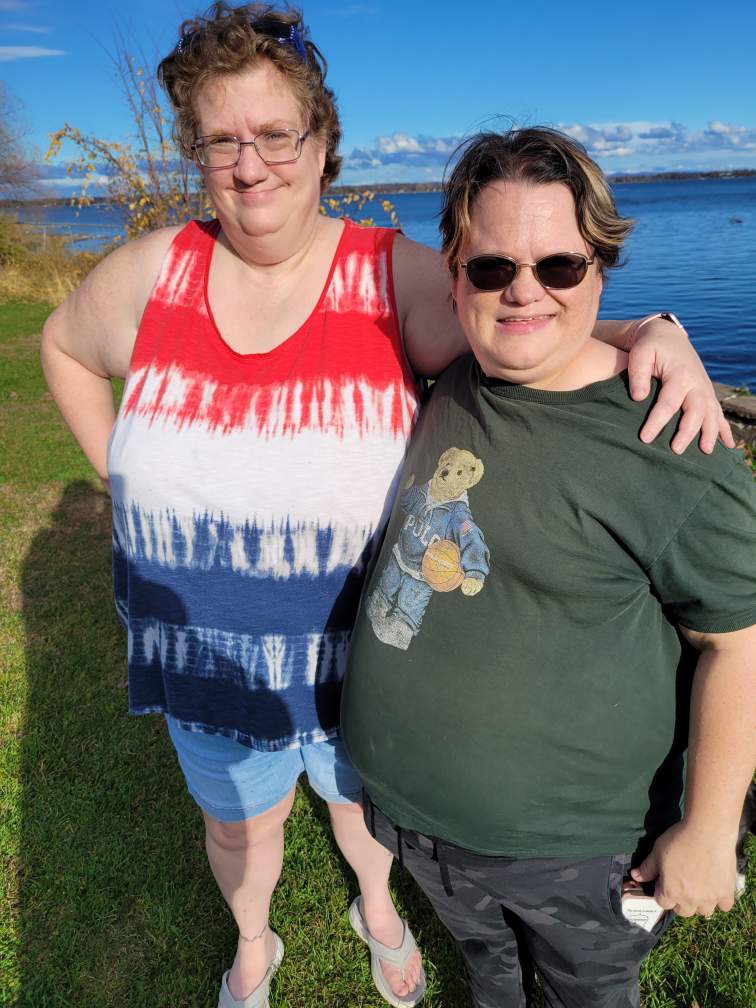
She moved away with her boyfriend, and we kept in touch for a while. She moved back to Erie when I started dating my husband. Things were getting harder for her with her boyfriend at the same time I was getting better. Then she moved again and we lost contact for many years. While we were separated, I got better and married my husband. When my niece set me up a Facebook account, I started searching Facebook for Cheryl and I found her. She was no longer with her boyfriend. She was with a man who treated her well.
Ever since Cheryl and I reconnected we have been inseparable. For a while we lived in separate states and texted each other constantly. Now we live in the same state and we still text constantly, we video chat with her sister and watch TV shows (we call it date night), and I have gone to her house for visits.
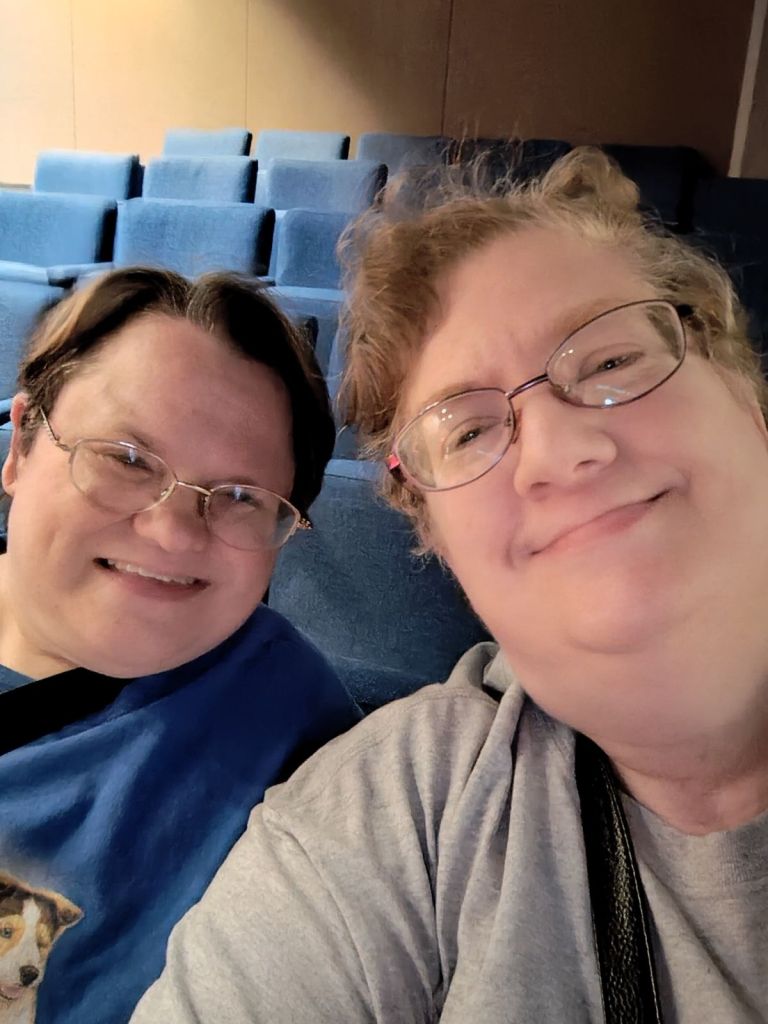
Now I can support her during hard times and be the friend I couldn’t be years ago. She still knows what to say and do when I’m struggling with my illness. When I’m down, I turn to my husband and Cheryl. Cheryl and I can talk about anything. We have no filter. She understands me better than any of my other friends. I understand her too.
Cheryl often gives me the same advice as my husband does and I tease her and say she is sneaking and talking about me with him. Cheryl reads my blog posts and uses what she learns to help me. I tell her she’s not allowed to use my blog posts against me. She responds with, “Too bad.” I talk over my problems with her and my therapist. I call her “therapist number one” and my actual therapist, “therapist number two.” She calls me “little sis,” and I call her “big sis.”
I can’t imagine life without Cheryl. She has been an important part of my struggle with mental illness. She kept me alive when I wanted to die, she lifted me up when I had hit the bottom of my hole, and she helps me stay in the light of recovery. Without her I would be lost. I can’t put into words how grateful I am for her dedicated friendship. I am so happy that she didn’t walk away from me when I couldn’t be supportive to her. I’m so happy that I now can support her through rough times.
Finding a friend to support you like Cheryl has me is hard, but if you do find one, hold on to her or him tightly. Not all friends will talk to you until two a.m., but be grateful for any friend that is willing to support you through your struggles with mental illness.
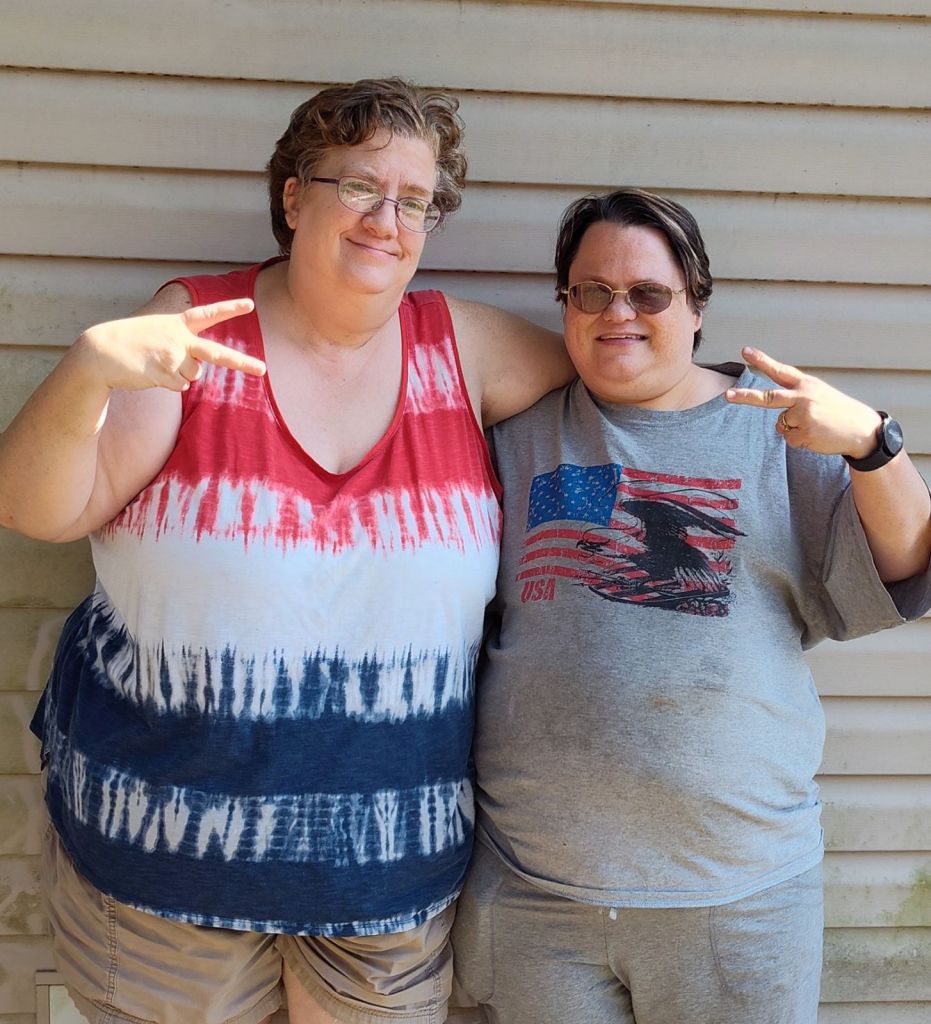
Having Cheryl to turn to when times get hard helps me stand tall in the light of recovery.
SIGNS OF SELF-INJURY
Self-injury is an unhealthy coping technique where a person causes bodily harm to oneself. It’s often done to feel something when a sufferer feels numb or to deal with painful internal emotions. It’s a serious problem. Knowing the signs of self-injury can help you aid a struggler in finding help to learn healthy coping techniques.
I started self-injuring at a young age by pulling my hair to relieve my inner anguish. When I started college, I tried different ways to relieve my pain such as burning myself, punching a wall, and cutting. I settled with cutting. It was the only way I knew how to cope with the overpowering emotions of depression. I hid my injuring from my family and friends.
There are signs you need to know that will help you identify self-injury taking place with a friend or loved one. The signs are:
- Wearing long sleeve shirts or pants even when it’s warm out. I wore long sleeve shirts even though it was summertime. I didn’t want anyone to see my wounds.
- Fresh scratches, cuts, bruises, bite marks, or other wounds. I had cuts on my shoulder area and lower arm.
- Excessive rubbing of an area to create a burn.
- Keeping sharp objects or other objects used for self-harm on hand. I kept sharp objects in my bedroom where I injured.
- Scars often in a pattern. I never cut deep enough to cause a lot of scars. I didn’t want people to question why I had scars. However, many who injure do have scars.
- Spending long periods of time alone. I spent a lot of time alone in my bedroom. That’s where I hurt myself.
- Frequent reports of accidental injury.
- Feelings of hopelessness, helplessness, and worthlessness. I was depressed when I harmed myself and I thought I was worthless and my life was hopeless. I felt like I had no control over the darkness that was holding me down.
- Difficulties in relationships with others. I lost a lot of friends throughout my school years. When I got older, I became a victim of abusive relationships.
- Behaviors and emotions that change quickly and are impulsive, intense, and unexpected. I went from being calm to emotional in minutes. I couldn’t regulate my emotions and had episodes of anger.
You can find these symptoms and more information on self-injury on the Mayo Clinic website at Self-injury/cutting – Symptoms and causes – Mayo Clinic. If you think someone you love is harming him or herself, talk to him or her and urge the person to get help. Tell an adult like a teacher or parent. There is help for self-injury and the struggler can learn healthy coping techniques to deal with his or her pain. I got help and now when my emotions become powerful, I turn to healthy coping techniques like journaling, confiding in my support team, and relaxation techniques.
With new coping techniques. I stand in the light of recovery as a stronger and healthier person.
19 Years
This is a unedited post. A unplanned writing to commemorate my wedding Anniversary.
19 years ago
I said I do to you
The man of my dreams
The love of my life
During each of the 19 years
My love has grown
Deeper and stronger
Through ups and downs
Our hearts beat
As one
Our love is rich
And forever flowing
19 years
Of loving you
Has been a blessing
As the years go on
Our love will
Continue to grow
Forever our hearts
Will beat as one
PROGRESS ON MY NEXT MEMOIR
When my LO was diagnosed with dementia, my whole world changed and my emotions went up and down. I was too emotional to work on my next memoir. I put it aside and started going to therapy to help me deal with this horrible illness my LO suffered with and my feelings. In the meantime, I stopped writing my next memoir. I found it hard to relive the past while struggling with the present. Now that I am dealing better with my emotions, I am writing again.
This past New Year’s Day, I decided to set myself a goal to get back to writing my book. I put in my phone’s calendar that I would write every Tuesday and Friday. I asked my fellow memoir writer and friend, Amy, to encourage me and remind me to write. Amy has been great; every Tuesday and Friday I get a text from her encouraging me and reminding me to write.
I have been sticking to my goal. Each Tuesday I retreat to a quiet place, and I work on my memoir, The Years After The Garage. I struggle with a few interruptions from my husband and dog. The dog follows me upstairs and always must go out. I write in our bedroom while my husband is downstairs watching TV. However, our bathroom is across from our bedroom, and after he uses the bathroom, he pops his head in and wants to talk. I try to remind him nicely I’m busy writing. I miss the days when he worked early in the morning and he went to bed at seven PM. It was the perfect time to write.
Despite the interruptions, I have been writing. Most writers keep track of how many words they write, but I’m different. I keep track of how many pages I write. I post on Facebook and send a text to Amy each writing night, telling her how many pages I wrote. I usually write two pages each on Tuesday and Friday. I know it doesn’t sound like a lot, but I finished two chapters and started another one.
I enjoyed reliving the Summer Enrichment Workshop for writing I attended in 1991. The program was held at Chatauqua High School. I made a friend on the bus and learned a lot about writing. In the afternoon the teacher took us to Chautauqua Institute, a nonprofit education center and summer resort. The Institute was magical for me and inspiring. I loved it there. I found many wonderful spots to write.
In this new book I still spend time at my grandparents. Instead of my grandparents living at the family garage, they now live forty-five minutes away in a home on endless acres of land. My cousins, Denny and Russell, are no longer around to go on adventures with. My siblings and I must entertain ourselves in other ways. The strong bond with my grandparents is unwavering. Instead of seeing my grandparents during coffee break, we see them on Sundays. We either have dinner with them or come after we have eaten at home.
I’m still bullied in this book, but the bullying changes and I slip further into mental illness. If the garage is gone, how do I escape from the bullying? What keeps me from falling to the bottom of the hole of my illness? How do I succeed when I feel hopeless and worthless?
Right now, I’m working on chapter twelve. I’m starting tenth grade. I have written three and a half pages in this chapter. This book will go to twelfth grade when I graduate from high school. Now I have to start going back to Pennwriters so I can get critiques on the chapters I have written. Pennwriters helps me grow as a writer and improve my writing.
Writing my book helps me help others and heal from the pains of the past. It also helps me strive to stay in the light of recovery.
WHAT RECOVERY MEANS
Many times when we think about recovery from an illness, we think of being healed or back to normal health and strength. Those who are recovered from the flu are healthy again. When it comes to mental illness, recovery has a different yet similar meaning. Most mental illnesses have no cure.
When we’re in recovery we are in a new normal. Our minds are clearer, we’re able to live a functional life, and we are stronger. Despite being in recovery, we still have mental illness, and we must take steps each day to manage it. We still have bad days, but we have coping skills to get through them.
What recovery means to me:
- I fought a long hard battle and climbed out of the dark hole of depression and anxiety. I struggled with my illness for many years. I used everything in me to fight it and gain control.
- I have learned coping skills to deal with hard times. I use different coping techniques like journaling, doing hobbies, relaxation, and self-care to deal with hard days.
- I found happiness. I have taken control of my illness, and I am able to enjoy life and the people around me. I no longer live in sadness. I have fun, I laugh and I enjoy life.
- I’m stable. I can make important decisions, I no longer cry easily, I can function, and I don’t fall apart like I once did. I can handle things I couldn’t when I was very sick.
- When I have bad days, I can pull myself up again. Bad days don’t leave me stuck at the bottom of my hole. I work my way through the hard days and climb back up to the top of the hole. I no longer dwell in the darkness, and I don’t let it hold me down.
- I must manage my illness every day. I take my medication and set up boundaries. I have a support system to turn to, and I know my limitations. I take care of my physical and mental health to stay in recovery. I know that even though I’m doing well I still could easily slip backwards if I don’t manage my illness.
- I found a new meaning to my life. Life no longer seems hopeless. My life has meaning now. I am important and I make a difference in others’ lives. Life is beautiful and mysterious. It’s a journey that I’m excited to be on.
- I’m not cured, but my illness no longer controls me. I know my illness will always be there and at times will try to push me down, but it no longer has control over me. I know the signs of when I’m really struggling and when to ask for help. I know how to deal with my illness when it tries to take over.
- I’m a stronger person. I am a stronger person because I fought this horrible illness. If I can fight mental illness and rise above it, I have the strength to fight any challenge life puts in my path.
What does recovery from mental illness mean to you? Fight your illness and find out what it means to be in recovery. Mental illness is treatable, and most people can find relief from their illness if they are willing to do the work and willing to fight. You don’t have to live your life at the bottom of the dark hole. You can find happiness, function in society, and live in the light. Find your determination and fight the battle to recovery.
It took me a long time to find recovery, but I’m glad I found it. I live a beautiful life in the light of recovery.
CAUSES OF STRESS
We all deal with stress in our lives. It’s all around us. When we struggle with mental illness, stress seems like a huge cloud hanging over us, threatening to throw us deeper into our hole. To handle that stress, we must first identify the things in our lives that cause stress. Knowing what causes you stress will help you find ways to avoid them and ways to cope with them.
I talked to my therapist about the things in my life that are causing me stress, and then we talked about how to cope with them.
Below is a list of things that cause stress.
- Finances. With the cost-of-living, money is a big stressor in many people’s lives. Coming up with a budget and keeping to that budget is helpful. Look for ways to save money. Focus on the bills you can pay and work out payment plans for ones you can’t pay. Don’t dwell on not having enough money. Only focus on what you do have.
- Relationships. Bad and unstable relationships cause a lot of stress. Take steps to end unhealthy relationships or go to therapy to work on them. Look for healthy and positive relationships.
- Health problems. Having a lot of health problems is hard to handle and stressful. Focus on what you can do for your health, and don’t worry about what you can’t do or the future. Like if you have diabetes, focus on the medication and changing your food habits, but don’t worry about the health problems diabetes can cause.
- Work. Working can be stressful. Know your limits. If working is too stressful for you then find other alternatives like filing for disability. If working full-time causes a lot of stress, then find a part-time job. I work part-time because working forty-hour weeks is too stressful for me. If you get stressed out at work, practice relaxation techniques or take a break if possible.
- Death. Losing a loved one, whether it’s a family member or a friend is very stressful and can cause depression. Allow yourself to grieve, use coping techniques to deal with depression, and take care of yourself. If you have a lot of decisions to make, take your time and if possible, delegate decisions to other family members or friends.
- Care giving. Taking care of a loved one who is sick is very stressful. Make sure you take care of yourself. Get someone to stay with your loved one while you take some time for yourself. Get help from friends, family, and in home-care agencies.
- Change. Moving, starting a new job, and other forms of change can be stressful. Find ways to cope with change and allow yourself time to get used to it.
- Traumatic events. Natural disasters, rape, abuse, and so on are very stressful. Look for a therapist to help you cope with the trauma. Give yourself time to heal. Journal about what you went through. Use art to get your feelings out.
These are only a few things that cause stress. Stress can make fighting mental illness harder. If we identify what causes us stress and find ways to cope with them or avoid them, it will help us reach recovery or stay in recovery. With mental illness you need to know your limits and use boundaries to protect your mental health. On a piece of paper list the things in your life that currently cause you stress. Then come up with a plan on how to cope with them or, if you can, avoid them.
Right now, I’m dealing with a lot of stress in my life: a sick loved one, a dog recovering from surgery, finances, and a badly bruised thumb. My therapist told me to practice self-care and to focus on the things I can change and let go of the things I can’t change. By doing this I stand in the light of recovery.
DEALING WITH STRESSORS
Stressors are things in our lives that cause physical, chemical, or emotional strain triggering a stress response. Stressors are all around us. They are in our environment, they are events, and they are also internal. When stressors happen to you, how do you cope with them? Do you let them tear you down or find ways to ease them?
I have a lot of stressors in my life right now. I was sick over a week ago with a viral infection and haven’t completely recovered. On top of that my dog, Esther, had surgery on her leg and requires a lot of care. The cost of her surgery and visits to the vet are adding up. I’m also trying to take care of my loved one with dementia and get him in-home care. I’m doing all this plus I work as a cashier.
Esther had a lump on her leg. It started out small, I thought it was because of her arthritis. The lump got bigger and that worried me. I had the vet look at it when I took Esther for her blood work. They said it was concerning so I set up an appointment to have it looked at further. When they aspirated it, they said the cells were abnormal and they needed to remove the lump and biopsy it.
Esther had her surgery last Tuesday. The vet had us coming in every couple of days to change her bandages, and that was not cheap. So, I asked them for the supplies to do it myself. The vet said no running, jumping, or rough housing for Esther. Trying to keep a dog from jumping is nearly impossible. I try to lift her on and from furniture as much as possible. I carry her outside down our porch stairs so she can go to the bathroom. I also carry her upstairs to her bed in our room at night. Taking care of Esther is stressful. I have dealt with some anxiety because of it.
On top of Esther’s care is the cost of the surgery and appointments with the vet. It’s adding up on my credit card. Finances are another stressor for me. I worry a lot about paying bills and having money to live on. Thanks to some extra money we got last year, I paid off our credit cards and now they’re adding up again.
On Thursday we had an appointment to get my loved one in-home care. We went over paperwork which included our income, how much we have in our checking and savings account, what we own such as properties and vehicles and our bills. This triggered more stress. My loved one needs help, I need the help, but I fear we won’t qualify because of income.
While dealing with all of this, I am not a hundred percent better after having a viral infection. My nose keeps running, I have drainage down my throat, and a cough because of the drainage. Plus, I have some fatigue. Not feeling good is a stressor. It’s hard to deal with everything and work when I don’t completely feel like myself.
Due to all the stressors in my life, I have been having anxiety attacks. To deal with the stressors in my life, I have been using coping techniques. Journaling helps me get out my feelings and release my stress. Texting with my support team and talking to my therapist helps me get the support I need. My friend Cheryl often gives similar advice as my therapist does, and I call her my first therapist. I also practice relaxation techniques such as deep breathing, guided imagery, and grounding. I do woodburning, a hobby of mine. I also make sure I am getting plenty of rest.
Sometimes we can’t avoid the stressors in our lives, but we can cope with them. Using coping techniques will help you better handle stressors. If the coping techniques I mentioned don’t work for you, talk to a therapist to find ones that will. Stressors make mental illness harder to handle, but if you cope with them you can work towards recovery.
Using coping techniques to handle my stressors helps me bathe in the light of recovery.
UNDERSTANDING MY LIMITS
Being a caregiver is a very hard and trying job. We love our loved ones (LO), but taking care of them can be very difficult. We are the ones they know well and the ones telling them what they can or can’t do, cleaning up after them, and in some ways invading their privacy. We take on a role that is self-sacrificing. We often give up our own needs for the ones of our LO’s, but even caregivers have limits. We as caregivers must understand our limits and know when to ask for help.
My LO is in the early stages of dementia, but there is still a lot I must do. I have to fix him a lunch and set up reminders for him to eat it before I go to work. I have to remind him to shower and change his clothes. I have to watch his diet because he has diabetes. I also have to keep track of all our finances and important matters. Much of what I must do does not come easily. He gets mad at me and argues with me. It’s hard to tell a grown man he needs to shower and change his clothes without insulting him. He takes offense.
I often feel like the bad guy. I’m the one who tells him he can’t have his sugary sweets or drinks. I’m the one who has to enforce the fact that he can’t drive anymore or work. I’m the one he says is always nagging him to do things he forgot to do and who takes things away from him. It’s hard to be the enemy. It hurts and takes a lot out of me emotionally. Sometimes I don’t want to argue so I let him have that doughnut or lemonade. I want things to go back to the way they used to be when we worked as a team, but I know things will only get worse.
I go to therapy to talk about what is going on with my LO and to keep my mental health stable. My therapist has been telling me for several sessions that I need to find in-home care for my LO and I need to know my limits. I have been resisting getting help because I know he won’t like it. My LO is determined that he can take care of himself. He can to a point. There are things he needs extra help with, and I have been trying hard to help him. He’s very stubborn and seems even more stubborn now.
My therapist is right. I need to know my limits and understand not to push them too far. There’s nothing wrong with asking for help. My LO is not quite old enough to get help through Medicare. I texted a good friend about needing to find in-home care for my husband. She suggested a program called Voices for Independence. It’s a program that helps people with disabilities be able to live their lives independently. Dementia is a disability and an illness. I called them and we have an appointment in our home this Thursday.
Unsure how to tell my husband about this appointment, I posted on a dementia support group on Facebook. They told me to say I need help, which is true. I need help because I’m pushing myself beyond my limits and it’s affecting me emotionally. I can only do so much for him. I know some care givers have it a lot harder than me, but I also know if I understand my limits now, it will help me in the future when my LO’s illness progresses. There’s nothing wrong with asking for help.
I know I must take care of not only my LO, but also my mental health. Being a caregiver takes a lot out of us mentally and physically. We as caregivers must also take care of ourselves and know when to seek extra help even if that means getting another caregiver, looking into nursing facilities, or turning to friends and family for support. Understanding our limits and obeying them will help us be better care givers.
I’m hoping the appointment with Voices of Independence will go well Thursday. If not, I will investigate other options. Knowing I have limits and being willing to ask for help keeps me standing in the light of recovery.
SICK AGAIN
No blog post this week because once again I have a viral infection. I’ve been sleeping a lot. When I get better I’ll write another post. Thank you for your patience.

