DEALING WITH STRESSORS

Stressors are things in our lives that cause physical, chemical, or emotional strain triggering a stress response. Stressors are all around us. They are in our environment, they are events, and they are also internal. When stressors happen to you, how do you cope with them? Do you let them tear you down or find ways to ease them?

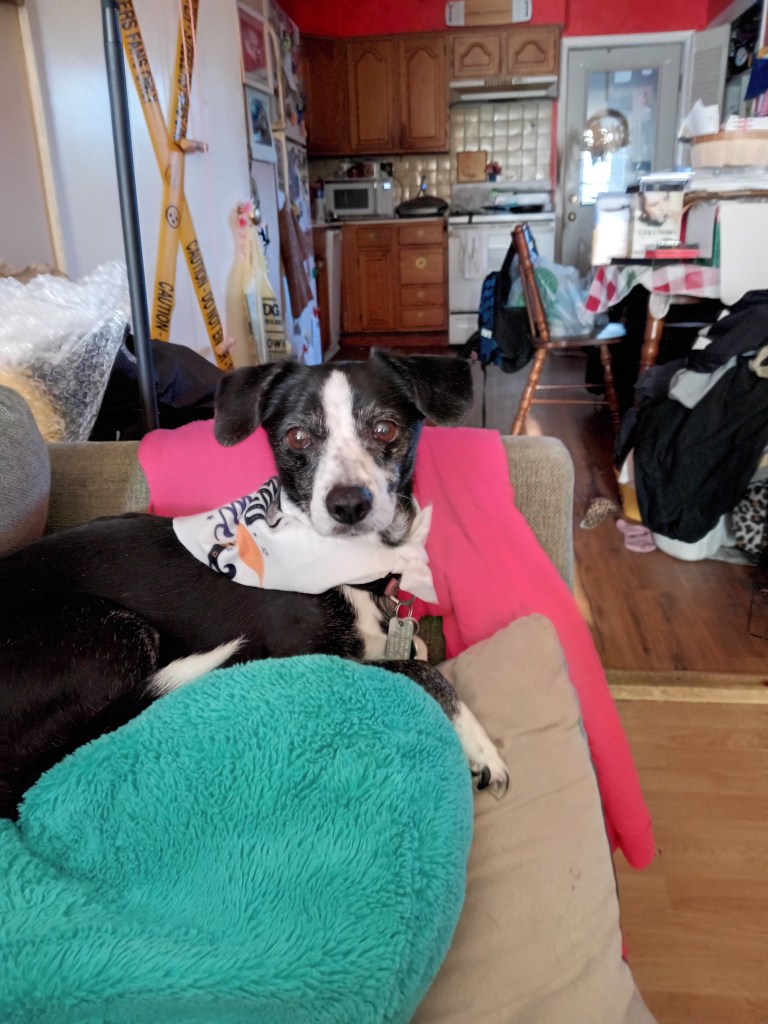
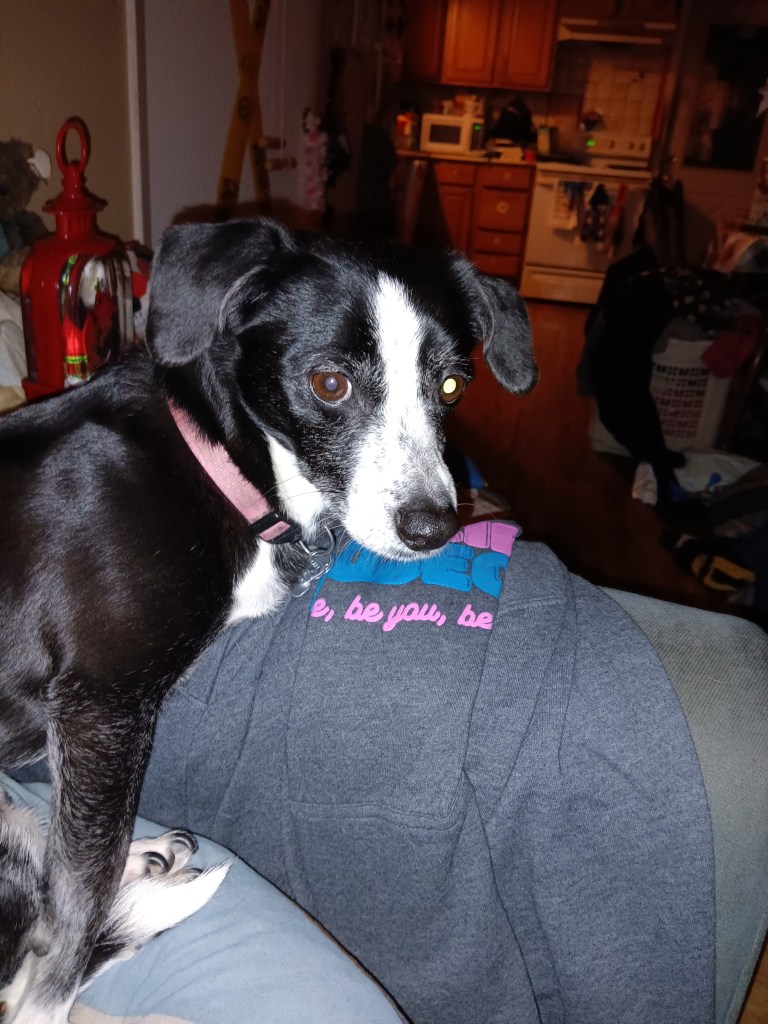
I have a lot of stressors in my life right now. I was sick over a week ago with a viral infection and haven’t completely recovered. On top of that my dog, Esther, had surgery on her leg and requires a lot of care. The cost of her surgery and visits to the vet are adding up. I’m also trying to take care of my loved one with dementia and get him in-home care. I’m doing all this plus I work as a cashier.

Esther had a lump on her leg. It started out small, I thought it was because of her arthritis. The lump got bigger and that worried me. I had the vet look at it when I took Esther for her blood work. They said it was concerning so I set up an appointment to have it looked at further. When they aspirated it, they said the cells were abnormal and they needed to remove the lump and biopsy it.

Esther had her surgery last Tuesday. The vet had us coming in every couple of days to change her bandages, and that was not cheap. So, I asked them for the supplies to do it myself. The vet said no running, jumping, or rough housing for Esther. Trying to keep a dog from jumping is nearly impossible. I try to lift her on and from furniture as much as possible. I carry her outside down our porch stairs so she can go to the bathroom. I also carry her upstairs to her bed in our room at night. Taking care of Esther is stressful. I have dealt with some anxiety because of it.

On top of Esther’s care is the cost of the surgery and appointments with the vet. It’s adding up on my credit card. Finances are another stressor for me. I worry a lot about paying bills and having money to live on. Thanks to some extra money we got last year, I paid off our credit cards and now they’re adding up again.

On Thursday we had an appointment to get my loved one in-home care. We went over paperwork which included our income, how much we have in our checking and savings account, what we own such as properties and vehicles and our bills. This triggered more stress. My loved one needs help, I need the help, but I fear we won’t qualify because of income.

While dealing with all of this, I am not a hundred percent better after having a viral infection. My nose keeps running, I have drainage down my throat, and a cough because of the drainage. Plus, I have some fatigue. Not feeling good is a stressor. It’s hard to deal with everything and work when I don’t completely feel like myself.

Due to all the stressors in my life, I have been having anxiety attacks. To deal with the stressors in my life, I have been using coping techniques. Journaling helps me get out my feelings and release my stress. Texting with my support team and talking to my therapist helps me get the support I need. My friend Cheryl often gives similar advice as my therapist does, and I call her my first therapist. I also practice relaxation techniques such as deep breathing, guided imagery, and grounding. I do woodburning, a hobby of mine. I also make sure I am getting plenty of rest.

Sometimes we can’t avoid the stressors in our lives, but we can cope with them. Using coping techniques will help you better handle stressors. If the coping techniques I mentioned don’t work for you, talk to a therapist to find ones that will. Stressors make mental illness harder to handle, but if you cope with them you can work towards recovery.

Using coping techniques to handle my stressors helps me bathe in the light of recovery.

UNDERSTANDING MY LIMITS

Being a caregiver is a very hard and trying job. We love our loved ones (LO), but taking care of them can be very difficult. We are the ones they know well and the ones telling them what they can or can’t do, cleaning up after them, and in some ways invading their privacy. We take on a role that is self-sacrificing. We often give up our own needs for the ones of our LO’s, but even caregivers have limits. We as caregivers must understand our limits and know when to ask for help.

My LO is in the early stages of dementia, but there is still a lot I must do. I have to fix him a lunch and set up reminders for him to eat it before I go to work. I have to remind him to shower and change his clothes. I have to watch his diet because he has diabetes. I also have to keep track of all our finances and important matters. Much of what I must do does not come easily. He gets mad at me and argues with me. It’s hard to tell a grown man he needs to shower and change his clothes without insulting him. He takes offense.

I often feel like the bad guy. I’m the one who tells him he can’t have his sugary sweets or drinks. I’m the one who has to enforce the fact that he can’t drive anymore or work. I’m the one he says is always nagging him to do things he forgot to do and who takes things away from him. It’s hard to be the enemy. It hurts and takes a lot out of me emotionally. Sometimes I don’t want to argue so I let him have that doughnut or lemonade. I want things to go back to the way they used to be when we worked as a team, but I know things will only get worse.

I go to therapy to talk about what is going on with my LO and to keep my mental health stable. My therapist has been telling me for several sessions that I need to find in-home care for my LO and I need to know my limits. I have been resisting getting help because I know he won’t like it. My LO is determined that he can take care of himself. He can to a point. There are things he needs extra help with, and I have been trying hard to help him. He’s very stubborn and seems even more stubborn now.

My therapist is right. I need to know my limits and understand not to push them too far. There’s nothing wrong with asking for help. My LO is not quite old enough to get help through Medicare. I texted a good friend about needing to find in-home care for my husband. She suggested a program called Voices for Independence. It’s a program that helps people with disabilities be able to live their lives independently. Dementia is a disability and an illness. I called them and we have an appointment in our home this Thursday.

Unsure how to tell my husband about this appointment, I posted on a dementia support group on Facebook. They told me to say I need help, which is true. I need help because I’m pushing myself beyond my limits and it’s affecting me emotionally. I can only do so much for him. I know some care givers have it a lot harder than me, but I also know if I understand my limits now, it will help me in the future when my LO’s illness progresses. There’s nothing wrong with asking for help.

I know I must take care of not only my LO, but also my mental health. Being a caregiver takes a lot out of us mentally and physically. We as caregivers must also take care of ourselves and know when to seek extra help even if that means getting another caregiver, looking into nursing facilities, or turning to friends and family for support. Understanding our limits and obeying them will help us be better care givers.

I’m hoping the appointment with Voices of Independence will go well Thursday. If not, I will investigate other options. Knowing I have limits and being willing to ask for help keeps me standing in the light of recovery.

SELF-CARE WHEN LIFE HANDS YOU TOO MUCH

You know that old saying, “When it rains it pours?” Well it holds true to life’s challenges. When life’s challenges come raining down on us, it only takes a moment before more problems pour down. Things seem to go wrong all at once. They start small and get bigger. It’s a lot to handle. We often wonder if we have enough strength to handle it. It’s especially hard when you’re struggling with mental illness or are in recovery. How do you keep yourself from falling apart? What do you do for yourself during the rough times?

Lately life seems to be pouring problems down on my husband and me. It seems like it’s too much to handle. It started when we got our car inspected and found out we had a leak in the muffler. Then we got the dreaded phone call telling us our nephew had passed on, and after returning home from his memorial service, I got sick with a viral infection. We got an estimate on our muffler and found out we needed a new muffler and exhaust manifold. The cost was over a thousand dollars. Next my viral infection turned into a sinus infection, and I got a bad rash on my face. Then I didn’t see a car behind me while backing up and hit it. Finally, a lump on our dog’s leg grew bigger, and when we took her to the vet, they said there were unusual cells in it and they needed to remove it. Plus, they found that our dog has a significant heart murmur.

When I told my therapist about all the things going on in my life, she asked me, “What are you doing for yourself?”

I thought hard about it. How was I taking care of myself? When our nephew passed, I couldn’t cry and I struggled with grief and some depression. I poured out my emotions in my journal. I texted with my friend Cheryl. I took extra time off work to deal with the loss. With the muffler I took a deep breath and went through our finances to see how we could manage to get it repaired. I tried to stay positive by looking for good things about getting a new muffler, like with it fixed the car would be quieter. I practiced self-care.

At one time I used to force myself to go to work sick. That only ended up with me getting worse, and a few times I ended up in the ER with an IV. This time I called off work. I slept most of the day; when I was awake, I lay on the couch and watched TV with my husband. I didn’t do housework or even cook supper. I ordered dinner in and pampered myself. Part of self-care is nurturing yourself and taking care of your physical health along with your mental health.

I could have easily slipped into depression while things were going wrong, but I practiced self-care. I used my journal to express my feelings, I took my medications, I leaned on my support system, I did woodburning to help me relax, and I talked to my therapist. I also rested when I needed to and went to the doctor. Plus, I made sure to take my medications as prescribed.

When your life gives you too many challenges to handle, it’s important to take care of yourself mentally and physically. What things can you do to take care of your needs and to show yourself love? Self-care is more than just meditating and taking bubble baths. It’s about finding ways to relax, going to the doctor, resting when your body is tired, making important decisions, setting boundaries, and managing finances. Making self-care an important part of your life helps you get through mental illness and keeps you in recovery. When life gets to be too much to handle, make sure you take care of yourself this will help you face the hard times with strength.

Things have been very hard lately. The bad things don’t seem to stop happening. Life seems overwhelming. It seems like God is giving me too much to handle, but he helps me handle it. I make it a priority to use coping techniques and self-care to face each challenge, and this helps me stay in the light of recovery.

AN APOLOGY LETTER

Part of life is getting hurt by people. Sometimes they hurt us by accident, some don’t even realize they hurt us, and some hurt us because they are not nice. Getting an apology helps ease the pain, but not everyone apologizes. How do we mend our broken hearts if a person who hurt us never apologizes?

Since my book has been published, people have asked me, “Has any of your bullies read your book and apologized?”

Unfortunately, none of them has apologized and I don’t expect them to. I’m not even sure they would admit it was them in my book if they read it. My friend, Roberta, suggested I try writing an apology letter from one of my bullies to me. I thought about it and decided that would be a great idea. Below is an apology letter I have written from one of the bullies in my book, Donna. If you haven’t read my book, Escape to the Garage: Family Love Overcomes Bullying, reading my book would give you a better idea about what Donna did to me.

Dear Aimee,

  I’m so sorry I called you a retard and other names in school. I didn’t understand what a learning disability was. I was a fool to think you were stupid. Look at you. You went to college. You wrote a book. You were never stupid or retarded. My words were cruel and wrong. I wish I could take them back. Now I’ve read your book I can see how much they hurt you. I’m sorry I caused you so much pain.

  In school I thought you weren’t smart enough to ever work a job and I told you that you would be on welfare. Boy was I wrong. My life turned out to be a mess, but you went on to college, you got a degree, and you have worked the same job for twenty-seven years. I’m sorry I said that about you. I was so wrong. I’m the one who failed to succeed, but you are a success.

  I’m sorry I took your friends away and turned them against you. I’m sorry I stopped other kids from making a friendship with you. I didn’t feel good about myself and I turned that on you. I made your life miserable. It wasn’t nice of me to tell others lies about you so they wouldn’t be your friend. In a way I was jealous of you. My family and home life weren’t as good as yours, so in turn I made your school days miserable. I’m sorry for that.

  Maybe if I took the time to really get to know you, we could have been good friends. Maybe you could have been someone I could have confided in instead of someone I tore apart. I’m glad to see you were able to rise above the abuse I put you through and are now able to help others.

  You are a smart wonderful person and I’m sorry I never took the chance to get to know you for who you are. I can never take back all the pain I put you through or heal the wounds I caused, but at least I can do is tell you how wrong I was and how sorry I am.

   I am truly sorry for being so awful to you in school. I hope you will forgive me.

Sincerely,

Donna

I’d be surprised if I ever got an apology from Donna, but writing this letter helped ease the pain in my soul. It helped me see Donna as a person who acted out of ignorance and as an imperfect person instead of a monster. I’ll never be able to tell her I forgive her, but I forgive her for my own benefit. I don’t want to talk to her or have her in my life, but she is no longer that evil monster that tore me apart in school. Now I see her as a broken person who used her own insecurities to hurt me.

Try writing a letter of apology from the person who hurt you deeply. It will help you in the healing process and help you to forgive that person. It will also help you let go of the grip that person has on you. Once you have written the letter whisper or yell it out loud, “I forgive you.” Then let the wounds in your heart heal.

Writing the letter to Donna helped me heal. Because I wrote the letter I bathe in the light of recovery.

WHAT IF’S

Do you ever worry about what might happen in the future? You start thinking about what could happen, and then it snowballs into a lot of “what if’s.” You think about so many “what if’s” that you feel tense in the shoulders and neck, you feel sick to the stomach, you have panic attacks, and you can’t sleep. You literally make yourself sick with anticipatory anxiety. Sometimes you get so upset that you cancel plans, stay in bed and block out the people you love.

I am guilty of struggling with anticipatory anxiety and even more now that I am doing somethings on my own since my loved one (lo)is  struggling with dementia. I’m learning to be more independent and to be a caregiver. I once depended on my lo for many things. We were a team, but now I have to take care of some of those things by myself. This is scary to me.

When our nephew passed, we had to travel three hours to his memorial service. My lo and I always shared the driving, and we always drove there in the summer. In the week before the service, I started spiraling with anticipatory anxiety. The “what if’s” swirled around in my mind like a tornado.

What if we can’t get out of Erie? What if we run into bad weather on the way there? What if we get in an accident and end up dead? What if we make it there and the weather is too bad to go home?  What if I can’t drive that far? What if we get stranded on the highway?

The “what ifs” made my shoulders tense, made me sick to my stomach, made my chest ache, and made emotions well up inside me like a ball caught in my throat. I told my “what if’s” to my friend Cheryl and she told me to stop worrying and I’ll be fine. She assured me that she believed I could make the trip without problems, but I couldn’t shut off my mind.

I wrote down my “what if’s” in a notebook and let my therapist read them.

My therapist said, “When you come up with a “what if,” find a solution. For each of your “what if’s,” there are solutions. I have faith you’re very capable of making this trip, but if your anxiety gets too bad, it’s okay to decide to cancel your plans. Have faith in yourself.”

So, here are my solutions for my “what ifs.”

  • What if we can’t make it out of Erie? Solution: If the weather is too bad, we’ll stay home.
  • What if we run into bad weather on the way? Solution: If the weather gets bad, we’ll pull off at an exit and find a hotel for the night.
  • What if we get in a bad accident and end up dead? Solution: Focus on the positive that we will make it safely.
  • What if we make it there and it’s too bad to leave to go home? Solution: I can call off work and stay at the hotel until the weather gets better.
  • What if I can’t drive that far? Solution: I’ll take breaks and take my time getting there.
  • What if we get stranded on the highway? Solution: We’ll pack a shovel, sleeping bags, water, and food.

With solutions to my “what if’s” I had a set plan and our trip no longer seemed so scary. My anxiety began to lift. We packed our car the night before and left early the next morning. Starting out it was snowy and a bit difficult to see, but I kept going. Farther down the highway the snow faded away and the sun shone. It was sunny for the rest of our trip. I stopped a couple times to stretch my legs, but we made it to our hotel without any problems.

The memorial service was on a Saturday, and we were going to stay until Monday, but because of a storm coming across Pennsylvania and much of the US, we left for home after we got some food at the meal after the service. The trip home was great. Sunny skies all the way home. The snowstorm hit the next day, and we were safe in our home. My anxiety was for nothing. I was so proud of myself for making the trip there and back without any problems.

If you’re struggling with anticipatory anxiety, come up with solutions for each of your “what if’s.” Once you do that, you’ll see that you have a plan for things that could go wrong. Having a plan makes the anxiety less powerful and helps ease your physical reactions.

From now on when I’m struggling with anticipatory anxiety, I’m going to come up with solutions, and this will help me stay in the light of recovery.

No Post

I apologize for another week without a post. We went to Sommerset, PA and attended our nephew’s memorial service January 24. It was a beautiful but sad service. We left for home right after the service to miss the snow storm. Then Monday I became sick with a viral infection.  I have spent the whole week in bed. I’m just now starting to feel better.

I will write a post next week. Until then keep fighting for recovery from mental illness. Find the positive in your life.

SAYING GOODBYE TO MY NEPHEW

Whenever I lose someone, I write about the person because it helps me grieve and get my feelings out. It was Thursday morning when I got a message from my niece wanting to give me a call. I was in bed, but I knew in my heart it was important, so I told her it was fine to call. Her voice was etched with sorrow and pain when she told me my nephew, Jason, had passed. I was in shock. I couldn’t cry. I just knew I had to tell my husband, who was very close to him. I had to be strong for him.

I married Lou in April 2007, and that’s when I met Jason. He was my husband’s sister’s son. Lou’s sister, her husband, her two girls, and Jason came to our wedding. I was delighted to meet my husband’s family. They welcomed me into the family with open arms. After the wedding, Jason gave me a big hug. His arms were gentle.

Nieces Jen, Holly, my husband Lou, Lou’s sister Debby and Jason

In the years to follow, Lou and I took vacations to Somerset, PA, where his sister and family live. Each time we visited, Jason took time off work to spend with us. We went to Latrobe to the Steelers training camp, we played putt-putt, we went to the mall, and we hung out at our hotel room. Jason’s laugh could brighten any soul. Hanging out with him was always the highlight of our trips, along with seeing the rest of the family.

Lou’s a Steelers fan, while Jason was a Titans fan. The two teased each other about their teams. When I got stuck in the middle, I sided with my husband. Even though he wasn’t a Steelers fan, Jason willingly went to Steelers training camp with us. He even pushed his way through the crowds to help Lou get autographs from the players.

During the time we hung out in our hotel room, I got to know Jason more. I came to love him dearly. He always had a bright smile and a kind heart. One time he told us we were his favorite aunt and uncle. That made me feel wonderful. It was hard coming into Lou’s family with nieces and nephews that were already grown up. Jason made me feel like I had always been a part of his life. It meant the world to me to be considered his favorite.

Jason was special in many ways. He had a fun and loving personality. He gave wonderful bear hugs and knew how to make the world shine brighter. It just doesn’t seem possible that he could leave this world so soon. He was only thirty-six and he had his whole life ahead of him. I saw him fall in love and then have his heart broken. I waited for him to find the right woman so I could go to his wedding, and some day hold his babies. Unfortunately, that never happened. It doesn’t seem like he was in my life long enough.

Jason, in the short time he was in my life, made a huge impact. My life was and is brighter and more beautiful because of him. It was an honor to be his aunt. He will always have a special place in my heart. He left this earth too soon, but I know he is in heaven making the other angels laugh and smile.

Screenshot

My heart is broken because of losing Jason, but in time I know it will heal. I will never forget him. He will be in my heart forever. His memory will help me through my grief and guide me to the light of recovery.

Next week there won’t be a post because we are traveling to Somerset for Jason’s memorial service.

FOCUSING ON THE POSITIVES OF 2025

When we get close to the end of the year many of us say, “I’m ready for this year to end. It was a bad year.”

We often focus on all the bad things that happened in the year, forgetting there were also good things. It’s easy to think about everything that went wrong in the year so that we can hope that a new year will be better. But it shouldn’t be the negatives of the past year that carry us into a new year. It should be the positives that build bridges for an even better year.

I can easily go through a list of things that went wrong in 2025. It was a rough year with my loved one being diagnosed with dementia and diabetes. I could easily talk about everything that went wrong in the past year, but it serves no purpose. Instead, I will list the positive things that happened in 2025.

Below is my list of positives:

  • I received an award from the president of the United States; I received a proclamation from Buffalo, NY’s mayor, declaring February 21 “Aimee Eddy Day” and I also received other awards for my work for One Life Project.
  • I had cataract surgery on both of my eyes, giving me new vision. I can see without glasses. I just need reading glasses.
  • My husband and I have taken many rides around Erie’s Peninsula. We enjoyed the scenery and time together.
  • My husband retired and I no longer must take the bus to work.
  • I threw a surprise retirement party for my husband and he was shocked. He loved the party.
  • We spent a romantic night in a hotel for our wedding anniversary.
  • I celebrated thirty years at my job with a dinner at Acrisure Stadium and a tour of the stadium.
  • I found a therapist that I really like who is helping me through my loved one’s dementia.
  • I got to see my niece and her family whom I haven’t seen in a few years.
  • I got Thanksgiving week off from work which I haven’t had off in thirty years.

I must admit I had to really think hard about the positives of last year. The bad things that happened weigh me down, but coming up with this list lessened my burdens. It made me realize that last year wasn’t so bad after all. I’m not throwing away a bad year; instead I’m using the positives of 2025 to build a positive bridge into 2026.

I know with mental illness it’s easy to just see the negatives in your life, but there are positives. To you 2025 was a bad year and you don’t see any hope for 2026. Try sitting down with a sheet of paper and reflecting on the past year. Think about the good things that happened like a friend who called to check on you, or after several days in bed you got out of bed. There are positives in your life and if you think hard, you’ll find them. Look at 2026 as a year with hope and new beginnings.

Going into the 2026 with hopes for a good year helps me stay in the light of recovery.

CAREGIVING AND MENTAL HEALTH

Mental illness is a rough disease, and even in recovery you must spend each day managing it. When you throw extra challenges in your life, like dealing with a loved one (LO) with dementia, staying in recovery becomes a bigger challenge. You no longer are just taking care of your illness; you are also taking care of someone else’s illness. This makes staying in the light even harder.

My loved one is in the early stages of dementia. He’s independent to a point. He is still able to stay home while I work, and he can help me with some stuff around the house, but he still needs my help with a lot of things. I take care of his medication, make his lunches before work, and leave reminders on Alexa for him to eat it. I also remind him to take care of his hygiene, I manage his diet for diabetes, I keep track of his appointments, and I also remind him about small stuff too. I also have to handle changes in his mood like arguing and anger outbursts.

He’s young, only in his sixties, and I’m only fifty-one. It’s so unfair that he has this illness at such a young age. We should have many more years to make memories, but we don’t. We must make every moment count now. I’m sad, angry, and frustrated. Some days I want to lie in bed and cry. I wish I had a magical wand to take this illness from him. He gets so frustrated when he can’t remember things and it breaks my heart.

So much has been taken away from him because of dementia that it feels like he’s losing everything. He can no longer work, he can’t drive, and his memory is fading. At times I’m the bad guy because I must tell him repeatedly, he can’t drive, he can’t work, he forgot to shower, and much more. He gets mad at me, and I try not to take it personally, but it hurts.

Dealing with my LO’s illness is very emotional and threatens to throw me back down the hole of depression, but I can’t let it. When my LO was diagnosed with diabetes I got

depressed. I knew I was going to have to manage it and make sure he follows a healthy diet on top of managing his dementia. All day at work I felt like crying, I was very sad, and just wanted to hide. When I got out of work, I told my LO I was sick and went to our room. I lay in bed crying until I fell asleep. I teetered on the edge of that dark hole.

I realized I need to take care of my mental illness while taking care of my LO. I used a program through work to help me find a therapist. I’m not in a depression, but I needed someone to confide in and to talk about my feelings to to stay in recovery. I found a therapist who understands what I’m going through and she is very good. I told my psychiatrist about my LO so he can keep track of how I’m doing. I confided in my support team. I also joined mental health and dementia support groups online.

All caregivers must take care of themselves as well as their loved ones, but it’s extra work to take care of your mental illness on top of caregiving and to stay in recovery. I find it hard to manage my medication on top of my LO’s, but I know it’s important. It’s also important to use coping techniques like journaling, relaxation techniques, finding positives, and grounding techniques. It’s okay to need a break from your LO too. Self-care is also important. Take time for yourself like having someone stay with your LO while you go out for a while, take a relaxing bath, eat healthy, exercise, take care of your hygiene, and find time for your hobbies.

Caring for yourself and your mental health is as important as taking care of your LO. I make my illness as much of a priority as my LO is. This helps me stay in the light of recovery.